
Automotive Maintenance Hydraulics
Two-Post and Four-Post Car Lift Cylinders: The Backbone of Auto Repair
An authoritative engineering analysis of hydraulic lifting mechanisms, fluid dynamics, and heavy-duty performance in professional automotive workshops.

Elevating the Standard of Automotive Maintenance
In the demanding environment of modern automotive repair shops, efficiency, safety, and precision are paramount. At the very core of these operational imperatives is the automotive lift. Whether a technician is performing a complex transmission replacement, routine brake maintenance, or precision wheel alignment, the vehicle must be elevated safely and securely. The unsung heroes driving this massive mechanical effort are the two-post and four-post car lift cylinders. These highly specialized hydraulic actuators convert fluid power into the immense linear force required to hoist passenger cars, commercial vans, and heavy-duty trucks effortlessly into the air.
Understanding the mechanics, material science, and safety protocols embedded within auto repair equipment hydraulics is critical for workshop owners, fleet managers, and maintenance professionals. A failure in a car hoist cylinder is not merely an inconvenience; it represents a catastrophic safety hazard and a severe liability. Therefore, selecting, maintaining, and understanding the engineering principles behind these hydraulic systems is a fundamental requirement for any successful automotive service business. This comprehensive guide explores the intricate details of two-post car lift cylinders, four-post auto lift hydraulics, and the rigorous engineering standards that keep mechanics safe beneath tons of suspended steel.
Mechanical Architecture: Two-Post vs Four-Post Lift Cylinders
While both systems utilize hydraulic fluid dynamics to achieve elevation, the engineering application and cylinder configurations differ significantly based on the intended use case of the automotive lift.
Two-Post Lift Cylinders
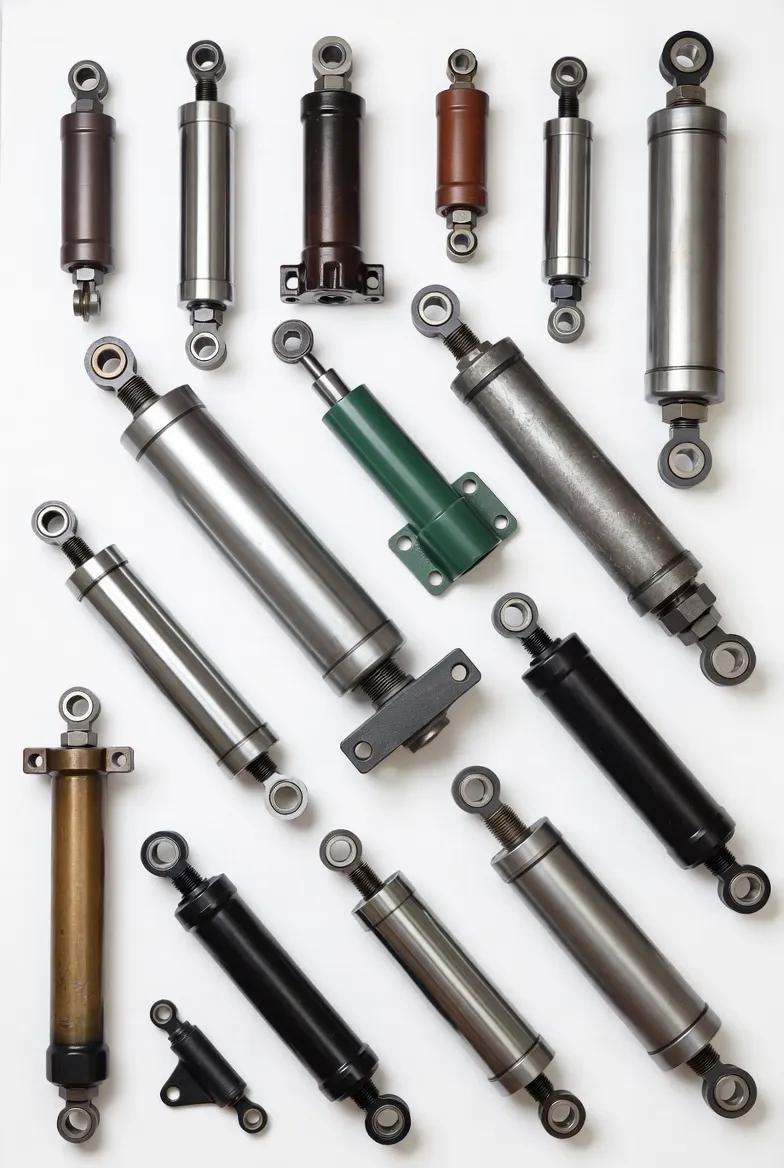
Two-post lifts are the undisputed workhorses of the auto repair industry, favored for their minimal footprint and unobstructed access to the vehicle undercarriage. These systems typically utilize two long-stroke hydraulic cylinders, one housed vertically within each column. Depending on the design, they can be direct-drive cylinders that push the carriage directly upwards, or chain-over-roller cylinder configurations that use a shorter cylinder combined with heavy-duty leaf chains to double the lifting speed and stroke length.
Four-Post Lift Cylinders
Four-post lifts are utilized for heavy-duty vehicles, long-term storage, and precision wheel alignment procedures. Unlike two-post systems, a four-post lift generally relies on a single, massive, horizontally mounted hydraulic cylinder hidden underneath one of the drive-on runways. This master cylinder pulls a complex network of heavy-duty steel cables routed through pulleys to all four corner columns, elevating the platform simultaneously and evenly. This requires a cylinder with exceptional pulling force and rigorous internal seal integrity.

Material Science and Harsh Garage Environments
The environment inside an automotive repair facility is incredibly hostile to mechanical equipment. Hydraulic cylinders are constantly exposed to airborne metallic dust, corrosive brake fluids, harsh degreasers, and extreme temperature fluctuations. To maintain operational integrity over a lifespan of tens of thousands of lifting cycles, manufacturers must utilize premium materials and advanced metallurgical processes.
The piston rod is the most vulnerable component of any auto hoist cylinder. Reputable manufacturers forge these rods from high-yield carbon steel, which is subsequently induction-hardened to resist denting from dropped tools or swinging vehicle parts. Following the hardening process, the rod undergoes a thick, micro-cracked industrial hard chrome plating. This plating provides a near-frictionless surface that glides smoothly past the internal seals, while serving as an impenetrable barrier against rust and chemical corrosion. A compromised chrome finish will rapidly destroy the polyurethane seals, leading to disastrous hydraulic leaks.
Advanced Sealing Technologies
Internal fluid dynamics rely on advanced sealing geometry. High-pressure polyurethane U-cups, energized by nitrile O-rings, ensure that hydraulic fluid does not bypass the piston under extreme loads. Furthermore, aggressive external wiper seals scrape away accumulated workshop grime before the rod retracts into the cylinder barrel. This prevents contaminants from acting as a lapping compound that would otherwise score the honed interior tube of the automotive lift hydraulic system.

Safety Mechanisms and Fluid Power Integrity
From an authoritative engineering perspective, lifting a three-ton vehicle above a mechanic requires redundant safety systems. The fluid power industry has developed stringent protocols to ensure that even in the event of a catastrophic failure, the vehicle remains secure.
Velocity Fuses and Parachute Valves
If a high-pressure hydraulic hose ruptures, the fluid must not be allowed to escape rapidly, which would cause the lift to plummet. Velocity fuses, also known as parachute valves, are integrated directly into the base port of the lift cylinders. These safety valves monitor the flow rate of exiting fluid. If the velocity exceeds normal descent speeds, the valve instantly snaps shut, locking the fluid inside the cylinder and freezing the lift safely in place.
Hydraulic Synchronization
In two-post lift systems, it is vital that both carriages rise at the exact same rate to keep the vehicle level. This is achieved through flow divider valves and mechanical equalization cables. If the hydraulic cylinders are not perfectly synchronized, the vehicle will tilt dangerously, shifting its center of gravity and potentially slipping off the lifting arms. Precision manufacturing tolerances within the cylinders ensure equal displacement of fluid during every cycle.
Maintenance Best Practices for Fleet and Workshop Managers
To adhere to E-E-A-T principles regarding trustworthiness and engineering expertise, we must address preventative maintenance. A two-post or four-post car lift is a major capital investment and a critical safety device. Neglecting preventative maintenance will inevitably lead to expensive downtime, compromised safety, and reduced lifespan of the auto repair equipment hydraulics.
- ✔️
Bleeding the Hydraulic System: Air trapped within the hydraulic lines or cylinder barrels acts like a spring. This causes a spongy, erratic lifting motion that can severely unbalance a vehicle. Workshops must routinely bleed the system via the integrated bleeder screws at the top of the cylinders to ensure smooth, rigid fluid power transmission.
- ✔️
Fluid Cleanliness and Viscosity: Hydraulic fluid is the lifeblood of the hoist. Using the incorrect viscosity, or allowing the fluid to become contaminated with water (which creates a milky appearance) or particulates, will destroy the internal seals and score the honed barrel. Regular fluid replacement schedules must be strictly followed.
- ✔️
Visual Rod and Seal Inspections: Technicians must perform daily visual checks. Any weeping fluid around the cylinder gland indicates a failing primary seal. Any vertical scratches on the chrome rod signify that debris has breached the wiper seal. Addressing these issues immediately prevents catastrophic failures mid-lift.

The Future of Auto Repair Equipment Hydraulics
The automotive repair industry is rapidly evolving, integrating smart technology into everyday workshop equipment. The next generation of two-post and four-post car lift cylinders is shifting from purely mechanical components to intelligent, sensor-driven systems.
Modern smart auto hoist cylinders are increasingly equipped with embedded linear position sensors and pressure transducers. These devices feed real-time operational data into a central workshop management system. By analyzing the fluid pressure curves required to lift various vehicles, Artificial Intelligence algorithms can predict when a seal is beginning to degrade or if a cylinder is experiencing abnormal friction. This shift from reactive repair to predictive maintenance ensures unparalleled workshop efficiency and ultimate technician safety.

Conclusion: Elevating Safety and Profitability
Two-post and four-post car lift cylinders are the undeniable foundation of professional automotive maintenance. By combining advanced metallurgical properties, sophisticated internal sealing designs, and rigorous safety mechanisms, these hydraulic systems ensure that technicians can operate beneath tons of steel with absolute confidence. For workshop owners, investing in high-quality auto repair equipment hydraulics and adhering to strict maintenance protocols is the ultimate strategy for maximizing operational uptime, ensuring workplace safety, and driving long-term business profitability.