
Fluid Power Innovation and Industry 4.0
The Rise of Smart Hydraulic Cylinders: Integrating Sensors for Predictive Maintenance
An authoritative engineering blueprint exploring the integration of IoT sensors, real-time data analytics, automated diagnostics, and the revolutionary shift from reactive repairs to intelligent predictive maintenance in heavy machinery.

Giving a Brain to the Mechanical Muscle
For over a century, fluid power has been the undisputed mechanical muscle driving the industrial world. From massive earthmovers tearing through bedrock to precision automated manufacturing lines, hydraulic linear actuators have converted the immense hydrostatic pressure of synthetic fluid into unrelenting, perfectly controlled kinetic force. However, despite their incredible metallurgical strength and advanced polymer sealing architectures, traditional hydraulic cylinders have always been “dumb” components. They operate blindly, entirely dependent on external directional control valves, unable to communicate their internal health or operational status to the machine operator until a catastrophic failure occurs. Today, that paradigm is undergoing a profound technological revolution. To explore the absolute cutting edge of fluid power technology, visiting our premium hydraulic cylinders platform provides an essential view into the future of the industry.
The integration of Industry 4.0 technologies and the Internet of Things (IoT) has birthed a new era: the rise of smart hydraulic cylinders. By embedding highly sophisticated micro-sensors directly into the forged steel barrel, the head gland, and the piston rod, engineers are giving the mechanical muscle a digital brain. These intelligent actuators now continuously monitor their own internal thermodynamics, structural stress, fluid pressures, and precise linear positioning in real-time. This continuous stream of telemetry data is transmitted to centralized artificial intelligence systems, fundamentally transforming how fleet managers and maintenance engineers interact with their heavy equipment.
From an authoritative engineering perspective, the transition to smart hydraulic cylinders is not merely a technological luxury; it is becoming a strict operational necessity to remain competitive. The financial bleed caused by unscheduled machine downtime, sudden seal blowouts, and undetected lateral side loading is massive. This comprehensive technical guide will meticulously dissect the architecture of sensor-integrated actuators, explore the mathematical algorithms driving predictive maintenance, and demonstrate how digital fluid power is permanently eradicating catastrophic mechanical failures across the global industrial landscape.
The Anatomy of Intelligence: Sensor Integration
Transforming a solid steel pressure vessel into an intelligent data node requires embedding sensitive electronics into an incredibly hostile, high-pressure environment. Engineers utilize three primary classes of sensor technologies.
Linear Position Transducers
The most critical metric for automation is knowing the exact location of the payload. Magnetostrictive linear position sensors are embedded directly down the center of a hollowed-out piston rod. A permanent magnet attached to the piston interacts with a wave-guide wire inside the sensor probe, calculating the absolute position of the stroke to within fractions of a millimeter. This allows master control systems to execute flawless, repeatable motion profiles without relying on external limit switches. This precise spatial awareness is heavily utilized in Forklift Hydraulic Cylinders for automated, exact material placement.
Internal Pressure Mapping
Micro-pressure transducers are integrated directly into the blind end and rod end ports of the cylinder. By continuously mapping the differential pressure between the two chambers, the onboard computer can instantly calculate the exact tonnage of force being applied or held. If the pressure in the extension chamber slowly drops while the directional control valve is locked, the sensor instantly detects the internal fluid bypass, diagnosing a failing piston seal long before the operator notices the load physically drifting downward.
Thermodynamic and Vibration Sensors
Heat and vibration are the ultimate indicators of mechanical distress. Embedded thermocouples monitor fluid temperatures in real-time. If localized heat spikes near the head gland, the system identifies severe tribological friction caused by lateral side-loading. Triaxial accelerometers detect abnormal microscopic vibrations that indicate a bent piston rod grinding against internal brass bearing guides. These sensors provide the empirical data required to intervene before the structural integrity of the cylinder is permanently destroyed.

The Paradigm Shift: From Reactive to Predictive Maintenance
Historically, fluid power maintenance was entirely reactive. An excavator or a factory press ran continuously until a seal blew out, a rod snapped, or a hose ruptured. This resulted in devastating, unscheduled downtime, emergency repair premiums, and dangerous worksite conditions. The integration of smart sensors eliminates this archaic methodology.
Algorithmic Degradation Tracking
Smart hydraulic cylinders do not just report raw data; they feed information into cloud-based machine learning algorithms. By analyzing pressure decay curves over thousands of cycles, the software can predict exactly when a polyurethane seal will degrade beyond acceptable tolerances. Instead of waiting for a leak, the fleet manager receives a digital alert stating that the cylinder has 200 operational hours remaining before critical failure. The maintenance team can then proactively order a replacement seal kit and schedule a precise, two-hour repair window during a planned holiday shutdown, entirely bypassing the chaos of unexpected equipment paralysis.
Preventing Catastrophic Secondary Damage
When a traditional cylinder fails, it often destroys other components. A scored barrel introduces metal shavings into the fluid, which travel backward and destroy the highly expensive main hydraulic pump. By catching internal bypass issues instantly through sensor integration, smart cylinders protect the macro-architecture of the entire fluid power network. In highly abusive environments, such as those endured by Excavator Hydraulic Cylinders, halting operation before a slightly bent rod snaps completely saves tens of thousands of dollars in metallurgical replacement costs.

Industrial Applications of Smart Fluid Power
The integration of IoT sensors is rapidly becoming the universal standard across specific sectors where safety, absolute precision, and maximum uptime are non-negotiable engineering requirements.
Safety-Critical Aerial Platforms
When lifting human personnel to extreme elevations, mechanical failure is a lethal scenario. Aerial Work Vehicle Hydraulic Cylinders equipped with smart pressure transducers instantly verify that the internal load-holding check valves are perfectly sealed. If the sensor detects even a fractional drop in support pressure, the machine’s safety interlock will prevent the boom from extending further, alerting the operator to lower the platform immediately and investigate the hydrostatic anomaly.
Telescopic Stability and Fleet Management
Multi-stage telescopic actuators are mathematically vulnerable to Euler buckling if extended improperly. Smart Dump Truck Hydraulic Cylinders utilize tilt sensors and stroke positioning data to ensure the cargo bed is not raised if the truck is parked on an unsafe, severe incline. The onboard computer dynamically calculates the center of gravity and will actively halt the hydraulic pump if the tipping angle presents a rollover hazard, protecting both the driver and the massive capital investment of the chassis.
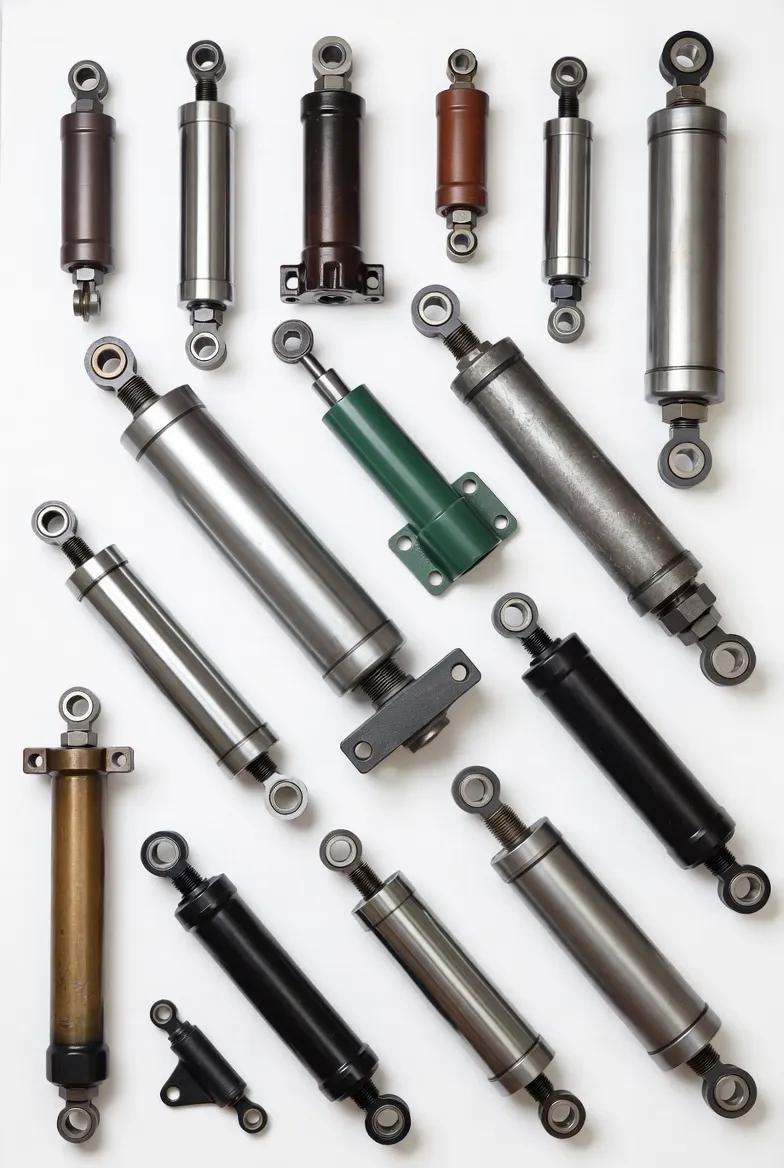
Overcoming the Engineering Challenges of Sensor Integration
While the benefits of predictive maintenance are mathematically undeniable, integrating delicate microelectronics into brutal industrial environments requires exceptional structural engineering. Manufacturers cannot simply strap a sensor to the outside of a cylinder barrel.
- ✔️
Deep Gun-Drilling the Piston Rod: To install a linear position transducer securely, the solid steel piston rod must be precision gun-drilled directly down its centerline. This creates a protective hollow cavity for the sensor probe. However, removing steel from the core alters the structural column strength of the rod. Engineers must recalculate the Euler buckling thresholds and often compensate by increasing the outer diameter of the rod or utilizing higher-yield 4140 chromoly alloys to maintain the original load rating.
- ✔️
Hardened Environmental Enclosures: The external connectors and digital transmitters must survive the same abrasive silica dust, torrential rain, and chemical washdowns as the steel barrel itself. Smart cylinders utilize IP69K rated stainless steel enclosures and specialized Mil-Spec locking cable connectors to ensure the digital telemetry signal is never interrupted by moisture or kinetic debris. For demanding applications like Agricultural Hydraulic Cylinders, these sensors must be shielded from highly corrosive liquid fertilizers and relentless mud impacts.


Conclusion: The Future of Flawless Actuation
The rise of smart hydraulic cylinders represents the most significant paradigm shift in fluid power engineering since the invention of the polyurethane seal. By seamlessly integrating advanced IoT sensors, linear position transducers, and thermodynamic monitors into indestructible forged steel pressure vessels, manufacturers have successfully given a digital brain to the world’s most powerful mechanical muscles. This technological fusion eradicates the chaos of reactive maintenance, empowering fleet managers to utilize highly precise, data-driven algorithms for predictive maintenance scheduling. By identifying microscopic internal fluid bypass, dangerous pressure spikes, and lateral side loading friction long before catastrophic structural failure occurs, smart cylinders guarantee unparalleled machine uptime and operational safety. If you are designing next-generation heavy machinery or seeking to dramatically lower the total cost of ownership of your existing industrial fleet through sensor integration, our specialized engineering team stands ready to architect the ultimate intelligent fluid power solution.