
Fluid Power Reliability Engineering
Essential Maintenance Tips to Extend Your Hydraulic Cylinder Lifespan
An authoritative technical blueprint exploring fluid contamination control, mechanical alignment, dynamic seal preservation, and the advanced diagnostic protocols required to maximize fluid power actuator longevity.

Protecting the Backbone of Industrial Machinery
In the highly rigorous and capital intensive disciplines of commercial earthmoving, deep underground mining, automated manufacturing, and large scale agricultural harvesting, fluid power systems are the undisputed driving force behind kinetic motion. Hydraulic cylinders are spectacular feats of metallurgical engineering, transforming the immense hydrostatic pressure of synthetic fluid into perfectly controlled linear force. These robust steel pressure vessels are expected to perform flawlessly under some of the most punishing environmental conditions on the planet. However, despite their massive forged steel barrels and hardened chrome piston rods, these actuators are not invincible. Without a relentless commitment to proactive care, they will rapidly degrade. Understanding the essential maintenance tips to extend your hydraulic cylinder lifespan is the absolute most critical skill required to prevent catastrophic machine downtime and preserve your operational profitability. To review the highest industry standards for fluid power components, visiting our premium hydraulic cylinders platform provides an excellent engineering baseline.
A hydraulic cylinder does not possess an arbitrary expiration date stamped onto its steel housing. Its ultimate longevity is entirely dictated by the harshness of its operational environment and the rigidity of the preventative maintenance protocols deployed to protect it. When fleet managers adopt a reactive “run to failure” methodology ignoring the system until fluid violently sprays across the job site they guarantee massive financial losses. A catastrophic seal blowout or a severely bent piston rod necessitates removing the machine from production, extracting the heavy actuator, and executing highly expensive metallurgical repairs. Conversely, world class engineering facilities operate on predictive schedules. They understand that preserving the microscopic tolerances within the cylinder is the only way to achieve thousands of hours of uninterrupted service.
From a highly authoritative engineering perspective evaluated against international fluid power standards, a comprehensive maintenance strategy must address multiple mechanical and chemical vectors simultaneously. You must relentlessly battle abrasive particulate contamination, eliminate severe geometric misalignment, strictly control thermodynamic fluid temperatures, and routinely inspect the dynamic sealing architecture. This comprehensive technical guide will meticulously dissect the core methodologies required to safeguard your fluid power investment, providing actionable, step by step instructions to dramatically increase actuator durability across any industrial application.
Vector 1: Absolute Fluid Purity and Contamination Control
The absolute deadliest enemy of any fluid power system is microscopic particulate contamination. Maintaining pristine hydraulic oil is the foundational requirement for extending the life of your equipment.
The Liquid Sandpaper Effect
If silica dust, rust flakes, or tiny metal shavings enter the hydraulic fluid, they are pumped directly into the cylinder chambers at high velocity. These microscopic particles embed themselves into the soft polyurethane piston seals. Once embedded, the seal transforms into a piece of high speed liquid sandpaper. With every extension and retraction cycle, this grit aggressively grinds against the highly polished interior wall of the steel barrel. This carves deep longitudinal scratches into the metal, a process known as scoring. Once the barrel is scored, fluid will bypass the seals indefinitely. Strict filtration prevents this completely.
ISO Cleanliness Monitoring
You cannot judge fluid cleanliness with the naked eye. Particles that destroy hydraulic cylinders are often smaller than ten microns roughly the size of a single human red blood cell. Maintenance professionals must utilize precise laboratory fluid sampling to monitor ISO cleanliness codes. Implement high efficiency return line filters and utilize dedicated kidney loop filtration carts to continuously scrub the oil reservoir. Replacing your main hydraulic filters strictly according to the OEM hourly guidelines is the cheapest and most effective insurance policy you can buy for your actuators.

Vector 2: Eliminating Lateral Side Loading
Hydraulic cylinders are precision instruments designed strictly to exert perfectly linear, centerline force. They possess virtually zero structural tolerance for perpendicular or lateral stress. This destructive lateral force is known throughout the industry as side loading.
The Mechanics of Mechanical Binding
If the mounting brackets on the heavy machinery frame are welded at even a slight angle, or if the main pivot pins have become heavily worn and sloppy, the extending cylinder rod will be forced to travel at a diagonal trajectory relative to the payload. This induces extreme bending moments. The rigid steel piston rod is aggressively forced to grind against one side of the internal brass bearing guides inside the head gland. Over time, this massive lateral friction visibly scores the chrome rod, crushes the wiper seal on one side, and can literally snap the rod in half due to extreme metallurgical fatigue.
To prevent this, maintenance routines must include strict geometric alignment checks. Utilize dial indicators to ensure perfectly parallel mounting. For applications like Forklift Hydraulic Cylinders, the mast rails must be heavily lubricated and perfectly aligned so the cylinder only provides vertical lift, rather than fighting against a binding carriage chassis.
Upgrading to Spherical Bearings
If the heavy machine chassis naturally flexes during operation such as an articulated loader driving over deeply rutted terrain a standard rigid clevis mount will bind. Upgrading the mounting points to spherical bearing rod eyes allows the cylinder to slightly tilt and articulate in multiple dimensions. This advanced ball and socket geometry effortlessly absorbs severe structural misalignment and chassis flex without transmitting destructive lateral side loads into the delicate internal cylinder seals, drastically extending the life of the actuator.

Vector 3: Guarding the Chrome Piston Rod
The piston rod is the most vulnerable component of the entire fluid power system because it is routinely thrust out of its protective steel housing into highly abrasive, hostile environments.
Physical Shrouds and Bellows
If a cylinder is operating in an environment where falling rocks or heavy debris are common, the bare rod will be struck and dented. A dent instantly shatters the brittle chrome plating. To prevent this, maintenance teams should install heavy duty Kevlar bellows or rigid steel shrouds over the extended rod. These physical barriers absorb kinetic impacts and block abrasive concrete dust or molten slag from ever reaching the highly polished chrome surface, effectively creating a clean micro environment for the actuator to breathe.
Aggressive Wiper Seal Maintenance
The external wiper seal located at the front of the head gland is your first line of defense. Its sole purpose is to scrape dirt and moisture off the retracting rod. These polyurethane lips wear out over time. If they become brittle, they allow mud to pass. Inspect wiper seals weekly. In extreme winter operations or heavy asphalt paving, standard rubber will fail. Heavy equipment like Excavator Hydraulic Cylinders must be fitted with precision machined brass scraper rings to violently shear off thick ice and hardened tar before it can destroy the primary pressure seals inside the gland.
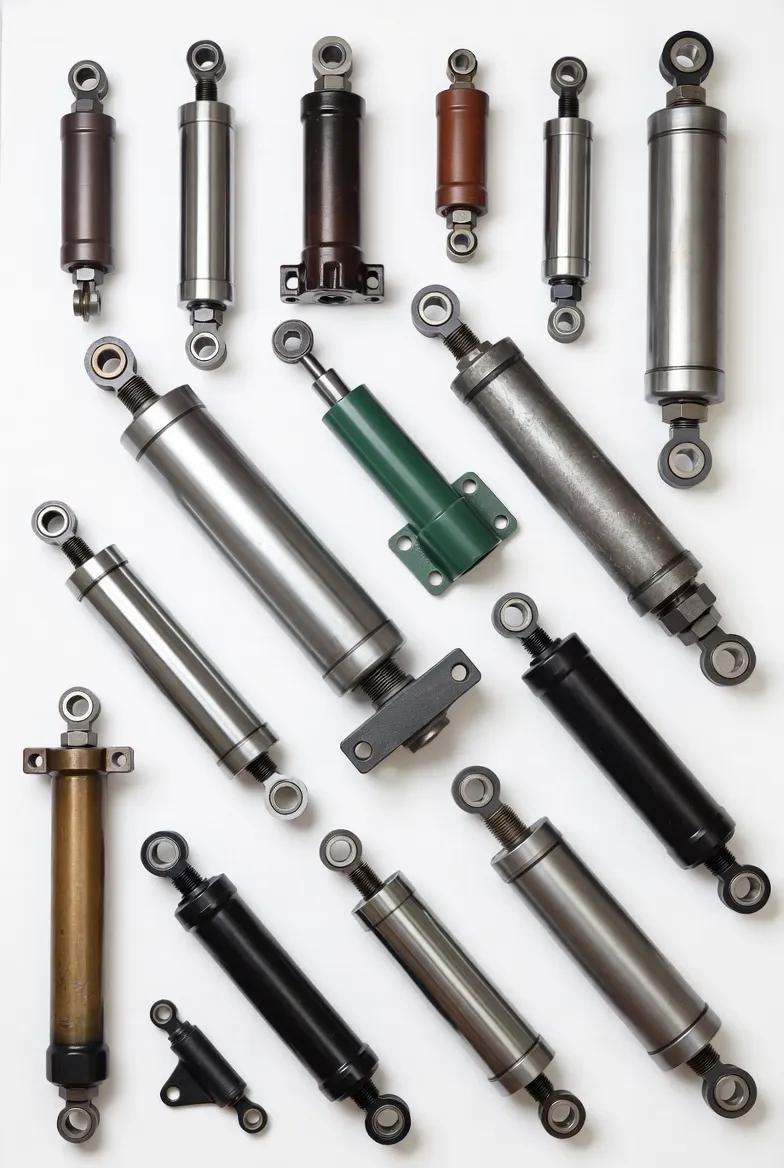
Vector 4: Managing Thermodynamic Equilibrium
A properly functioning hydraulic system is designed to operate within a very specific thermal equilibrium. Heat is the natural byproduct of fluid friction, but uncontrolled heat will rapidly destroy your actuator.
- ✔️
Preventing Polymer Baking: Prolonged exposure to fluid temperatures exceeding one hundred eighty degrees Fahrenheit will rapidly bake the synthetic polyurethane rod and piston seals. The material loses its crucial elasticity, becoming hard, brittle, and highly prone to cracking. A brittle seal cannot expand to maintain contact with the dynamic steel surfaces, allowing massive fluid bypass. Ensure your main heat exchangers radiators are blown clean of debris daily and the electric cooling fans are fully operational.
- ✔️
Avoiding the Diesel Effect: If the hydraulic pump ingests atmospheric air through a suction leak, the fluid becomes highly aerated. When this spongy fluid is pumped into the cylinder and subjected to thousands of PSI, the trapped air bubbles undergo massive thermodynamic compression. The internal temperature of these microscopic bubbles spikes to over two thousand degrees, literally igniting the oil vapor in a micro-explosion. This diesel effect scorches the barrel and instantly melts the seals. Bleed your system regularly to ensure zero trapped air remains in the circuit. This is particularly crucial for Agricultural Hydraulic Cylinders operating varying attachments across long hose runs.

Vector 5: Lubrication of Mechanical Pivot Joints
The longevity of a cylinder is intrinsically linked to how freely it can move within its chassis mounting brackets. If the actuator cannot pivot naturally, it will tear itself apart geometrically.
Cylinders that drive sweeping radial arcs rely on heavy duty clevis pins or trunnion mounts. These pivot points endure tens of thousands of pounds of crushing force while simultaneously rotating. The friction generated at this joint is astronomical. To prevent the steel pins from galling fusing together through friction against the steel saddles, the joint must be aggressively and continuously lubricated. High quality installations feature integrated grease zerks. Maintenance technicians must pump extreme pressure molybdenum grease into these fittings on a strict weekly schedule. If neglected, the sheer rotational friction will seize the pin solid. A seized pin forces the extending rod to bend in half to accommodate the mechanical movement. For massive equipment like Dump Truck Hydraulic Cylinders, a seized trunnion pin will rip the entire mount right off the chassis.

Vector 6: Storage and Inactivity Protocols
Ironically, a hydraulic cylinder can degrade faster sitting idle than it does working on a job site. If a machine is parked outdoors for the winter, the exposed chrome rods are highly susceptible to oxidation. Even the best hard chrome has microscopic pores.
Whenever possible, park the machinery with all hydraulic cylinders fully retracted. Retracting the cylinder draws the polished rod entirely back inside the oil filled steel barrel, perfectly isolating it from atmospheric moisture and corrosive salt spray. If the machine kinematics require the cylinder to remain extended during storage, maintenance teams must coat the exposed chrome heavily in industrial cosmoline or high-adhesion marine grease to create an impenetrable chemical barrier against rust. This is a mandatory practice for fleet managers storing Aerial Work Vehicle Hydraulic Cylinders outdoors during off seasons.
Conclusion: Dictating Your Own Durability
Executing essential maintenance tips to extend your hydraulic cylinder lifespan is the ultimate differentiator between highly profitable industrial operations and crippling, reactive repair bills. The longevity of your fluid power system is entirely malleable. By rigorously defending the system against abrasive particulate contamination, fiercely eliminating the geometric misalignment that causes lethal side loading, relentlessly lubricating mechanical pivot joints, and protecting the thermodynamic equilibrium of the fluid, engineering professionals can push the boundaries of mechanical endurance. Proactive maintenance transforms unpredictable catastrophic breakdowns into routine, highly manageable tasks, ensuring your heavy machinery continues to deliver uncompromising kinetic force for years to come.