
Advanced Fluid Power Diagnostics
Hydraulic Cylinder Troubleshooting: Recognizing and Fixing Common Failures
An authoritative engineering blueprint detailing empirical diagnostic methodologies, structural failure analysis, thermodynamic anomalies, and the precise maintenance protocols required to restore hydrostatic integrity to your heavy machinery.

The Operational Imperative of Rapid Diagnostics
In the unforgiving and highly capital intensive disciplines of commercial earthmoving, automated manufacturing, subsea dredging, and large scale agricultural production, fluid power systems are the absolute lifeblood of productivity. Hydraulic cylinders represent the physical muscles of these immense machines, converting the hydrostatic pressure of synthetic fluid into perfectly calibrated linear kinetic energy. However, these complex pressure vessels operate in the most hostile thermodynamic and physical environments imaginable. When a cylinder begins to fail, it rarely does so in silence. It communicates its distress through specific operational anomalies. Recognizing these symptoms early and executing precise diagnostic troubleshooting is the fundamental barrier between a minor maintenance adjustment and a catastrophic, lethal mechanical failure. To explore the absolute highest industry standards for fluid power components, visiting our premium hydraulic cylinders platform provides an essential engineering baseline.
Troubleshooting a hydraulic cylinder is a process of empirical deduction. Maintenance engineers cannot simply guess at the root cause of a failure; doing so results in massive financial waste, repetitive breakdowns, and extended machine downtime. Whether an actuator is suffering from slow operational velocity, uncontrolled payload drift, violent shuddering during extension, or massive external fluid hemorrhaging, the symptoms are invariably tied to the laws of physics. Understanding the complex interplay between polymer sealing architecture, metallurgical stress, and fluid dynamics is essential. By isolating the actuator from the broader hydraulic circuit and conducting targeted pressure testing, technicians can accurately pinpoint whether the failure lies within the physical steel geometry, the elastomeric boundaries, or the chemical composition of the fluid itself.
?️ CORE ENGINEERING PRINCIPLE
Effective troubleshooting demands a separation of symptoms from root causes. A blown rod seal is a symptom; the severe lateral side loading causing the rod to crush that seal is the root cause. Fixing the symptom without addressing the underlying kinematic failure guarantees a catastrophic recurrence.
Decoding the Symptoms: Visual and Kinematic Anomalies
Uncontrolled Cylinder Drift
When an operator places the directional control valve in neutral, the cylinder should lock rigidly in place. If the payload slowly drops or retracts under its own weight, the system is suffering from cylinder drift. This indicates that high pressure fluid is bypassing the internal piston seals or bleeding backward through a worn directional spool valve. In critical safety applications like Aerial Work Vehicle Hydraulic Cylinders, even microscopic drift is a severe safety hazard requiring immediate diagnostic isolation.
Shuddering and Stick-Slip Motion
A healthy actuator moves with perfectly smooth, linear velocity. If the cylinder visibly shudders, groans, or jerks violently during extension, it is experiencing a phenomenon known as “stick-slip.” This is almost universally caused by excessive mechanical friction due to severe lateral side loading, a bent piston rod, or massive air aeration within the hydraulic fluid. For precision material handling equipment, such as Forklift Hydraulic Cylinders, stick-slip motion destroys payload stability and requires immediate structural realignment.
Localized Thermal Hot Spots
Excessive heat is the ultimate enemy of fluid power. If an infrared thermal camera detects a glaring hot spot directly over the piston location on the barrel, it definitively confirms internal fluid bypass. The friction of the high pressure synthetic oil violently squeezing through a tiny clearance gap generates immense thermodynamic heat, which rapidly bakes and destroys the surrounding polyurethane seals, accelerating the catastrophic failure loop.

Polymer Devastation: The Anatomy of Seal Failure
Elastomeric seals are the absolute hydrostatic boundary of the machine. When they fail, the actuator is paralyzed. Understanding why seals fail requires examining the fluid chemistry and the microscopic physical environment inside the pressure vessel.
- Particulate Abrasion: If abrasive silica dust bypasses the external wiper seal, it embeds into the soft polyurethane piston seals. This transforms the seal into liquid sandpaper, aggressively scoring the mirror-finished steel barrel and creating permanent channels for fluid to bypass.
- Chemical Hydrolysis: When standard polyurethane is exposed to water contamination at elevated temperatures, the water molecules break down the polymer chains. The seals revert to a mushy, gel-like state and instantly extrude out of their grooves under pressure.
- Thermal Embrittlement: Prolonged exposure to fluid temperatures exceeding the maximum rating of the polymer (e.g., above 250 degrees Fahrenheit for standard Nitrile) causes the rubber to bake, harden, and crack, completely losing its vital elasticity.
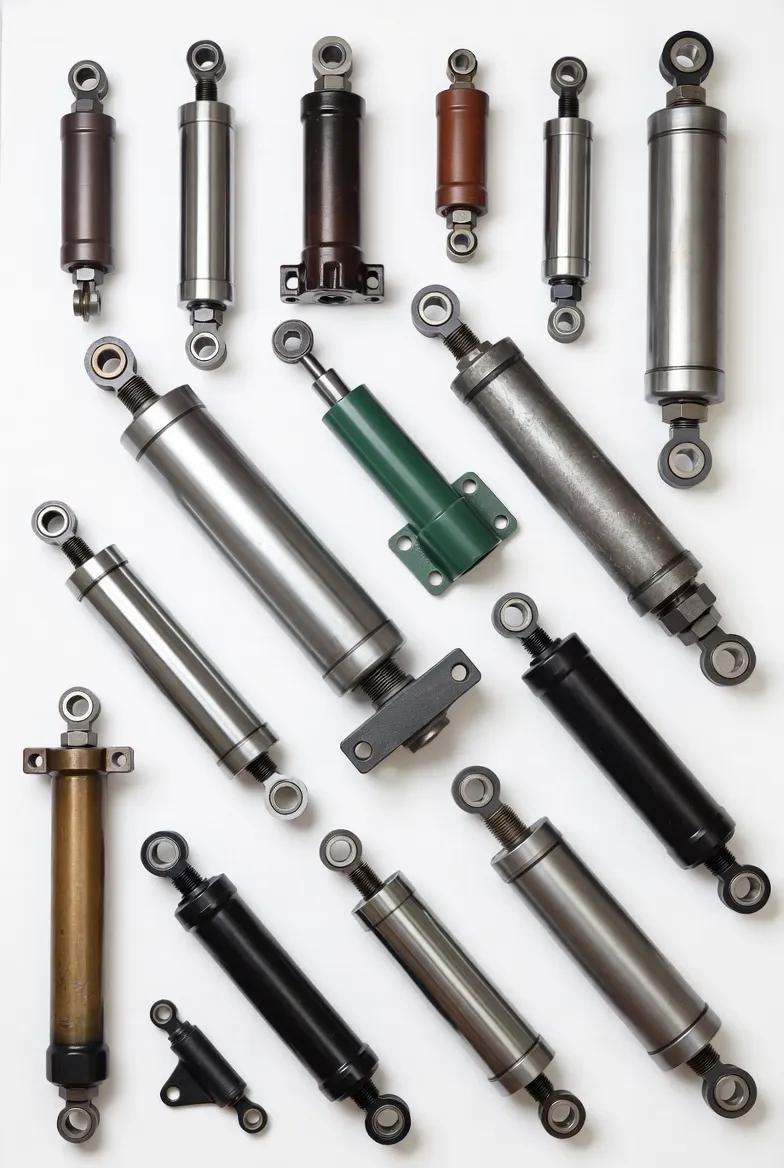
For heavy duty machinery operating in intensely hostile environments, such as Dump Truck Hydraulic Cylinders hauling abrasive aggregate, specifying extreme-duty brass scraper seals and high-temperature Viton O-rings is mandatory to extend the operational lifecycle of the fluid boundary.
Structural Demise: Buckling and Plastic Deformation
Beyond seal failures, the physical steel structure of the cylinder is susceptible to catastrophic destruction if subjected to forces exceeding its metallurgical yield strength. These failures are highly dangerous and often require total component replacement.
Euler Column Buckling
When a hydraulic cylinder extends to push a massive payload, the chrome rod acts as a slender column under extreme compressive stress. The mathematics of Euler Buckling dictate exactly how much force a shaft can withstand before it loses structural stability. If a cylinder with a long stroke is commanded to push an immovable object at maximum hydraulic pressure, the immense compressive force will rapidly exceed the Euler limit. The steel will yield, bowing outward violently until it permanently deforms. Once a rod is bent, the hard chrome plating shatters into jagged flakes, destroying the seals instantly.
Barrel Ballooning
If a cylinder is subjected to an extreme, sudden kinetic shock load (e.g., an excavator bucket slamming into solid granite), the internal hydrostatic pressure can instantaneously spike well beyond the maximum rating of the pressure relief valves. This astronomical pressure surge causes the steel barrel to undergo plastic deformation, expanding radially outward like a balloon. In this bloated section, the internal piston seals can no longer physically span the expanded gap, causing an instant, total loss of load holding capacity. Excavator Hydraulic Cylinders must utilize immensely thick barrel walls to combat this exact phenomenon.

Thermodynamic Explosions: The Micro-Diesel Effect
Not all damage is mechanical. The very fluid powering the system can turn into an explosive hazard if the hydraulic circuit is heavily contaminated with atmospheric air.
Aeration and Cavitation
Air typically enters the system through a microscopic vacuum leak on the pump suction line. When highly aerated, spongy fluid is pumped into the cylinder and subjected to massive hydrostatic compression, the trapped air bubbles undergo massive thermodynamic contraction. The internal temperature of these microscopic bubbles spikes to over two thousand degrees Fahrenheit, literally igniting the oil vapor in a micro-explosion. This “diesel effect” scorches the barrel, creates black carbon soot, and instantly melts the synthetic piston seals.

Executing Predictive Maintenance and Diagnostics
The ultimate goal of fluid power engineering is to transition from reactive repairs to intelligent, predictive maintenance. Catching failures before they result in catastrophic downtime requires rigorous procedural discipline.
- ✔️
The Port Blocking Test: Do not guess whether a directional control valve or the cylinder is to blame for payload drift. Physically disconnect the hydraulic lines from the cylinder and install high-pressure steel caps. If the suspended load continues to drop, you have definitively proven that fluid is bypassing the internal piston seals. If the load holds rigid, the control valve spool is hemorrhaging fluid.
- ✔️
Kinematic Alignment Verification: To prevent severe side loading, technicians must continuously utilize dial indicators to check the parallelism of the mounting brackets. Replace any worn spherical bearings or sloppy pivot pins in the machine linkage immediately. For rigid applications like Agricultural Hydraulic Cylinders driving planar equipment, absolute geometrical alignment preserves the life of the actuator.
- ✔️
Absolute Fluid Purity: Enforce rigorous ISO fluid cleanliness standards. Regularly deploy kidney loop filtration carts to scrub the oil of microscopic silica dust and water emulsification before it can destroy the internal components.

Conclusion: Mastering Fluid Power Reliability
Effective hydraulic cylinder troubleshooting is not a guessing game; it is a rigid, data-driven engineering protocol. By executing ruthless diagnostic isolations to pinpoint the exact failure vector, identifying the mechanical root causes of severe lateral side loading, and relentlessly maintaining the absolute thermodynamic purity of the hydraulic fluid, fleet managers can eradicate catastrophic machine failure. Transforming your maintenance strategy from reactive repairs to intelligent, predictive diagnostics ensures your heavy machinery performs with absolute, unyielding, and safe kinetic force. If your fleet is suffering from repeated structural failures, severe seal degradation, or complex hydrostatic anomalies, our specialized engineering team stands ready to deliver the ultimate diagnostic solution and provide access to world-class replacement actuators.