
Logistics and Commercial Transport Hydraulics
Tail Lift Cylinders: Revolutionizing Freight and Logistics Vehicles
An authoritative engineering analysis of hydraulic lifting and tilting mechanisms, payload distribution, and fluid power dynamics in the modern commercial transport sector.

The Backbone of Modern Supply Chain Efficiency
In the fast-paced world of global logistics, retail distribution, and commercial freight, the ability to load and unload cargo swiftly and safely is the absolute cornerstone of operational profitability. The commercial trucking industry relies heavily on hydraulic tail lifts to bridge the gap between the vehicle cargo bed and the ground. At the very heart of these indispensable platforms are the tail lift cylinders. These highly specialized hydraulic actuators are engineered to perform flawlessly under immense stress, ensuring that multi-ton payloads can be elevated, lowered, and tilted with absolute precision.
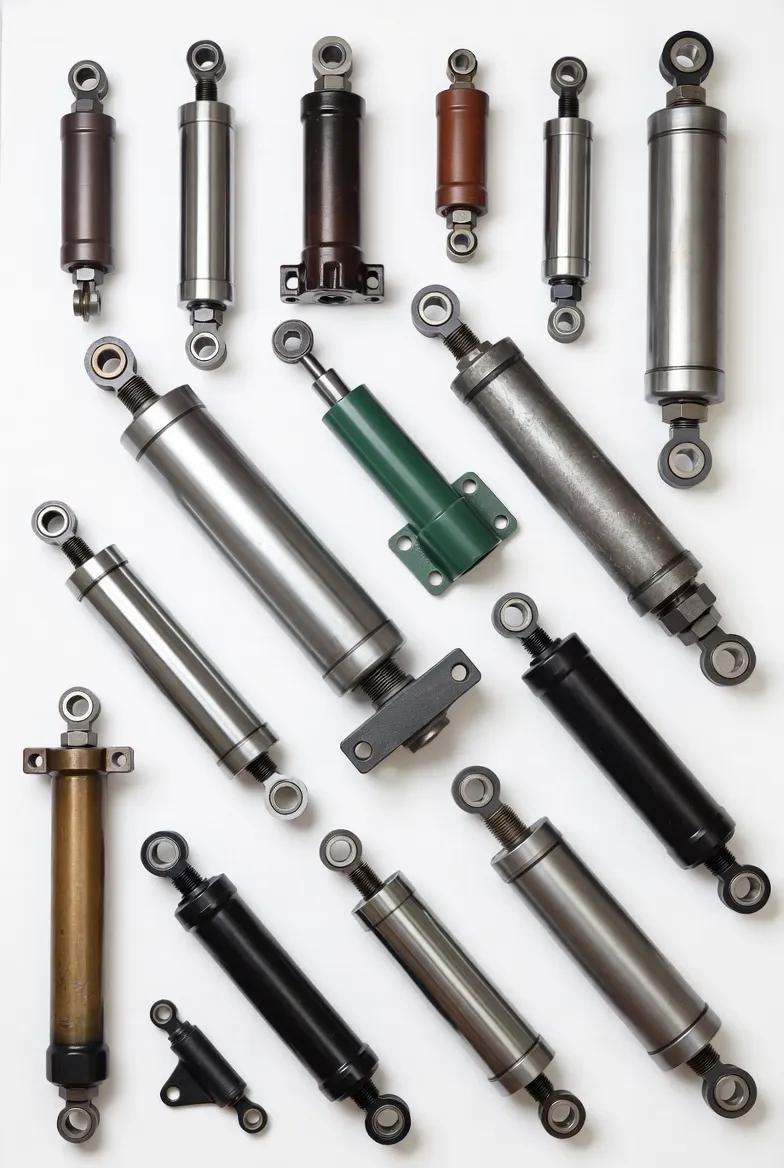
A standard commercial truck tail lift mechanism relies on a synchronized network of fluid power components. Unlike simple single-action pistons, the tailboard requires a complex choreography of movement. This involves two distinct types of actuators: the lifting cylinders, which provide the vertical hoisting power, and the tilting cylinders, which adjust the pitch and angle of the platform to match uneven terrain or loading docks. The integration of these hydraulic lifting and tilting cylinders transforms a standard logistics vehicle into an autonomous loading ecosystem, completely eliminating the need for external forklifts or loading bays at delivery sites.
Understanding the fluid dynamics, material science, and structural engineering behind heavy duty trailer hydraulic lifts is crucial for fleet managers and commercial vehicle designers. A failure in a tailboard cylinder is not merely a logistical delay; it represents a severe occupational hazard. This comprehensive engineering guide explores the intricacies of tail lift cylinders, detailing their design imperatives, safety protocols, and the maintenance strategies required to maintain peak fleet reliability.
Mechanical Architecture: Lifting Versus Tilting Dynamics
The operation of a heavy-duty tail lift is divided into two primary kinetic functions. Each function demands a specific cylinder design optimized for unique load vectors and fluid displacement requirements.
Primary Lifting Cylinders
These actuators bear the absolute weight of the cargo and the steel platform. Typically mounted vertically or at a steep angle within the lift armature, lifting cylinders are often single-acting. They use high-pressure hydraulic fluid to extend and raise the platform, while relying on the sheer gravity of the platform to retract and push the fluid back into the reservoir. They feature thick-walled barrels to prevent ballooning under extreme multi-ton loads.
Articulation and Tilting Cylinders
Tilting cylinders are almost exclusively double-acting. They require fluid pressure to both extend and retract, allowing the operator to actively pull the platform closed against the rear doors of the logistics vehicle, or tilt it downward to create a ramp. These cylinders experience intense sheer stress and side-loading, requiring highly reinforced trunnion mounts and heavy-duty spherical bearings at the pivot points.

Overcoming the Hostile Transport Environment
The operational environment for a commercial truck tail lift mechanism is arguably one of the most destructive in the fluid power industry. Positioned at the very rear of the vehicle, near the road surface, these cylinders are constantly bombarded by abrasive hazards. In winter months, they are coated in highly corrosive road salt and freezing slush. In summer, they endure extreme heat radiating from the asphalt, alongside constant spray of grit, mud, and highway debris.
To survive these brutal conditions and maintain the integrity of the hydraulic fluid dynamics in logistics vehicles, engineers utilize uncompromising material science. The longevity of a tailboard cylinder is directly proportional to its ability to repel contamination and resist chemical degradation over thousands of highway miles.
Advanced Metallurgy and Sealing Profiles
Premium tail lift cylinders feature piston rods crafted from high-yield alloy steel that undergoes deep induction hardening. This creates a core capable of handling severe impact without denting. Crucially, the exterior is treated with a thick layer of micro-cracked industrial hard chrome or advanced nitrocarburizing. This provides an armor-like defense against rust. Furthermore, aggressive polyurethane wiper seals act as mechanical scrapers. As the cylinder retracts, these heavy-duty wipers physically shear away dried mud and corrosive salt, preventing these destructive elements from breaching the internal pressure seals.

Mandatory Safety Engineering and Operator Protection
From an authoritative engineering standpoint, the most critical aspect of commercial transport fleet safety is preventing sudden equipment failure. A tail lift carrying heavy freight and a human operator possesses immense kinetic energy. Sudden depressurization can lead to fatal accidents.
Velocity Fuses and Parachute Valves
To entirely negate the risk of a platform free-fall, high-quality tail lift cylinders are equipped with internally integrated velocity fuses, commonly known as parachute valves. In the event that a high-pressure hydraulic hose is severed by road debris or sheer wear, the fluid attempts to exit the cylinder at an unnatural speed. The velocity fuse detects this sudden pressure drop and mechanically locks shut in a fraction of a second, safely freezing the platform in mid-air and protecting the operator.
Pressure Relief and Overload Protection
Logistics operators often face the temptation to overload the lifting platform. If the cylinders attempt to elevate a load that exceeds structural design limits, it can result in bent piston rods or torn chassis mounts. Integrated pressure relief valves in the hydraulic power pack automatically bypass fluid back to the reservoir if the lifting force exceeds safe operational thresholds, preventing operator-induced mechanical destruction.
Fleet Management: Maintenance Best Practices
The trustworthiness of a logistics network is defined by vehicle uptime. When a tail lift fails at a delivery site, the entire supply chain is disrupted. Preventative maintenance of tailboard cylinder maintenance is the most cost-effective strategy to avoid expensive roadside emergency repairs.
- ✔️
Visual Inspection Routines: Fleet mechanics must conduct strict visual checks of the hydraulic lifting and tilting cylinders. Any fluid weeping around the gland nut is an early warning sign of primary seal degradation. Furthermore, scoring lines on the chrome rod indicate that road grit has bypassed the wiper seal, requiring immediate intervention before the entire barrel is internally destroyed.
- ✔️
Fluid Quality Control: The hydraulic fluid is the lifeblood of the tail lift mechanism. Operating in high-humidity or extreme weather can lead to water condensation inside the reservoir. Milky or aerated (foamy) hydraulic fluid compromises lubricity and introduces compressibility into the system, causing the platform to bounce dangerously. Strict fluid replacement schedules must be adhered to.
- ✔️
Pivot Point Lubrication: The trunnion mounts and hinge pins bear extreme sheer forces. If these joints run dry, the resulting friction creates massive lateral binding forces against the cylinder rod. Consistent greasing of all zerk fittings ensures the cylinder extends smoothly without bending under off-center loads.

The Digital Transformation: Smart Hydraulics and IoT Integration
The future of logistics vehicle hydraulics is rapidly moving towards intelligent, data-driven architecture. The integration of the Industrial Internet of Things (IIoT) into heavy duty trailer hydraulic lifts is revolutionizing how fleet managers oversee their assets.
Next-generation tail lift cylinders are being equipped with embedded linear position sensors and pressure transducers. These smart sensors feed real-time telematics directly to the vehicle’s onboard computer and cloud-based fleet management dashboards. By analyzing the fluid pressure required to lift the platform, artificial intelligence algorithms can calculate the exact weight of the cargo, ensuring perfect payload distribution and preventing legal weight limit violations. Furthermore, predictive AI can detect minute increases in friction within the cylinder over time, alerting maintenance teams to replace degrading seals before a mid-route failure ever occurs. This leap from reactive repairs to intelligent predictive maintenance represents the pinnacle of modern transport efficiency.

Conclusion: Engineering the Future of Delivery
Tail lift cylinders are the undeniable driving force behind the speed and efficiency of modern commercial transport. By seamlessly integrating advanced metallurgical corrosion resistance, uncompromising safety mechanisms, and cutting-edge IoT smart technology, these hydraulic actuators ensure that freight logistics operate with maximum productivity and supreme operator safety. For fleet operators, trailer manufacturers, and logistics companies, investing in superior hydraulic lifting and tilting cylinders is a foundational strategy for securing a highly reliable, safe, and immensely profitable transport network in today’s competitive global market.