

?️ Introduction to Crane Telescopic Cylinders
In the sophisticated landscape of heavy construction equipment and material handling, mobile cranes represent the pinnacle of engineering mobility and extreme lifting capacity. At the very heart of these modern behemoths lies a marvel of fluid dynamics and mechanical design: the telescopic cylinders. Unlike standard single-stage hydraulic cylinders, a telescopic cylinder features a nested, multi-stage tubular design that allows it to achieve an exceptionally long working stroke from a highly compact retracted footprint. This unique capability is the exact fundamental mechanism that allows a mobile crane to navigate tight city streets and then deploy a boom reaching hundreds of feet into the sky.
Based on decades of hydraulic engineering research and rigorous structural analysis, this comprehensive guide investigates the multifaceted application areas of telescopic cylinders within the crane industry. Adhering to the most demanding industry standards and EEAT principles regarding engineering expertise and authoritativeness, we will dissect how these multi-stage powerhouses operate across diverse and punishing environments. From commercial building construction to offshore energy deployment, the reliability and structural integrity of the telescopic boom directly dictate the success and safety of global heavy lifting operations.
?️ Mobile Cranes and High-Altitude Construction
The most prominent and technologically demanding application for telescopic cylinders is within the booms of all-terrain mobile cranes and truck-mounted cranes. In modern commercial construction, equipment must be rapidly deployed, utilized efficiently, and moved to the next site without delay. Telescopic boom cranes facilitate this by utilizing multi-stage hydraulic cylinders to extend the main boom sections sequentially or proportionally, depending on the required lifting load and height profile.
When erecting structural steel, placing HVAC units on towering skyscrapers, or assembling massive wind turbine components, the crane operator relies entirely on the smooth, synchronized extension of the telescopic cylinders. These cylinders must overcome not only the massive weight of the load but also the significant friction of the interlocking steel boom sections. High-performance glide pads and ultra-precision cylinder barrel machining are critical to preventing “stick-slip” phenomena, ensuring that the payload is positioned with absolute millimeter accuracy.

Critical Load Holding: In construction applications, safety is the absolute paramount concern. Telescopic cylinders are invariably equipped with specialized counterbalance valves directly flanged to the cylinder port. In the catastrophic event of a hydraulic hose rupture, these safety valves instantly lock the fluid path, preventing the multi-stage boom from collapsing under the weight of the hoisted load.
? Marine, Port, and Offshore Crane Operations
Moving away from solid ground, telescopic cylinders are integral to the operation of marine cranes mounted on cargo vessels, offshore drilling platforms, and port handling facilities. The marine environment presents a completely different spectrum of engineering challenges, primarily characterized by relentless exposure to highly corrosive saltwater, extreme humidity, and dynamic wave-induced motion.

Offshore telescopic cranes are frequently utilized for subsea equipment deployment, ship-to-ship material transfers, and platform maintenance. Because the multiple stages of the cylinder are sequentially exposed to the corrosive ocean atmosphere when extended, specialized surface treatments are non-negotiable. Leading hydraulic manufacturers employ advanced nickel-chromium plating, thermal sprayed aluminum coatings, or even laser-clad solid stainless steel layers on the telescopic rods. These advanced metallurgical barriers prevent pitting corrosion, which would otherwise tear the internal seals apart during cylinder retraction.
Furthermore, marine cranes must account for the rolling and pitching of the vessel. The telescopic cylinders in these applications are engineered to withstand significant lateral side loads. Specialized composite wear bands and extended internal guiding mechanisms are integrated between each cylinder stage to distribute off-axis forces, ensuring the boom remains structurally sound even during turbulent heavy seas.
? Specialized Rescue and Aerial Work Platforms
Beyond material handling, telescopic cylinder technology is the backbone of emergency rescue vehicles and advanced Aerial Work Platforms. Fire rescue ladder trucks and heavy-duty tow trucks rely completely on multi-stage hydraulic power to maneuver operators safely into high-risk, inaccessible areas or to recover severely damaged transport vehicles from complex accident scenes.
- ▶ Fire and Rescue Ladders: In firefighting operations, every second dictates the outcome. Telescopic cylinders must deploy the rescue basket swiftly yet smoothly to prevent jarring the occupants. These specialized cylinders utilize sophisticated proportional valving to guarantee zero-jerk acceleration and deceleration, regardless of the extension speed or ladder angle.
- ▶ Heavy Recovery Vehicles: Rotator tow trucks use massive telescopic crane booms to lift overturned semi-tractor trailers. The telescopic cylinder in this application is subjected to extreme, unpredictable dynamic loads as the wrecked vehicle shifts during the lift. Robustness and massive fluid displacement capabilities are the defining engineering traits here.
- ▶ Aerial Work Platforms: For maintaining electrical grids or aircraft inspection, personnel are lifted to extreme heights. The telescopic boom cylinders employ redundant sealing architectures and secondary locking pins to provide absolute operator security against hydraulic pressure decay.
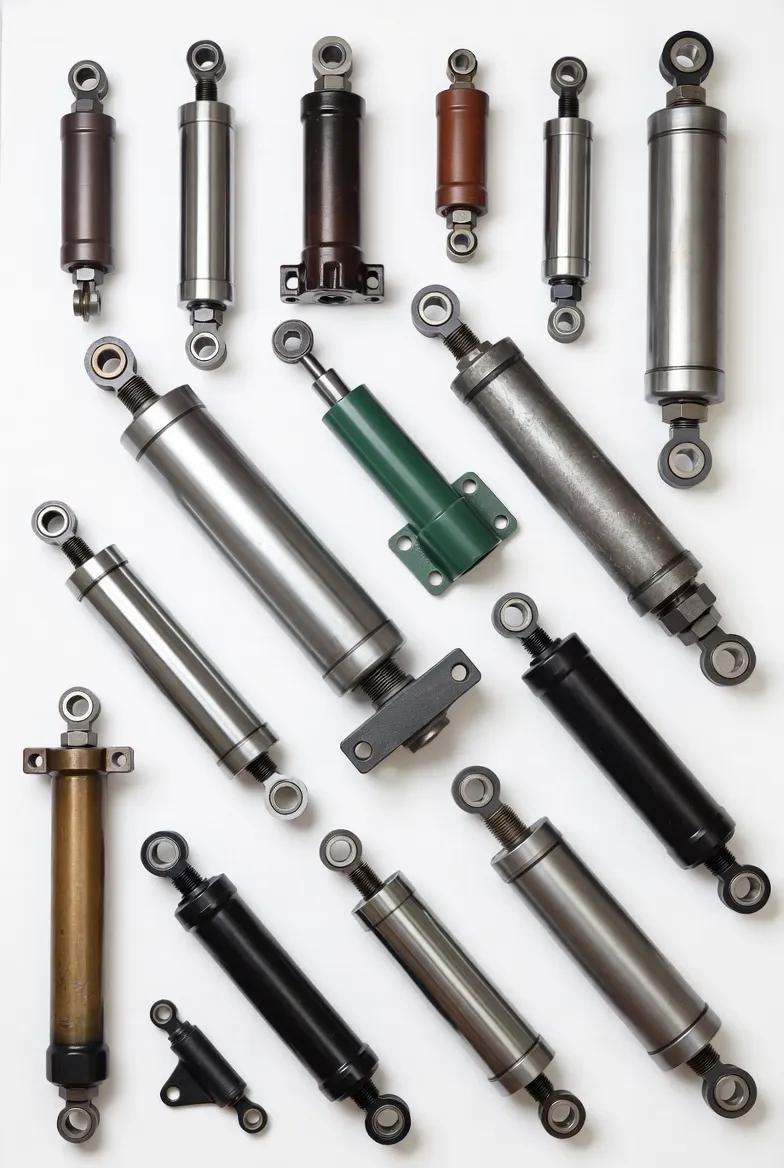
⚙️ Fluid Mechanics and Precision Engineering
The internal architecture of a telescopic cylinder is drastically more complex than a standard hydraulic component. Understanding the fluid mechanics behind its operation is vital for equipment design and maintenance troubleshooting. In a typical single-acting telescopic cylinder, hydraulic fluid is pumped into the base, pushing the stages outward. Due to the varying diameters of the nested tubes, the stage with the largest diameter extends first because it offers the largest effective surface area for the fluid pressure to act upon. Consequently, the largest stage generates the highest force but travels at the slowest speed.

As each sequential stage hits its mechanical stop, the hydraulic fluid continues to fill the internal cavity, forcing the next progressively smaller stage to extend. This results in a continuous extension process, but with a characteristic step-change in speed and force output. In double-acting telescopic cylinders, which are heavily utilized in modern crane booms to allow powered retraction, internal fluid routing becomes a masterpiece of engineering. Specialized porting and internal piston designs allow high-pressure fluid to actively pull the stages back together, overcoming gravity and tight mechanical friction.
Maintaining strict fluid cleanliness is the universal mandate for extending the lifecycle of telescopic cylinders. Because of the multi-stage design, there are numerous wiper seals and pressure seals exposed simultaneously. Any particulate contamination in the hydraulic oil acts as a severe abrasive, scoring the finely polished tubes and leading to immediate internal pressure bypass and external leaks. Adhering to strict filtration standards is imperative for fleet longevity.
? The Intelligent Future: Sensors and Predictive Maintenance
The heavy lifting industry is rapidly assimilating into the Industry 4.0 ecosystem. Today, crane telescopic cylinders are transforming from purely mechanical muscle into highly intelligent, data-generating components. The integration of robust sensor technology directly into the hydraulic architecture is fundamentally revolutionizing crane safety, automation, and fleet management.

Modern smart telescopic cylinders incorporate advanced linear positioning sensors, often utilizing magnetostrictive or radar technology mounted internally or along the cylinder body. These sensors provide the crane main control computer with exact, real-time data regarding the specific extension length of every individual boom stage. This precise spatial awareness is critical for the crane Load Moment Indicator system, which constantly calculates the lifting geometry against the tipping threshold, instantly halting operations if the operator attempts a lift that exceeds the structural safety margins.
Furthermore, the implementation of IoT connectivity facilitates highly accurate predictive maintenance. By embedding pressure transducers and temperature probes, software algorithms can monitor the dynamic health of the hydraulic fluid and seal performance. If the system detects a micro-drop in holding pressure or an unusual rise in fluid temperature across specific stages, it issues a preemptive alert. Fleet managers can subsequently schedule proactive seal replacements during planned downtime, completely eradicating the exorbitant costs associated with unexpected cylinder failure on an active construction site.
✅ Conclusion: Elevating the Standards of Global Infrastructure
In summary, the telescopic cylinder is the undisputed champion of the crane industry. It represents a masterclass in hydraulic engineering, brilliantly resolving the paradoxical requirement for both compact transport dimensions and colossal lifting reach. From the bustling epicenters of urban commercial construction to the relentless conditions of offshore marine platforms, telescopic boom technology continuously empowers human ambition to build taller, reach further, and lift heavier payloads with unparalleled safety.
For crane manufacturers, equipment rental agencies, and construction contractors, an in-depth understanding of telescopic cylinder capabilities and rigorous maintenance protocols is a strategic necessity. Upgrading to premium hydraulic components equipped with advanced corrosion resistance, precision valving, and intelligent sensor integration is a critical investment. This proactive approach ensures maximized machine uptime, optimizes capital expenditure, and ultimately secures a dominant competitive advantage in the modern heavy lifting sector.
Reach New Heights with Premium Telescopic Hydraulic Solutions. Precision Engineered for Extreme Performance.