

?️ Introduction: The Core of Boom Elevation
In the rigorous domain of heavy construction and large scale material handling, the ability to maneuver massive payloads with absolute precision is the ultimate operational goal. At the heart of a crane kinematic structure lies a highly specialized hydraulic component: the crane luffing cylinder. Often referred to in the engineering community as the boom elevation cylinder or derricking cylinder, this formidable hydraulic actuator is explicitly designed to alter the angle of the crane boom relative to the horizontal plane. By extending or retracting, the luffing cylinder directly controls the operating radius and the lifting height, dictating the entire spatial reach of the heavy machinery.
Relying on advanced fluid dynamics and robust metallurgical engineering, this comprehensive guide provides an authoritative analysis of the vast application areas of crane luffing cylinders. Adhering strictly to Google SEO optimization strategies focusing on Experience, Expertise, Authoritativeness, and Trustworthiness, we will dissect how these heavy duty hydraulic actuators operate across extreme environments. From towering commercial skyscraper developments to turbulent offshore oil platforms, the structural integrity and precise actuation of the luffing cylinder are non negotiable elements that guarantee operational efficiency and workforce safety.
?️ Mobile Cranes and All Terrain Lifting Operations
One of the most demanding applications for luffing hydraulic cylinders is found within the architecture of mobile cranes, including rough terrain and all terrain cranes. These highly versatile machines are dispatched to urban construction zones, bridge building sites, and rapid response industrial accidents. The boom elevation cylinder on a mobile crane must possess the capability to raise a massive telescopic boom, often loaded with heavy counterweights and the payload itself, from a horizontal travel position to a near vertical lifting angle.
- ▶ Massive Thrust Requirements: Because the luffing cylinder is typically mounted near the pivot point of the boom, the mechanical disadvantage means the cylinder must generate thrust forces exponentially greater than the actual weight of the load being lifted. Heavy duty luffing cylinders are engineered with exceptionally large bore diameters to translate fluid pressure into hundreds of tons of linear force.
- ▶ Dynamic Load Management: During operations such as placing precast concrete girders, wind gusts and load swinging create severe dynamic stress. The luffing hydraulic actuator must absorb these shock loads without transferring destructive vibrations to the crane chassis.

In mobile applications, the safety protocols governing the luffing mechanism are absolute. Every luffing cylinder is equipped with integrated counterbalance valves directly flanged to the cylinder ports. In the unlikely event of a main hydraulic line rupture, these critical safety valves instantaneously close, locking the pressurized hydraulic oil inside the barrel and preventing the boom from entering a catastrophic free fall state.
?️ Urban Skyscrapers and Luffing Jib Tower Cranes
As global urbanization accelerates, construction sites in major metropolitan areas are becoming increasingly constrained. Traditional hammerhead tower cranes, which require a massive horizontal clearance for their jibs to swing, are often unsuitable for crowded downtown projects due to airspace restrictions and overlapping crane zones. This spatial limitation has led to the widespread adoption of luffing jib tower cranes.

The defining characteristic of a luffing jib tower crane is its ability to raise its jib to an almost vertical position, allowing it to operate within an exceptionally tight slewing radius. The heavy duty luffing cylinder for tower crane applications is the primary driver of this motion. Unlike mobile cranes, tower crane luffing cylinders must operate continuously for extended shifts at extreme altitudes. They are subjected to relentless duty cycles and massive tension forces.
To guarantee unwavering reliability at hundreds of feet in the air, these specialized luffing actuators utilize premium forged steel components and advanced multi stage sealing configurations. The internal guide rings and bearing materials are selected for their ultra low friction coefficients, ensuring that the boom elevation remains incredibly smooth, which is critical when placing delicate structural glass panels or maneuvering heavy steel beams around tight architectural corners.
? Marine Cranes and Offshore Operations
Transitioning from dry land to the unpredictable maritime environment introduces an entirely new spectrum of extreme engineering challenges. Marine deck cranes, offshore pedestal cranes, and subsea lifting equipment depend heavily on the marine crane luffing hydraulic cylinder. In these applications, the luffing cylinder must not only elevate massive cargo containers and drilling equipment but also compensate for the continuous pitching and rolling of the vessel.
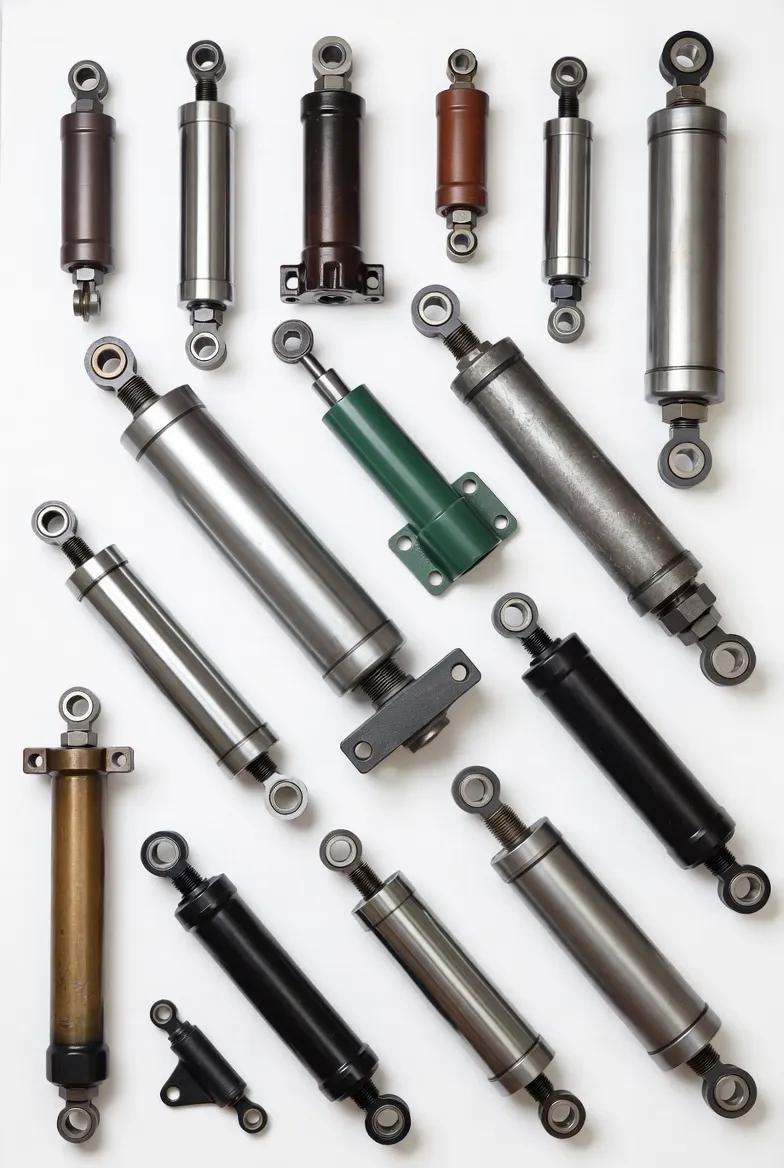
The marine atmosphere is highly corrosive. Saltwater spray, relentless humidity, and drastic temperature fluctuations will rapidly destroy standard hydraulic components. Therefore, offshore luffing cylinders undergo rigorous anti corrosion surface treatments. The exposed piston rods are typically coated using advanced technologies such as laser cladding, thermal sprayed aluminum, or dual layer nickel chromium plating. These metallurgical barriers provide exceptional resistance against chloride induced pitting, ensuring that the critical seals are not torn by a rusted rod during retraction.
Active Heave Compensation (AHC)
In advanced offshore lifting operations, luffing cylinders are integrated into Active Heave Compensation systems. By utilizing real time motion sensors, the crane control system commands the luffing cylinder to rapidly extend and retract, actively counteracting the vertical movement of the ship induced by ocean waves. This allows the suspended payload to remain perfectly stationary relative to the seabed, enabling safe subsea installations even in severe weather conditions.
⚙️ Advanced Engineering and Precision Manufacturing
The reliable performance of a boom elevation cylinder is not coincidental; it is the direct result of meticulous precision engineering and strict quality control protocols. Because a luffing cylinder serves as the critical structural link between the crane superstructure and the boom, any mechanical failure could lead to catastrophic consequences.
- ▶ Spherical Bearing Integration: At both the rod end and the base end of the luffing cylinder, heavy duty spherical plain bearings are utilized. These articulating joints accommodate the micro deflections and lateral bending forces that occur in the crane boom during lifting, preventing destructive side loads from scoring the internal cylinder walls.
- ▶ Advanced Sealing Tribology: The internal seals of a luffing actuator must contain extreme hydraulic pressures while operating under highly variable temperature ranges. Premium polyurethane and PTFE composite seals are deployed to ensure zero internal fluid bypass. This guarantees that when the crane operator halts the boom mid air, the luffing cylinder holds its position with zero drift.

? Smart Sensors and Predictive Maintenance
The future of crane hydraulics is intrinsically linked to the digital revolution of Industry 4.0. Today, the traditional luffing cylinder is evolving from a purely mechanical power component into a highly intelligent, data gathering IoT node. The integration of advanced sensor technology directly within the hydraulic architecture is fundamentally transforming crane safety parameters and fleet management strategies.

Modern smart luffing cylinders incorporate sophisticated linear displacement transducers, such as magnetostrictive sensors embedded within the cylinder rod. These sensors provide the crane Load Moment Indicator computer with continuous, millimeter accurate data regarding the exact extension length of the boom. This precise geometrical awareness allows the crane control unit to dynamically calculate lifting capacities in real time, actively preventing the operator from initiating maneuvers that could exceed the structural tipping threshold.
Furthermore, the integration of smart sensors facilitates highly accurate predictive maintenance for hydraulic cylinders. By continuously monitoring pressure fluctuations, fluid temperature variances, and microscopic leakage signatures, artificial intelligence algorithms can accurately forecast the degradation curve of internal seals. Fleet managers receive automated alerts detailing the health status of the luffing cylinder, allowing them to schedule proactive maintenance during planned downtime. This predictive approach completely eliminates the exorbitant financial losses and safety hazards associated with unexpected hydraulic failures on an active job site.
? Conclusion: Elevating Heavy Industry Standards
In summary, the crane luffing cylinder is the undisputed champion of boom elevation and spatial reach in the heavy lifting industry. It represents a masterclass in fluid power engineering, seamlessly bridging the gap between immense mechanical forces and precision load placement. From the crowded construction sites of modern metropolises utilizing agile tower cranes to the punishing environments of offshore marine platforms, luffing cylinders continuously empower human ambition to build taller and lift heavier payloads with unparalleled safety.
For construction contractors, crane manufacturers, and equipment rental agencies, establishing a profound understanding of luffing cylinder capabilities and adhering to stringent maintenance protocols is a strategic imperative. Upgrading to premium hydraulic actuators engineered with advanced corrosion protection, robust counterbalance valving, and intelligent sensor integration is a critical operational investment. This proactive methodology ensures maximized machine uptime, optimizes capital expenditure, and solidifies a dominant competitive advantage in the global heavy machinery sector.
Master Core Hydraulic Technology. Elevate Your Engineering Capabilities. Ensure Absolute Safety in Every Lift.