

Global waste management is facing an unprecedented challenge: the sustainable handling of astronomical volumes of refuse. In this critical logistical battle, hydraulic baler cylinders stand as unsung heroes, providing the literal muscle behind modern compaction and recycling technology. Whether it’s managing agricultural waste, municipal solid waste (MSW), industrial scrap, or standard corrugated cardboard for recycling, the baler cylinder application is the cornerstone of efficient volume reduction.
Compaction balers are designed to compress loose material into dense, manageable, and stackable bales. This transformation is not merely about space-saving; it is the linchpin that enables economically viable transportation, facilitates downstream recycling processes, and minimizes landfill footprint. The performance, reliability, and sheer force generated by these heavy-duty refuse baler cylinders directly dictate the efficiency and profitability of any waste processing facility.
This comprehensive guide provides an authoritative engineering analysis of baler cylinders for waste management, exploring their diverse application areas, critical design principles for extreme durability, maintenance imperatives for longevity, and the emerging trends that define this essential sector of modern environmental engineering. Based on decades of fluid power expertise, we examine why these actuators must operate at the pinnacle of efficiency.
Economic Viability
High-density baling enables cost-effective logistics by drastically reducing transportation volume, turning waste into a manageable commodity.
Recycling Prowess
Efficient hydraulic compaction processes are required to prepare recyclable materials like plastics, metal scraps, and cardboard for resale and reuse.
Engineering Analysis: How Baler Cylinders Work
At its core, a hydraulic packaging baler cylinder operates on Pascal’s principle: pressure applied to a confined fluid is transmitted undiminished in all directions. In a standard horizontal or vertical baler, a large hydraulic pump pushes hydraulic fluid into the cylinder’s base. This fluid acts against the piston, generating immense linear force through the piston rod, which is attached to a platen (press ram). This platen is what physically compacts the refuse against a fixed wall or door.
The sheer scale of force required for refuse compaction is significant. For example, a standard vertical cardboard baler may generate 50,000 to 80,000 pounds of force. To achieve this, these actuators operate at high pressures—frequently exceeding 3,000 PSI. This creates severe design imperatives regarding sealing technology, cylinder wall thickness (utilizing high-yield strength seamless steel tubing), and rod surface treatment. The compaction cylinder mechanism must perform this duty cycle thousands of times over its lifespan without a hitch.
- High Pressure Duty Cycles: Frequent operation near peak pressure ratings.
- Contamination Resistance: Operation in abrasive environments (dust, waste liquids).
- Rapid Cycletimes: Efficiency demands quick extension and retraction (regenerative circuits).
- Lateral Stress Management: Dealing with unbalanced loads during compaction.

Diverse Compaction Cylinder Application Areas
While standard recycling is top of mind, the applicability of baler cylinders for waste management is vast. Each specialized baler type requires distinct cylinder configurations and performance metrics. From smaller vertical units to gigantic two-ram horizontal presses, these hydraulic actuators are customized for the specific refuse they handle.
The versatility of modern hydraulic refuse compactor cylinders is essential because waste itself is diverse. Some waste is springy (like plastic), requiring long holding times at pressure. Other waste is abrasive (like metal or glass), requiring specialized rod plating and seal configurations. Below we explore the primary deployment environments for these vital actuators.
Critical Waste and Recycling Deployments
- ✔
Municipal Solid Waste (MSW): Standard refuse is compacted at transfer stations using massive horizontal MSW baling cylinders to minimize transport costs to landfills and increase the density of landfill cells, thereby maximizing landfill lifespan. - ✔
Cardboard (OCC) and Paper Recycling: Vertical and horizontal balers for corrugated containers (OCC) utilize high-pressure cylinders to create uniform bales suitable for global resale and repulping in paper mills. - ✔
Plastic and PET Compaction: Due to plastic’s high elastic memory (spring-back), PET baler cylinder applications often require sustained, high-pressure holding cycles and regenerative hydraulic circuits to maximize throughput speed. - ✔
Agricultural Waste Management: Large-scale farms use horizontal balers for managing plastics (hay bale wraps), excess straw, and cotton. These agricultural baler cylinders require extreme environmental sealing due to mud and chemical exposure. - ✔
Industrial Scrap and Metal Baling: Heavy-duty, high-tonnage actuators are required to compact metal shavings, aluminum cans, and end-of-life vehicle parts. Metal baler cylinders often feature hardened glands and double hard-chrome plated rods to resist severe abrasion. - ✔
E-Waste (Electronic Waste): Specialized shredders and balers manage the compaction of obsolete electronics, prioritizing volume reduction for transport.

Key Technical Engineering Imperatives for Baler Actuators
The reliability of a waste processing hydraulic cylinder is not accidental; it is a direct function of stringent design principles and material selection. In baling applications, environmental contamination, erratic shock loads, and high-pressure duty cycles are standard. Engineering must preempt failure through robust specifications.
When we analyze a compaction cylinder mechanism, we prioritize five critical failure modes: lateral rod buckling, seal extrusion due to pressure spikes, side-load wear on the gland, hydraulic fluid contamination, and chemical erosion (leachate). To engineer a cylinder that meets Google’s E-E-A-T principles for expert trustworthiness, a manufacturer must validate these specifications using rigorous simulation and testing protocols.
Rod Sealing Systems
Multi-lip sealing profiles (e.g., polyurethane U-cups energized by Nitrile) with aggressive heavy-duty rod wipers are essential to prevent leachate and dust ingestion.
Rod Hardness & Plating
Rods must be made from high-tensile steel (often 1045 or 4140) induction hardened and double hard-chrome plated (minimum 0.001” per side) to resist abrasion from scrap metal.
Mounting Integrity
Horizontal balers rely heavily on trunnion mounts or spherical clevis bearings to accommodate chassis flex and side-loading during compaction. Integrated bearing mounts are crucial for longevity.
Honed Tubes & Pistons
Heavy-wall tubes are honed to a micro-inch finish (typically 16 Ra max) to maximize seal lifespan. Pistons utilize wide ductile iron or reinforced nylon wear bands to handle side loads.
Furthermore, modern manufacturers of heavy-duty refuse baler cylinders utilize advanced metallurgical processes. The cylinder glands (or head caps), for example, are typically machined from 65-45-12 ductile iron rather than standard gray iron. Ductile iron provides significantly greater yield strength and fatigue resistance, preventing fracture when the ram encounters an uncrushable object within the refuse bundle. The hydraulic packaging baler cylinder must have this high elastic limit.
Lastly, the fluid power system itself must be integrated into the dynamic AI control feel. Manufacturers are increasingly utilizing proportional hydraulic valves and integrated linear transducers (magnetostrictive sensors) embedded within the cylinder itself. This allows for real-time monitoring of ram position and velocity, optimizing cycle times and providing predictive maintenance data—preventing catastrophic failures before they halt a critical waste volume reduction pipeline.
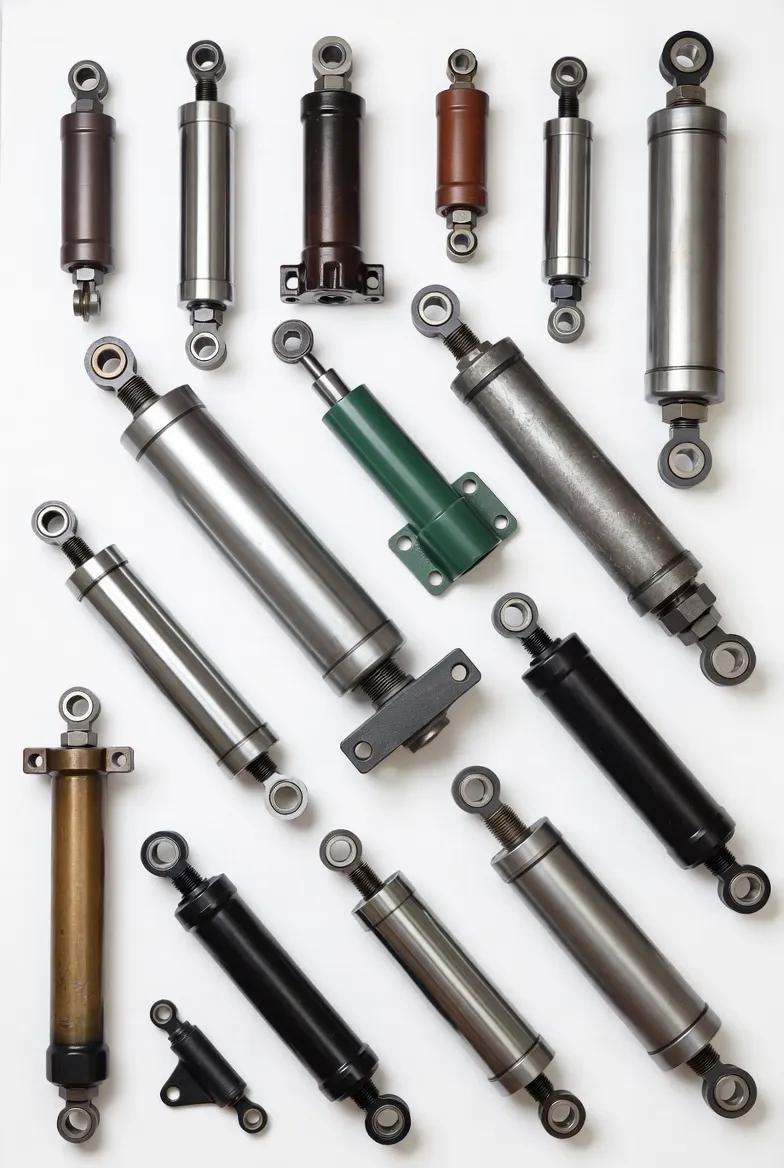
Maintenance Protocols for Waste Processing Cylinders (E-E-A-T)
Preventive maintenance is non-negotiable for hydraulic compaction processes. Refuse machinery operates 24/7, and downtime is financially devastating. Based on industry best practices and deep engineering expertise, the following maintenance imperatives must be adhered to maximize the reliability and safety of your industrial scrap baling cylinders and MSW systems.
- ?
Strict Fluid Cleanliness Management: Hydraulic fluid contamination is the leading cause of premature cylinder failure in waste processing. Baler environments are dirty. Utilize high-efficiency ISO-rated filtration systems (10-micron absolute or better), conduct regular fluid analysis, and manage water content (using desiccant breathers). Contaminated fluid acts as a grinding compound, destroying dynamic seals and scoring honed tubes.
- ?
Preventative Rod Inspection and Protection: MSW and metal balers operate in harsh areas. Daily visual inspections of the piston rod surface are necessary. Even minor scratches can tear the wiper seal, ingesting debris into the gland. Severe scratches or ‘scoring’ indicate an external contaminant or internal wear band failure. Ensure the rod remains coated in a thin film of oil during operation to maintain lubricity for the MSW baling cylinder.
- ?
Mounting and Joint Integrity Verification: Horizontal baler actuators are frequently trunnion-mounted. These pivots require regular lubrication (daily or as specified by the OEM). Verify torque on mounting bolts and Cleves pins. Excess wear in these pivot points will introduce severe side-loading on the gland, causing stick-slip and accelerated seal failure in the heavy-duty refuse baler cylinders.
- ?
Pressure Relief Valve Calibration: Balers generate immense force. To maximize safety and prevent structural damage, the main and circuit-specific hydraulic relief valves must be regularly tested and calibrated against known standards. Operating below pressure minimizes baling density; operating above pressure risks catastrophic failure. This is a crucial safety component of waste handling hydraulic presses.

Future Trends: Smart Technology in MSW Compaction (Tech Feel)
The trajectory of the waste management industry is undeniably towards automation and intelligence. This digital transformation is profoundly impacting refuse baler cylinders and their associated compaction hydraulics. This is where the true AI and Tech feel will revolutionize MSW volume reduction.
We are seeing a rapid shift towards electro-hydraulic systems. These “Smart Cylinders” are equipped with integrated magnetostrictive linear transducers, embedded pressure transducers, and sometimes even temperature sensors at the ports. This provides an absolute feedback loop to the machine controller. By analyzing the velocity and pressure curves over thousands of compaction cycles, AI algorithms can accurately predict seal wear or fluid bypass leakage before a catastrophic failure occurs.
Furthermore, Smart compactor cylinders are enabling high-throughput regenerative circuits that autonomously adjust cycle speed based on waste density. If standard refuse (low density) is detected, the baler cylinder for waste management extends rapidly. If scrap metal (high density) is detected, the system shifts into maximum force mode with high dynamic feel. This technology optimizes energy consumption and minimizes daily operational costs, driving profitability for waste transfer stations.

Conclusion: Engineering for a Sustainable Future
In summary, the baler cylinder application is the fundamental enabler of modern waste volume reduction. From municipal solid waste compaction at transfer stations to high-tonnage industrial scrap baling cylinders processing automobiles, the sheer force and reliability generated by these heavy-duty actuators are critical for global sustainability efforts. When engineered correctly—utilizing advanced metallurgy, specialized sealing systems, and predictive smart technology—these MSW baling cylinders can reduce waste volumes by up to 10:1, turning logarithmic waste volumes into economically manageable logistics.
Maintaining the optimal performance of your refuse balers requires a proactive maintenance philosophy and partnership with an expert hydraulic engineering firm. For those seeking custom engineered fluid power solutions, we invite you to consult with our specialized team today. Our commitment to expertise, authoritativeness, and trustworthiness (E-E-A-T) ensures we design, build, and maintain the heavy-duty refuse compactor cylinders required to maximize your environmental processing efficiency for decades.