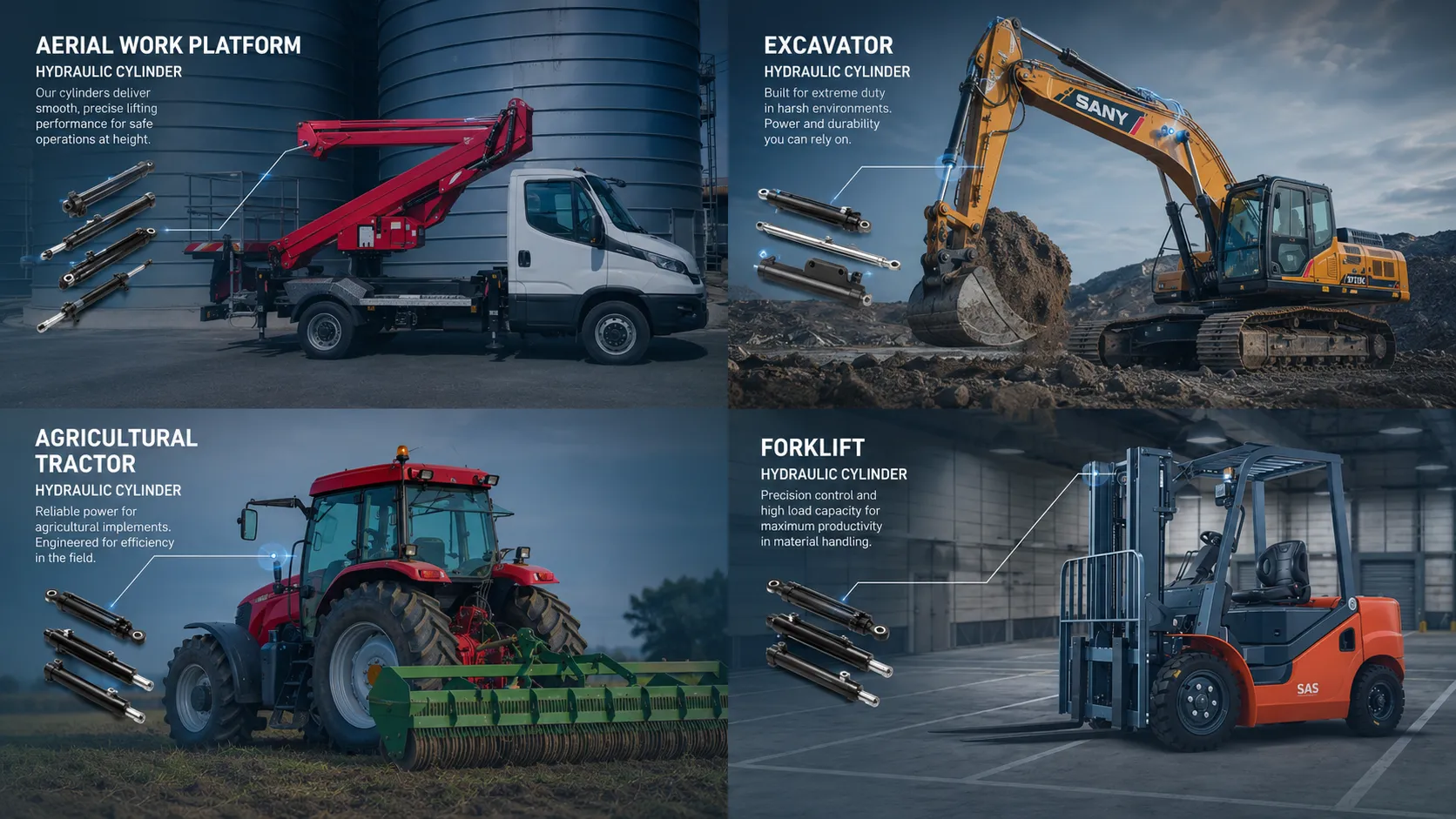
STAINLESS VS CARBON STEEL HYDRAULIC CYLINDER
The economics of stainless and carbon-steel cylinders depend on actual exposure and maintenance conditions, not a universal claim about lifetime. Comparisons should identify the complete assembly, its protective finishes and the cost of reaching failed components.
Define comparable duty and exposure
Two quotations can only be compared if the bore, stroke, pressure, mounting, fluid and environmental conditions are equivalent. A carbon-steel actuator in a dry indoor machine has a different corrosion challenge from a washdown unit near hot chemicals. Record wetting frequency and whether a worker can inspect hidden joints. The material decision should address a real mechanism rather than an assumed generic industrial atmosphere.
Record the existing coating system
Painted or plated carbon-steel components rely on their specified protection and the way it is maintained. Check coating damage after installation, exposed edges and contact with cleaning agents. A worn coating may invite corrosion but does not automatically mean the entire cylinder is defective. Evaluate accessible touch-up processes and whether pressure parts or moving rod surfaces have separate treatments. Include the actual maintenance specification in the baseline comparison.
Clarify the stainless bill of materials
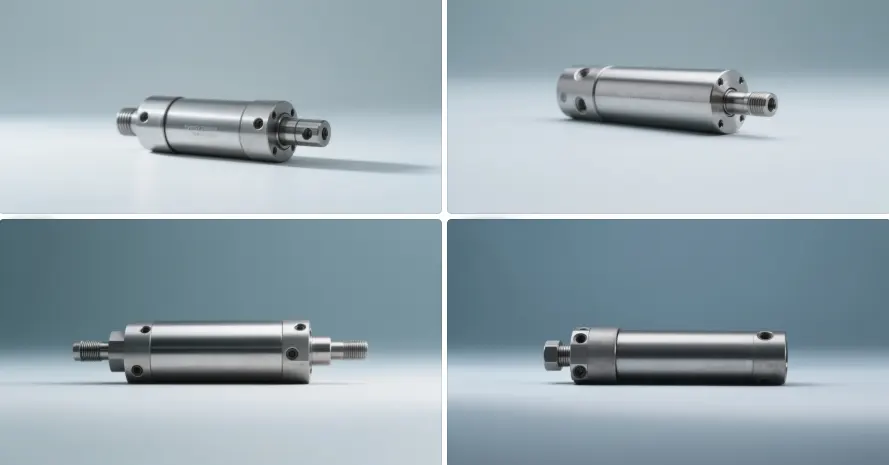
A stainless barrel may still be attached to carbon-steel pins or fittings, while a fully stainless construction carries different scope and cost. Ask each supplier to identify rod, gland, piston, mounts, hardware and finish. A quoted premium may reflect fabrication or documentation as well as alloy cost. Do not assume two bids with the same word stainless are equivalent without component lists.
Price comparisons depend on a defined baseline, including the stainless product configuration range.
Compare repairable and nonrepairable defects
Surface rust on an accessible bracket, a pit on the rod’s seal track and a crack at a pressure weld have different consequences. Estimate repair choices and safety approvals for each case. Replacement downtime may involve safely supporting the machine, draining fluid, shipping parts and recommissioning. Use actual site costs rather than guessed industry rates. This assessment may make accessibility more important than initial alloy price.

Keep seal and hydraulic performance equal
A corrosion-focused material change does not fix dirty oil, poor alignment or unsuitable seal compounds. Compare both options against identical fluid chemistry, pressure cycles and external cleaning requirements. A well-engineered protected steel rod can be more reliable than a poorly finished stainless rod in some duties. Ask suppliers to explain any differences in rod finish, gland construction or seals instead of treating the alloy alone as the product.
Include fabrication and inspection costs
Stainless machining, welding and post-treatment may differ from the carbon-steel baseline. The quote should specify included pressure tests, material traceability and finishing documentation. Some projects require special records; others do not. A cheaper offer that excludes a necessary inspection is not a cost-equivalent alternative. Conversely, avoid purchasing unrelated certifications that do not improve the project’s accepted requirements.
Model multiple life-cycle scenarios
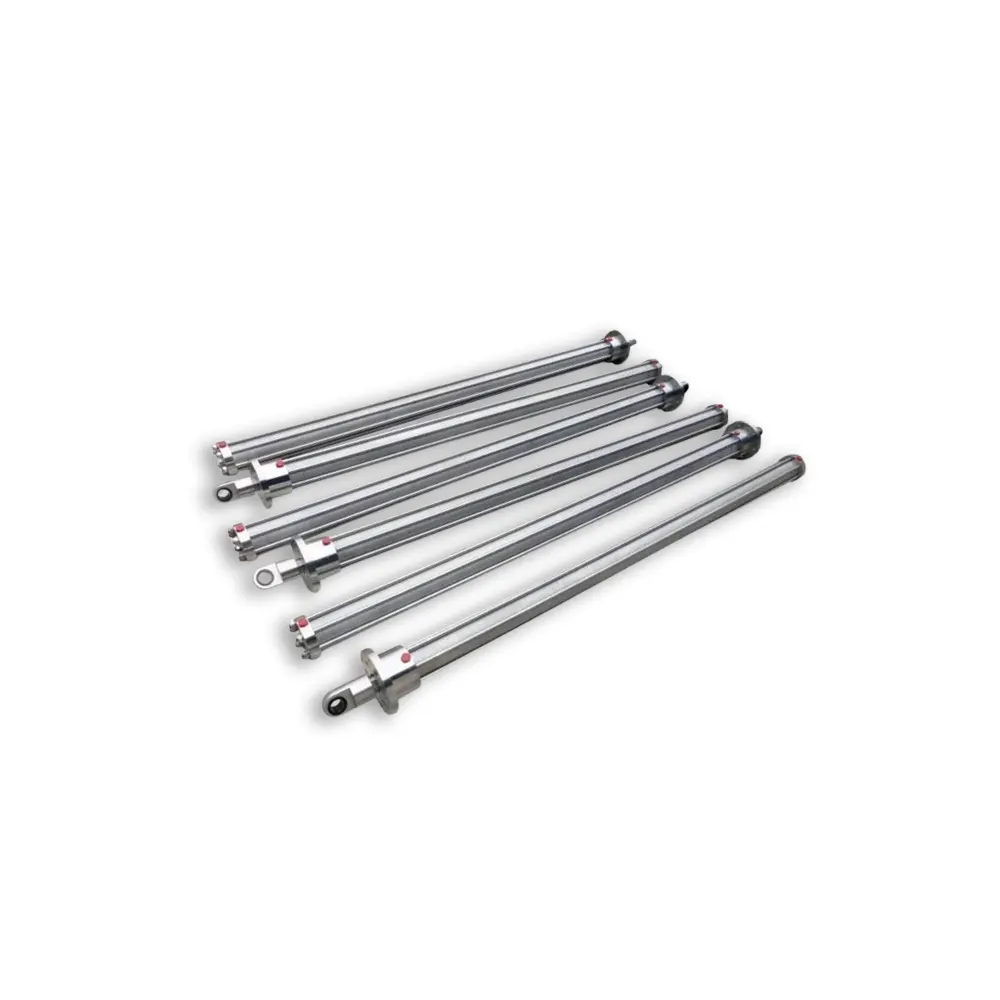
Total cost can be considered as acquisition, installation, planned service, expected repairs and downtime over a defined study period. Corrosion frequency and replacement time may be uncertain, so run plausible scenarios rather than using a single claimed service life. State which figures come from company maintenance records and which are assumptions. Sensitivity testing can identify when an apparently expensive material choice would become attractive.
Document the final purchase rationale
A justified selection satisfies strength, pressure, dimensions, environmental exposure and the buyer’s economic priorities. If mild service makes protected carbon steel adequate, a stainless upgrade need not be automatic. If frequent washing damages the baseline, a corrosion-focused design may be worth considering. Preserve supplier evidence, maintenance assumptions and approved deviations in the purchasing file so the comparison remains auditable.
Build an apples-to-apples comparison sheet
Start with the identical bore, rod, stroke, pressure, connection geometry and duty. Then compare a fully specified coated-steel construction with an equally defined stainless alternative. The corrosion exposure must be described, including cleaning frequency and whether contact surfaces trap liquid. A vague lower quote might omit a protective finish or a required traceability record, making the apparent cost saving misleading. Create separate columns for actual purchase cost, installation, scheduled inspection, corrective repair and the expected consequences of shutdown.

Calculate cost using explicit variables
A defensible ownership model sums acquisition and installation costs with planned maintenance and expected repair or replacement over a chosen period. Do not assign a probability of failure without credible service data. Instead calculate scenarios: low maintenance, repeated coating repair, one rod replacement and a major shutdown case, stating each assumption. For example, downtime duration depends on equipment access and whether spare actuators are stocked. The exercise shows which uncertain cost factors drive the decision rather than manufacturing a precise payback percentage.
The cost model can be compared against industrial cylinder choices.
Account for hidden installation differences
Material upgrades may change manufacturing details, rod finish, seals, exposed hardware and mass or dimensional constraints. Evaluate whether replacement requires hoses, pin adjustments, new paint interfaces or extra inspection. A stainless tube paired with corroding carbon-steel fittings may still need significant service. Conversely, an appropriate coated-steel assembly in sheltered duty can be economical if coatings are maintained. Ask each supplier to identify the scope before comparing prices.
Test the case against maintenance records
Review past corrosion sites, rod leakage events, coating repair work and access restrictions on the actual equipment family. A single failure does not establish statistical life, but repeated localized corrosion may make a more resistant design worth investigating. Document which costs are sourced from purchase orders, technician hours and production records. Treat uncertain future events as sensitivity cases. A business case is stronger when engineers and maintenance managers agree on the likely failure mechanism before purchasing the more expensive alloy.

Specify the chosen option without losing technical control
Once a choice is made, lock the drawing revision, component materials, finish, seals, delivery inspection and any approved alternative. The lowest price is meaningful only for options that satisfy functional and environmental requirements. Record what the owner must inspect after installation so the comparison can be revisited using real evidence. Avoid declaring that every stainless cylinder is lower maintenance or that coated steel is always inferior. The outcome should fit the observed machine and the owner’s risk tolerance.
Life-cycle model inputs
| Cost category | Decision assumption |
|---|---|
| Initial supply | Use real quoted compliant prices |
| Installation | Record machine-offline and fitting work |
| Coating service | Model inspection and touch-up needs |
| Rod replacement | Consider seal-track damage consequences |
| Downtime | Calculate actual site value where known |
| Evidence | Separate data from assumptions |
A lifecycle comparison with explicit uncertainty
Start with two drawings for cylinders of equivalent stroke, bore, mounting geometry and pressure duty, then identify the full material and finish of each assembly. A painted carbon-steel barrel with a protected rod is not directly comparable to a partly stainless barrel with unspecified pins or seals. Separate purchase cost from fabrication, inspection, replacement parts and installation labor. An apparently lower quote may omit a required finish or pressure-test report. The purchasing team should compare technically compliant offers first and record any differences as proposed exceptions, not bury them in an assumed service-life advantage.
Use three scenarios to expose uncertain maintenance costs. In sheltered, controlled equipment, an existing carbon-steel design may need little coating work. In an aggressive washdown setting, repeated cleaning and coating damage could increase inspection or repair effort. In difficult-to-access machinery, even a single unplanned replacement may create costly shutdown, lifting and recommissioning work. These are scenarios, not asserted outcomes. Populate them with the owner’s actual work orders and downtime values where available; otherwise mark estimates and run a range. Do not publish a precise payback percentage or number of corrosion-free years based on an invented failure probability.
Inspect how seals, rods and mounting hardware change between alternatives. A more resistant tube cannot fix poor alignment or a chemically incompatible wiper, and corrosion at a carbon-steel clevis may remain the main maintenance concern. The assessment should include cleaning access and whether replaceable components can be serviced without removing the entire mechanism. Review the sensitivity of the total cost to corrosion frequency, coating repair, spare-part lead time and production interruption, rather than drawing a conclusion from material price alone.
Once a choice has been made, preserve the approved component list, corrosion exposure, inspection obligations and maintenance assumptions. Schedule a baseline service review so the owner can compare observed conditions with the original investment case. A later procurement decision can then use verified performance rather than generalized expectations about steel grades. This process supports both stainless and suitable protected carbon-steel choices without implying that either is always superior.
Five material investment questions
Is stainless always the best long-term investment?
No. The economics depend on corrosion severity, fabrication cost, access, spare parts and downtime. A written scenario comparison is more reliable than a universal service-life claim.
Can coated carbon steel work in wet environments?
Potentially, when the protection system and maintenance are suitable for the real exposure. Edge damage, scratches and inaccessible interfaces still deserve assessment.
What makes two quotations technically comparable?
Matching geometry, pressure duty, fluid, sealing, component materials, finish, testing and documentation. Mark deviations rather than treating two visually similar cylinders as equal.
How should unverified lifetime estimates be handled?
Label them assumptions, examine several plausible outcomes and avoid promoting them to warranties or engineering facts without supporting records.
Should seals be part of the price comparison?
Yes. Material choice alone does not control leakage, fluid compatibility or seal replacement intervals. Compare the full engineered assembly.
Choose the documented ownership option
Purchase the option that meets the machine’s engineering conditions and an evidence-based ownership comparison. Keep unknown operating risks explicit so a quote difference is not mistaken for a proven lifetime saving.
Provide exposure and the compared specification requirements.