
Advanced Fluid Power Diagnostics
Bypassing Hydraulic Cylinders: Symptoms, Root Causes, and Diagnostic Pressure Tests
An authoritative engineering blueprint detailing internal hydrostatic seal degradation, thermodynamic fluid shear, mechanical load drift, and the precise diagnostic pressure tests required to isolate and eliminate actuator failure.

The Invisible Failure of Fluid Power Systems
In the high intensity arenas of commercial earthmoving, deep subterranean mining, automated industrial manufacturing, and massive scale agricultural processing, fluid power systems are the absolute foundation of mechanical productivity. Hydraulic cylinders act as the critical linear actuators, converting the immense hydrostatic pressure of synthetic fluids into perfectly controlled kinetic energy. This energy conversion relies entirely on one fundamental physical law: fluids are effectively incompressible, and when trapped within a perfectly sealed chamber, they generate unyielding structural force. However, when the internal seals of a cylinder begin to degrade, a phenomenon known as bypassing hydraulic cylinders occurs. This is an insidious, invisible mechanical failure where pressurized fluid silently escapes across the piston boundary, resulting in a devastating loss of machine power, severe overheating, and highly dangerous load drift. For procurement professionals and maintenance engineers seeking the highest industry standards for precision engineered components immune to these failures, establishing a technical baseline at our premium hydraulic cylinders platform is a mandatory first step.
Unlike an external head gland leak that visibly drips oil onto the ground and triggers immediate maintenance intervention, internal fluid bypass is entirely concealed within the heavy steel barrel. The machine operator may notice that the equipment feels sluggish, requires higher engine RPMs to lift standard payloads, or fails to hold a suspended load in a fixed position. Because there is no external visual evidence of a leak, inexperienced mechanics frequently misdiagnose the problem, wasting immense operational capital replacing perfectly healthy hydraulic pumps, directional control valves, or relief circuits. Understanding the exact mechanical symptoms of fluid bypass and knowing how to isolate the actuator using rigorous diagnostic pressure tests is the definitive hallmark of an elite fluid power technician.
Evaluated against stringent international ISO fluid power diagnostic standards, this comprehensive technical blueprint will systematically deconstruct the architecture of bypassing hydraulic cylinders. We will meticulously analyze the primary symptoms of internal seal failure, explore the root causes ranging from abrasive silica contamination to thermodynamic tube ballooning, and provide a definitive, step by step engineering protocol for executing safe and accurate diagnostic pressure tests. Mastering these concepts ensures your heavy machinery fleet maintains absolute kinetic dominance and prevents catastrophic operational downtime.
Identifying the Symptoms of Bypassing Hydraulic Cylinders
Because fluid bypass happens entirely behind thick steel walls, operators and mechanics must rely on secondary operational symptoms to identify the failure. Recognizing these signs early prevents the destruction of interconnected hydraulic components.
Hydraulic Cylinder Drift (Load Sag)
The most prominent and dangerous symptom of a bypassing cylinder is load drift. When a machine elevates a heavy payload and the control valve is returned to neutral, the trapped fluid should lock the piston in place. However, if the piston seals are compromised, the immense pressure of the suspended load forces the oil to squeeze past the piston into the opposite chamber. This causes the cylinder to slowly retract or extend on its own, allowing the implement to sag toward the ground. This is a critical safety violation in machinery such as Aerial Work Vehicle Hydraulic Cylinders, where even a fraction of an inch of drift can destabilize a human occupied platform high above the ground.
Extreme Localized Overheating
When high pressure hydraulic fluid is forced through a microscopic gap in a torn piston seal, it undergoes extreme fluid shear. This violent friction converts mechanical energy directly into thermal energy. A bypassing cylinder will generate immense heat internally, often making the steel barrel scalding hot to the touch specifically near the piston band. If this localized overheating is ignored, it will rapidly degrade the remaining elastomeric seals and effectively cook the synthetic hydraulic fluid, spreading thermal contamination throughout the entire machine architecture.
Loss of Force and Velocity
A cylinder suffering from internal bypass can no longer convert one hundred percent of the pump flow into linear motion. Because a portion of the pressurized fluid is simply leaking back to the return side, the actuator will exhibit a profound loss of kinetic lifting force. The machine will struggle to move payloads it previously handled with ease, and the extension and retraction speeds will become noticeably sluggish. This inefficiency burns excess diesel fuel and drastically reduces operational output in high volume applications like Agricultural Hydraulic Cylinders working across vast planting acreages.

Root Causes of Internal Seal Degradation
Piston seals do not fail without a mechanical or chemical catalyst. Identifying the root cause of the bypass is critical; simply installing new seals without fixing the underlying systemic issue will result in immediate recurrent failure.
Abrasive Particulate Contamination
The primary assassin of fluid power seals is microscopic particulate contamination. If the external rod wiper seal is damaged, the retracting chrome rod drags abrasive silica sand, metallic dust, and dried mud directly into the hydraulic circuit. This abrasive grit embeds itself into the soft polyurethane piston seals. As the piston strokes back and forth, the embedded grit acts as liquid sandpaper, violently scoring the highly polished internal walls of the steel barrel. These deep longitudinal scratches create permanent physical channels for high pressure fluid to bypass the seals, completely destroying the hydrostatic integrity of heavy equipment such as Dump Truck Hydraulic Cylinders operating in brutal aggregate quarries.
Tube Ballooning (Hoop Stress Failure)
Occasionally, the seals are perfectly intact, but the steel barrel itself has failed. When an actuator is subjected to sudden, violent kinetic shock loads—such as an excavator bucket smashing into solid bedrock—the internal hydrostatic pressure spikes astronomically. If this pressure surge exceeds the yield strength of the steel tube, the barrel will permanently expand outward, a phenomenon known as ballooning or hoop stress deformation. The piston seals can no longer physically bridge the increased diameter of the ballooned tube, allowing massive volumes of fluid to bypass the piston. This structural failure requires complete replacement of the actuator.

Executing Diagnostic Pressure Tests
Because hydraulic drift can also be caused by a leaking directional control valve located elsewhere on the machine, technicians must definitively isolate the cylinder to prove it is the source of the bypass. This requires precise, highly disciplined diagnostic pressure testing.
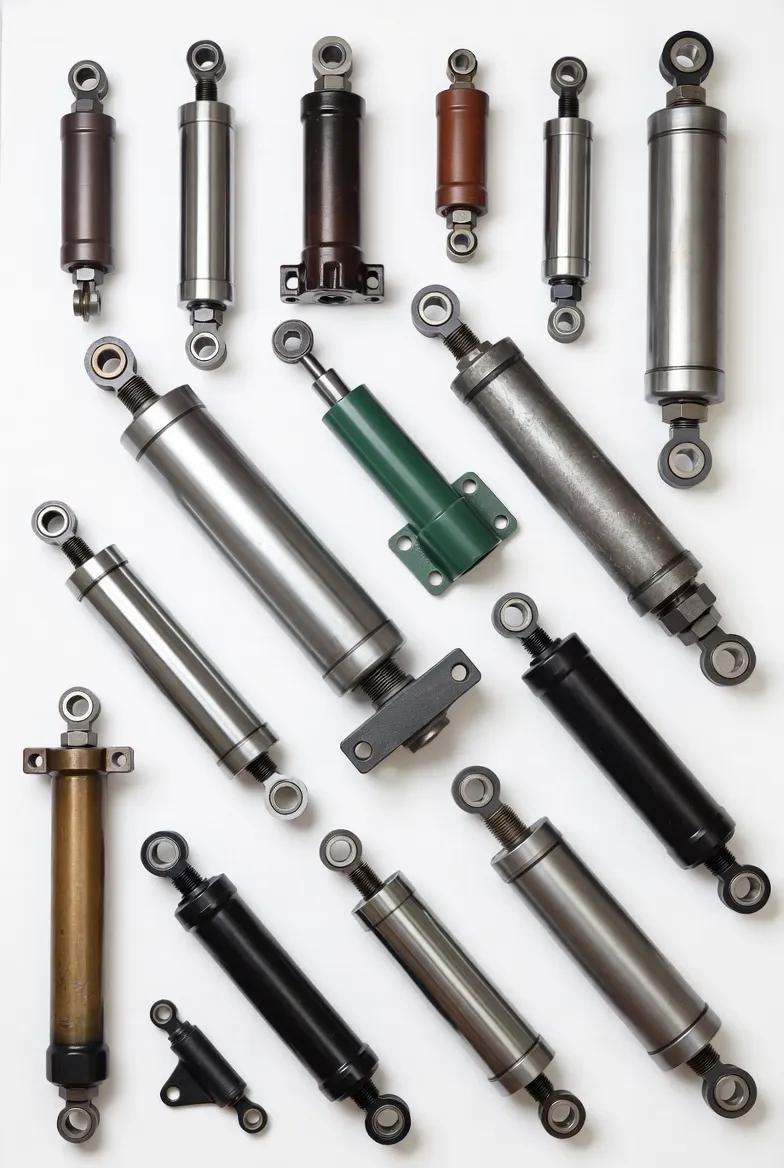
Method 1: The Hydrostatic Leak-Down Test
This is the safest and most definitive isolation test. Elevate the machine payload to a designated height and secure it safely with rigid steel jack stands. Shut off the engine and cycle the valves to relieve line pressure. Disconnect both hydraulic hoses from the cylinder ports and immediately seal the cylinder ports with high pressure steel caps. This physically traps the fluid entirely inside the actuator. Carefully remove the steel jack stands, transferring the immense weight of the payload back onto the capped cylinder. Attach a dial indicator to the chrome rod. If the rod drifts downward while the ports are capped, the fluid is unequivocally bypassing the internal piston seals. If the rod remains perfectly rigid, the cylinder is healthy, and the original drift was caused by a leaking control valve upstream.
Method 2: The Open-Port Visual Bypass Test
If capping the lines is logistically impossible, mechanics utilize a visual bypass test. Fully extend the cylinder until it bottoms out at the end of its stroke. Leave the high pressure line connected to the extension port. Disconnect the return line from the retraction port and place a large bucket underneath it. Turn the machine on and command the control valve to continue extending the cylinder. Because the piston is already bottomed out, it cannot physically move, and the pressure will spike to the maximum relief valve setting. Look at the open retraction port. A healthy piston seal will hold back the pressure perfectly, and the open port will remain dry. If a steady stream of hydraulic oil pours out of the open port, it is absolute empirical proof that the fluid is blasting past the ruined piston seal. This test is highly effective for rapidly diagnosing compact actuators like Forklift Hydraulic Cylinders.
Preventative Maintenance and System Restoration
Once a cylinder is confirmed to be bypassing, immediate action is required. Continuing to operate a bypassing cylinder will superheat the hydraulic fluid, destroying the primary pump and causing thousands of dollars in systemic collateral damage.
- ✔️
Comprehensive Teardown and Honing: The compromised cylinder must be removed, completely disassembled, and subjected to a deep metallurgical inspection. If the inner barrel is scored by contamination, simply installing new seals is useless. The barrel must be mounted on an industrial honing machine to cut a fresh, mirror like finish into the steel wall, ensuring the new polyurethane seals have a flawless topography to glide against.
- ✔️
Upgrading Sealing Architectures: When rebuilding the piston, upgrade standard nitrile seals to advanced, high temperature fluoropolymers (Viton or PTFE) if the machine operates in extreme thermodynamic environments. Ensure rigid anti extrusion rings are installed to protect the elastomers from sudden pressure spikes.
- ✔️
Fluid Filtration and Purging: The abrasive grit that destroyed the cylinder is still circulating in your machine’s hydraulic oil. After installing the rebuilt cylinder or a new replacement, you must completely flush the system fluid and upgrade to absolute 3 micron glass media filters to trap suspended silica before it destroys the rest of your fleet.


Conclusion: Restoring Unyielding Kinetic Force
Bypassing hydraulic cylinders represent a profound breakdown in the thermodynamic and structural integrity of a fluid power system. The invisible internal fluid leak inevitably causes highly dangerous mechanical drift, severe system overheating, and crippling productivity losses. By mastering the execution of rigorous diagnostic pressure tests—such as the isolated leak-down test and the open-port visual bypass test—maintenance engineers can definitively identify internal seal degradation without resorting to costly, blind parts replacement. Accurately diagnosing the root cause ensures that capital is deployed efficiently to rebuild the steel barrel, upgrade the elastomeric architecture, and flush systemic contamination. Never allow a drifting actuator to compromise the safety of your personnel or the efficiency of your fleet. If your organization requires expert diagnostic consultation, advanced seal architecture upgrades, or direct procurement of heavily fortified, premium replacement cylinders built to the absolute highest global standards, our elite technical engineering team stands ready to architect your ultimate fluid power solution.