
Fluid Power Standards & Interchangeability
What Is the Difference Between ANSI and ISO Hydraulic Cylinder Mounting Styles?
A definitive global engineering comparison of imperial and metric mounting interfaces, covering dimensional codes, pilot diameters, port threads, and the strategic implications for machine design, spare parts, and international market compliance.

The Global Divide in Hydraulic Cylinder Interfacing Standards
In the interconnected world of global machinery design and international trade, understanding the difference between ANSI and ISO hydraulic cylinder mounting styles is a foundational engineering and procurement competency. These two standards represent the primary dimensional languages for how a hydraulic cylinder attaches to a machine. The ANSI/NFPA standard, dominant across North America, defines mounting dimensions in imperial inch units using specific “MF” codes. The ISO standard, which governs the European and Asian markets, defines its interfaces in metric units. While both standards serve the identical purpose of ensuring a cylinder can be physically mounted and connected, their dimensions, tolerances, and porting specifications are fundamentally different and are not directly interchangeable. Specifying the wrong standard for a target market can render a machine unserviceable and uncompetitive.
The most profound difference between these two systems is not simply a matter of converting inches to millimeters. The two systems have different underlying design philosophies for their standard components. An ANSI/NFPA tie rod cylinder uses a standard SAE straight thread O-ring boss (ORB) port and a Unified National Fine (UNF) thread on its piston rod end. Its metric ISO counterpart uses an ISO 6149 metric thread port and a metric fine thread on the rod end. For a maintenance team, this means that a standard North American hydraulic fitting and clevis will not connect to an ISO cylinder, and vice versa. The regional dominance of a standard creates a powerful economic lock-in for spare parts and replacement cylinders. A manufacturer who excels in both, like EverPower-Huachang HYDRAULIC, provides a crucial strategic advantage for global OEMs, enabling them to build a machine with the correct mounting standard for its final destination market from a single, reliable supply source.
This comprehensive technical guide will exhaustively compare the ANSI/NFPA and ISO mounting style systems. We will decode the specific dimensional codes—what an “MF6” mount means in NFPA versus an “ME5” or “MP5” in ISO—and provide a detailed cross-reference of functionally similar but dimensionally incompatible mounts. We will explore the critical differences in pilot diameters, bolt patterns, and port and rod end thread specifications. By mastering this distinction, you can ensure your machine design is globally compliant, your spare parts strategy is coherent, and your procurement process is error-free. For a deeper dive into the specific NFPA standard, our expert guide on what is NFPA T3.6.7 R1 standard for hydraulic cylinders is an essential companion resource.
Decoding the Mounting Codes: ANSI/NFPA vs. ISO Designations
Both standards use a shorthand alphanumeric code system to define mounting configurations, but the meaning and exact dimensions of a similar code are distinct.
The ANSI/NFPA “MF” and “MP” Mounting Codes
The ANSI/NFPA T3.6.7 R1 standard defines its fixed mounting styles using “MF” (Mounting, Flange or Foot) codes and pivoting styles with “MP” (Mounting, Pivot) codes. The code after the letters defines a very specific geometry. For example, MF1 is a head rectangular flange, while MF2 is a cap rectangular flange—a functionally identical but physically mirrored configuration. The workhorse industrial mount is MF5, a head side lug mount with through-holes, while MF6 is a cap side lug mount with tapped holes. The “MP1” code defines a standard fixed clevis mount. For each code, the standard dictates the exact bolt size, bolt circle, and, critically, the precise pilot diameter of the spigot that aligns the cylinder in a counterbored hole. This pilot is the primary concentricity feature. The dimensions for a specific bore and pressure class are tabulated, and a cylinder ordered as an “NFPA MF5 mount” from any compliant manufacturer will have the identical footprint and bolt pattern. This is the bedrock of North American industrial interchangeability.
The ISO 6020/2 “ME” and “MP” Mounting Codes
The ISO 6020/2 standard for 160 bar (and ISO 6022 for 250 bar) tie rod cylinders uses a similar but non-interchangeable coding system. A fixed flange mount is designated as “ME5” for a head flange and “ME6” for a cap flange. The critical difference is that all bolt circle diameters, bolt sizes, and pilot diameters are metric dimensions derived from the cylinder’s metric bore size. The physical size of the mounting flange, bolt size, and pilot diameter for an ISO cylinder with a 100mm bore are different from an NFPA cylinder with a functionally similar 4-inch bore. The standard pivoting clevis mount is designated “MP5.” The ISO system does not use the imperial “MF” code. While the naming convention appears similar, a cylinder designed to an ISO ME6 mount will not fit on a machine designed for an NFPA MF2 mount without a significant and ill-advised re-machining of the cylinder’s end cap. This is why a global OEM must manage two distinct bills of materials for the same basic machine, a complexity simplified by sourcing from a manufacturer competent in both standards.

Critical Dimensional Discrepancies: Ports, Rods, and Pilots
The complete incompatibility of the two systems is cemented by their different standards for fluid ports, rod end attachments, and the physical envelope of the cylinder body itself.
?Hydraulic Ports: SAE O-Ring Boss vs. ISO 6149 Metric Ports
The method of connecting hydraulic hoses to the cylinder is a primary point of difference. An ANSI/NFPA cylinder is manufactured with ports conforming to the SAE J1926 standard for straight thread O-ring boss (ORB) ports. The port size is designated by a dash number, for instance, a “SAE #12” port. An ISO cylinder will have an ISO 6149-1 metric straight thread port with an O-ring seal. A common metric port on a 100mm bore cylinder is an M22x1.5 thread. The two fittings are not physically compatible. A standard North American hydraulic hose with a SAE ORB fitting cannot be connected to an ISO metric port. This has a direct consequence for global maintenance: a manufacturing plant in Germany cannot simply install its locally sourced ISO-standard hydraulic hose onto a piece of US-imported machinery designed with NFPA cylinders. A global manufacturer like EverPower-Huachang HYDRAULIC addresses this by building cylinders with the specific port standard required by the machine’s target market.
?Rod End Threads: UNF Imperial vs. ISO Metric Fine
The threaded end of the piston rod, where a clevis or rod eye is attached, also follows the regional standard. An NFPA cylinder will have a Unified National Fine (UNF) thread, such as 1-1/4″-12 UNF. An ISO cylinder will have an ISO metric fine thread, such as M30x2. The two are completely incompatible. If a maintenance technician in a facility stocked with metric fasteners and spare ISO rod eyes attempts to attach a component to an NFPA cylinder rod, the parts will not fit. This distinction is a critical specification detail that must be clearly stated on the cylinder’s purchase order, and a thorough pre-installation dimensional check, as described in our guide on what pre-installation checks should be done before installing a hydraulic cylinder, is the final verification to prevent this costly error.

Strategic Implications of the ANSI vs. ISO Choice
The decision to design a machine around one standard or the other has profound, long-term consequences for its serviceability, global competitiveness, and total cost of ownership.
Market Access and Regional Serviceability
A machine’s hydraulic cylinder mounting standard directly determines its maintainability in a given geographic region. A construction machine built with all NFPA-compliant cylinders and SAE ports, sold into the North American market, can be repaired by any local hydraulic shop using standard inventory components. That same machine, shipped to a European construction site, becomes a maintenance nightmare. The local technicians with their metric tooling and ISO-standard spare parts will be unable to replace or reseal the cylinder without ordering unique, imported parts, causing massive and costly downtime. Therefore, the choice of cylinder standard is a primary strategic decision for an OEM’s market access plan. A globally-focused company will often design its high-volume machines with the specific local standard in mind, a process made significantly easier by partnering with a single supplier like EverPower-Huachang HYDRAULIC that can build the same basic cylinder in both an ANSI and an ISO configuration.
Managing a Dual-Standard Global Supply Chain
The practical engineering solution for a global OEM is to manage two parallel, almost identical bill-of-materials (BOM) lines for their machines: one for the North American market and one for the European/Asian market. The only difference in the hydraulic system is often the cylinder, the hoses, and the clevis ends. All other structural brackets and the machine’s logic are identical. The critical success factor is a manufacturing partner who can flawlessly execute both BOM variants from a single production line, ensuring that the correct ANSI or ISO cylinder is installed in the correct machine frame. A quality system with rigorous component traceability and a clear, visual marking of the standard on the cylinder itself prevents the costly assembly error of mixing standards. This traceability and flexibility are hallmarks of a modern, globally competent hydraulic cylinder manufacturer.
Visual Identification and Dimensional Verification
On a busy assembly line, an ANSI NFPA cylinder can look almost identical to its ISO counterpart. The bolt holes and the physical size are close enough that a misidentification is a real risk. A professional manufacturer physically imprints or tags the cylinder with its governing standard (e.g., “ANSI/NFPA T3.6.7 R1 4.00″ Bore” or “ISO 6020/2-100 Bore ME5”). The most definitive pre-installation check is to physically measure the rod’s thread pitch with a thread pitch gauge and verify the port thread size with a calibrated plug gauge. This is a critical quality control step at both the cylinder manufacturing facility and the machine assembly plant. Our guide on how to determine the correct rod diameter for a hydraulic cylinder and its relations to mounting is a further resource on ensuring the entire rod-end assembly is compatible. This disciplined verification step prevents a costly and embarrassing machine rejection at the customer’s dock.
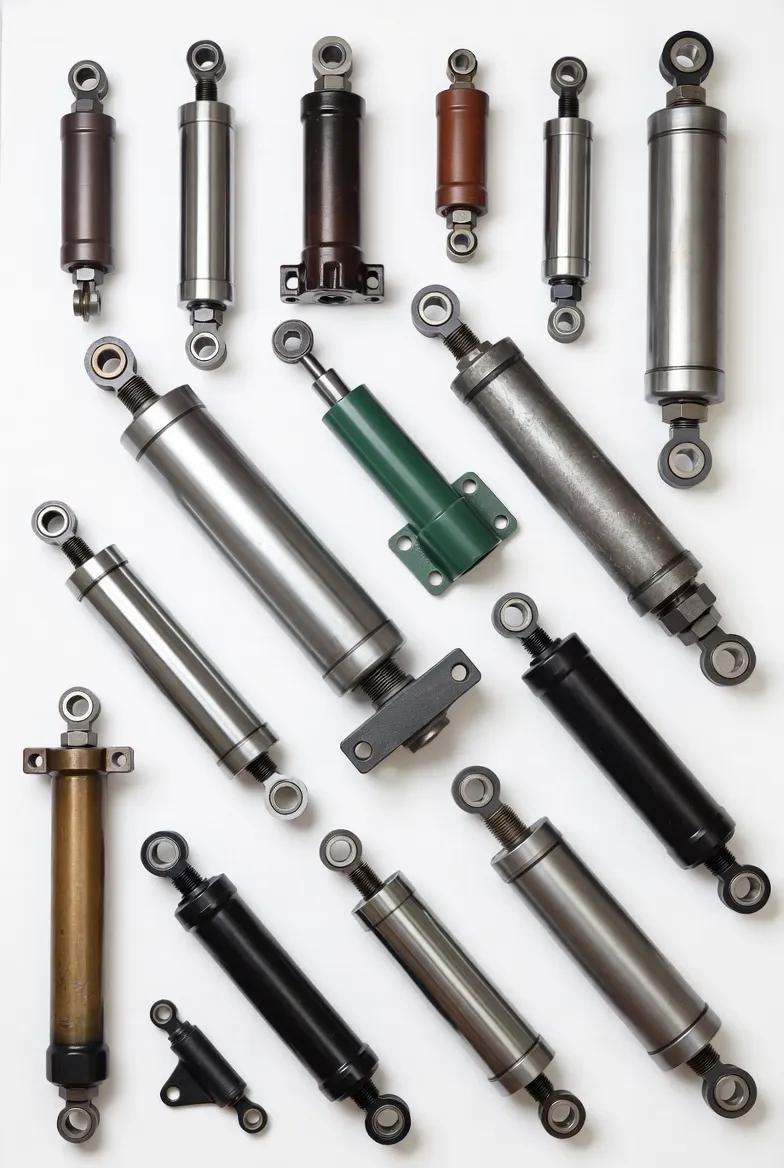
A Global Engineering Strategy for Cylinder Standardization
The existence of two parallel global standards is an engineering reality that, when managed strategically, can be transformed from a risk into a competitive advantage.
- ?
Designing a “Global-Ready” Machine Platform: A modern, world-class OEM designs its machine platform to be “global-ready” from the initial CAD layout. The cylinder mounting brackets are designed to accept either an ANSI or an ISO cylinder flange by using a common bolt-hole pattern or by using a machined adapter plate. The hydraulic hose routing is designed with a common interface point so that the hose and fitting can be swapped regionally. The cylinder’s core functional parameters (bore, stroke, pressure, rod diameter) are identical, but the mounting interface is a regional variable. This upfront engineering investment, while non-trivial, is far less than the cost of managing multiple regional machine variants or dealing with service failures from incorrect parts.
- ?
The Value of a Multi-Standard Manufacturing Partner: The most critical element in this strategy is the cylinder supplier. The ideal partner has expert engineering knowledge of both the NFPA and ISO standards, not just from a catalog, but from decades of manufacturing experience to both sets of dimensional requirements. They can advise on the specific standard code for a given function and ensure that the port and rod end threads are perfectly matched. Their machining centers can seamlessly switch between imperial pilot diameters and metric bolt-hole circles, and their in-house advanced metrology will verify that the finished part conforms to the correct standard. This eliminates the costly and risky process of trying to source cylinders from two different regional manufacturers for the same machine platform.
- ✅
Documenting and Certifying the Correct Standard: The final defense against an ANSI/ISO mix-up is a verified documentation package for every cylinder. The Certificate of Conformance must explicitly state the governing dimensional standard and the specific mounting code. The dimensional inspection report should have the measured pilot diameter and bolt-hole dimensions checked and signed off. The physical tag on the cylinder must be unambiguous. This level of documented, verifiable quality, which is standard practice for a company like EverPower-Huachang HYDRAULIC with its ISO 9001 certified quality system, creates a transparent, reliable global supply chain where the correct component is always installed in the correct machine.

Mastering the Global Language of Hydraulic Interfacing
The difference between ANSI and ISO hydraulic cylinder mounting styles is a critical piece of technical knowledge that sits at the intersection of engineering, global supply chain management, and machine serviceability. It is a distinction that must be rigorously managed through qualified design, verified procurement, and documented quality control.