
Advanced Forestry Fluid Power
Grapple Steering and Opening Cylinders: The Core of Timber Extraction
An authoritative engineering analysis of heavy duty hydraulic clamping mechanisms, articulated steering dynamics, and extreme environment fluid power in modern skidders and log handlers.

Mastering the Logistics of the Deep Forest
The commercial logging industry operates on the principles of massive volume extraction and relentless operational efficiency. Once mature trees have been felled by specialized harvesting equipment, the formidable task of transporting these multi ton logs from the deep forest floor to the roadside landing zones begins. This critical logistical phase is dominated by heavy duty skidders and sophisticated log handlers. These powerful, all terrain vehicles are designed to traverse the most punishing topographies on earth, dragging or carrying colossal payloads of raw timber. At the very terminus of their mechanical lifting booms lies the grapple, the ultimate interface between the machine and the payload. The absolute reliability, clamping force, and directional control of this grapple are governed entirely by highly specialized opening and closing cylinders, as well as grapple steering cylinders.
In the demanding theater of forestry operations, standard industrial hydraulic components are completely inadequate. When a skidder reverses into a pile of felled timber, the grapple opening and closing cylinders must actuate with explosive speed to secure the load. Once gripped, the massive hydraulic pressure must be sustained without fluctuation as the vehicle drags the timber over rocks, stumps, and deep ravines. Simultaneously, the grapple steering cylinders must provide precise rotational torque, allowing the operator to align the logs perfectly for safe dragging or precise stacking at the processing deck. The violent shock loads transmitted through the tree trunks directly into these hydraulic actuators are immense, capable of destroying inferior equipment in a matter of hours.
From a rigorous fluid power engineering perspective aligned with the highest industry standards, the design of log handler hydraulics demands profound expertise in metallurgy, extreme pressure sealing architecture, and dynamic load mitigation. A catastrophic failure of a grapple cylinder deep within a logging concession not only halts production but presents a severe safety hazard to the operational crew. This comprehensive engineering treatise will dissect the mechanical complexities, advanced corrosion resistance strategies, and intelligent fluid dynamic safety protocols that elevate world class forestry hydraulic cylinders above the rest.
Mechanical Architecture of Grapple Fluid Power
The operation of a modern skidder grapple requires a symphony of hydraulic motion. The actuators must balance the need for rapid cycle times with the requirement for unrelenting, static clamping force.
Opening and Closing Dynamics
The primary function of the grapple is to secure the timber payload. The opening and closing cylinders are generally mounted in a cross linked geometry within the grapple head. When the operator commands the grapple to close, high pressure hydraulic fluid floods the cap end of the cylinders. The linear extension of the piston rods forces the heavy steel tongs to pivot inwards. Because tree trunks vary wildly in diameter, the cylinders must maintain continuous active pressure against the load to prevent slippage as the logs shift and settle during transit. This demands zero internal leakage and exceptionally robust pressure seals.
Grapple Steering and Rotation
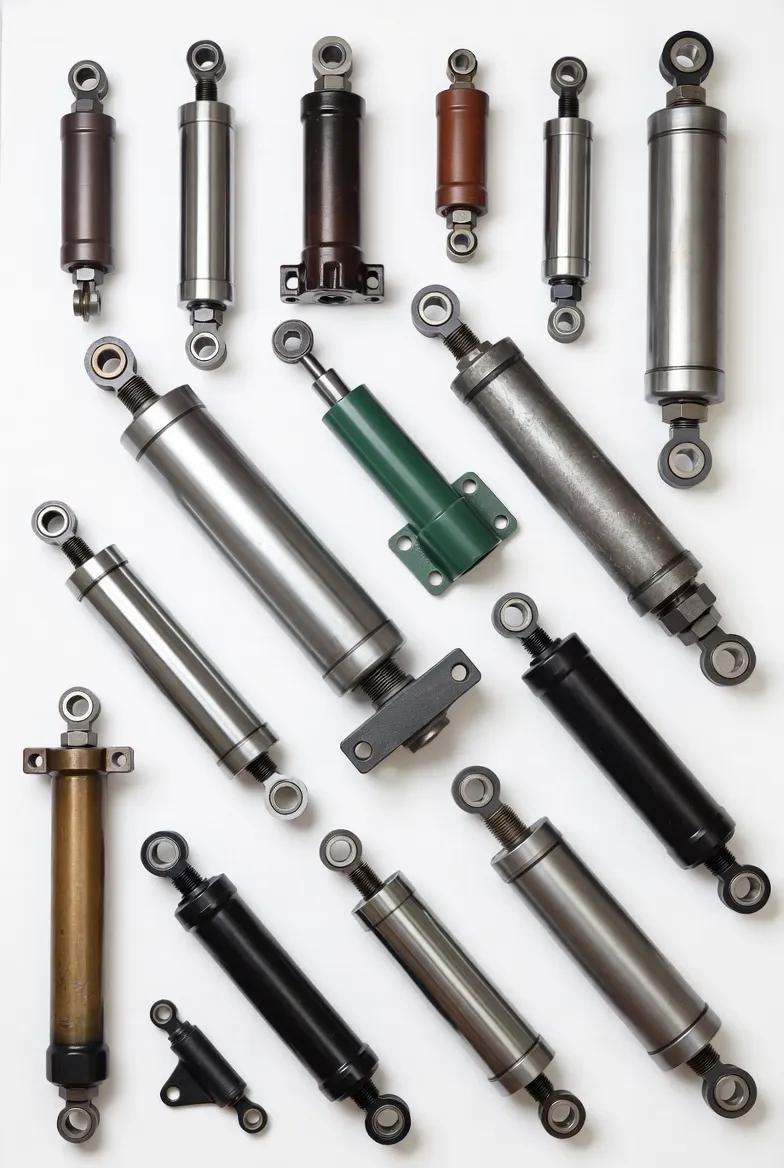
To effectively gather scattered logs or position timber onto a processing deck, the grapple head must be highly maneuverable. Grapple steering cylinders provide the lateral articulation needed to swing the empty grapple into position or to align a heavy payload. These cylinders are subjected to severe side loading and torsional stress, particularly when a dragged log catches on a stump, sending a violent twisting force up through the grapple head. Consequently, the mounting trunnions and clevis ends of these cylinders must be massively over engineered to prevent structural shearing.
Combating Aggressive Environmental Degradation
The logging site presents an unparalleled test of endurance for exposed hydraulic components. Grapple cylinders are mounted at the lowest and most vulnerable points of the machine, constantly plunging into deep mud, abrasive sand, and dense brush. Furthermore, the act of gripping and dragging timber coats the cylinder rods in a highly tenacious mixture of tree sap and fine sawdust. If this debris is allowed to bypass the cylinder gland, it will rapidly contaminate the hydraulic fluid, destroying internal pumps and precision valves throughout the entire skidder.
To ensure the longevity of log handler hydraulics over thousands of operating hours, elite cylinder manufacturers deploy advanced metallurgical defenses and radical sealing architectures. The piston rod must be impervious to blunt force impacts from swinging branches while simultaneously repelling the corrosive chemical attacks of acidic tree sap.

Induction Hardening and Aggressive Wiper Technology
To survive the relentless physical abuse of the forest, the piston rods of premium grapple cylinders are forged from high yield alloy steel and subjected to deep induction hardening prior to receiving an extra thick layer of industrial hard chrome plating. This metallurgical process prevents the rod from denting when struck by heavy timber. Equally critical is the sealing package. The cylinder gland is fitted with an exceptionally aggressive double lip polyurethane scraper. This specialized wiper seal acts as an absolute mechanical barrier, physically shearing away baked on resin, ice, and abrasive mud before the rod retracts, perfectly protecting the internal high pressure seals from catastrophic scoring and wear.
Absolute Fluid Safety and Dynamic Load Retention
From a stringent engineering safety perspective evaluated by industry leading authorities, dragging tons of timber behind a high speed vehicle leaves no margin for error. The hydraulic systems must default to a state of absolute security in the event of an unexpected component failure.
Mechanical Lock via Pilot Operated Check Valves
To completely eliminate the risk of a heavy log slipping from the grapple due to a burst hydraulic hose or a sudden engine stall, all heavy duty grapple opening and closing cylinders feature highly reliable pilot operated check valves. These safety devices are flange mounted directly to the cylinder inlet ports. If the system experiences an unexpected pressure loss, the valve instantly snaps shut mechanically in a fraction of a millisecond. This locks the high pressure hydraulic fluid entirely within the clamping chamber, keeping the massive timber securely gripped until the operator can safely address the situation.
Hydraulic Shock Mitigation Systems
When a skidder travels over rough, rocky terrain while dragging a massive payload, violent bouncing forces are transferred through the grapple arms directly into the steering and clamping hydraulic circuits. To protect the cylinder barrels and internal seals from rupturing under these severe pressure spikes, advanced forestry machines integrate hydraulic accumulators into the fluid network. These high pressure nitrogen charged vessels act as fluid shock absorbers, compressing slightly to absorb the sudden kinetic impact, thereby preserving the structural integrity of the entire machine linkage.

Preventative Maintenance Strategies for Forestry Machinery
The financial profitability of a commercial logging operation depends entirely on maximizing equipment availability. Executing major hydraulic repairs deep within a remote forest is extraordinarily time consuming, dangerous, and expensive. Therefore, executing rigid preventative maintenance on forestry equipment fluid power systems is an absolute necessity for fleet managers.
- ✔️
Absolute Fluid Cleanliness Management: The electro hydraulic proportional control valves on modern log handlers are extremely sensitive to contamination. Airborne sawdust easily enters the system via damaged quick disconnects or poorly maintained reservoir breathers. Maintenance personnel must conduct routine fluid particle counting tests, utilizing high efficiency offline bypass filtration to purify the hydraulic oil, ensuring it meets strict ISO cleanliness standards to prevent expensive directional valves from jamming in the field.
- ✔️
Visual Monitoring and Rod Preservation: During daily walkarounds, operators must inspect all exposed piston rods. Any weeping fluid around the cylinder gland indicates that the primary high pressure seal has been compromised by abrasive sawdust ingestion or a scored rod. Catching these micro leaks early allows for planned maintenance and prevents massive hydraulic oil spills in environmentally sensitive forestry zones.
- ✔️
Spherical Bearing and Pin Lubrication: Grapple steering cylinders encounter immense lateral twisting forces as heavy logs shift and bounce. The heavy duty spherical plain bearings and steel mounting pins at both ends of the actuator are crucial for absorbing this off center loading. Regularly injecting extreme pressure water resistant grease prevents the bearings from seizing, which would otherwise inflict fatal bending stress on the cylinder barrel, leading to sudden structural failure.

Digital Transformation: Deep Integration of Smart Hydraulics and IoT
As the concept of smart machinery rapidly expands across global heavy industries, traditional hydraulic clamping and steering technologies are experiencing a profound digital transformation. Grapple cylinders are evolving from simple mechanical actuation components into highly intelligent, multi dimensional sensing nodes within the Industrial Internet of Things.
Next generation smart log handler hydraulics are internally embedded with high frequency pressure transmitters and precision magnetostrictive displacement sensors. Throughout the timber extraction cycle, these sensors stream dynamic telemetry back to the carrier machine onboard computer via CAN bus protocols. Artificial intelligence algorithms analyze the real time pressure escalation curves to accurately measure the weight and shifting dynamics of the grabbed tree trunk, automatically optimizing the hydraulic flow to prevent slipping while maximizing fuel efficiency. Furthermore, through continuous deep learning of the fluid data, the system can predict the fatigue life of internal seals with exceptional accuracy, guiding maintenance teams to perform preventative replacements during scheduled downtime. This data driven predictive maintenance model is fundamentally revolutionizing the safety and efficiency management of massive logging operations.

Conclusion: Forging the Shield of Global Timber Extraction
Grapple steering cylinders and opening/closing cylinders are indisputably the most critical hydraulic driving forces behind the safety, speed, and operation of modern skidders and log handlers. By perfectly combining extreme heavy duty abrasion resistant metallurgy, uncompromising mechanical fail safe load holding technologies, and high precision electro hydraulic closed loop control based on the Industrial Internet of Things, these technologically advanced heavy actuators ensure that mankind can safely conquer the most demanding forestry environments. For heavy equipment manufacturers and logging fleet enterprises, mastering top tier fluid power and smart hydraulic clamping systems is the fundamental cornerstone to establishing engineering excellence, ensuring absolute operator safety, and securing maximum commercial productivity.