
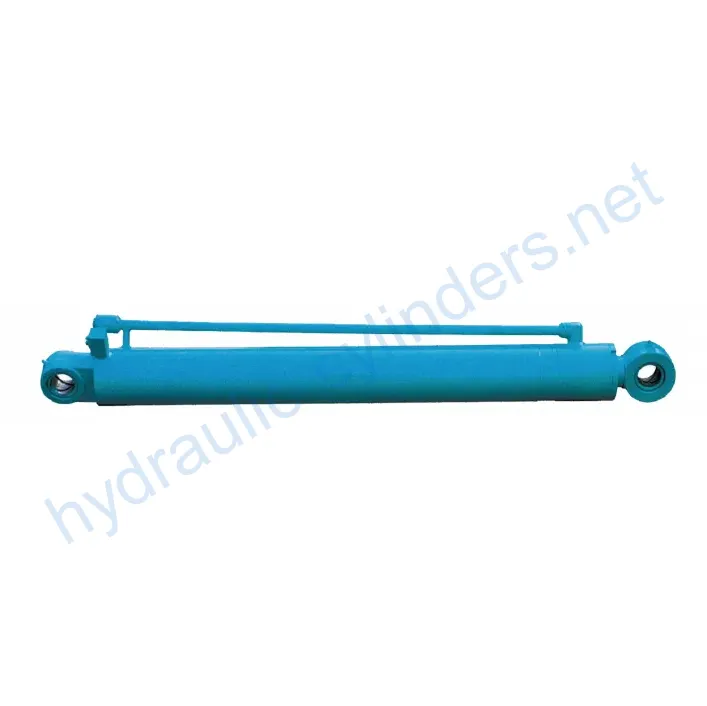
Armzylinder für Kobelco Großbagger SK350LC
Als einer der Hersteller, Lieferanten und Exporteure von mechanischen Produkten, bieten wir Hydraulikzylinder und viele andere Produkte an.
Bitte setzen Sie sich mit uns in Verbindung, um Einzelheiten zu erfahren.
Post:sales@hydraulic-cylinders.net
Hersteller, Lieferant und Exporteur von Hydraulikzylindern.
Arm Cylinder For Kobelco Large Excavator SK350LC
Definition und Erklärung
The arm cylinder is a specially designed hydraulic cylinder that provides linear motion and power to the arm of various machinery, such as excavators, cranes, and mechanical arms. The arm cylinder plays a crucial role in hydraulic systems, allowing for the efficient movement and control of additional tools or attachments. These cylinders not only enable smooth motion but also withstand heavy loads, ensuring efficient operation and reliability of the machinery under various working conditions.
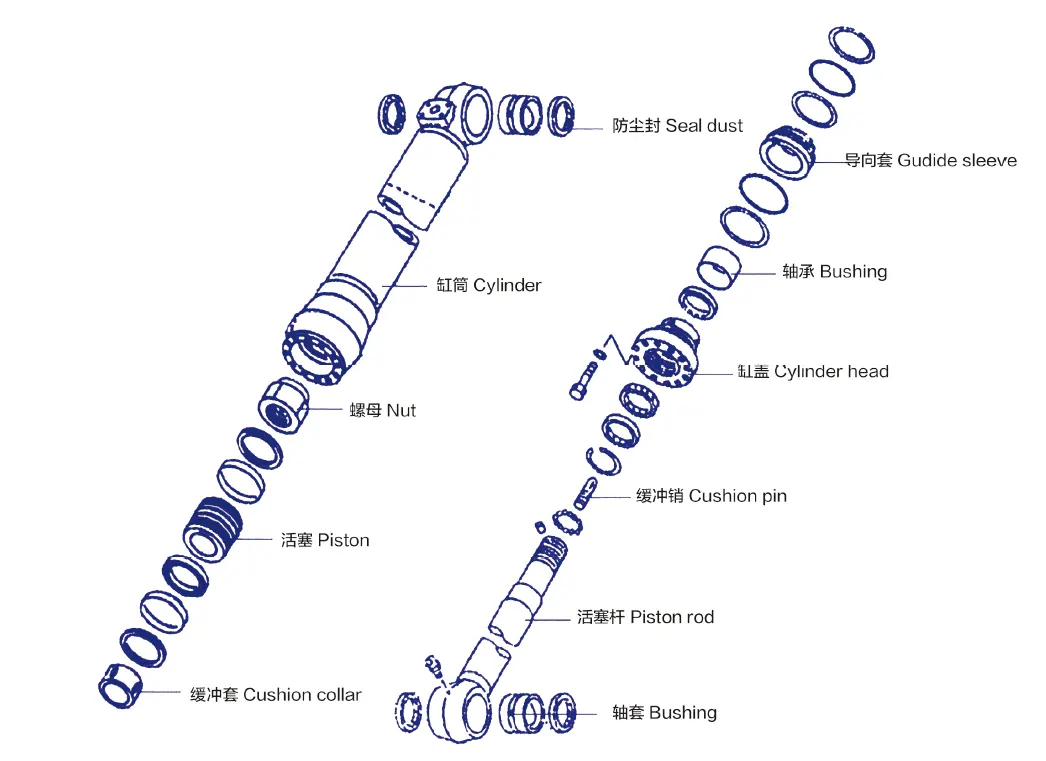
Merkmale
- High Efficiency Transmission: The arm cylinder provides powerful linear motion and force, ensuring high performance of the mechanical arm in various operations.
- Präzise Steuerung: Durch das Hydrauliksystem ermöglicht der Armzylinder eine präzise Bewegungssteuerung, wodurch der Einsatz zusätzlicher Werkzeuge flexibler und genauer wird.
- Langlebigkeit: Armzylinder werden typischerweise aus hochfesten Materialien hergestellt und bieten eine ausgezeichnete Verschleiß- und Korrosionsbeständigkeit, wodurch sie sich für den Langzeiteinsatz in rauen Umgebungen eignen.
- Multi-function Adaptability: These cylinders can be widely applied to various machinery, such as excavators, cranes, and mechanical arms, catering to different job requirements.
- Easy Maintenance: The design considers ease of maintenance and replacement, making regular inspections and upkeep more convenient, reducing equipment downtime.

Anwendungen
1. Bauingenieurwesen: Bei Baggern und Kränen wird der Armzylinder verwendet, um die Bewegung von Schaufeln oder Auslegern bei Erdarbeiten, Materialtransport und Strukturinstallationen zu steuern.
2. Fertigung: In automated production lines, the arm cylinder is used for the motion of mechanical arms in processes such as assembly, welding, and handling, improving production efficiency and accuracy.
3. Landwirtschaftliche Maschinen: Bei landwirtschaftlichen Maschinen wie Mähdreschern und Sämaschinen steuert der Armzylinder die Bewegung der Arbeitsarme für Aufgaben wie Pflanzen, Düngen und Ernten.
4. Bergbau: In mining equipment, the arm cylinder is used to control the arm movement of mining machinery for ore extraction and transport.
5. Logistik und Transport: Bei Gabelstaplern und Handhabungsrobotern wird der Armzylinder zur Steuerung des Anhebens und der Bewegung der Gabeln verwendet, wodurch das Materialhandling und das Stapeln ermöglicht wird.
Designüberlegungen und Auswahlkriterien
- Bearing Capacity: The arm cylinder’s ability to withstand loads and forces is a critical design consideration.
- Sealing: Various seals, such as piston seals and rod seals, made of wear-resistant materials like polyurethane and nitrile rubber, are used. The cylinder body and threaded ends undergo fine treatment to improve wear resistance.
- Durability: The arm cylinder is designed for durability, considering factors like corrosion resistance, strength, and longevity in demanding operating conditions.
- Safety: Safety features are incorporated into the design to ensure the proper and secure operation of the arm cylinder.
- Maintainability: The design allows for easy maintenance and repair, reducing downtime and ensuring the longevity of the equipment.

Abdichtung und Schmierung
The arm cylinder utilizes various seals, such as piston seals and rod seals, which are made of wear-resistant materials like polyurethane and nitrile rubber. The cylinder body and threaded ends are finely treated to enhance wear resistance. Regular lubrication with appropriate hydraulic oil is necessary to ensure smooth operation.
Regelmäßige Inspektion und vorbeugende Wartung
- Überprüfen Sie den Armzylinder regelmäßig auf Anzeichen von Verschleiß, Leckagen oder Beschädigungen.
- Überprüfen und ersetzen Sie Dichtungen und andere Komponenten nach Bedarf.
- Maintain proper lubrication by adding an adequate amount of hydraulic oil.
- Befolgen Sie die Richtlinien des Herstellers zu Wartungsintervallen und -verfahren.
- Implement preventive measures to minimize potential issues and extend the lifespan of the arm cylinder.

Produktinstallationshandbuch
1. Prepare the necessary tools and equipment for installation, including wrenches, hydraulic fittings, and safety equipment.
2. Ensure the excavator or machinery is safely parked and powered off.
3. Remove any existing arm cylinder, if applicable, by following the manufacturer’s instructions.
4. Carefully position the new arm cylinder in place, aligning it with the attachment points.
5. Securely fasten the arm cylinder using the appropriate bolts or pins.
6. Connect the hydraulic hoses to the designated ports, ensuring proper fittings and tight connections.
7. Double-check all connections, seals, and fittings for any leaks or abnormalities.
8. Test the functionality of the arm cylinder by operating the machinery’s controls.
9. Make any necessary adjustments or troubleshooting if the arm cylinder does not function correctly.

Sicherheitsaspekte und Umweltfaktoren
When using the arm cylinder, safety measures are of utmost importance to prevent accidents and ensure the well-being of operators and those nearby. Proper training, adherence to safety protocols, and the use of personal protective equipment are crucial. Additionally, considering environmental factors such as fluid leaks and proper disposal of hydraulic components helps reduce the impact on the environment.
Fehlerdiagnose und häufige Probleme
1. Leaks: Check for any visible leaks in the hydraulic system, especially around the seals and connections.
2. Loss of Power: If the arm cylinder is not providing sufficient force, inspect the hydraulic system for blockages or malfunctions.
3. Erratic Movement: If the arm cylinder exhibits unpredictable or jerky motion, it may indicate issues with the control valve or hydraulic fluid levels.
4. Übermäßiger Lärm: Unusual noise during arm cylinder operation may suggest problems with internal components or fluid contamination.
5. Seal Failure: If seals deteriorate or fail, it can lead to leaks, reduced performance, and potential damage to other hydraulic components.
Fehlerbehebung und Lösungen
- Inspect and replace damaged or worn seals, ensuring proper installation.
- Check for any blockages in the hydraulic system and clear them if necessary.
- Verify the hydraulic fluid levels and top up as needed with the recommended oil.
- If noise persists, consult a professional to diagnose and repair the arm cylinder.
- Implement regular maintenance to prevent potential issues and address them promptly.
Autor: lyl
Über uns
We are a professional manufacturer of replacement hydraulic cylinders, offering a wide range of products. We have become one of the leading manufacturers and wholesale distributors of hydraulic cylinders in domestic and international markets. Guided by the principle of excellent quality, we continuously improve our technological capabilities and production efficiency through refined manufacturing workshops and industrialized production management strategies. By introducing high-end digital manufacturing equipment and professional testing systems, we optimize our manufacturing platform and enhance product quality control processes, demonstrating strong innovation capabilities. Our goal is to meet the diverse needs of customers with principles of efficiency, precision, and high quality.
Hydraulischer Zylinder Anwendung:

 DE
DE  EN
EN  PT
PT  ES
ES  FR
FR  IT
IT  AR
AR  ZH
ZH  RU
RU  KO
KO  KA
KA  BG
BG  CS
CS  DA
DA  EL
EL  ET
ET  FI
FI  HU
HU  ID
ID  LT
LT  LV
LV  NB
NB  NL
NL  PL
PL  RO
RO  SK
SK  SL
SL  SV
SV  TR
TR  UK
UK