
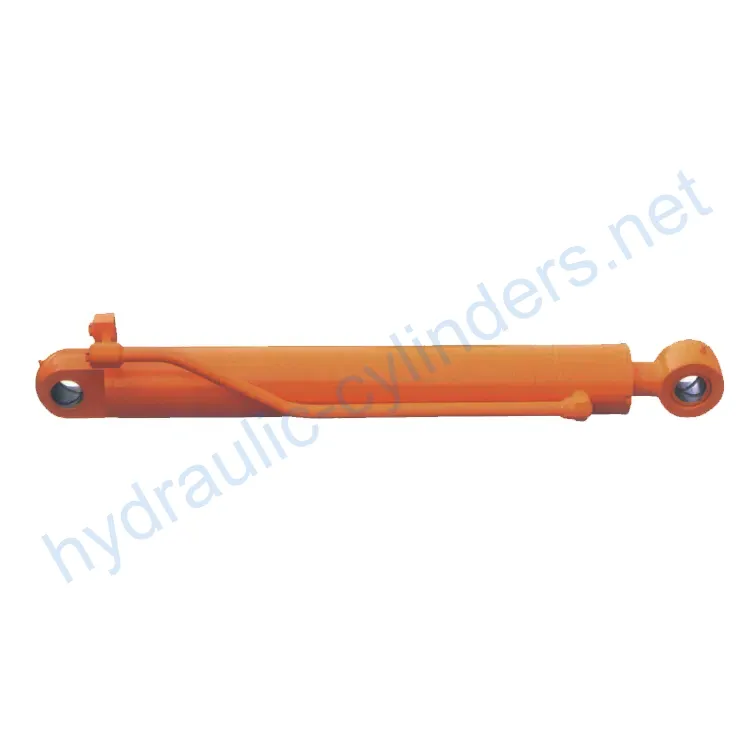
Armzylinder für Volvo Kleinbagger EC170D
Als einer der Hersteller, Lieferanten und Exporteure von mechanischen Produkten, bieten wir Hydraulikzylinder und viele andere Produkte an.
Bitte setzen Sie sich mit uns in Verbindung, um Einzelheiten zu erfahren.
Post:sales@hydraulic-cylinders.net
Hersteller, Lieferant und Exporteur von Hydraulikzylindern.
Arm Cylinder For Volvo Small Excavator EC170D
Einführung
The Arm Cylinder is a specially designed hydraulic cylinder that provides linear motion and power for the arm of various types of machinery such as excavators, cranes, and robotic arms. It plays a critical role in hydraulic systems, enabling the efficient movement and control of additional tools or attachments. These cylinders not only ensure smooth motion but also withstand heavy loads, ensuring high efficiency and reliability of the machinery under various operating conditions.
Definition und Erklärung
The Arm Cylinder is a hydraulic cylinder designed to provide linear motion and power to the arm of machinery. It is used in various applications, such as excavators, cranes, and robotic arms, to enable efficient movement and control of additional tools or attachments. These cylinders are essential components in hydraulic systems, allowing for smooth and precise operation, even under heavy load conditions. They are made of high-strength materials to ensure durability and are resistant to wear and corrosion, making them suitable for long-term use in harsh environments.
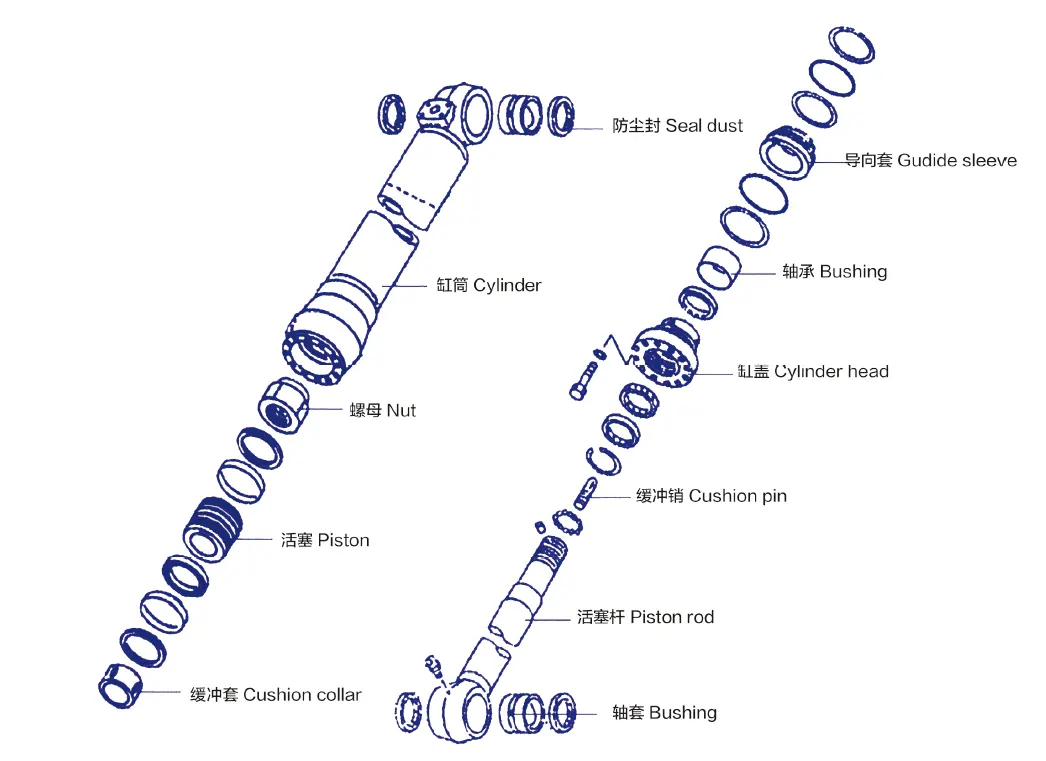
Produkteigenschaften
- High Transmission Efficiency: The Arm Cylinder provides powerful linear motion and force, ensuring high efficiency in various operations.
- Präzise Steuerung: Through hydraulic systems, the Arm Cylinder enables precise motion control, making operations with additional tools more flexible and accurate.
- Starke Haltbarkeit: Arm Cylinders are typically made of high-strength materials, offering excellent wear and corrosion resistance, suitable for long-term use in harsh environments.
- Vielseitige Anpassungsfähigkeit: These cylinders are widely used in various machinery such as excavators, cranes, and robotic arms, catering to different work requirements.
- Einfache Wartung: Designed for easy maintenance and replacement, the Arm Cylinder facilitates regular inspections and maintenance, reducing equipment downtime.

Anwendungen
Der Armzylinder findet in verschiedenen Branchen Anwendung:
1. Bauingenieurwesen
Bei Baggern und Kränen steuert der Armzylinder die Bewegung von Schaufeln oder Auslegern für Erdarbeiten, Materialtransport und die Montage von Bauwerken.
2. Herstellung
In automated production lines, the Arm Cylinder enables the movement of robotic arms for assembly, welding, and material handling processes, enhancing production efficiency and precision.
3. Landwirtschaftliche Maschinen
In agricultural machinery such as harvesters and seed drills, the Arm Cylinder controls the movement of operating arms for tasks like seeding, fertilizing, and harvesting.
4. Bergbau
Bei Bergbaumaschinen steuert der Armzylinder die Armbewegung der Maschinen zur Erzgewinnung und zum Erztransport.
5. Logistik und Transport
Bei Gabelstaplern und Handhabungsrobotern steuert der Armzylinder das Anheben und Bewegen der Gabeln und ermöglicht so das Materialhandling und Stapeln.
Designüberlegungen und Auswahlkriterien
When designing the Arm Cylinder, several factors and selection criteria should be taken into account:
1. Tragfähigkeit
The Arm Cylinder should be designed to withstand the specific loads and forces it will encounter during operation.
2. Abdichtung
Various sealing elements such as piston seals and rod seals should be used to ensure optimal performance and prevent leakage.
3. Haltbarkeit
The components of the Arm Cylinder, such as the cylinder body and threaded ends, should undergo precision surface treatment to enhance wear resistance and durability.
4. Sicherheit
The design should incorporate safety features such as pressure relief valves and safety locks to prevent accidents and ensure the safety of operators and surrounding personnel.
5. Wartung
The Arm Cylinder should be designed for ease of maintenance and repair, allowing for quick and hassle-free inspections and replacements.

Abdichtung und Schmierung
The Arm Cylinder utilizes various sealing components such as piston seals and rod seals, which are made of wear-resistant materials such as polyurethane and nitrile rubber. The cylinder body and threaded ends are finely treated to improve wear resistance. Regular lubrication with the appropriate amount of hydraulic oil is necessary to ensure smooth operation and longevity.
Regelmäßige Inspektion und vorbeugende Wartung
- Regularly inspect the Arm Cylinder for any signs of wear, damage, or leakage.
- Ensure that all connections and fasteners are secure.
- Check and replace any worn or damaged seals promptly.
- Halten Sie den Armzylinder sauber und frei von Ablagerungen oder Verunreinigungen.
- Befolgen Sie die Richtlinien des Herstellers zu Wartungsintervallen und -verfahren.
Anleitung zur korrekten Produktinstallation
Proper installation of the Arm Cylinder is crucial for optimal performance and longevity. Follow these steps:
- Stellen Sie sicher, dass die Montageflächen sauber und frei von Verunreinigungen sind.
- Align the Arm Cylinder with the mounting holes and secure it using appropriate bolts or fasteners.
- Stellen Sie sicher, dass alle Verbindungen ordnungsgemäß festgezogen sind.
- Check for any leaks or abnormal noises during initial operation.
- Refer to the manufacturer’s installation instructions for specific guidance.

Sicherheitsaspekte und Umweltfaktoren
When using the Arm Cylinder, it is essential to prioritize safety measures. Proper safety precautions are crucial to prevent accidents and ensure the well-being of individuals and the surrounding environment.
Fehlerdiagnose und häufige Probleme
Common faults and problems that may occur with the Arm Cylinder include:
- Leakage from the cylinder or hydraulic connections.
- Unusual noise during operation.
- Unregelmäßige oder ruckartige Armbewegungen.
- Excessive wear on seals or other components.
- Failure to hold or maintain position.
Um diese Probleme zu beheben, beachten Sie bitte die folgenden Tipps und Lösungsansätze:
- Inspect and replace any damaged or worn seals.
- Lockere Verbindungen oder Befestigungselemente festziehen.
- Prüfen Sie den Hydraulikflüssigkeitsstand und die Qualität.
- Flush and replace the hydraulic fluid if necessary.
- Spezifische Probleme lassen sich im Fehlerbehebungsleitfaden des Herstellers nachlesen.

Denken Sie daran, den Artikel logisch zu strukturieren, Zwischenüberschriften zur einfacheren Navigation zu verwenden, relevante Bilder oder Diagramme zur besseren Verständlichkeit einzufügen und einen klaren und prägnanten Inhalt zu gewährleisten, der für Leser mit unterschiedlichem technischen Wissen geeignet ist.
Über uns
We are a professional manufacturer of replacement hydraulic cylinders. With a wide range of products, we have become one of the leading manufacturers and wholesale distributors in the domestic and international markets. We uphold the principle of excellence in quality and continuously improve our technological capabilities and production efficiency. By introducing high-end digital manufacturing equipment and professional testing systems, we optimize our manufacturing platform and enhance product quality control processes, demonstrating strong innovation capabilities. Our goal is to meet the diverse needs of customers with efficiency, precision, and high quality.
Furthermore, we pride ourselves on our professionalism, international certifications, customized services, production facilities, and after-sales services.
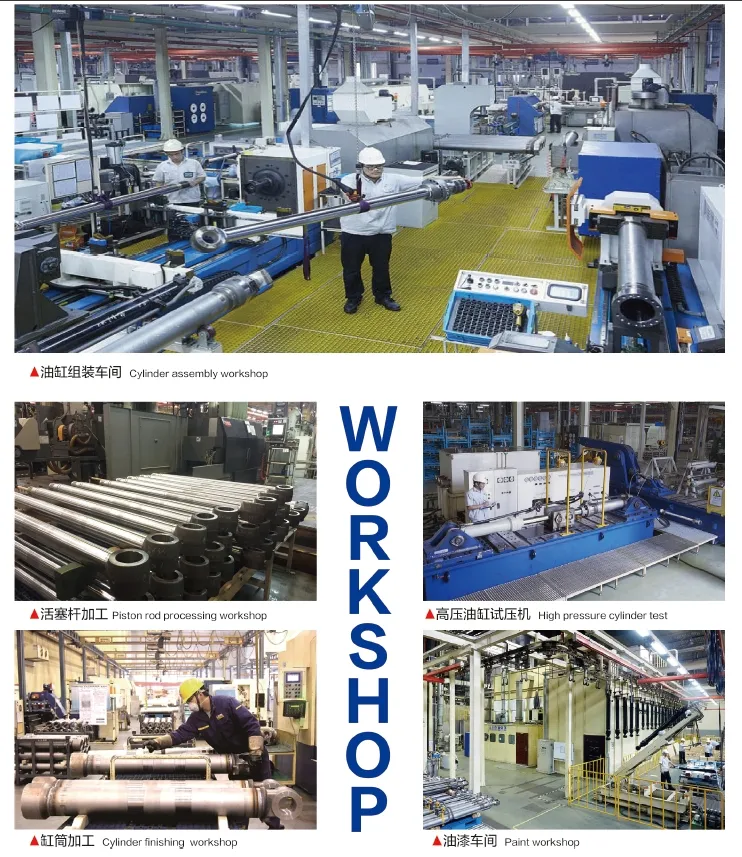
Hydraulischer Zylinder Anwendung:

 DE
DE  EN
EN  PT
PT  ES
ES  FR
FR  IT
IT  AR
AR  ZH
ZH  RU
RU  KO
KO  KA
KA  BG
BG  CS
CS  DA
DA  EL
EL  ET
ET  FI
FI  HU
HU  ID
ID  LT
LT  LV
LV  NB
NB  NL
NL  PL
PL  RO
RO  SK
SK  SL
SL  SV
SV  TR
TR  UK
UK