
Fluid Power Diagnostics Engineering
Why Is My Hydraulic Cylinder Acting Jerky? A Comprehensive Analysis
An authoritative technical engineering guide exploring the physics of stick-slip friction, fluid aeration, mechanical binding, and advanced hydraulic cylinder troubleshooting protocols.

The Loss of Smooth Hydrostatic Motion
In the highly demanding and mathematically precise sectors of automated manufacturing, heavy construction, and aerospace engineering, fluid power systems are the undisputed backbone of kinetic force generation. A properly functioning hydraulic circuit is defined by its ability to translate immense hydrostatic pressure into perfectly smooth, relentless, and unyielding linear motion. When an equipment operator or maintenance engineer asks the critical question, why is my hydraulic cylinder acting jerky, they are identifying a severe breakdown in this mechanical harmony. Instead of gliding seamlessly through its stroke, the cylinder stutters, chatters, hesitates, or leaps forward violently. This erratic movement destroys automated assembly line precision, massively accelerates component fatigue, and introduces extreme safety hazards when suspending or lowering heavy payloads.
A jerky hydraulic cylinder is never a random occurrence; it is always the physical manifestation of an underlying thermodynamic, mechanical, or fluid dynamic failure. Because hydraulic oil is an incompressible medium, any actuator driven by a consistent pump flow should theoretically move at a constant velocity. When that velocity breaks down into a stuttering, vibrating motion, the system is struggling to overcome a fluctuating resistance or is battling a compressible contaminant within the fluid column. Diagnosing this issue requires a meticulous process of elimination, moving from the microscopic chemistry of the hydraulic oil to the macroscopic structural alignment of the equipment chassis.
From an authoritative engineering perspective evaluated against international fluid power standards, resolving jerky cylinder motion requires deep technical expertise. You must differentiate between the pneumatic bounce of fluid aeration, the severe mechanical grinding of side loading, the complex physics of stick-slip friction, and the hydraulic resonance of a failing counterbalance valve. This comprehensive technical manual will systematically dissect each of these root causes, providing maintenance professionals with the advanced hydraulic cylinder troubleshooting protocols necessary to restore absolute smooth rigidity to their industrial actuators.
Culprit 1: The Physics of Stick-Slip Friction (Stiction)
The most common mechanical cause of a hydraulic cylinder acting jerky is a phenomenon known in tribology as stick-slip friction, often referred to colloquially as stiction. This is a complex interaction between the internal elastomeric seals and the polished steel cylinder barrel.
Static vs Kinetic Friction
The laws of physics dictate that static friction the force required to initiate movement from a dead stop is significantly higher than kinetic friction the force required to keep an object moving. When a hydraulic cylinder is resting, the polyurethane piston seals press tightly against the barrel wall, squeezing out the microscopic film of lubricating oil. When hydraulic pressure is applied, it builds up behind the piston until it overcomes this massive static friction. The piston violently breaks free and surges forward. Once moving, the friction drops to the lower kinetic level. If the pump flow is low, the pressure instantly drops, the piston stalls, static friction re-engages, and the cycle repeats. This continuous grabbing and releasing creates a severe, violent juddering motion.
Loss of Internal Lubrication
Stick-slip is drastically exacerbated by a lack of proper lubrication between the seals and the barrel. This can occur if the hydraulic fluid has broken down due to extreme thermal degradation, losing its essential lubricity additives. Furthermore, if a cylinder barrel was improperly honed during a previous rebuild, lacking the precise microscopic crosshatch pattern required to retain a thin film of oil, the seals will run completely dry against the steel. This dry running not only causes aggressive jerky motion but will rapidly shred the elastomeric seals, leading to massive internal fluid bypass.

Culprit 2: Fluid Aeration and Compressibility
If the jerky motion is accompanied by a distinctly spongy, bouncing sensation when the cylinder stops, the root cause is almost certainly fluid aeration. The defining characteristic of hydraulic power is the incompressibility of liquids. When atmospheric air is introduced into the closed loop hydraulic circuit, it fundamentally destroys this property.
Unlike hydraulic oil, air is a highly compressible gas. When a pocket of air becomes trapped inside the cylinder chamber, it acts exactly like a giant mechanical coil spring. As the hydraulic pump drives fluid into the cylinder, the energy is initially wasted compressing the trapped air bubble. Once the air is fully compressed, the cylinder leaps forward. If the load resistance changes slightly, the air bubble rapidly expands and contracts, causing the entire piston assembly to shudder and bounce. This aeration creates a highly erratic, uncontrollable velocity profile.
Identifying Air Ingestion Vectors
Air does not spontaneously generate inside a cylinder; it must be drawn in from the outside environment. The most common ingestion point is a microscopic vacuum leak on the suction line between the main fluid reservoir and the hydraulic pump inlet. Because this line is under negative pressure, a loose hose clamp or a degraded fitting will suck atmospheric air directly into the fluid stream without leaking a single drop of oil outward. Alternatively, if the fluid level in the main reservoir drops too low, the pump will create a vortex, pulling massive gulps of air down into the intake. Finally, if the primary rod seal in the cylinder head gland is heavily worn, a rapidly extending cylinder pulling a heavy, overrunning load can create a temporary internal vacuum, sucking air straight past the wiper seal.

Culprit 3: Mechanical Binding and Side Loading
If you have definitively ruled out fluid aeration and verified the oil possesses adequate lubricity, the jerky motion may be entirely structural. Hydraulic cylinders are designed to apply force in a perfectly straight, linear axis. They are highly intolerant of lateral forces.
Misalignment and Side Loading
When the mounting brackets on the heavy machinery become worn, or if the cylinder is installed slightly out of parallel alignment with the payload guides, severe side loading occurs. This lateral force pushes the rigid steel piston rod aggressively against one side of the brass head gland, while simultaneously forcing the internal piston against the opposite wall of the steel barrel. This massive metal on metal binding creates extreme mechanical friction. The hydraulic pressure must build up significantly to shove the binding components past each other, resulting in a heavy, grinding, jerky motion that will rapidly destroy the actuator completely.
Bent Piston Rods
A direct consequence of extreme side loading or exceeding the column buckling strength of the actuator is a bent piston rod. Even a microscopic bow in the hardened chrome rod turns it into a massive eccentric cam. As the bent rod attempts to retract through the perfectly straight, tight tolerances of the cylinder head gland, it binds heavily. The cylinder will exhibit smooth motion during extension but will shudder violently and bind during retraction as the bent section forces its way through the tight gland seals.
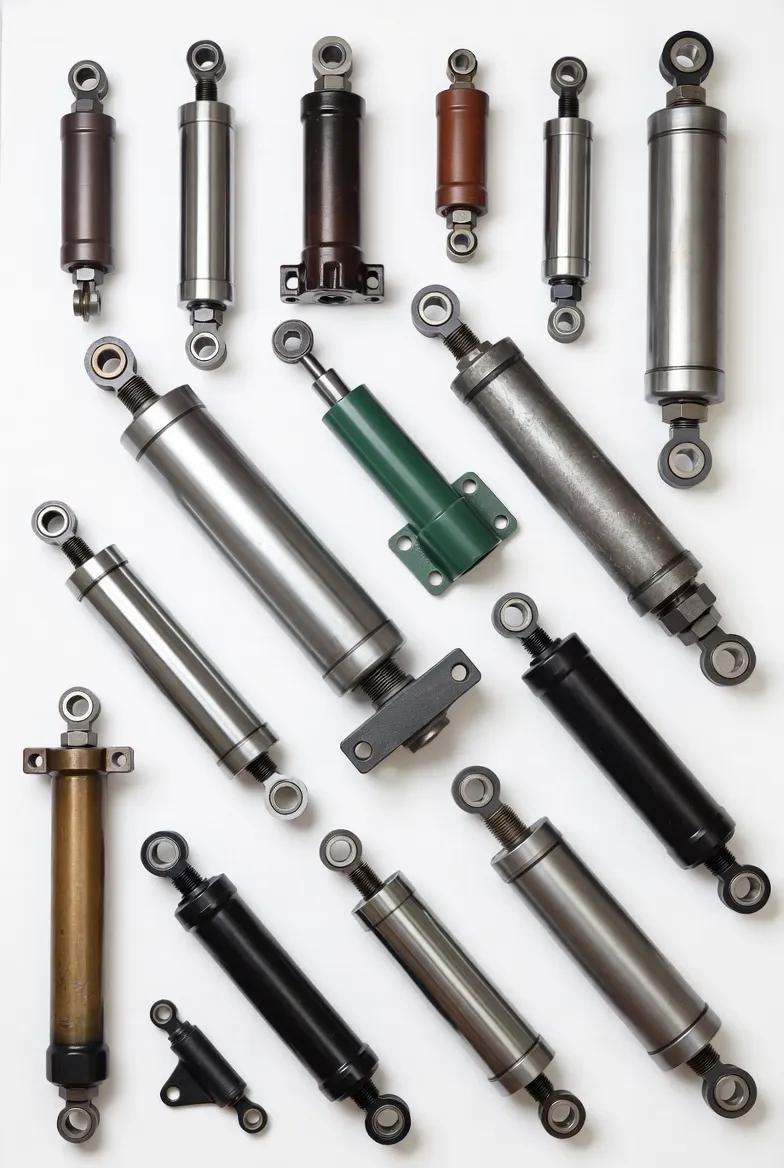
Culprit 4: Valve Instability and Flow Restrictions
A comprehensive hydraulic cylinder troubleshooting protocol must look beyond the physical actuator and examine the control circuit. In many instances, the cylinder is mechanically flawless, but the fluid being supplied to it is fluctuating wildly, creating the illusion of a failing actuator.
- ✔️
Counterbalance Valve Chatter: If the jerky motion strictly occurs when lowering a heavy payload, the primary suspect is the counterbalance valve. These highly sensitive holding valves are designed to create backpressure, preventing a heavy load from freefalling faster than the pump can supply fluid. If the counterbalance valve is incorrectly adjusted, or if its internal pilot spring has fatigued, it will rapidly open and close in milliseconds. This rapid oscillation, known as valve chatter, sends violent hydraulic shockwaves into the cylinder, causing the entire boom or press to shudder violently as it descends.
- ✔️
Proportional Valve Hysteresis: In advanced automated manufacturing, cylinder speed is governed by electro hydraulic proportional directional control valves. If the electrical signal supplying the valve is erratic, or if the microscopic tolerances inside the valve spool have become contaminated with silt, the valve will struggle to maintain a consistent open position. This fluctuating flow rate directly translates into jerky, inconsistent cylinder extension speeds.

Diagnostic Resolution and Preventative Maintenance
Restoring smooth, rigid motion to a fluid power system requires executing a logical, process of elimination diagnostic protocol. You must isolate the variables to prevent wasting thousands of dollars replacing perfectly functional components.
Always begin by addressing the simplest and most common culprit: aeration. Position the cylinder under zero load and execute a rigorous bleeding procedure, either by utilizing dedicated bleed valves or by systematically cycling the cylinder back and forth at low idle to purge trapped air back to the reservoir. Simultaneously, inspect the pump suction lines for vacuum leaks. If the fluid is pure and air free, apply an external dial indicator to the extended chrome rod to check for deflection and bending. If the rod is straight, deploy inline digital pressure gauges before and after the counterbalance valves to monitor for erratic pressure fluctuations. If all external factors are verified, the cylinder must be extracted, disassembled, and rebuilt with new, properly lubricated dynamic seals to resolve internal stick-slip friction.

Conclusion: Securing Fluid Power Precision
Understanding exactly why a hydraulic cylinder is acting jerky is the fundamental bedrock of proactive heavy machinery maintenance and safe operations. Erratic motion is not merely an annoyance; it is a highly destructive mechanical symptom that accelerates component fatigue, compromises load holding safety, and destroys manufacturing precision. By mastering the tribological physics of stick-slip friction, securing the fluid network against compressible air ingestion, maintaining perfect structural alignment to prevent side loading, and carefully calibrating complex control valves, engineering professionals can eliminate erratic kinematics. Rigorous diagnostic procedures ensure that the world’s most powerful automated equipment continues to perform with absolute, unyielding, and flawlessly smooth reliability.