


Armzylinder für Nante NT08
Einführung
The arm cylinder, also known as an hydraulic cylinder, is a specially designed hydraulic actuator used to provide linear motion and power to the arm of various types of machinery, such as excavators, cranes, and robotic arms. The arm cylinder plays a crucial role in hydraulic systems, enabling the efficient movement and control of additional tools or attachments. These cylinders not only provide smooth motion but also withstand heavy loads, ensuring efficient operation and reliability of the machinery in various working conditions.
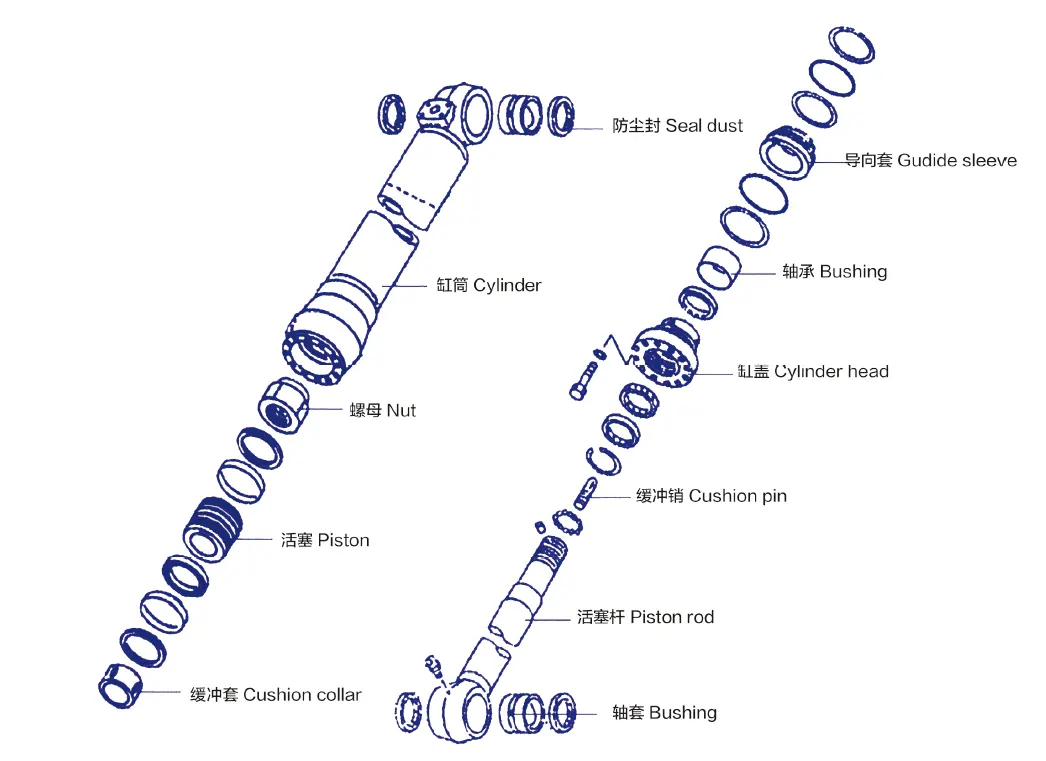

Merkmale
- Hocheffizientes Getriebe: Der Armzylinder sorgt für eine kraftvolle lineare Bewegung und Kraft und gewährleistet so die hohe Leistungsfähigkeit des mechanischen Arms bei verschiedenen Operationen.
- Präzise Steuerung: Durch das Hydrauliksystem wird eine präzise Bewegungssteuerung des Armzylinders erreicht, wodurch der Einsatz zusätzlicher Werkzeuge flexibler und genauer wird.
- Haltbarkeit: Armzylinder bestehen typischerweise aus hochfesten Materialien mit ausgezeichneter Verschleiß- und Korrosionsbeständigkeit, sodass sie für den Langzeiteinsatz in rauen Umgebungen geeignet sind.
- Multifunktionale Anpassungsfähigkeit: These cylinders can be widely used in various machinery equipment, such as excavators, cranes, and robotic arms, to accommodate different job requirements.
- Wartungsfreundlichkeit: The design of the arm cylinder takes into consideration ease of maintenance and replacement, making regular inspections and upkeep more convenient, thus reducing equipment downtime.


Anwendungen
Der Armzylinder findet Anwendung in verschiedenen Branchen:
1. Bauingenieurwesen
Bei Baggern und Kränen dient der Armzylinder zur Steuerung der Bewegung der Schaufel oder des Auslegers für Erdarbeiten, Materialtransport und die Montage von Bauwerken.
2. Herstellung
In automatisierten Produktionslinien wird der Armzylinder für die Bewegung von Roboterarmen in Prozessen wie Montage, Schweißen und Materialhandhabung eingesetzt, wodurch die Produktionseffizienz und -präzision verbessert werden.
3. Landwirtschaftliche Maschinen
Bei landwirtschaftlichen Maschinen wie Mähdreschern und Sämaschinen steuert der Armzylinder die Bewegung des Arbeitsarms für Aufgaben wie Pflanzen, Düngen und Ernten.
4. Bergbau
Bei Bergbaumaschinen dient der Armzylinder zur Steuerung der Armbewegung von Bergbaumaschinen für die Erzgewinnung und den Erztransport.
5. Logistik und Transport
Bei Gabelstaplern und Handhabungsrobotern steuert der Armzylinder das Anheben und Bewegen der Gabeln und ermöglicht so die Handhabung und Stapelung von Materialien.


Designüberlegungen und Auswahlkriterien
Bei der Konstruktion und Auswahl von Armzylindern sollten mehrere Faktoren berücksichtigt werden:
1. Tragfähigkeit
The arm cylinder should be able to withstand the expected loads and forces encountered during operation.
2. Abdichtung
Various sealing elements, such as piston seals and rod seals, should be used to ensure proper sealing. These seals are typically made of wear-resistant materials like polyurethane and nitrile rubber. The surface of the cylinder body and threaded end should also undergo careful processing to improve wear resistance.
3. Haltbarkeit
The arm cylinder should be constructed using high-quality materials and manufacturing processes to ensure durability and resistance to wear and corrosion.
4. Sicherheit
Safety considerations, such as pressure relief valves and emergency stop systems, should be incorporated into the design to prevent accidents and protect operators.
5. Wartung
Regular lubrication with appropriate hydraulic oil and periodic inspection are necessary for maintaining the performance and longevity of the arm cylinder.


Inspektion und vorbeugende Wartung
To ensure optimal performance and longevity of the arm cylinder, the following inspection and preventive maintenance measures should be taken:
1. Regelmäßige Inspektionen
Inspect the arm cylinder for any signs of wear, leakage, or damage. Check the seals, connections, and hydraulic lines for proper functioning.
2. Schmierung
Add an appropriate amount of hydraulic oil to ensure proper lubrication of the cylinder components.
3. Maintenance Schedule
Adhere to a regular maintenance schedule, including cleaning, lubrication, and replacement of worn-out parts as needed.
4. Proper Storage
When the arm cylinder is not in use, store it in a clean and dry environment to protect it from contamination and corrosion.
Produktinstallationshandbuch
Befolgen Sie diese Schritte für die ordnungsgemäße Installation des Armzylinders:
- Ensure the machinery is properly supported and in a safe position.
- Remove any existing cylinder or component that the new arm cylinder will replace.
- Attach the arm cylinder to the designated mounting points using appropriate bolts and hardware.
- Alle Verbindungen fest anziehen.
- Connect the hydraulic lines to the appropriate ports, ensuring correct alignment.
- Check for any leaks and perform a pressure test to ensure proper installation.


Sicherheitsaspekte und Umweltfaktoren
When working with arm cylinders, safety measures are of utmost importance:
It is essential to follow all recommended safety procedures and regulations while operating machinery equipped with arm cylinders. This includes wearing appropriate personal protective equipment, implementing lockout/tagout procedures when performing maintenance, and ensuring proper training for operators.
Additionally, considering environmental factors such as temperature, humidity, and exposure to corrosive substances is crucial to maintain the performance and longevity of the arm cylinder. Regular inspections and proper maintenance help mitigate potential environmental risks.
Fehlerbehebung und häufige Probleme
Bei Problemen mit dem Armzylinder können die folgenden Tipps und Lösungen zur Fehlerbehebung helfen, die Probleme zu diagnostizieren und zu beheben:
- Problem 1: Der Zylinder fährt nicht richtig aus oder ein.
- Problem 2: Übermäßige Geräusche oder Vibrationen während des Betriebs.
- Problem 3: Slow or jerky movement of the arm.
- Issue 4: Cylinder seal failure or leakage.
- Issue 5: Überhitzung des Hydrauliksystems.
Lösung: Check for hydraulic leaks, ensure proper fluid levels, and inspect the seals for any damage or wear.
Lösung: Inspect the mounting points and connections for loose or damaged components. Check for worn-out or misaligned parts.
Lösung: Ensure the hydraulic system is properly maintained and the fluid is clean. Check for clogged filters or restrictions in the hydraulic lines.
Lösung: Replace the damaged seals with new ones made from suitable materials and ensure proper installation and alignment.
Lösung: Check for excessive fluid levels, dirty filters, or inadequate cooling. Address any issues with the hydraulic system to prevent overheating.
Remember to organize the article logically, use subheadings for easy navigation, incorporate relevant images or charts to enhance understanding, and ensure the content is clear, concise, and suitable for readers with varying levels