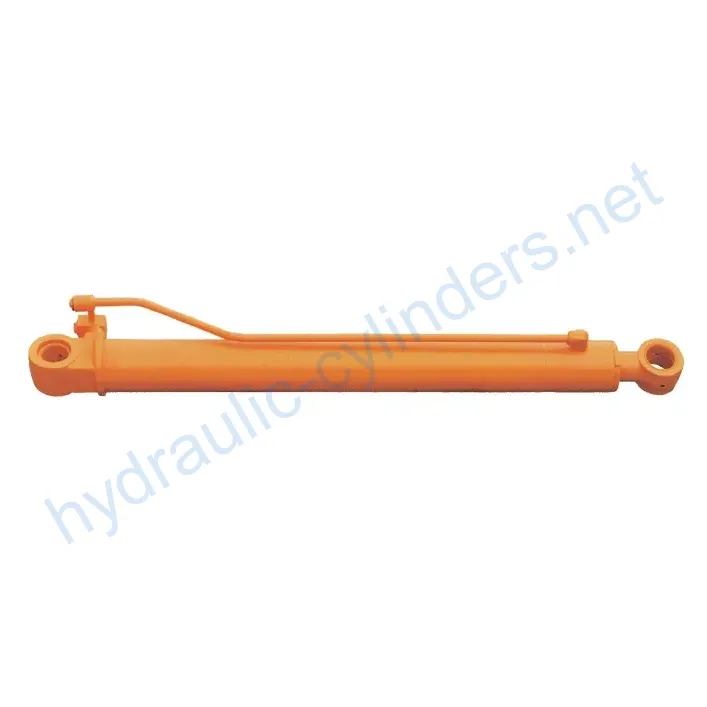
Armzylinder für Nante NT45
Einführung
The Arm Cylinder for Nante NT45 is a specialized hydraulic cylinder designed to provide linear motion and power for various types of machinery arms, such as excavators, cranes, and robotic arms. The arm cylinder plays a crucial role in hydraulic systems, allowing for efficient movement and control of attached tools or attachments. These cylinders not only provide smooth motion but also withstand heavy loads, ensuring high operational efficiency and reliability of the machinery in various working conditions.

Merkmale
- Effiziente Energieübertragung: The arm cylinder provides strong linear motion and force, ensuring high performance of the machinery arm in various operations.
- Präzise Steuerung: With the hydraulic system, the arm cylinder enables precise motion control, making operations of attached tools more flexible and accurate.
- Haltbarkeit: Arm cylinders are typically made with high-strength materials, offering excellent wear and corrosion resistance, making them suitable for long-term use in harsh environments.
- Vielseitige Anpassungsfähigkeit: These cylinders can be widely applied to various types of machinery equipment such as excavators, cranes, and robotic arms, accommodating different job requirements.
- Einfache Wartung: Designed with ease of maintenance and replacement in mind, the arm cylinders facilitate convenient regular inspections and maintenance, reducing equipment downtime.


Anwendungen
The Arm Cylinder for Nante NT45 finds applications in various industries:
- Bauingenieurwesen: In excavators and cranes, the arm cylinder controls the movement of buckets or booms for earthwork, material handling, and structural installation.
- Herstellung: In automated production lines, the arm cylinder facilitates the motion of robotic arms for assembly, welding, and material handling processes, enhancing production efficiency and precision.
- Landmaschinen: In agricultural equipment such as harvesters and seeders, the arm cylinder controls the movement of operational arms for tasks like seeding, fertilizing, and harvesting.
- Bergbau: In mining equipment, the arm cylinder controls the arm movement for mining and material transportation purposes.
- Logistik und Transport: In forklifts and handling robots, the arm cylinder controls the lifting and movement of forks, enabling material handling and stacking.
Designüberlegungen und Auswahlkriterien
When designing the arm cylinder, several key factors and selection criteria are taken into consideration:
- Belastbarkeit: The arm cylinder is designed to withstand the specific load requirements of the machinery, ensuring safe and efficient operation.
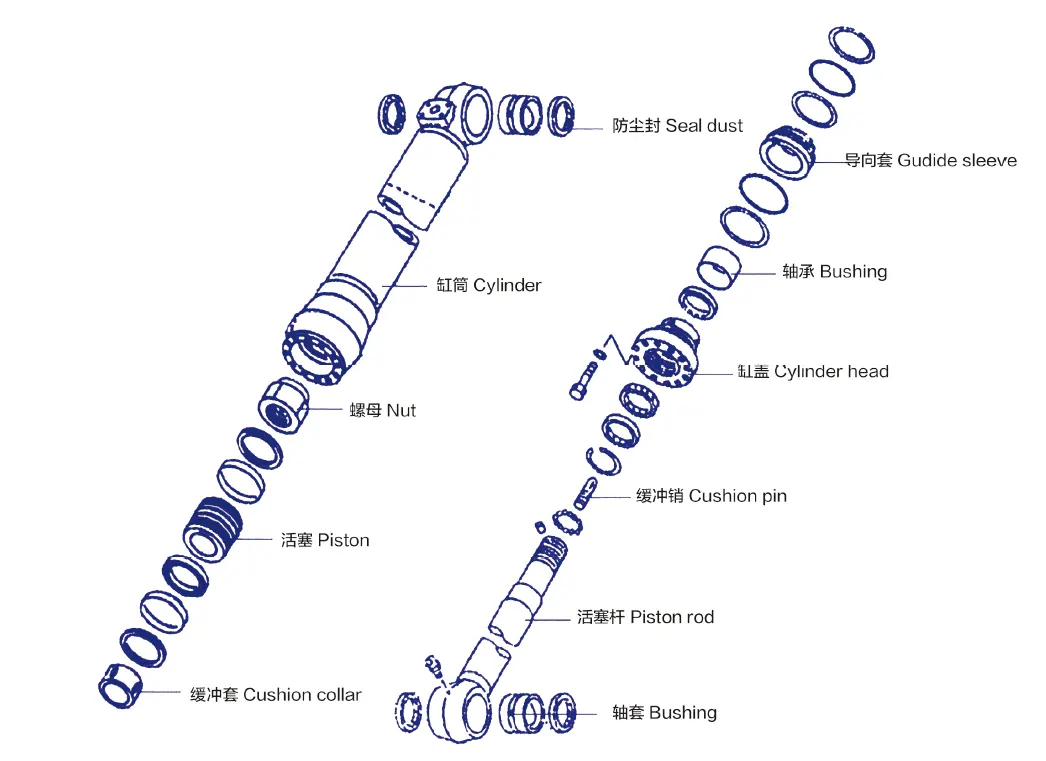
- Dichtungsfähigkeit: Various sealing components, such as piston seals and rod seals, are used to ensure effective sealing. These seals are made of wear-resistant materials like polyurethane and nitrile rubber.
- Haltbarkeit: The cylinder body and threaded end surfaces are finely treated to improve wear resistance, ensuring long-term durability.
- Sicherheit: Safety considerations are integrated into the design to prevent accidents or malfunctions during operation.
- Wartbarkeit: The arm cylinder is designed for easy maintenance and regular lubrication with appropriate hydraulic oil.


Abdichtung und Schmierung
The arm cylinder utilizes various seals, such as piston seals and rod seals, made of wear-resistant materials like polyurethane and nitrile rubber. Additionally, the cylinder body and threaded end surfaces undergo fine treatment to enhance wear resistance. Regular lubrication with the appropriate amount of hydraulic oil is required to ensure smooth operation.
Regelmäßige Inspektion und vorbeugende Wartung
To maintain optimal performance, regular inspections and preventive maintenance measures should be taken, including:
- Checking the condition of seals and replacing them if necessary.
- Inspecting the cylinder body and end surfaces for wear or damage.
- Monitoring the hydraulic oil level and quality, and replenishing or replacing it as needed.
- Verifying the proper functioning of control valves and other hydraulic components.
- Tightening any loose connections or fittings.
Produktinstallationshandbuch
Follow these steps for proper installation of the Arm Cylinder for Nante NT45:
- Bereiten Sie den Montagebereich vor und stellen Sie sicher, dass er sauber und frei von Schmutz ist.
- Position the cylinder carefully in the desired location.
- Securely attach the cylinder using appropriate mounting hardware.
- Connect the hydraulic hoses or pipes to the cylinder using proper fittings.
- Überprüfen Sie die Funktion des Zylinders, um dessen einwandfreie Funktion sicherzustellen.


Sicherheitsaspekte und Umweltfaktoren
When working with the Arm Cylinder for Nante NT45, it is essential to prioritize safety measures to prevent accidents or injuries. Adequate safety precautions should be taken, such as wearing appropriate personal protective equipment and following operating instructions.
Fehlerbehebung und häufige Probleme
Some common troubleshooting and issues related to the Arm Cylinder for Nante NT45 include:
- Leckage von Hydraulikflüssigkeit an Dichtungen oder Verbindungen.
- Abnormal noise or vibration during operation.
- Insufficient or uneven movement of the arm.
- Failure to hold a specific position.
- Unregelmäßige oder ruckartige Bewegungen.
Here are some tips and solutions for addressing these problems:
- Prüfen Sie beschädigte Dichtungen oder Verbindungen und ersetzen Sie diese gegebenenfalls.
- Check for loose or worn components and tighten or replace them as necessary.
- Ensure the hydraulic fluid level is sufficient and of the correct viscosity.
- Verify the proper functioning of control valves and other hydraulic components.
- Clean and lubricate the cylinder and related components regularly.


Denken Sie daran, den Artikel logisch zu strukturieren und Zwischenüberschriften für eine einfache Navigation zu verwenden. Fügen Sie relevante Bilder oder Diagramme ein, um das Verständnis zu erleichtern. Achten Sie darauf, dass der Inhalt klar, prägnant und für Leser mit unterschiedlichem technischen Vorwissen geeignet ist.
Autor: lyl