
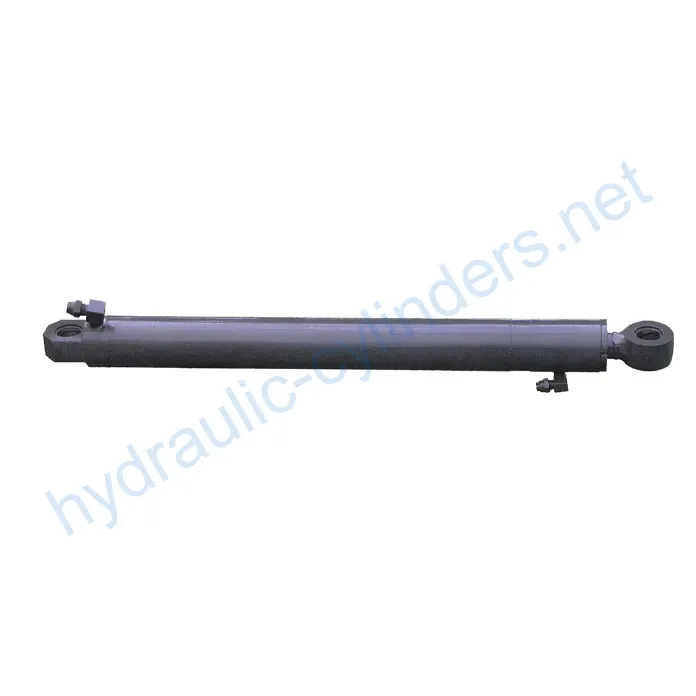
Armzylinder für NHIG 2306LC
Als einer der Hersteller, Lieferanten und Exporteure von mechanischen Produkten, bieten wir Hydraulikzylinder und viele andere Produkte an.
Bitte setzen Sie sich mit uns in Verbindung, um Einzelheiten zu erfahren.
Post:sales@hydraulic-cylinders.net
Hersteller, Lieferant und Exporteur von Hydraulikzylindern.
Armzylinder für NHIG 2306LC
Einführung
The Arm Cylinder For NHIG 2306LC is a specialized hydraulic cylinder designed to provide linear motion and power to the arms of various machinery such as excavators, cranes, and robotic arms. The arm cylinders play a crucial role in hydraulic systems, allowing for efficient movement and control of additional tools or attachments. These cylinders not only enable smooth motion but also withstand heavy loads, ensuring high operational efficiency and reliability of the machinery in various working conditions.
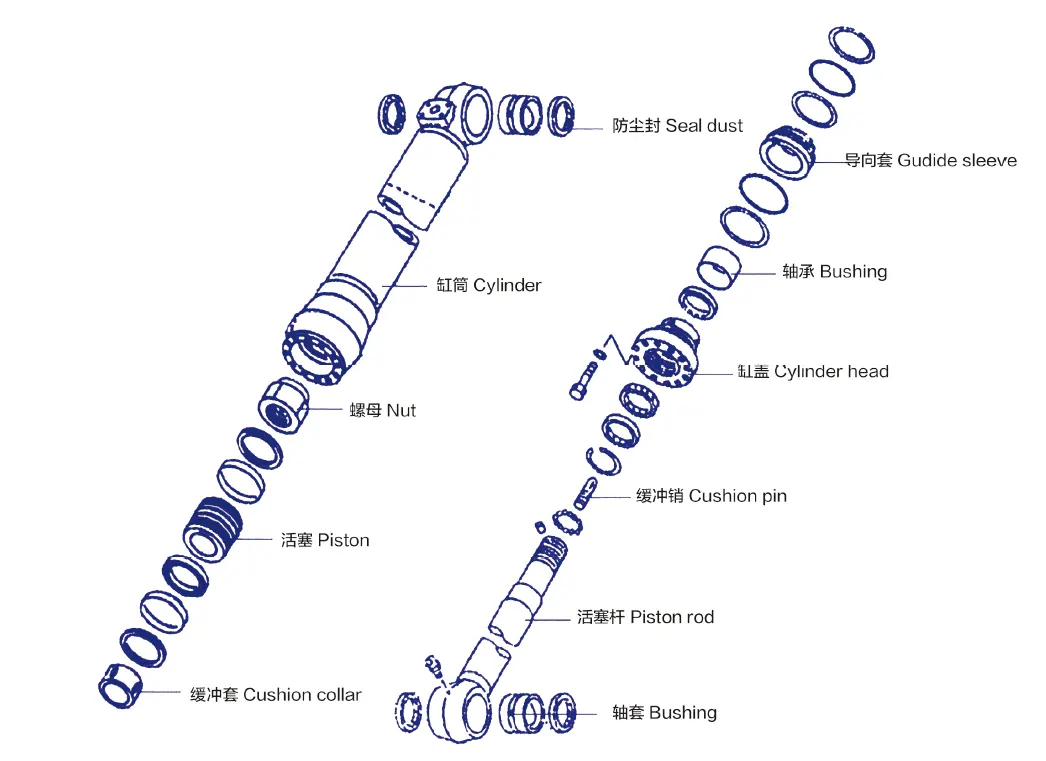
Merkmale
-
Hocheffiziente Übertragung
Der Armzylinder sorgt für eine kraftvolle lineare Bewegung und Kraft und gewährleistet so die hohe Leistungsfähigkeit des Roboterarms bei verschiedenen Operationen.
-
Präzise Steuerung
Durch das Hydrauliksystem ermöglicht der Armzylinder eine präzise Bewegungssteuerung, wodurch die Arbeit mit angebrachten Werkzeugen flexibler und genauer wird.
-
Haltbarkeit
The Arm Cylinder is manufactured using high-strength materials, offering excellent wear resistance and corrosion resistance, making it suitable for long-term use in harsh environments.
-
Multifunktionale Anpassungsfähigkeit
These cylinders have wide applications in various machinery such as excavators, cranes, and robotic arms, adapting to different job requirements.
-
Einfache Wartung
The design of the Arm Cylinder takes into consideration ease of maintenance and replacement, making regular inspections and servicing convenient and reducing equipment downtime.

Anwendungen
-
Bauingenieurwesen
In excavators and cranes, the Arm Cylinder is used to control the movement of buckets or booms for earthworks, material handling, and structural installation.
-
Fertigungsindustrie
In automated production lines, the Arm Cylinder is used for the motion of robotic arms in assembly, welding, and handling processes, improving production efficiency and precision.
-
Landmaschinen
In agricultural machinery such as harvesters and seeders, the Arm Cylinder controls the movement of operating arms for tasks such as seeding, fertilizing, and harvesting.
-
Bergbau
Bei Bergbaumaschinen dient der Armzylinder zur Steuerung der Armbewegung von Bergbaumaschinen für die Erzgewinnung und den Erztransport.
-
Logistik und Transport
In forklifts and transport robots, the Arm Cylinder controls the lifting and movement of forks, enabling material handling and stacking.
Designüberlegungen und Auswahlkriterien
-
Belastbarkeit
Der Armzylinder ist so konstruiert, dass er spezifischen Belastungsanforderungen standhält und einen sicheren und effizienten Betrieb gewährleistet.
-
Versiegelung
Various sealing components such as piston seals and rod seals, made from wear-resistant materials like polyurethane and nitrile rubber, are used to maintain proper sealing and prevent leakage.
-
Haltbarkeit
The cylinder body and threaded ends undergo meticulous surface treatment to enhance wear resistance and prolong lifespan.
-
Sicherheit
Strict safety standards are followed during the design and manufacturing process to ensure the Arm Cylinder’s safe operation.
-
Wartbarkeit
The design allows for easy maintenance and replacement of components, reducing downtime and improving overall productivity.

Abdichtung und Schmierung
The Arm Cylinder utilizes various sealing components, such as piston seals and rod seals, made from wear-resistant materials like polyurethane and nitrile rubber. The cylinder body and threaded ends undergo precise surface treatment to enhance wear resistance. Regular lubrication with appropriate hydraulic oil is essential for smooth operation.
Regelmäßige Inspektion und vorbeugende Wartung
-
Führen Sie regelmäßige Inspektionen durch, um Anzeichen von Verschleiß, Beschädigung oder Leckagen festzustellen.
-
Ensure proper lubrication by adding the recommended amount of hydraulic oil at regular intervals.
-
Tighten loose connections and fasteners to maintain structural integrity.
-
Replace worn-out seals or damaged components promptly to prevent malfunctions.
-
Follow the manufacturer’s guidelines and recommendations for maintenance procedures and schedules.

Produktinstallationshandbuch
1. Ensure the machinery is powered off and in a stable position.
2. Carefully position the Arm Cylinder in the desired location, aligning the mounting holes.
3. Attach the cylinder securely using appropriate bolts and nuts.
4. Connect the hydraulic lines according to the machinery’s hydraulic system diagram.
5. Double-check all connections and tighten them to the recommended torque.
6. Test the Arm Cylinder’s functionality by performing a controlled motion test.
7. Make any necessary adjustments and ensure proper alignment.
8. Once satisfied with the installation, power on the machinery and conduct a final test.

Sicherheitsaspekte und Umweltfaktoren
When using the Arm Cylinder, it is crucial to follow safety measures to prevent accidents and injuries. Proper training and adherence to safety guidelines are essential for operators and maintenance personnel. Additionally, considering environmental factors such as temperature, humidity, and exposure to corrosive substances ensures optimal performance and longevity of the Arm Cylinder.
Fehlerbehebung und häufige Probleme
1. Issue: Slow or jerky arm movement.
Solution: Check for low hydraulic oil level or a clogged hydraulic filter. Refill or replace as necessary.
2. Issue: Leakage around the cylinder.
Solution: Inspect seals and connections for damage or wear. Replace faulty components.
3. Issue: Cylinder not extending or retracting fully.
Solution: Check for obstructions in the hydraulic lines or damaged control valves. Clear blockages or replace faulty valves.
4. Issue: Excessive noise during operation.
Solution: Inspect the cylinder for loose or damaged components. Tighten connections or replace damaged parts.
5. Issue: Cylinder overheating.
Solution: Check for improper lubrication or a malfunctioning cooling system. Add lubrication or repair cooling components.
Über unser Unternehmen
We are a professional manufacturer of replacement hydraulic cylinders with a wide range of products. We have become one of the leading manufacturers and wholesalers of hydraulic cylinders in both domestic and international markets. We uphold the principle of excellent quality and continuously improve our technical expertise and production efficiency. By introducing high-end digital manufacturing equipment and professional testing systems, we optimize our manufacturing platform and enhance our product quality control processes. Our goal is to meet customer’s diverse needs with efficiency, accuracy, and high-quality products.

Hydraulischer Zylinder Anwendung:

 DE
DE  EN
EN  PT
PT  ES
ES  FR
FR  IT
IT  AR
AR  ZH
ZH  RU
RU  KO
KO  KA
KA  BG
BG  CS
CS  DA
DA  EL
EL  ET
ET  FI
FI  HU
HU  ID
ID  LT
LT  LV
LV  NB
NB  NL
NL  PL
PL  RO
RO  SK
SK  SL
SL  SV
SV  TR
TR  UK
UK