

Armzylinder für Volkswagen Mittelbagger DLS200-8B
Als einer der Hersteller, Lieferanten und Exporteure von mechanischen Produkten, bieten wir Hydraulikzylinder und viele andere Produkte an.
Bitte setzen Sie sich mit uns in Verbindung, um Einzelheiten zu erfahren.
Post:sales@hydraulic-cylinders.net
Hersteller, Lieferant und Exporteur von Hydraulikzylindern.
Armzylinder für Volkswagen Mittelbagger DLS200-8B
Einführung
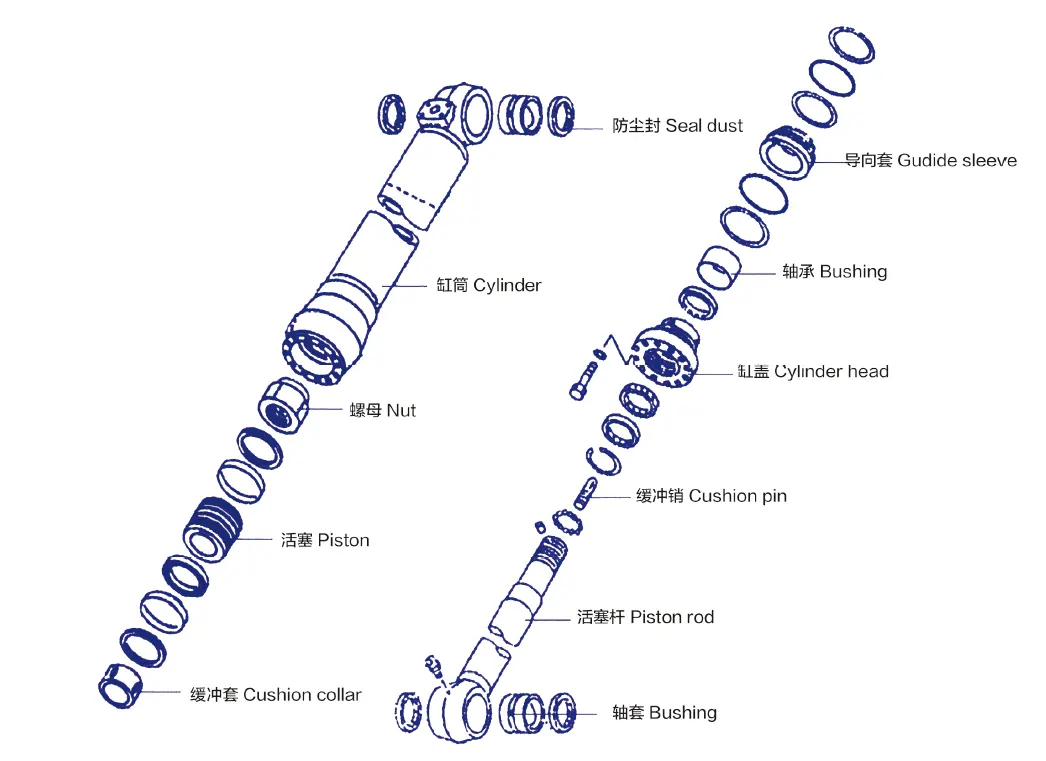
The Arm Cylinder is a specially designed hydraulic cylinder that provides linear motion and power to the arm of various machinery, such as excavators, cranes, and robotic arms. It plays a crucial role in hydraulic systems, allowing for efficient movement and control of additional tools or attachments. These cylinders not only ensure smooth motion but also withstand heavy loads, ensuring efficient operation and reliability of the machinery in various working conditions.
Definition und Erklärung
The Arm Cylinder is a type of hydraulic cylinder specifically designed to provide linear motion and power to the arm of various machinery. It is an essential component of hydraulic systems, allowing for efficient movement and control of additional tools or attachments. The cylinder is capable of smooth motion and can withstand heavy loads, ensuring high efficiency and reliability in different operational scenarios.
Merkmale
- Hocheffiziente Übertragung: Der Armzylinder sorgt für eine kraftvolle lineare Bewegung und Kraft und gewährleistet so die hohe Leistungsfähigkeit des Maschinenarms.
- Präzisionssteuerung: Durch das Hydrauliksystem ermöglicht der Armzylinder eine präzise Bewegungssteuerung, wodurch der Einsatz zusätzlicher Werkzeuge flexibler und genauer wird.
- Haltbarkeit: The Arm Cylinder is typically manufactured using high-strength materials, offering excellent wear and corrosion resistance, making it suitable for long-term use in harsh environments.
- Multifunktionale Anpassungsfähigkeit: Diese Zylinder finden in verschiedenen Maschinen, wie z. B. Baggern, Kränen und Roboterarmen, vielfältige Anwendung und passen sich unterschiedlichen Arbeitsanforderungen an.
- Einfache Wartung: The design of the Arm Cylinder considers ease of maintenance and replacement, making regular inspection and upkeep more convenient, reducing equipment downtime.

Anwendungen
1. Bauingenieurwesen: In excavators and cranes, the Arm Cylinder controls the movement of the bucket or boom for earthmoving, material handling, and structural installation.
2. Verarbeitendes Gewerbe: In automated production lines, the Arm Cylinder is used for the motion of robotic arms, enabling assembly, welding, and material handling processes, improving production efficiency and precision.
3. Landwirtschaftliche Maschinen: Bei landwirtschaftlichen Geräten wie Mähdreschern und Sämaschinen steuert der Armzylinder die Bewegung der Arbeitsarme und führt Aufgaben wie Säen, Düngen und Ernten aus.
4. Bergbau: Bei Bergbaumaschinen steuert der Armzylinder die Armbewegung der Maschinen und erleichtert so die Erzgewinnung und den Erztransport.
5. Logistik und Transport: Bei Gabelstaplern und Handhabungsrobotern steuert der Armzylinder das Anheben und Bewegen der Gabeln und ermöglicht so das Materialhandling und Stapeln.
Designüberlegungen und Auswahlkriterien
- Tragfähigkeit: The Arm Cylinder is designed to withstand the specific load requirements of the machinery, ensuring safe and efficient operation.
- Versiegelung: Various seals, such as piston seals and rod seals, are used to prevent fluid leakage and maintain system integrity. These seals are made of wear-resistant materials like polyurethane and nitrile rubber.
- Haltbarkeit: The cylinder body and threaded ends undergo precise surface treatments to enhance wear resistance, ensuring long-lasting performance.
- Sicherheit: Sicherheitsmerkmale sind in die Konstruktion integriert, um Unfälle zu verhindern und den Schutz des Bedieners zu gewährleisten.
- Wartbarkeit: The Arm Cylinder is designed for easy maintenance and repair, allowing for regular inspections and timely replacements, minimizing downtime.

Abdichtung und Schmierung
The Arm Cylinder utilizes various sealing elements, such as piston seals and rod seals, to prevent fluid leakage. These seals are made of wear-resistant materials like polyurethane and nitrile rubber. The cylinder body and threaded ends undergo fine surface treatments to enhance wear resistance. Adequate hydraulic oil lubrication is necessary to ensure smooth operation. Regular replenishment of hydraulic oil is required to maintain optimal lubrication.
Regelmäßige Inspektion und vorbeugende Wartung
- Inspect the Arm Cylinder for any signs of leakage, damage, or abnormal wear. Replace damaged or worn-out parts promptly.
- Check the hydraulic fluid level and quality regularly. Ensure proper maintenance of the hydraulic system, including filter replacement and fluid replenishment.
- Inspect and clean the hydraulic connections to prevent contamination and ensure proper sealing.
- Perform periodic pressure tests to ensure the Arm Cylinder operates within the specified range.
Produktinstallationshandbuch
1. Prepare the necessary tools and equipment for installation, including a crane or lifting device, torque wrench, and thread sealant.
2. Ensure the work area is clean and free from debris that may affect the installation process.
3. Carefully position the Arm Cylinder in the desired location, aligning it with the mounting points.
4. Securely fasten the Arm Cylinder using appropriate bolts or mounting brackets, following the manufacturer’s specifications for torque values.
5. Apply thread sealant to the hydraulic connections to ensure proper sealing.
6. Connect the hydraulic hoses or pipes to the Arm Cylinder, ensuring tight and secure fittings.
7. Double-check all connections and fasteners to ensure they are properly tightened.

Sicherheitsaspekte und Umweltfaktoren
When using the Arm Cylinder, it is crucial to follow proper safety measures to prevent accidents and ensure operator well-being. Safety precautions include wearing personal protective equipment, adhering to machinery operating guidelines, and implementing lockout/tagout procedures when performing maintenance tasks. Additionally, considering environmental factors such as temperature, humidity, and exposure to corrosive substances is essential to ensure the longevity and performance of the Arm Cylinder.
Fehlerdiagnose und häufige Probleme
Fehlerdiagnose:
- Identify any abnormal noises or vibrations during operation, which may indicate mechanical issues.
- Check for fluid leaks or pressure loss, indicating potential seal or hydraulic system problems.
- Inspect the cylinder for uneven movement or insufficient force, suggesting internal component wear or damage.
Common Issues:
- Dichtungsversagen oder Leckage
- Internal component wear
- Pressure loss
- Uneven movement or insufficient force
For fault diagnosis and common issues, it is recommended to consult a qualified technician or refer to the manufacturer’s troubleshooting guide for specific solutions.

Remember to organize the article logically, using subheadings for easy navigation. Incorporate relevant images or charts to enhance understanding and ensure the content is clear, concise, and suitable for readers with different levels of technical knowledge.
Autor: lyl
Über unser Unternehmen
We are a professional manufacturer of replacement hydraulic cylinders, offering a wide range of products. We have become one of the leading hydraulic cylinder manufacturers and wholesale distributors in the domestic and international markets. Our commitment to excellence in quality is supported by our industrialized production management strategies in our state-of-the-art manufacturing facilities, constantly improving our
Hydraulischer Zylinder Anwendung:

 DE
DE  EN
EN  PT
PT  ES
ES  FR
FR  IT
IT  AR
AR  ZH
ZH  RU
RU  KO
KO  KA
KA  BG
BG  CS
CS  DA
DA  EL
EL  ET
ET  FI
FI  HU
HU  ID
ID  LT
LT  LV
LV  NB
NB  NL
NL  PL
PL  RO
RO  SK
SK  SL
SL  SV
SV  TR
TR  UK
UK