

Armzylinder für Doosan Kleinbagger DX120
Als einer der Hersteller, Lieferanten und Exporteure von mechanischen Produkten, bieten wir Hydraulikzylinder und viele andere Produkte an.
Bitte setzen Sie sich mit uns in Verbindung, um Einzelheiten zu erfahren.
Post:sales@hydraulic-cylinders.net
Hersteller, Lieferant und Exporteur von Hydraulikzylindern.
Arm Cylinder for Doosan Small Excavator DX120
The arm cylinder is a specially designed hydraulic cylinder that is used to provide linear motion and power to the arm of various types of machinery, such as excavators, cranes, and robotic arms. The arm cylinder plays a crucial role in hydraulic systems, allowing for the effective movement and control of additional tools or attachments. These cylinders not only enable smooth motion but also have the ability to withstand heavy loads, ensuring efficient operation and reliability of the machinery under various working conditions.
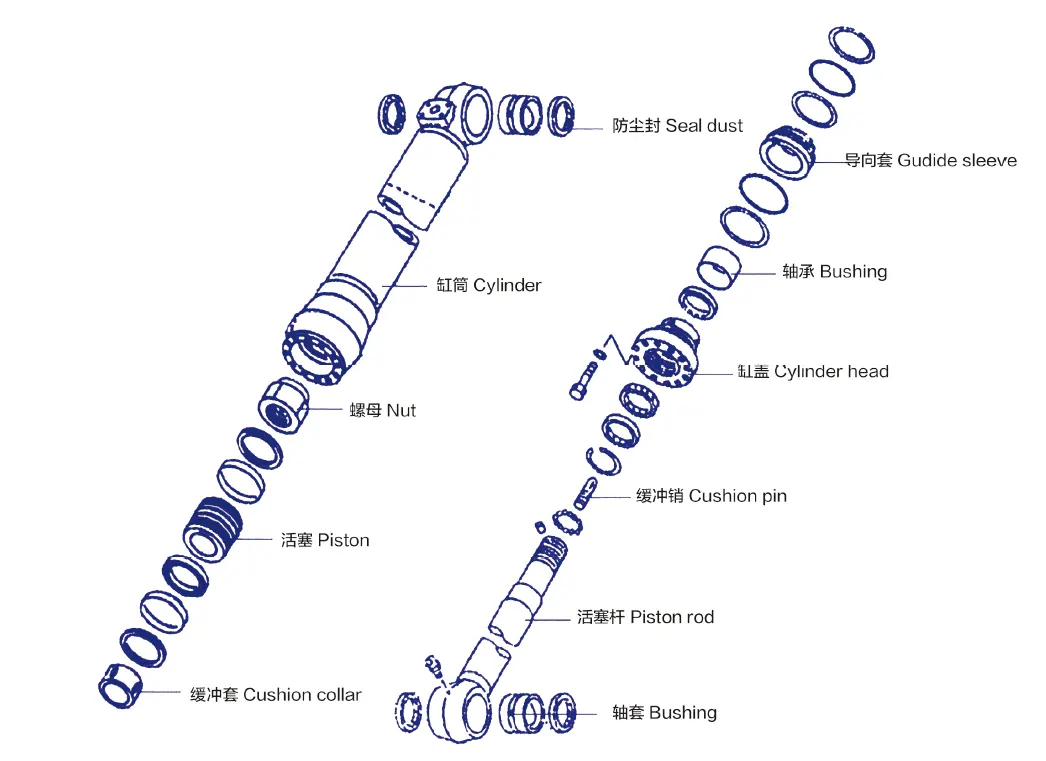
Merkmale des Armzylinders:
- Hocheffiziente Übertragung: Der Armzylinder ermöglicht eine kraftvolle lineare Bewegung und Kraftübertragung und gewährleistet so die hohe Leistungsfähigkeit des Roboterarms bei verschiedenen Operationen.
- Präzise Steuerung: Durch das Hydrauliksystem ermöglicht der Armzylinder eine präzise Bewegungssteuerung, wodurch der Einsatz zusätzlicher Werkzeuge flexibler und genauer wird.
- Haltbarkeit: Armzylinder werden typischerweise aus hochfesten Werkstoffen hergestellt, die eine ausgezeichnete Verschleiß- und Korrosionsbeständigkeit aufweisen und sich daher für den Langzeiteinsatz in rauen Umgebungen eignen.
- Multifunktionale Anpassungsfähigkeit: Diese Zylinder können in verschiedensten Maschinen, wie Baggern, Kränen und Roboterarmen, eingesetzt werden und passen sich so den unterschiedlichen Anforderungen der jeweiligen Aufgabe an.
- Einfache Wartung: Die Armzylinder wurden mit Blick auf einfache Wartung und Austauschbarkeit entwickelt und ermöglichen so bequeme regelmäßige Inspektionen und Wartungsarbeiten, wodurch Ausfallzeiten der Geräte reduziert werden.

Der Armzylinder findet in verschiedenen Branchen Anwendung:
- Construction: In excavators and cranes, the arm cylinder controls the movement of the bucket or boom for earthwork, material handling, and structural installation.
- Manufacturing: In automated production lines, the arm cylinder enables the motion of robotic arms for processes like assembly, welding, and material handling, increasing production efficiency and precision.
- Agricultural Machinery: In agricultural machinery such as harvesters and seeders, the arm cylinder controls the movement of operating arms for tasks like planting, fertilizing, and harvesting.
- Bergbau: Bei Bergbaumaschinen steuert der Armzylinder die Armbewegung zur Erzgewinnung und zum Erztransport.
- Logistics and Transportation: In forklifts and handling robots, the arm cylinder controls the lifting and movement of forks, allowing for material handling and stacking.
Gestaltungsüberlegungen und Auswahlkriterien:
Bei der Konstruktion von Armzylindern werden mehrere Schlüsselfaktoren berücksichtigt:
- Belastbarkeit: Arm cylinders are designed to withstand specific loads, ensuring safe and efficient operation.
- Versiegelung: Various types of seals, such as piston seals and rod seals, are used to ensure effective sealing. These seals are made from wear-resistant materials like polyurethane and nitrile rubber.
- Haltbarkeit: Cylinder bodies and threaded ends undergo precision treatments to enhance wear resistance.
- Sicherheit: Safety features, such as pressure relief valves, are incorporated to prevent excessive pressure and ensure safe operation.
- Wartbarkeit: Regular inspection and preventive maintenance measures are essential to extend the lifespan of the arm cylinder and minimize potential issues.

Proper sealing and lubrication are crucial for the performance and longevity of the arm cylinder:
- Various sealing elements, such as piston seals and rod seals, are used to prevent fluid leakage and maintain proper operation.
- The seals are made from durable materials like polyurethane and nitrile rubber, which have excellent wear resistance.
- The cylinder body and threaded ends undergo meticulous surface treatments to enhance wear resistance.
- Regular lubrication with an appropriate amount of hydraulic oil is required to ensure smooth operation and reduce friction.
Regelmäßige Inspektion und vorbeugende Wartung:
Um die optimale Leistung und Langlebigkeit des Armzylinders zu gewährleisten, sollten regelmäßige Inspektionen und vorbeugende Wartungsmaßnahmen durchgeführt werden:
- Prüfen Sie den Zylinder auf Anzeichen von Undichtigkeiten, Beschädigungen oder Verschleiß.
- Prüfen Sie die Dichtungen und ersetzen Sie sie gegebenenfalls.
- Monitor the fluid levels and top up with hydraulic oil as needed.
- Examine the cylinder for any signs of contamination or corrosion.
- Ziehen Sie alle losen Verbindungen und Armaturen fest.
- Follow the manufacturer’s guidelines for specific inspection and maintenance procedures.

Installationsanleitung:
Die korrekte Installation des Armzylinders ist entscheidend für seine Funktion und Sicherheit. Gehen Sie wie folgt vor:
- Stellen Sie sicher, dass die Geräte sicher befestigt und ausgeschaltet sind.
- Carefully position the arm cylinder, aligning it with the mounting points.
- Securely fasten the cylinder to the equipment using appropriate bolts and fittings.
- Inspect all connections to ensure they are tightly secured and leak-free.
- Double-check the alignment and movement of the cylinder before operation.

Sicherheitsaspekte und Umweltfaktoren:
Bei der Arbeit mit Armzylindern sind Sicherheitsmaßnahmen von höchster Wichtigkeit. Folgende Punkte müssen unbedingt priorisiert werden:
- Follow proper operating procedures and guidelines provided by the equipment manufacturer.
- Ensure all operators are trained on the safe operation of the machinery.
- Use appropriate personal protective equipment (PPE), such as gloves and safety glasses.
- Regularly inspect and maintain the equipment to identify and address any potential safety hazards.
- Dispose of used hydraulic oil and other waste materials in accordance with environmental regulations.
Fehlerbehebung und häufige Probleme:
Arm cylinders may encounter certain faults or issues during operation. Here are some common ones:
- Flüssigkeitsaustritt: Inspect seals and connections for signs of leakage. Replace worn or damaged seals.
- Langsame oder ungleichmäßige Bewegung: Check the hydraulic system for any restrictions or insufficient fluid levels. Ensure proper lubrication.
- Übermäßiger Lärm oder Vibrationen: Inspect the cylinder for any loose fittings or damaged components. Tighten or replace as necessary.
- Poor or Erratic Performance: Check the hydraulic system for any issues with pressure or flow. Clean or replace filters and monitor fluid levels.
For troubleshooting, consider the following tips and solutions to effectively diagnose and resolve problems:
- Refer to the equipment’s user manual or consult with technical support for specific troubleshooting steps.
- Inspect the hydraulic system for any signs of damage, contamination, or blockages.
- Check all connections and fittings for tightness and leaks.
- Analyze the system’s pressure and flow rates to identify any abnormalities.
- Follow preventive maintenance measures to minimize potential issues.
Autor: lyl
Über unser Unternehmen:
We are a professional
Hydraulischer Zylinder Anwendung:

 DE
DE  EN
EN  PT
PT  ES
ES  FR
FR  IT
IT  AR
AR  ZH
ZH  RU
RU  KO
KO  KA
KA  BG
BG  CS
CS  DA
DA  EL
EL  ET
ET  FI
FI  HU
HU  ID
ID  LT
LT  LV
LV  NB
NB  NL
NL  PL
PL  RO
RO  SK
SK  SL
SL  SV
SV  TR
TR  UK
UK