

Arm CylinderFor Hitachi Wheel Excavator ZX170W-3
Als einer der Hersteller, Lieferanten und Exporteure von mechanischen Produkten, bieten wir Hydraulikzylinder und viele andere Produkte an.
Bitte setzen Sie sich mit uns in Verbindung, um Einzelheiten zu erfahren.
Post:sales@hydraulic-cylinders.net
Hersteller, Lieferant und Exporteur von Hydraulikzylindern.
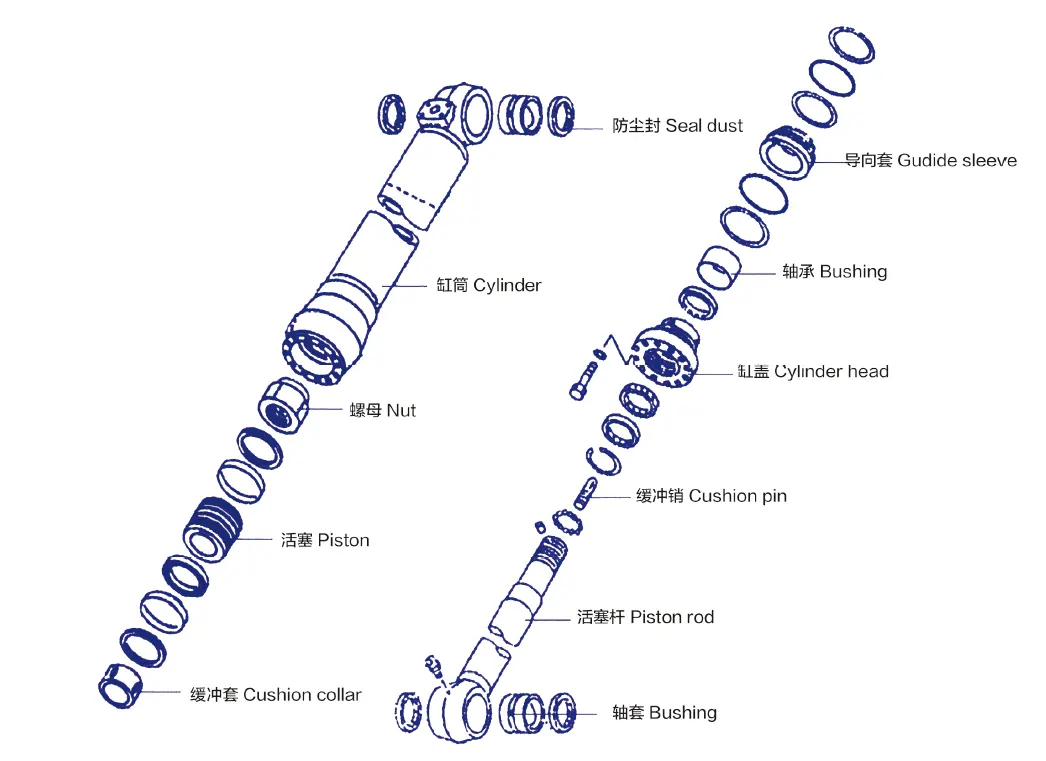
Arm Cylinder for Hitachi Wheel Excavator ZX170W-3
Einführung
The Arm Cylinder for Hitachi Wheel Excavator ZX170W-3 is a specialized hydraulic cylinder designed to provide linear motion and power to the arm of various machinery such as excavators, cranes, and mechanical arms. The arm cylinder plays a crucial role in hydraulic systems, enabling the efficient movement and control of additional tools or attachments. These cylinders not only ensure smooth motion but also withstand heavy loads, ensuring high efficiency and reliability of the machinery in various operating conditions.
Merkmale
-
High-efficiency Transmission
Der Armzylinder sorgt für eine kraftvolle lineare Bewegung und Kraft und gewährleistet so die hohe Leistungsfähigkeit des mechanischen Arms bei verschiedenen Operationen.
-
Präzise Steuerung
Through the hydraulic system, the arm cylinder enables accurate motion control, making the operation of additional tools more flexible and precise.
-
Haltbarkeit
Der Armzylinder besteht typischerweise aus hochfesten Werkstoffen und bietet eine ausgezeichnete Verschleiß- und Korrosionsbeständigkeit, wodurch er sich für den Langzeiteinsatz in rauen Umgebungen eignet.
-
Vielseitige Anpassungsfähigkeit
These cylinders can be widely applied to various machinery such as excavators, cranes, and mechanical arms, adapting to different work requirements.
-
Einfache Wartung
Bei der Konstruktion wurde auf einfache Wartung und Austausch geachtet, was regelmäßige Inspektionen und Wartungsarbeiten bequemer macht und Ausfallzeiten der Geräte reduziert.

Anwendungen
1. Bauingenieurwesen
Bei Baggern und Kränen steuert der Armzylinder die Bewegung von Schaufeln oder Auslegern für Erdarbeiten, Materialtransport und Stahlbauarbeiten.
2. Fertigungsindustrie
In automated production lines, the arm cylinder is used for the motion of mechanical arms in processes such as assembly, welding, and handling, enhancing production efficiency and accuracy.
3. Landwirtschaftliche Maschinen
Bei landwirtschaftlichen Geräten wie Erntemaschinen und Sämaschinen steuert der Armzylinder die Bewegung der Arbeitsarme für Aufgaben wie Säen, Düngen und Ernten.
4. Bergbau
Bei Bergbaugeräten steuert der Armzylinder die Armbewegung von Bergbaumaschinen zur Erzgewinnung und zum Erztransport.
5. Logistik und Transport
Bei Gabelstaplern und Handhabungsrobotern steuert der Armzylinder das Anheben und Bewegen der Gabeln und ermöglicht so die Handhabung und Stapelung von Materialien.

Designüberlegungen und Auswahlkriterien
Bei der Konstruktion von Armzylindern müssen mehrere Schlüsselfaktoren berücksichtigt werden:
-
Belastbarkeit
Der Armzylinder sollte so konstruiert sein, dass er den zu erwartenden Belastungen und Kräften standhält, um einen sicheren und effizienten Betrieb zu gewährleisten.
-
Versiegelung
Various sealing components, such as piston seals and rod seals, should be used, preferably made of wear-resistant materials like polyurethane and nitrile rubber. The cylinder body and threaded ends should undergo precise treatment to enhance wear resistance. Regular lubrication with hydraulic oil is necessary for smooth operation.
-
Haltbarkeit
The arm cylinder should be made of durable materials with excellent resistance to wear and corrosion to withstand harsh operating conditions.
-
Sicherheit
Safety features should be incorporated into the design, such as pressure relief valves or overload protection mechanisms, to prevent accidents or damage to the machinery.
-
Wartbarkeit
The design should consider ease of maintenance and repair, allowing for convenient inspections and minimizing downtime.

Regelmäßige Inspektion und vorbeugende Wartung
- Regularly inspect the arm cylinder for any signs of leaks, damage, or abnormal wear. Address any issues promptly to prevent further damage and ensure optimal performance.
- Check and replace worn or damaged seals and components regularly to maintain proper sealing and prevent fluid leakage.
- Ensure the arm cylinder is properly lubricated with the recommended hydraulic oil at the specified intervals to reduce friction and ensure smooth operation.
- Verify the tightness of all connections and fasteners to prevent potential leaks or loosening during operation.
- Follow the manufacturer’s guidelines for maintenance and conduct periodic inspections to identify any potential issues before they escalate.
Produktinstallationshandbuch
Follow these steps to properly install the arm cylinder:
- Stellen Sie sicher, dass die Maschine ausgeschaltet und das Hydrauliksystem drucklos ist.
- Remove the old arm cylinder if necessary, carefully disconnecting any hydraulic lines or fittings.
- Inspect the mounting points and mating surfaces for any damage or debris. Clean and prepare them as needed.
- Position the new arm cylinder in place, aligning the mounting holes with the corresponding points on the machinery.
- Securely fasten the arm cylinder to the machinery using the appropriate bolts or pins, ensuring proper alignment.
- Reconnect any hydraulic lines or fittings, following the manufacturer’s specifications for torque and tightness.
- Test the arm cylinder’s functionality by gradually pressurizing the hydraulic system and checking for proper operation.
- Inspect for any leaks or abnormal behavior. Address any issues before putting the machinery back into service.

Sicherheitsaspekte und Umweltfaktoren
When working with arm cylinders, it is essential to prioritize safety measures:
- Follow all safety guidelines provided by the manufacturer for the specific machinery and hydraulic system.
- Use appropriate personal protective equipment (PPE) when working with hydraulic systems, including gloves, safety glasses, and protective clothing.
- Regularly inspect the arm cylinder and hydraulic system for any potential safety hazards, such as leaks or damaged components.
- Train operators and maintenance personnel on proper handling and operation of the machinery to minimize the risk of accidents or injuries.
- Dispose of used hydraulic fluids and components in accordance with local environmental regulations to prevent pollution and protect the environment.
Fehlerbehebung und häufige Probleme
Häufige Probleme, die bei Armzylindern auftreten können, sind:
- Leaking hydraulic fluid: Inspect and replace worn or damaged seals to ensure proper sealing and prevent fluid leakage.
- Abnormal noises during operation: Check for loose connections or worn components and address them promptly to avoid further damage.
- Inconsistent or loss of movement: Verify the hydraulic system pressure and flow, and inspect for any blockages or restrictions in the lines.
For troubleshooting and resolving these issues, consider the following:
- Refer to the manufacturer’s documentation for specific troubleshooting steps and recommended solutions.
- Consult with a qualified hydraulic technician or contact the manufacturer’s customer support for assistance.
- Regularly maintain and inspect the arm cylinder to identify
Hydraulischer Zylinder Anwendung:

 DE
DE  EN
EN  PT
PT  ES
ES  FR
FR  IT
IT  AR
AR  ZH
ZH  RU
RU  KO
KO  KA
KA  BG
BG  CS
CS  DA
DA  EL
EL  ET
ET  FI
FI  HU
HU  ID
ID  LT
LT  LV
LV  NB
NB  NL
NL  PL
PL  RO
RO  SK
SK  SL
SL  SV
SV  TR
TR  UK
UK