
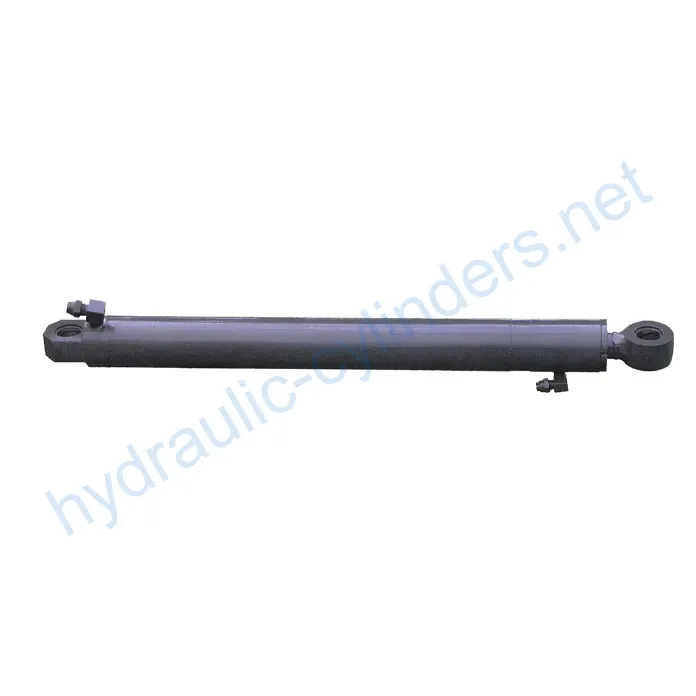
Arm CylinderFor Hitachi Wheel Excavator ZX210W-3
Als einer der Hersteller, Lieferanten und Exporteure von mechanischen Produkten, bieten wir Hydraulikzylinder und viele andere Produkte an.
Bitte setzen Sie sich mit uns in Verbindung, um Einzelheiten zu erfahren.
Post:sales@hydraulic-cylinders.net
Hersteller, Lieferant und Exporteur von Hydraulikzylindern.
Arm Cylinder for Hitachi Wheel Excavator ZX210W-3
The Arm Cylinder for Hitachi Wheel Excavator ZX210W-3 is a specialized hydraulic cylinder designed to provide linear motion and power to the arm of various types of machinery, such as excavators, cranes, and mechanical arms. The arm cylinder plays a crucial role in hydraulic systems, allowing for efficient movement and control of additional tools or attachments. These cylinders not only ensure smooth motion but also withstand heavy loads, ensuring efficient operation and reliability of the machinery under various working conditions.
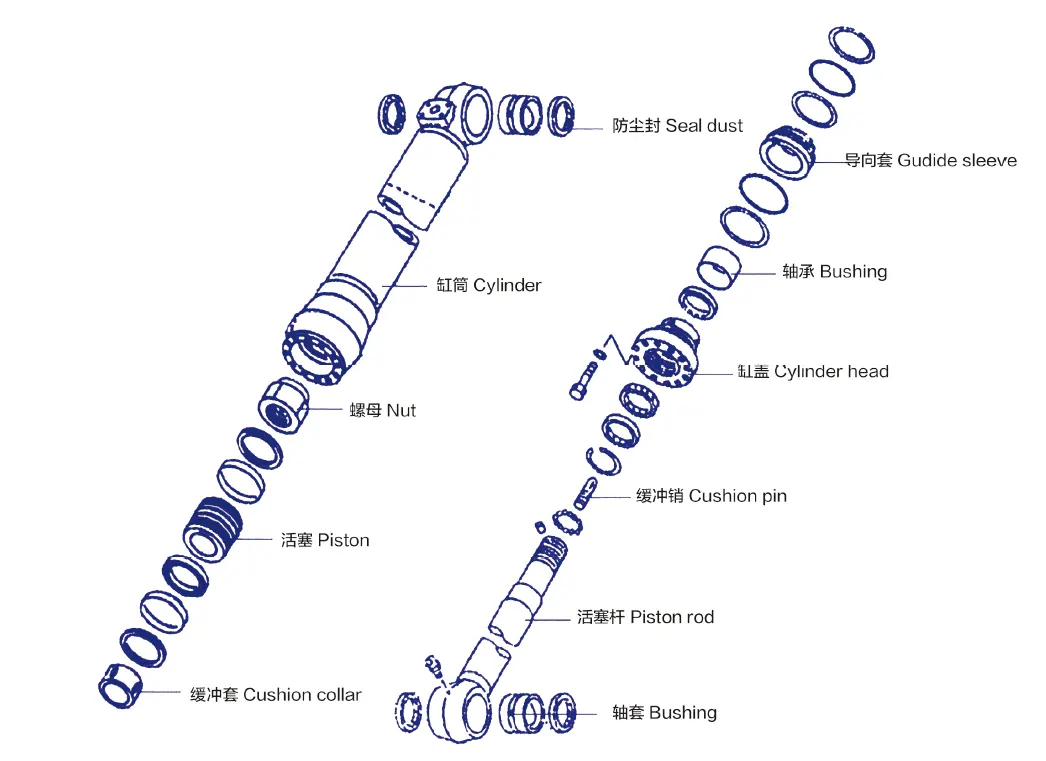
Features of the Arm Cylinder:
- Hocheffiziente Übertragung: The arm cylinder provides powerful linear motion and force, ensuring high-performance capabilities for the mechanical arm during various operations.
- Präzise Steuerung: Durch das Hydrauliksystem ermöglicht der Armzylinder eine präzise Bewegungssteuerung, wodurch der Einsatz zusätzlicher Werkzeuge flexibler und genauer wird.
- Haltbarkeit: Armzylinder werden typischerweise aus hochfesten Werkstoffen hergestellt, die eine ausgezeichnete Verschleiß- und Korrosionsbeständigkeit aufweisen und sich daher für den Langzeiteinsatz in rauen Umgebungen eignen.
- Multifunktionale Anpassungsfähigkeit: These cylinders can be widely applied to various machinery, such as excavators, cranes, and mechanical arms, adapting to different operational requirements.
- Einfache Wartung: The design takes into consideration ease of maintenance and replacement, making regular inspections and maintenance more convenient, reducing equipment downtime.

The Arm Cylinder for Hitachi Wheel Excavator ZX210W-3 can be efficiently produced by our company. Our products serve as perfect replacements for these hydraulic cylinders.
Anwendungsbereiche des Armzylinders:
- Bauingenieurwesen: Bei Baggern und Kränen steuert der Armzylinder die Bewegung von Schaufeln oder Auslegern für Erdarbeiten, Materialtransport und die Montage von Bauwerken.
- Fertigungsindustrie: In automated production lines, the arm cylinder is used for the motion of mechanical arms during processes such as assembly, welding, and handling, enhancing production efficiency and precision.
- Landmaschinen: Bei landwirtschaftlichen Maschinen wie Mähdreschern und Sämaschinen steuert der Armzylinder die Bewegung der Arbeitsarme für Aufgaben wie Säen, Düngen und Ernten.
- Bergbau: Bei Bergbaugeräten steuert der Armzylinder die Armbewegung von Bergbaumaschinen zur Erzgewinnung und zum Erztransport.
- Logistik und Transport: Bei Gabelstaplern und Handhabungsrobotern steuert der Armzylinder das Anheben und Bewegen der Gabeln und erleichtert so das Materialhandling und das Stapeln.
Gestaltungsüberlegungen und Auswahlkriterien:
When designing the arm cylinder, several factors must be taken into account to ensure its optimal performance:
- Belastbarkeit: The arm cylinder should be designed to handle the specific loads it will encounter during operation.
- Versiegelung: Various sealing elements, such as piston seals and rod seals, should be used to maintain the integrity of the hydraulic system. These seals are made from wear-resistant materials like polyurethane and nitrile rubber.
- Haltbarkeit: The cylinder body and threaded ends should undergo precise processing to improve wear resistance, ensuring long-term durability.
- Sicherheit: Safety measures should be implemented to prevent accidents during operation and maintenance.
- Wartbarkeit: The design should consider ease of maintenance and repair, allowing for efficient inspections and reducing potential downtime.

Proper sealing and lubrication are crucial for the arm cylinder’s performance. Various sealing components, such as piston seals and rod seals, made from wear-resistant materials like polyurethane and nitrile rubber, should be used. The cylinder body and threaded ends should undergo fine processing to improve wear resistance. Regular lubrication with the appropriate amount of hydraulic oil is necessary to ensure smooth operation.
Regular inspections and proactive maintenance measures are essential to prolong the lifespan of the arm cylinder. Some recommended preventive maintenance measures include:
- Regularly checking for leaks and signs of wear on the seals.
- Inspecting the cylinder body for any signs of damage or corrosion.
- Ensuring proper lubrication by checking oil levels and adding hydraulic oil as needed.
- Lose Verbindungen oder Befestigungselemente festziehen.

Für die korrekte Montage des Armzylinders beachten Sie bitte folgende Richtlinien:
- Ensure the installation surface is clean and free of debris.
- Use suitable tools and equipment to handle the cylinder to prevent damage.
- Follow the manufacturer’s instructions for mounting the cylinder, including torque specifications for fasteners.
- Check the alignment of the cylinder and make any necessary adjustments to ensure proper fit.
- Perform a trial run to verify the cylinder’s operation before putting it into full use.
Sicherheitsaspekte und Umweltfaktoren:
When using the arm cylinder, it is vital to prioritize safety measures to prevent accidents and ensure the well-being of operators and bystanders. Safety precautions should be followed, such as wearing appropriate personal protective equipment and adhering to operational guidelines provided by the manufacturer.
Regarding environmental factors, it is essential to consider the impact of hydraulic fluids and potential leakage. Proper disposal of fluids and adherence to environmental regulations should be followed to minimize any negative effects on the environment.
Fehlerdiagnose und häufige Probleme:
Zu den häufig auftretenden Problemen mit dem Armzylinder gehören:
- Leakage from seals or connections.
- Reduced performance or loss of power.
- Ungewöhnliche Geräusche während des Betriebs.
- Unregelmäßige oder ruckartige Bewegungen.
To diagnose and address these issues, consider the following tips:
- Inspect seals, connections, and fittings for signs of leaks and replace any worn or damaged components.
- Check hydraulic fluid levels and ensure they are within the recommended range.
- Inspect the cylinder body for any signs of damage or misalignment.
- Sorgen Sie für eine ordnungsgemäße Schmierung der beweglichen Teile.
- If the issue persists, consult a qualified technician or contact the manufacturer for further assistance.

As a leading manufacturer of replacement hydraulic cylinders, we offer a wide range of products and have become one of the top hydraulic cylinder manufacturers and wholesale distributors in domestic and international markets. Our commitment to excellence, industrialized production management strategies, and continuous improvement in technology and production efficiency sets us apart. With state-of-the-art digital manufacturing equipment and professional testing systems, we optimize our manufacturing platform and enhance product quality control processes, ensuring a strong focus on innovation. Our goal is to meet diverse customer needs with efficiency, accuracy, and high-quality products.
Über unser Unternehmen:
- Sachverstand: We are a professional manufacturer specializing in hydraulic cylinders.
- Internationale Zertifizierungen: Unsere Produkte erfüllen internationale Qualitäts- und Sicherheitsstandards.
- Anpassungsdienstleistungen: Wir bieten maßgeschneiderte Lösungen, um die spezifischen Anforderungen unserer Kunden zu erfüllen.
- Produktionsanlagen: We utilize advanced manufacturing
Hydraulischer Zylinder Anwendung:

 DE
DE  EN
EN  PT
PT  ES
ES  FR
FR  IT
IT  AR
AR  ZH
ZH  RU
RU  KO
KO  KA
KA  BG
BG  CS
CS  DA
DA  EL
EL  ET
ET  FI
FI  HU
HU  ID
ID  LT
LT  LV
LV  NB
NB  NL
NL  PL
PL  RO
RO  SK
SK  SL
SL  SV
SV  TR
TR  UK
UK