
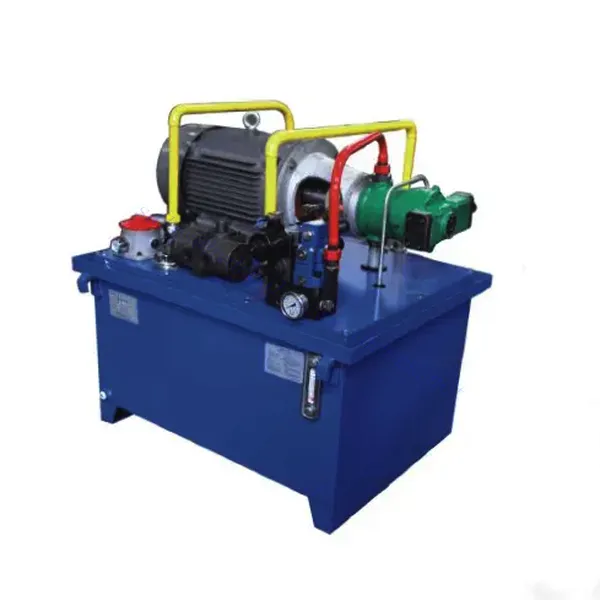
Hydraulic System For Coating Equipment
Als einer der Hersteller, Lieferanten und Exporteure von mechanischen Produkten, bieten wir Hydraulikzylinder und viele andere Produkte an.
Bitte setzen Sie sich mit uns in Verbindung, um Einzelheiten zu erfahren.
Post:sales@hydraulic-cylinders.net
Hersteller, Lieferant und Exporteur von Hydraulikzylindern.
Hydraulic System For Coating Equipment

The hydraulic system for coating equipment is a state-of-the-art solution designed to revolutionize the painting process in various industries. This advanced system offers superior efficiency, precise control, and increased productivity, ensuring optimal performance and superior coating results. Let’s discuss the main characteristics, use methods, maintenance requirements, and other essential aspects of the hydraulic system of painting equipment.
The synchronous hydraulic system controls multiple cylinders to act simultaneously and requires a certain precision. Synchronizing steps or synchronizing valves maintain synchronization accuracy.
Hydraulic System For Coating Equipment Features:
1. The variable piston pump is used with the return oil and water cooler, significantly reducing the system’s heat output.
2. Adopt the best domestic manufacturer synchronous valve to achieve multi-cylinder synchronization and improve production efficiency and accuracy.
3. The use of laser cutting and bending processes to ensure the strength and beauty of the equipment.
Synchronous Hydraulic System Parameter:

Motor Power:11KW
Oil Tank:200L
Beschreibung des kundenspezifischen Hydrauliksystems:

Aufbau eines Öltanks:

Öltank-Reinigungskappe:

Kundenspezifisches Hydrauliksystem:
(1)Vertikales Hydrauliksystem

(2) Horizontales Hydrauliksystem

(3) Seitlich montiertes Hydrauliksystem
Die seitlich montierte Hydraulikpumpstation, d. h. die Ölpumpeneinrichtung, wird horizontal auf einem separaten Tank installiert. Bei der seitlichen Ausführung kann eine Ersatzpumpe angebracht werden. Sie wird hauptsächlich für Systeme mit einem großen Behältervolumen von 250 Litern und einer elektrischen Leistung von 7,5 kW oder mehr verwendet.


Characteristics of the Explosion-Proof Hydraulic System For Mine Equipment:
- High Precision and Control
- The hydraulic system controls key coating parameters such as pressure, flow rate, and spray pattern for a consistent and uniform coating.
- Allows fine-tuning of coating parameters during application, ensuring accurate results and reducing waste.
- Versatility and Adaptability
- The system is compatible with a wide range of painting equipment, including spray guns, robotic arms, and automatic painting lines, for various painting applications.
- Provides flexibility to adjust coating parameters to suit different coating materials, substrates, and desired finishes.
- Excellent Efficiency and Productivity
- Minimize over-spraying, reduce material waste, and optimize coating efficiency by providing consistent pressure and flow control.
- Achieve faster coating cycles and increase productivity and throughput without compromising quality.
- User-friendly Interface
- Operators can easily adjust and monitor coating parameters with an intuitive and easy-to-use control interface.
- Provides real-time feedback on pressure, flow, and other critical parameters for precise control and troubleshooting.
What Are The Basic Components Of A Hydraulic System?
A hydraulic system comprises several essential components that generate, control, and transmit hydraulic power. The basic components of a hydraulic system include:
- Hydraulikflüssigkeit:
Hydraulic fluid serves as the medium for transmitting power in the system. It is typically a specially formulated oil with high viscosity, good lubrication, and resistance to foaming and temperature changes. - Reservoir:
The reservoir, also known as the hydraulic tank, holds the hydraulic fluid. It provides a storage location for the fluid, allows for heat dissipation, and facilitates the removal of air and contaminants from the system. The reservoir has a pause to maintain fluid cleanliness and prevent pressure buildup. - Hydraulikpumpe:
The hydraulic pump generates flow and pressure in the hydraulic system. It converts mechanical energy into hydraulic energy, typically from an electric motor or an engine. Common types of pumps include gear, vane, and piston pumps. - Actuators:
Actuators are hydraulic devices that convert hydraulic pressure into mechanical force or motion. They are responsible for performing the desired work in the system. The two primary types of actuators are:- Hydraulic Cylinders: Hydraulic cylinders consist of a cylindrical barrel, a piston, and a rod. When pressurized fluid enters the cylinder, it pushes the piston, which generates linear motion. Hydraulic cylinders are commonly used in applications that require straight-line force, such as lifting or pushing.
- Hydraulic Motors: Hydraulic motors convert hydraulic energy into rotational motion. They are often used in applications that require continuous rotary motion, such as driving conveyor belts or rotating machinery.
- Regelventile:
Control valves regulate the flow and pressure of hydraulic fluid in the system. They direct the liquid to the desired actuators and control their speed, direction, and force. Control valves include various types, such as directional control valves, pressure control valves, flow control valves, and proportional valves. - Hydraulikleitungen und -schläuche:
Hydraulic lines and hoses transport the pressurized hydraulic fluid between the components of the system. They are typically made of steel or flexible materials, such as reinforced rubber or thermoplastic, to withstand high pressures and accommodate system movements. - Filter:
Filters are crucial components that help maintain the cleanliness of the hydraulic fluid. They remove contaminants, such as particles, debris, and water, to prevent damage to system components. Filters are commonly located in the reservoir, suction lines, and return lines. - Akkumulator:
An accumulator stores hydraulic energy in the form of pressurized fluid. It consists of a gas-filled chamber separated from the hydraulic fluid by a piston or bladder. Accumulators can absorb pressure surges, store energy for peak demands, and provide emergency power in case of pump failure.
Fähigkeit und Kapazität der Fabrik:
(1) Montage
Wir verfügen über eine erstklassige, unabhängige Forschungs- und Entwicklungsmontageplattform. Die Hydraulikzylinder-Produktionswerkstatt verfügt über vier halbautomatische Montagelinien für Hubzylinder und eine automatische Montagelinie für Kippzylinder mit einer geplanten jährlichen Produktionskapazität von 1 Million Stück. Die Spezialzylinderwerkstatt ist mit verschiedenen Spezifikationen eines halbautomatischen Reinigungsmontagesystems mit einer geplanten jährlichen Produktionskapazität von 200.000 ausgestattet und mit renommierten CNC-Bearbeitungsgeräten, einem Bearbeitungszentrum, einer hochpräzisen Spezialausrüstung für die Zylinderverarbeitung, einer Roboterschweißmaschine, einer automatischen Reinigungsmaschine, einer automatischen Zylindermontagemaschine und einer automatischen Lackierproduktionslinie ausgestattet. Es sind mehr als 300 Sets (Sätze) an kritischer Ausrüstung vorhanden. Die optimale Zuweisung und effiziente Nutzung der Ausrüstungsressourcen gewährleistet die Genauigkeitsanforderungen der Produkte und erfüllt die hohen Qualitätsanforderungen der Produkte.


(2) Bearbeitungen
Die Bearbeitungswerkstatt ist mit einem maßgeschneiderten Schrägschienen-Drehzentrum, einem Bearbeitungszentrum, einer Hochgeschwindigkeits-Honmaschine, einem Schweißroboter und anderen zugehörigen Geräten ausgestattet, die die Bearbeitung von Zylinderrohren mit einem maximalen Innendurchmesser von 400 mm und einer maximalen Länge von 6 Metern ermöglichen.

(3) Schweißen

(4) Malerei und Beschichtung
Mit kleinen und mittleren Zylinder automatische Lackieranlagen auf Wasserbasis, zu erreichen automatische Roboter Be-und Entladen und automatische Spritzen, die Design-Kapazität von 4000 Stück pro Schicht;
Wir verfügen auch über eine halbautomatische Lackieranlage für große Zylinder, die von einer Energiekette angetrieben wird und eine Kapazität von 60 Kisten pro Schicht hat.


(5) Prüfung
Wir verfügen über erstklassige Prüfeinrichtungen und Prüfstände, um sicherzustellen, dass die Leistung des Zylinders den Anforderungen entspricht.

Wir gehören zu den führenden Herstellern von Hydrauliksystemen. Wir bieten Ihnen ein umfassendes Angebot an Hydrauliksystemen sowie die dazugehörigen Komponenten. landwirtschaftliche Getriebe. Wir haben unsere Produkte an Kunden weltweit exportiert und uns aufgrund unserer hervorragenden Produktqualität und unseres Kundendienstes einen guten Ruf erworben. Wir begrüßen Kunden im In- und Ausland, die uns kontaktieren, um Geschäfte zu verhandeln, Informationen auszutauschen und mit uns zusammenarbeiten!
Hydraulischer Zylinder Anwendung:

 DE
DE  EN
EN  PT
PT  ES
ES  FR
FR  IT
IT  AR
AR  ZH
ZH  RU
RU  KO
KO  KA
KA  BG
BG  CS
CS  DA
DA  EL
EL  ET
ET  FI
FI  HU
HU  ID
ID  LT
LT  LV
LV  NB
NB  NL
NL  PL
PL  RO
RO  SK
SK  SL
SL  SV
SV  TR
TR  UK
UK