
Fluid Power Thermal Engineering
How Does Temperature Affect Hydraulic Cylinder Performance?
A comprehensive analysis of thermal effects on fluid power actuators, exploring viscosity changes, seal behavior, material expansion, and system efficiency across extreme operating temperatures.

The Critical Influence of Thermal Conditions on Fluid Power Actuators
In the demanding realm of fluid power engineering, temperature represents one of the most pervasive and consequential environmental variables affecting hydraulic cylinder performance, reliability, and service life. The question of how does temperature affect hydraulic cylinder performance extends far beyond simple considerations of fluid viscosity to encompass a complex web of interacting physical phenomena including thermal expansion of metallic components, degradation kinetics of elastomeric seals, changes in lubrication regimes, and the thermodynamic behavior of the hydraulic fluid itself. From arctic mining operations where cylinders must function reliably at minus forty degrees Fahrenheit to steel mill applications where ambient temperatures routinely exceed one hundred fifty degrees Fahrenheit, understanding thermal effects is essential for successful hydraulic system design and operation.
Temperature extremes, whether excessively high or dangerously low, can precipitate a cascade of performance degradations and potential failure modes in hydraulic cylinder systems. Elevated operating temperatures accelerate fluid oxidation and thermal degradation, reduce fluid viscosity leading to increased internal leakage and diminished volumetric efficiency, soften elastomeric seal materials promoting extrusion failures, and induce differential thermal expansion between dissimilar materials that can compromise critical clearances. Conversely, frigid temperatures dramatically increase fluid viscosity causing sluggish operation and cavitation, embrittle seal materials rendering them susceptible to fracture, and increase pressure drops throughout the hydraulic circuit resulting in wasted energy and reduced system responsiveness.
This authoritative technical treatise provides an exhaustive examination of the multifaceted relationship between temperature and hydraulic cylinder behavior. We will explore the fundamental thermophysical properties governing fluid viscosity changes, the thermal expansion characteristics of cylinder construction materials, the temperature dependent performance of sealing systems, and the implications of thermal effects on hydraulic cylinder efficiency and longevity. Furthermore, this guide will present practical strategies for mitigating adverse temperature effects through proper fluid selection, thermal management system design, and the application of advanced materials and coatings engineered for extreme thermal environments.
Hydraulic Fluid Viscosity and Temperature Relationships
The viscosity temperature relationship of hydraulic fluid is perhaps the single most significant thermal factor governing hydraulic cylinder performance and efficiency.
Viscosity Index and Temperature Sensitivity
Hydraulic fluids exhibit a strong inverse relationship between temperature and viscosity. As fluid temperature increases, viscosity decreases markedly, while decreasing temperatures cause dramatic viscosity increases. The Viscosity Index (VI) of a hydraulic fluid quantifies its resistance to viscosity change with temperature. High VI fluids, typically formulated with advanced additive packages and synthetic base stocks, maintain more consistent viscosity across wide temperature ranges compared to conventional mineral oils. For hydraulic cylinder applications subject to significant ambient temperature swings or wide variations in operating temperature, selecting a fluid with a high Viscosity Index is essential to maintaining adequate lubrication film thickness, minimizing internal leakage, and ensuring consistent actuator response characteristics throughout the operating envelope.
Viscosity Effects on Internal Leakage and Efficiency
The volumetric efficiency of a hydraulic cylinder is directly influenced by fluid viscosity and its temperature dependence. At elevated operating temperatures, reduced fluid viscosity leads to increased internal leakage across piston seals and through the clearance between the piston and cylinder bore. This internal bypass flow represents lost energy and reduces the effective force output and velocity of the actuator. Conversely, at low temperatures, excessively high viscosity impedes fluid flow through system components, increases pressure drops, and can cause sluggish cylinder response and cavitation on the inlet side of the pump. Maintaining hydraulic fluid temperature within the optimal operating range, typically between 100 degrees Fahrenheit and 140 degrees Fahrenheit for most industrial systems, ensures that viscosity remains within the range for which seals and other precision components were designed.

Thermal Expansion and Material Compatibility Considerations
The materials constituting hydraulic cylinders exhibit varying coefficients of thermal expansion, and differential expansion between mating components can significantly affect clearances, seal compression, and structural integrity across temperature extremes.
?Differential Expansion of Cylinder Components
Steel cylinder barrels, cast iron pistons, bronze wear rings, and elastomeric seals all possess distinct coefficients of thermal expansion. As hydraulic cylinder temperature rises during operation, these components expand at different rates. The steel barrel, with a relatively low coefficient of thermal expansion, expands less than the aluminum pistons sometimes used in lightweight applications. This differential expansion can reduce critical running clearances, potentially leading to increased friction, accelerated wear, or even piston seizure in extreme cases. Conversely, at cold start conditions, clearances may be excessive until components reach thermal equilibrium, contributing to increased internal leakage and reduced volumetric efficiency during initial operation. Proper material selection and clearance specification must account for the full range of anticipated operating temperatures to maintain optimal fit and function across all thermal conditions.
?Thermal Effects on Seal Groove Geometry
The precise dimensions of seal grooves machined into pistons and cylinder heads are critical to proper seal function. Temperature induced dimensional changes can alter the gland fill volume and the radial squeeze applied to dynamic seals. At elevated temperatures, thermal expansion of the metallic gland components can reduce the available volume for the seal, potentially leading to excessive compression, increased friction, and accelerated seal wear or extrusion damage. At low temperatures, contraction of the gland may reduce seal squeeze below the minimum required for effective sealing, resulting in increased leakage. Seal groove designs intended for wide temperature range applications typically incorporate additional volume to accommodate thermal expansion of the seal material, which itself expands at a significantly higher rate than the surrounding metal components.

Temperature Effects on Sealing System Performance
Elastomeric seals are among the most temperature sensitive components in a hydraulic cylinder, and their behavior across the thermal spectrum profoundly influences actuator reliability.
High Temperature Seal Degradation
Sustained exposure to elevated hydraulic cylinder temperatures accelerates the chemical and physical degradation of elastomeric seal materials. Thermal oxidation causes hardening, embrittlement, and loss of elasticity in conventional nitrile rubber seals. Fluorocarbon seals offer superior high temperature resistance but at significantly higher cost. As seals harden and lose compliance, their ability to conform to cylinder bore and rod surfaces diminishes, leading to increased leakage and accelerated wear. Additionally, the combination of elevated temperature and high system pressure can cause seal extrusion through extrusion gaps that are within acceptable limits at normal operating temperatures. The selection of seal materials with appropriate high temperature ratings is essential for applications such as steel mill equipment, forging presses, and other high thermal load environments.
Low Temperature Seal Embrittlement
At subfreezing temperatures, elastomeric seals undergo a glass transition, becoming stiff, brittle, and prone to fracture under the dynamic stresses of cylinder operation. Standard nitrile seals may become unacceptably brittle at temperatures below approximately minus twenty degrees Fahrenheit. Low temperature seal compounds incorporating specialized plasticizers and polymer blends extend the usable temperature range downward, with some specialty formulations remaining flexible to minus sixty five degrees Fahrenheit. During cold starts, seals may initially leak until frictional heating warms the cylinder assembly to temperatures at which seal materials recover their designed compliance and sealing effectiveness. This phenomenon necessitates careful consideration of warm up procedures for hydraulic systems operating in arctic or severe winter conditions.
Thermal Cycling and Compression Set
Repeated thermal cycling of hydraulic cylinders subjects seals to alternating periods of expansion and contraction. This cycling accelerates compression set, the permanent deformation that occurs when an elastomer is compressed for extended periods at elevated temperatures. Seals that have taken a significant compression set lose their ability to maintain adequate contact pressure against sealing surfaces, resulting in increased static and dynamic leakage. The cumulative effect of thermal cycling on seal compression set is a primary factor limiting the service life of hydraulic cylinder sealing systems. Selection of seal materials with low compression set characteristics and proper gland design that minimizes stress relaxation are critical for applications involving frequent and wide temperature fluctuations.
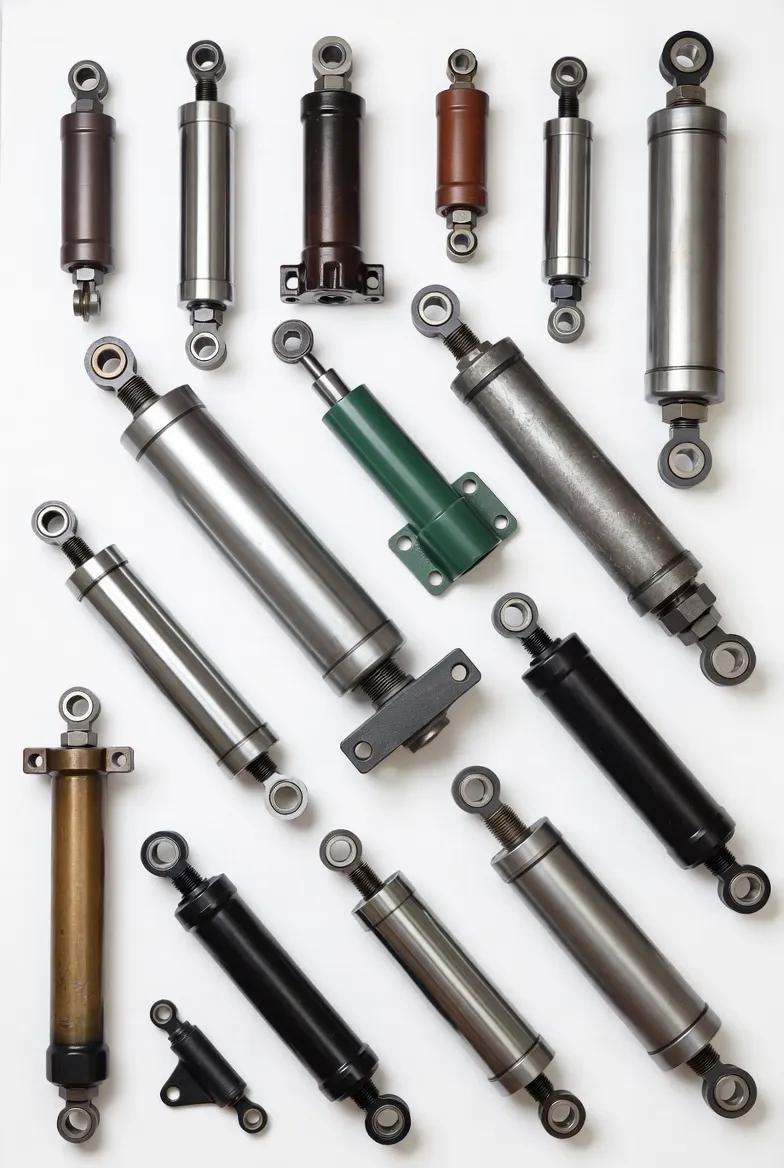
Thermal Management Strategies for Hydraulic Cylinders
Proactive thermal management is essential for maintaining hydraulic cylinder performance within optimal limits and maximizing component service life.
- ❄️
Cold Weather Operational Strategies: In low temperature environments, several strategies can mitigate the adverse effects of cold on hydraulic cylinder performance. Low viscosity hydraulic fluids with high Viscosity Index minimize the viscosity increase at low temperatures. Reservoir heaters and fluid warmers precondition the hydraulic fluid before system startup. Slow, low pressure cycling of cylinders during warm up periods gradually increases fluid and component temperatures through viscous heating and friction, allowing seals to regain flexibility before full pressure operation commences. In extreme arctic applications, specialized synthetic hydrocarbon or ester based fluids with pour points below minus sixty five degrees Fahrenheit may be required to ensure adequate fluid flow and cylinder response.
- ?
High Temperature Mitigation Approaches: Controlling elevated hydraulic cylinder temperatures requires a systems level approach. Adequately sized heat exchangers maintain reservoir fluid temperature below maximum recommended limits, typically 140 degrees Fahrenheit for optimal fluid life. For cylinders operating near intense heat sources, such as furnaces or exhaust systems, radiant heat shields and reflective insulation protect the actuator from excessive external thermal loads. In extreme cases, active cooling of cylinder bodies using water jackets or directed forced air may be necessary. Selecting hydraulic fluids with high thermal stability and oxidation resistance extends fluid service life and reduces the formation of varnish and sludge that can impair cylinder function.
- ?
Condition Monitoring and Predictive Maintenance: Continuous or periodic monitoring of hydraulic cylinder temperature provides valuable insight into system health and impending failures. Infrared thermography can identify localized hot spots indicative of excessive internal leakage or abnormal friction. Trending of fluid operating temperature over time can reveal degrading system efficiency or failing heat exchanger performance. The integration of temperature sensors into hydraulic cylinder assemblies enables real time monitoring and alarm functions that alert operators to potentially damaging thermal excursions before catastrophic failure occurs.

Advanced Materials and Coatings for Extreme Temperature Applications
Modern materials science offers an expanding portfolio of specialized materials and surface treatments engineered to extend the operational temperature envelope of hydraulic cylinders.
High Temperature Seal Materials
Beyond standard fluorocarbon seals, specialized high temperature seal materials enable hydraulic cylinder operation in extreme thermal environments. Perfluoroelastomer seals withstand continuous service temperatures exceeding 500 degrees Fahrenheit while maintaining chemical resistance superior to conventional fluorocarbons. Polytetrafluoroethylene based seal elements with specialized fillers provide excellent high temperature performance and low friction characteristics. Metal piston rings and filled PTFE wear rings offer viable alternatives to elastomeric seals in applications where temperatures exceed the practical limits of rubber compounds.
Thermal Barrier and Reflective Coatings
Cylinders operating in proximity to intense radiant heat sources benefit from the application of specialized thermal barrier coatings. Ceramic based coatings applied to cylinder exteriors reflect a significant portion of incident thermal radiation, reducing heat absorption and maintaining lower internal component temperatures. These coatings also provide corrosion protection and can be formulated to provide specific emissivity characteristics optimized for particular thermal environments. In some applications, polished metallic surfaces or reflective foil wraps serve a similar function at lower cost.
Cryogenic and Arctic Service Materials
Hydraulic cylinders destined for cryogenic or severe arctic service require careful material selection to avoid brittle fracture of structural components. Low temperature carbon steels with enhanced notch toughness, such as ASTM A333 Grade 6, maintain ductility at temperatures down to minus fifty degrees Fahrenheit. Austenitic stainless steels, particularly Type 304 and Type 316, retain excellent toughness at cryogenic temperatures and are frequently specified for liquefied natural gas and other extreme low temperature fluid power applications. Specialized low temperature seal compounds incorporating silicone or fluorosilicone polymers remain flexible and maintain sealing effectiveness where conventional materials would embrittle and fail.
Understanding how does temperature affect hydraulic cylinder performance is essential for engineers and system designers tasked with delivering reliable fluid power solutions across diverse operating environments. By accounting for thermal effects during the design phase and implementing appropriate mitigation strategies, the adverse impacts of temperature extremes on hydraulic cylinder efficiency, seal life, and overall reliability can be effectively managed.

Conclusion: Mastering Thermal Effects in Hydraulic Cylinder Systems
The influence of temperature on hydraulic cylinder performance is both profound and multifaceted, affecting everything from the fundamental viscosity of the hydraulic fluid to the long term durability of critical sealing elements. High temperatures accelerate fluid degradation, reduce viscosity leading to increased internal leakage, soften seals promoting extrusion failures, and induce differential thermal expansion that can compromise precision clearances. Low temperatures dramatically increase fluid viscosity causing sluggish operation and cavitation, embrittle seal materials rendering them susceptible to fracture, and increase energy losses throughout the hydraulic circuit. Successful fluid power system design demands a comprehensive understanding of these thermal effects and the implementation of appropriate countermeasures including high Viscosity Index fluids, thermal management systems, proper material selection, and condition monitoring practices. By embracing a holistic approach to thermal management, engineering professionals can ensure that hydraulic cylinders deliver reliable, efficient, and durable performance across the full spectrum of operating temperatures encountered in industrial and mobile equipment applications.