
Fluid Power Reliability Engineering
How to Protect Hydraulic Cylinder Rods from Damage: The Engineering Guide
An authoritative technical analysis exploring mechanical shrouding, advanced metallurgy, wiper seal architecture, and the definitive preventative maintenance protocols required to safeguard fluid power linear actuators.

The Most Vulnerable Component in Fluid Power
Within the highly demanding disciplines of heavy industrial manufacturing, mobile construction equipment, deep underground mining, and offshore marine engineering, hydraulic cylinders operate as the primary instruments of kinetic force. These robust steel pressure vessels contain immense hydrostatic energy, translating fluid pressure into controlled, relentless linear motion. However, despite the massive forged steel barrels and heavy duty ductile iron end caps, every hydraulic cylinder possesses a critical Achilles heel: the piston rod. Understanding exactly how to protect hydraulic cylinder rods from damage is arguably the most vital maintenance strategy an engineering professional can deploy to ensure equipment longevity and prevent catastrophic mechanical failure.
The vulnerability of the hydraulic cylinder rod stems entirely from its operational kinematics. Unlike the internal piston or the static base weldment, the rod must physically leave the highly protected, lubricated sanctuary of the cylinder barrel. As the actuator extends to lift or push a payload, the polished steel rod is violently thrust out into the hostile external environment. Once exposed, it is subjected to an unrelenting barrage of destructive forces. On a construction site, it faces flying rock shrapnel and abrasive concrete dust. In a steel mill, it endures blistering radiant heat and highly corrosive slag. On a marine vessel, it is constantly battered by corrosive saltwater spray. Any physical damage sustained while the rod is extended is immediately drawn back into the delicate internal sealing architecture the moment the cylinder retracts.
From a rigorous engineering perspective evaluated against international reliability standards, hydraulic rod failure is the leading catalyst for total system breakdown. A single microscopic pit or jagged dent in the chrome plating will instantly slice the polyurethane wiper and primary pressure seals, resulting in massive external fluid leaks, severe environmental contamination, and immediate loss of lifting power. To prevent these highly expensive and dangerous failures, fleet managers and equipment designers must deploy a multi tiered defense strategy. This comprehensive technical guide will systematically dissect the exact methodologies used to safeguard these critical components, exploring advanced metallurgical coatings, the deployment of hydraulic cylinder rod protection boots, structural alignment optimizations, and the definitive predictive maintenance protocols required to maximize actuator lifespan.
Identifying the Primary Vectors of Rod Damage
Before you can effectively shield a fluid power component, you must intimately understand the enemy. Hydraulic cylinder rods are relentlessly attacked by three distinct categories of environmental and mechanical hostility.
Kinetic Impact and Dents
The most sudden and catastrophic form of damage is blunt force kinetic impact. If a cylinder is operating the bucket of a wheel loader in a rock quarry, falling boulders can strike the extended cylinder rod. Because the core of the rod is typically made of ductile carbon steel to prevent snapping, a heavy strike will physically dent the metal. This dent instantly fractures the hard, brittle chrome plating on the surface. When the cylinder retracts, the sharp, jagged edges of the shattered chrome act like a razor blade, instantly slicing the elastomeric rod seals and guaranteeing immediate fluid failure.
Abrasive Particulate Scoring
In dusty agricultural or construction environments, the extended rod is constantly coated in a fine layer of abrasive particulate silica sand, dirt, or concrete dust. If the external wiper seal fails to scrape this debris away, the rod drags the abrasive grit directly into the tight tolerances of the cylinder head gland. This grit becomes embedded in the guide bands and begins to relentlessly scratch the polished chrome surface along its longitudinal axis. This creates deep, microscopic grooves known as scoring, providing a permanent escape channel for high pressure hydraulic fluid.
Chemical Corrosion and Pitting
Standard hard chrome plating contains microscopic cracks. In offshore marine environments, highly corrosive saltwater mist can migrate through these micro-cracks and attack the underlying carbon steel core. As the steel rusts, it expands, causing the chrome plating to bubble and flake off in large patches. This severe pitting completely destroys the surface geometry of the rod. Furthermore, highly acidic environments, such as chemical processing plants or agricultural fertilizer spreaders, can chemically dissolve standard coatings entirely.

Level 1 Defense: Metallurgical Upgrades and Coatings
The absolute first line of defense in learning how to prevent cylinder rod scoring begins long before the actuator is installed on the machine. It starts in the manufacturing phase. Selecting the correct hydraulic piston rod coating and underlying metallurgy is critical for surviving hostile industrial conditions.
Induction Hardened Chrome Plating (IHCP)
Standard hard chrome plating provides excellent scratch resistance, but it offers zero protection against heavy kinetic impacts because the underlying steel is too soft. To combat falling rocks and heavy debris, engineers must specify Induction Hardened Chrome Plated rods. Before the chrome is applied, the steel rod is passed through a high intensity electromagnetic coil and rapidly quenched. This hardens the outer layer of the steel core to an incredibly dense 50-60 HRC. The induction hardened case acts like a rigid anvil beneath the chrome plating. When a rock strikes the rod, the hardened steel refuses to dent, ensuring the brittle chrome layer remains perfectly intact.
Advanced Corrosion: Nickel-Chrome and Nitriding
If the primary threat is severe chemical corrosion rather than physical impact, standard chrome is insufficient. In offshore and maritime applications, engineers deploy dual-layer Nickel-Chrome plating. A thick layer of nickel which is entirely impervious to saltwater is electroplated onto the steel, followed by the hard chrome layer for friction reduction. Alternatively, modern aerospace and agricultural equipment increasingly utilize Ferritic Nitrocarburizing (often known as Melonite or Tenifer). This thermochemical process diffuses nitrogen into the steel surface, creating an incredibly hard, ultra-smooth black oxide layer that is highly resistant to scratching and completely immune to standard rust pitting.

Level 2 Defense: Physical Shrouds and Bellows
Sometimes, altering the metallurgy is not enough. If the environment is continuously hostile—such as a foundry filled with molten slag or a concrete saw cutting massive slabs—the only way to protect hydraulic cylinder rods from damage is to physically isolate them from the environment.
Hydraulic Cylinder Bellows and Covers
The most effective comprehensive barrier is the installation of hydraulic cylinder bellows and covers. Also known as hydraulic cylinder rod protection boots, these accordion style sleeves slide completely over the piston rod. One end clamps tightly to the cylinder head gland, while the other clamps to the rod eye clevis. As the cylinder extends and retracts, the bellows effortlessly expand and compress, maintaining a perfectly sealed, clean micro environment around the chrome rod at all times. They completely block abrasive dust, chemical splatter, and moisture from ever touching the polished steel.
Material Selection for Custom Hydraulic Rod Sleeves
Specifying custom hydraulic rod sleeves requires matching the fabric to the specific industrial threat. For standard dusty environments, heavy duty Neoprene or Nitrile rubber bellows offer exceptional durability and oil resistance. If the cylinder is operating in a steel mill or welding automation cell where sparks and molten slag are present, the bellows must be stitched from aluminized Kevlar or specialized Nomex fabrics capable of withstanding radiant temperatures exceeding 1000 degrees Fahrenheit without igniting.
Rigid Steel Shrouding
In forestry applications where timber falls unpredictably, or in deep underground mining, flexible fabric bellows will simply be ripped off by massive jagged branches or sharp rocks. In these extreme environments, engineers design the machinery chassis with rigid steel plates or heavy tubular shrouds welded parallel to the actuator. These solid steel armor plates act as physical barricades, absorbing massive kinetic blows before the objects can ever reach the delicate cylinder rod.
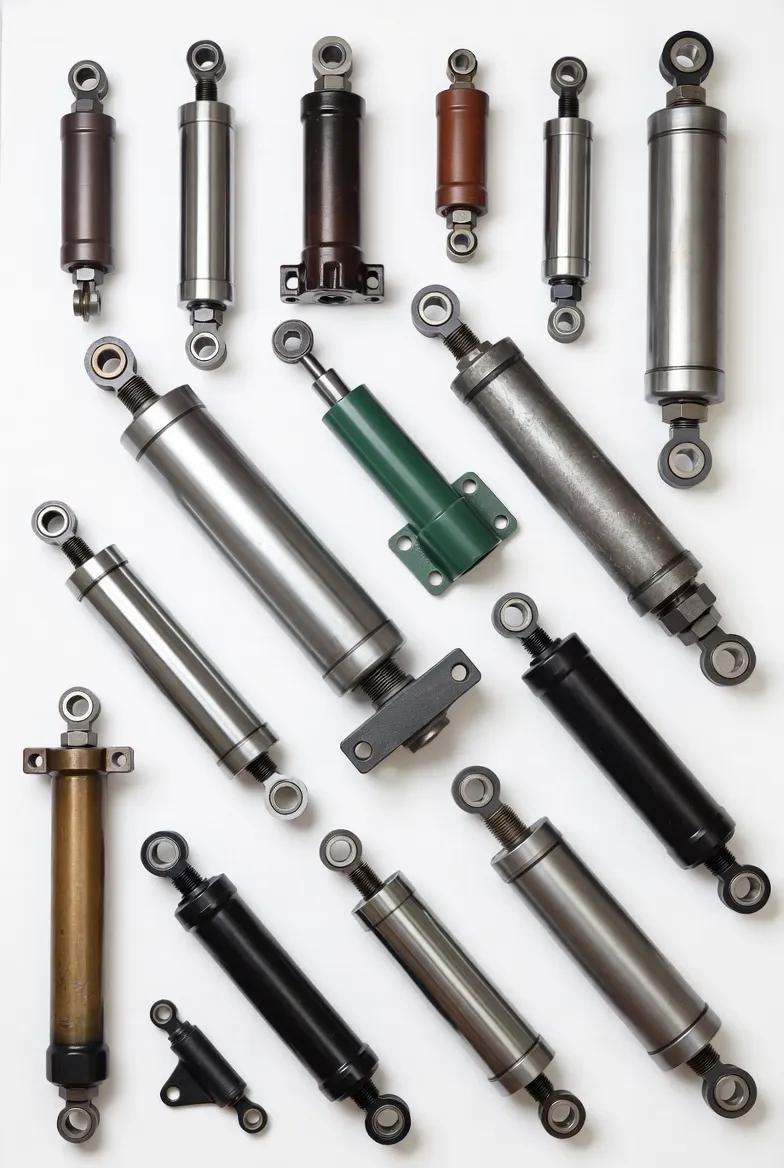
Level 3 Defense: Advanced Wiper and Scraper Architecture
If physical shrouds are impossible due to spatial constraints, the cylinder must rely entirely on its internal wiper seal to maintain cleanliness. The wiper seal is the absolute first line of defense located at the very front of the cylinder head gland. Its sole engineering purpose is to aggressively scrape the retracting chrome rod clean, preventing external dirt, moisture, and ice from entering the pressurized fluid zones.
- ✔️
Standard Polyurethane Wipers: For clean factory automation or light duty mobile equipment, standard polyurethane lip seals are highly effective at sweeping away light dust and fluid droplets. They maintain excellent elasticity and wrap tightly around the rod diameter.
- ✔️
Heavy Duty Brass Scraper Rings: In severe winter conditions where thick ice physically freezes onto the extended rod, or in asphalt paving environments where hot tar bakes onto the chrome, a soft polyurethane lip will instantly shatter or roll over when it hits the hardened obstruction. For these scenarios, engineers deploy metallic scrapers. These are precision machined brass or bronze rings that fit tightly against the rod. The sharp brass edge violently shears off thick ice and hardened tar before it can reach the secondary polymer wiper seal.

Level 4 Defense: Kinematic Alignment and Side-Loading Prevention
Even the thickest armor cannot protect a rod from catastrophic failure if the machine itself is tearing it apart geometrically. Hydraulic cylinders are strictly designed to exert linear, centerline force. The silent killer of piston rods is extreme lateral stress, universally known as side loading.
If the mounting brackets on the heavy machinery are misaligned by even a fraction of an inch, or if the main pivot pins have become heavily worn and sloppy, the extending cylinder rod will be forced to travel at a slight diagonal angle. This forces the hardened steel rod to aggressively grind into one side of the brass bearing guides inside the head gland. Over time, this massive lateral friction visibly scores one side of the chrome rod, shreds the wiper seal, and can literally snap the rod in half due to extreme bending moments. To protect the rod, maintenance professionals must ensure absolute, micrometer precise alignment during installation, utilize intermediate trunnion mounts to reduce Euler buckling in long stroke applications, and deploy spherical bearing mounts to effortlessly absorb unintended radial chassis twisting.

Conclusion: A Comprehensive Shielding Strategy
Learning exactly how to protect hydraulic cylinder rods from damage is the absolute foundation of proactive fluid power maintenance. The piston rod is the physical bridge between the immense hydrostatic energy of the machine and the hostile, abrasive reality of the industrial environment. By executing a highly layered defense strategy starting with specifying induction hardened chrome alloys, integrating protective Kevlar bellows and rigid steel shrouds, deploying aggressive brass scraper rings for ice and tar, and ensuring flawless structural kinematic alignment engineering professionals can virtually eliminate premature rod failure. Implementing these advanced protective protocols drastically reduces devastating fluid leaks, maximizes the lifespan of internal elastomeric seals, and ensures the world’s most powerful automated equipment operates with unyielding reliability.