
Fluid Power Actuator Procurement Guide
Hydraulic Cylinder Bore and Stroke: What You Need to Know Before Buying
An authoritative engineering blueprint detailing the mathematical physics of hydrostatic force, differential volume dynamics, and the critical dimensional metrics required to successfully procure industrial fluid power components.

The Foundation of Fluid Power Specification
In the highly rigorous and mathematically precise sectors of automated industrial manufacturing, commercial construction, agricultural harvesting, and marine engineering, fluid power systems represent the undisputed pinnacle of mechanical force generation. Linear actuators convert the immense hydrostatic pressure of synthetic fluid into perfectly controlled physical motion. However, before a procurement manager issues a purchase order or an engineer finalizes a machine design, they must confront the two most critical dimensional metrics in the entire fluid power industry: hydraulic cylinder bore and stroke. Understanding exactly what these dimensions mean, how they interact, and how they dictate the ultimate kinetic capability of the actuator is absolutely paramount. To explore a vast array of correctly specified components, visiting our premium hydraulic cylinders platform is a highly recommended starting point for any industrial buyer.
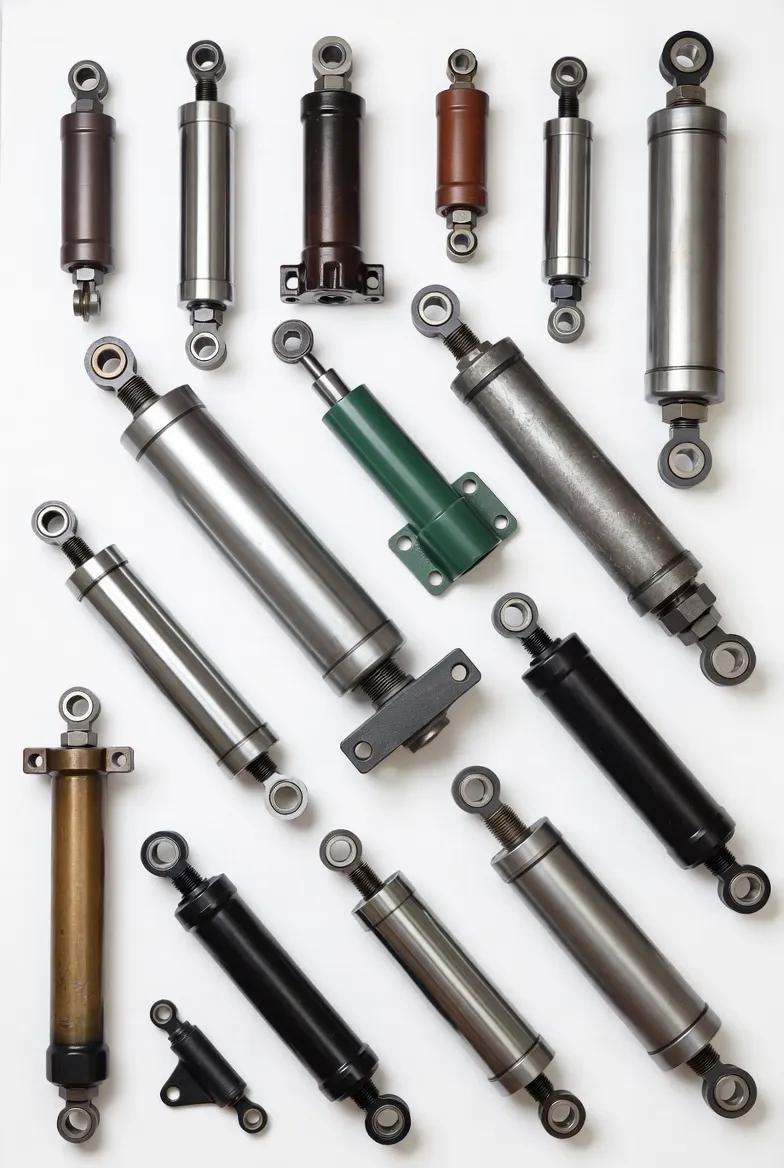
Hydraulic cylinder bore and stroke are not merely physical measurements used to ensure the component fits within a welded steel chassis. They are the fundamental mathematical variables that define the physics of the machine. The bore diameter dictates the absolute maximum pushing force the cylinder can generate, determining whether a machine can lift a ten pound cardboard box or a forty ton boulder. The stroke length dictates the exact linear distance that payload can be moved, governing the operational reach of the equipment. Specifying the incorrect bore and stroke combination is not a minor inconvenience; it is a catastrophic engineering failure. An undersized bore will stall the machine and violently blow out pressure relief valves, while an oversized stroke paired with an inadequate rod diameter will result in immediate, catastrophic structural buckling.
From an authoritative engineering perspective evaluated against international fluid power manufacturing standards, procuring a hydraulic cylinder requires a meticulous analysis of the target payload, the available system operating pressure, the required cycle velocity, and the geometric constraints of the mounting kinematics. This comprehensive technical guide will meticulously dissect the precise definitions of bore and stroke, explore the critical underlying physics of Pascal Principle, provide clear mathematical formulas for calculating output tonnage, and outline the vital engineering considerations you must evaluate before authorizing the purchase of any fluid power actuator.
Defining the Bore: The Engine of Hydrostatic Force
When evaluating hydraulic cylinder bore and stroke, the bore is always listed first because it is the primary generator of mechanical power. The bore refers specifically to the inner diameter of the cylinder barrel, which directly dictates the surface area of the internal piston.
Pascal Law and Surface Area
The entire science of fluid power is built upon Pascal Law, which dictates that Force equals Pressure multiplied by Area. When a hydraulic pump forces pressurized synthetic fluid into the base of the cylinder, that fluid pushes against the circular face of the solid steel piston. The larger the bore diameter, the larger the surface area of the piston. Because the pressurized fluid has more square inches to push against, the resulting mechanical output force increases exponentially. A four inch bore cylinder supplied with two thousand PSI of pressure will generate dramatically more lifting tonnage than a two inch bore cylinder operating at the exact same pressure. This is why heavy duty machinery like Excavator Hydraulic Cylinders feature massive bore diameters to crush through solid bedrock.
Calculating Bore Area
To determine exactly how much force a cylinder can produce, you must first calculate the bore area using standard geometric mathematics. The formula is: Area equals the Bore Diameter squared, multiplied by 0.7854. For example, a cylinder with a three inch bore has an area of roughly 7.06 square inches (3 multiplied by 3 equals 9; 9 multiplied by 0.7854 equals 7.068). If your hydraulic power unit provides 3000 PSI, this cylinder will generate approximately 21,200 pounds of pushing force. Buyers must precisely calculate their required payload tonnage and match it against the bore area to ensure the actuator will not stall under load.

Defining the Stroke: The Metric of Linear Distance
While the bore determines how much weight the machine can move, the stroke determines how far that weight can travel. The stroke is defined as the total linear distance the piston rod can extend from its fully retracted position to its fully extended position.
Pin-to-Pin Measurements and Dead Length
When buying a hydraulic cylinder, it is crucial to understand that the stroke length is not the same as the total physical length of the cylinder body. An actuator with a twenty four inch stroke will actually measure significantly longer than twenty four inches when fully retracted. This is due to the “dead length” of the cylinder, which includes the thickness of the base cap, the thickness of the internal piston, the depth of the head gland bearing guides, and the external mounting clevises. Buyers must carefully measure the “retracted pin-to-pin distance” (the distance between the center of the base mounting hole and the center of the rod mounting hole when fully collapsed) and the “extended pin-to-pin distance” to ensure the cylinder will physically fit within the mechanical constraints of their machine chassis.
The Telescopic Solution for Extreme Strokes
In specialized applications, the required stroke length far exceeds the available installation space. A standard rod style cylinder cannot extend further than its own barrel length. To solve this architectural paradox, engineers specify multi-stage telescopic cylinders. These advanced components utilize a nested structure of descending diameter steel tubes. As fluid pressure is applied, the largest stage extends first, followed sequentially by the smaller stages. This brilliant kinematics allows a telescopic cylinder to achieve an extended stroke up to six times greater than its compact retracted footprint, making them the absolute mandatory standard for Dump Truck Hydraulic Cylinders that must raise long cargo beds to extreme vertical angles.

The Hidden Variable: Rod Diameter and Structural Integrity
While hydraulic cylinder bore and stroke are the headline specifications, buyers must never overlook the third critical dimension: the diameter of the piston rod. The rod diameter profoundly influences both the structural durability and the retraction dynamics of the actuator.
Preventing Euler Buckling
When a cylinder extends to push a massive load, the extended chrome rod acts as a slender column under extreme compressive stress. The mathematics of column buckling dictate that if the stroke is very long and the pushing force is very high, a thin rod will violently bow outward and snap in half. Buyers must ensure the specified rod diameter is thick enough to withstand the maximum compressive tonnage at full extension without exceeding the material’s yield strength. For long horizontal pushes, engineers often specify heavy duty oversized rods or implement internal stop tubes to increase the internal bearing overlap and provide vital structural rigidity.
Annular Area and Retraction Speed
The rod diameter also alters the fluid volume inside the cylinder. During powered retraction in a double acting cylinder, fluid fills the rod-end chamber. Because the solid steel rod physically occupies space within this chamber, there is less empty volume to fill compared to the blind end. This means a constant flow of hydraulic fluid will cause the cylinder to retract significantly faster than it extends. However, because the fluid can only push against the donut-shaped surface area surrounding the rod (the annular area), the total pulling force is noticeably weaker than the pushing force. A massive rod diameter will create lightning-fast retraction speeds but extremely weak pulling tonnage. This careful balance is critical in applications like Aerial Work Vehicle Hydraulic Cylinders, where smooth, controlled descent is required.
Critical Procurement Considerations Before Buying
Knowing the required bore and stroke is the foundation, but a successful procurement strategy requires evaluating several other dynamic variables to ensure the actuator survives the harsh realities of the industrial work site.
- ✔️
System Operating Pressure: A cylinder with a huge bore is useless if it is not rated to handle the hydrostatic pressure generated by your hydraulic pump. Buyers must strictly match the Maximum Operating Pressure of the cylinder to their system’s relief valve setting. Standard industrial cylinders are rated for 2500 to 3000 PSI, while heavy-duty mobile equipment often requires pressure vessels rated for 5000 PSI or higher to prevent catastrophic barrel ballooning and explosive seal failure.
- ✔️
Mounting Kinematics: How the cylinder attaches to the machine is just as important as how much it can lift. If the payload travels in a sweeping radial arc, such as a loader arm, you must specify a pivot mount like a clevis or a spherical bearing. If the cylinder is bolted rigidly to a machine base while the load arcs, the resulting lateral side-loading will instantly bend the rod and shred the internal seals. For heavy automated factory presses that push perfectly straight, rigid flange mounts provide the ultimate centerline stability.
- ✔️
Environmental Hostility: Standard components will rapidly deteriorate in extreme environments. If purchasing Agricultural Hydraulic Cylinders exposed to caustic fertilizers and heavy mud, buyers must specify aggressive brass scraper seals and induction-hardened chrome plating to prevent abrasive scoring and chemical pitting from destroying the fluid boundary.

Calculating Your Requirements: A Practical Sizing Example
To ensure a successful purchase, you must apply theoretical physics to your practical machinery requirements. Let us execute a standard procurement calculation.
Assume your industrial application requires lifting a solid payload of precisely 15,000 pounds. Your machine’s hydraulic power unit is regulated to a maximum operating pressure of 2,500 PSI. To determine the minimum necessary bore diameter, you must first calculate the required piston area. By rearranging Pascal Law, Area equals Force divided by Pressure. Dividing 15,000 pounds by 2,500 PSI reveals that you need exactly 6.0 square inches of piston surface area to successfully lift the load. To convert this area into a commercial bore diameter, you use the reverse circle area formula: Diameter equals the square root of the Area divided by 0.7854. Dividing 6.0 by 0.7854 yields 7.63. The square root of 7.63 is roughly 2.76 inches. Because a 2.76 inch bore is not a standard manufacturing size, the procurement manager must round up to the next commercially available heavy-duty size, which would be a 3.0 inch bore cylinder, providing an excellent safety margin of excess lifting power.

Conclusion: Architecting Flawless Mechanical Power
Understanding hydraulic cylinder bore and stroke: what you need to know before buying is the fundamental barrier between creating highly efficient, reliable heavy machinery and suffering crippling, expensive catastrophic failures. Fluid power design relies on uncompromising mathematical laws. By rigorously calculating the necessary bore area to achieve maximum hydrostatic force, meticulously analyzing the stroke length to ensure geometric fitment, and specifying indestructible piston rods to prevent Euler buckling, procurement professionals can architect flawless mechanical power. Whether you are sourcing compact components for intricate automated logistics or specifying massive Forklift Hydraulic Cylinders for distribution warehouses, exact dimensional sizing guarantees that your machinery will perform with absolute, unyielding, and safe reliability. If you require expert validation of your calculations or custom manufacturing capabilities, our specialized team is ready to assist you.