
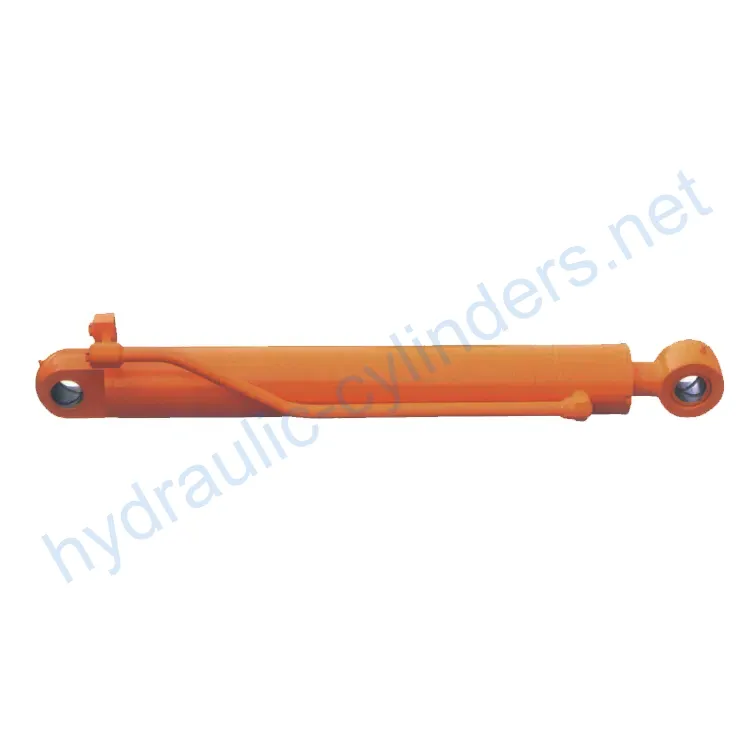
Arm CylinderFor Sumitomo Small Excavator SH130-5
Como cilindros hidráulicos uno de los fabricantes, los surtidores y los exportadores de productos mecánicos, ofrecemos cilindros hidráulicos y muchos otros productos.
Póngase en contacto con nosotros para más información.
Correo:sales@hydraulic-cylinders.net
Fabricante proveedor exportador de cilindros hidráulicos.
Arm Cylinder For Sumitomo Small Excavator SH130-5
Introducción
The arm cylinder is a specially designed hydraulic cylinder that is used to provide linear motion and power to the arm of various machinery, such as excavators, cranes, and robotic arms. The arm cylinder plays a crucial role in hydraulic systems, enabling the effective movement and control of additional tools or attachments. These cylinders not only allow for smooth motion but also withstand heavy loads, ensuring efficient operation and reliability of the machinery under various working conditions.
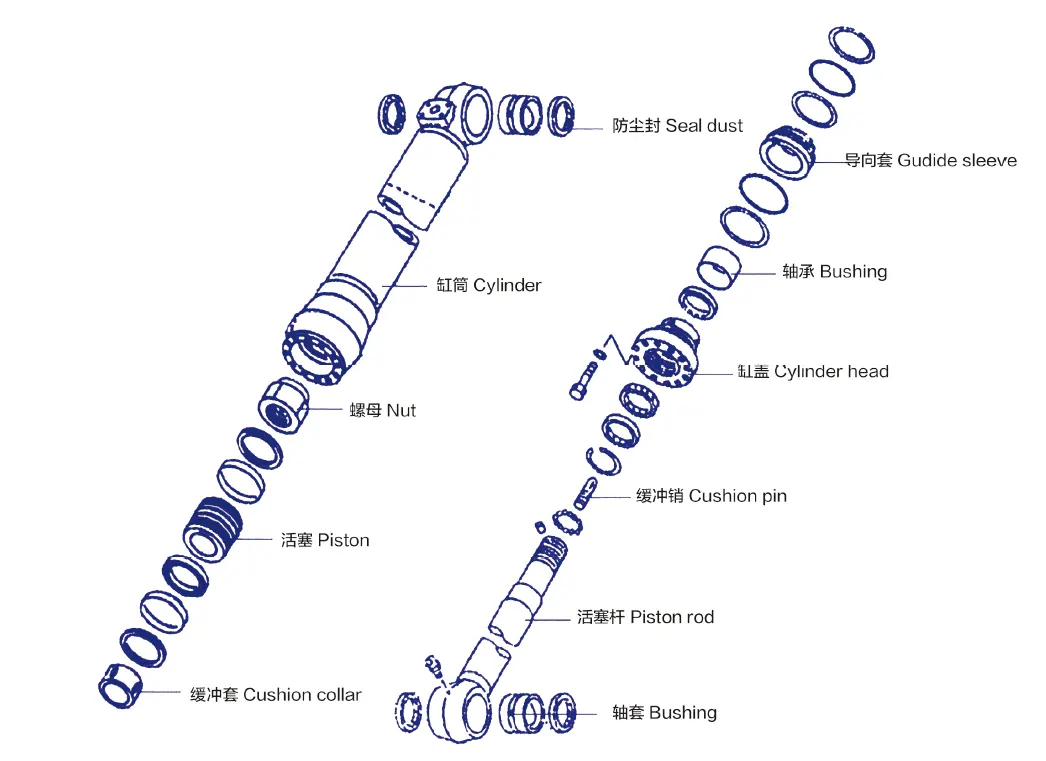
Características
- Transmisión de potencia eficiente: El cilindro del brazo proporciona un potente movimiento lineal y fuerza, lo que garantiza un alto rendimiento del brazo mecánico en diversas operaciones.
- Control preciso: Mediante sistemas hidráulicos, el cilindro del brazo permite un control preciso del movimiento, lo que hace que el funcionamiento de las herramientas acopladas sea más flexible y preciso.
- Durabilidad: Los cilindros de los brazos se fabrican normalmente con materiales de alta resistencia, que ofrecen una excelente resistencia al desgaste y a la corrosión, lo que los hace adecuados para su uso a largo plazo en entornos hostiles.
- Adaptabilidad multifuncional: These cylinders can be widely used in various types of machinery, such as excavators, cranes, and robotic arms, adapting to different work requirements.
- Fácil mantenimiento: Designed with ease of maintenance and replacement in mind, regular inspections and upkeep are made convenient, reducing equipment downtime.

Aplicaciones
El cilindro del brazo encuentra aplicaciones en diversas industrias:
- Ingeniería de la construcción: En excavadoras y grúas, el cilindro del brazo controla el movimiento del cucharón o la pluma, lo que permite realizar trabajos de movimiento de tierras, manipulación de materiales e instalación de estructuras.
- Fabricación: En las líneas de producción automatizadas, el cilindro del brazo facilita el movimiento de los brazos robóticos para los procesos de ensamblaje, soldadura y manipulación de materiales, mejorando la eficiencia y la precisión de la producción.
- Maquinaria agrícola: En maquinaria agrícola como cosechadoras y sembradoras, el cilindro del brazo controla el movimiento de los brazos operativos para tareas como la siembra, la fertilización y la cosecha.
- Minería: En el equipo de minería, el cilindro del brazo controla el movimiento del brazo para la extracción y el transporte del mineral.
- Logística y Transporte: En carretillas elevadoras y robots de manipulación, el cilindro del brazo controla la elevación y el movimiento de las horquillas, lo que permite la manipulación y el apilado de materiales.
Consideraciones de diseño y criterios de selección
When designing and selecting an arm cylinder, several factors should be taken into account:
- Capacidad de carga: The arm cylinder must be able to withstand the intended load and operate safely under the expected conditions.
- Caza de focas: Various seals, such as piston seals and rod seals, should be used to ensure effective sealing. These seals are often made of wear-resistant materials like polyurethane and nitrile rubber.
- Durabilidad: The cylinder body and threaded ends should undergo meticulous processing to improve wear resistance. Regular lubrication with the appropriate amount of hydraulic oil is necessary.
- Seguridad: Safety measures should be implemented to prevent accidents during operation, such as emergency stop systems and protective covers.
- Mantenimiento: Regular inspections and proactive maintenance should be carried out to detect any potential issues and ensure optimal performance.

Sellado y lubricación
The arm cylinder utilizes various sealing components, such as piston seals and rod seals, which are made of wear-resistant materials like polyurethane and nitrile rubber. The cylinder body and threaded ends are finely processed to enhance wear resistance. Regular lubrication with the appropriate amount of hydraulic oil is essential for proper functioning.
Inspección regular y mantenimiento preventivo
To ensure the longevity and optimal performance of the arm cylinder, the following measures should be taken:
- Inspeccione periódicamente el cilindro para detectar cualquier signo de fuga, daño o desgaste.
- Check the hydraulic oil level and quality, and replace or replenish as needed.
- Inspect and clean the sealing components to maintain proper sealing effectiveness.
- Apriete cualquier conexión o sujetador suelto.
- Siga las recomendaciones del fabricante en cuanto a intervalos y procedimientos de mantenimiento.

Guía de instalación del producto
Proper installation of the arm cylinder is crucial for its optimal performance and longevity. Follow these guidelines:
- Asegúrese de que la superficie de montaje esté limpia y libre de residuos.
- Use appropriate tools and techniques to secure the cylinder in place.
- Make sure all connections are properly tightened.
- Follow the manufacturer’s instructions for hydraulic fluid filling and bleeding.
- Pruebe el funcionamiento del cilindro antes de ponerlo en uso completo.

Consideraciones de seguridad y factores ambientales
When working with arm cylinders, it is essential to prioritize safety measures, considering the following:
- Provide appropriate training to operators, ensuring they understand the safe operation procedures and potential hazards.
- Implement safety features, such as emergency stop systems and protective covers, to prevent accidents.
- Adhere to local regulations and standards regarding the use and installation of hydraulic equipment.
- Consider environmental factors and choose materials that minimize the impact on the ecosystem.
Solución de problemas y problemas comunes
When encountering issues with the arm cylinder, the following troubleshooting steps can be helpful:
- Asunto: The cylinder is leaking.
- Solución: Inspect and replace any damaged seals or components. Ensure proper sealing and connection.
- Asunto: The cylinder is not moving smoothly.
- Solución: Check for any obstructions or misalignment. Lubricate the cylinder and ensure proper functioning of the hydraulic system.
- Asunto: The cylinder is not generating enough force.
- Solución: Check for any malfunctions in the hydraulic system, such as low oil pressure or insufficient flow. Inspect the cylinder for any damage or wear.
By following these troubleshooting steps and implementing preventive measures, potential issues can be minimized, ensuring optimal performance and longevity of the arm cylinder.
Sobre nosotros
We are a professional manufacturer of replacement hydraulic cylinders, offering a wide range of products. We have become one of the leading manufacturers and wholesale distributors of hydraulic cylinders in both domestic and international markets. Our commitment to excellence in quality is upheld through our industrialized production management strategy, leveraging sophisticated manufacturing facilities, and enhancing technological expertise and production efficiency. By introducing advanced digital manufacturing equipment and professional testing systems, we
Cilindro hidráulico Aplicación:

 ES
ES  EN
EN  PT
PT  DE
DE  FR
FR  IT
IT  AR
AR  ZH
ZH  RU
RU  KO
KO  KA
KA  BG
BG  CS
CS  DA
DA  EL
EL  ET
ET  FI
FI  HU
HU  ID
ID  LT
LT  LV
LV  NB
NB  NL
NL  PL
PL  RO
RO  SK
SK  SL
SL  SV
SV  TR
TR  UK
UK