

Cilindro de brazo para excavadora grande Kobelco SK350LC-8
Como cilindros hidráulicos uno de los fabricantes, los surtidores y los exportadores de productos mecánicos, ofrecemos cilindros hidráulicos y muchos otros productos.
Póngase en contacto con nosotros para más información.
Correo:sales@hydraulic-cylinders.net
Fabricante proveedor exportador de cilindros hidráulicos.
Arm Cylinder For Kobelco Large Excavator SK350LC-8
Arm Cylinder is a specially designed hydraulic cylinder that provides linear motion and power for the arm of various machinery, such as excavators, cranes, and robotic arms. The arm cylinder plays a crucial role in hydraulic systems, enabling the effective movement and control of additional tools or attachments. These cylinders not only ensure smooth motion but also withstand heavy loads, ensuring efficient operation and reliability of the machinery under various working conditions.
Definición y explicación
The arm cylinder is a hydraulic cylinder designed to provide linear motion and power to the arm of various machines. It allows for precise control and movement of attachments, such as buckets or lifting arms, in machinery like excavators, cranes, and robotic arms. The arm cylinder is a critical component in hydraulic systems, ensuring efficient operation and reliable performance.
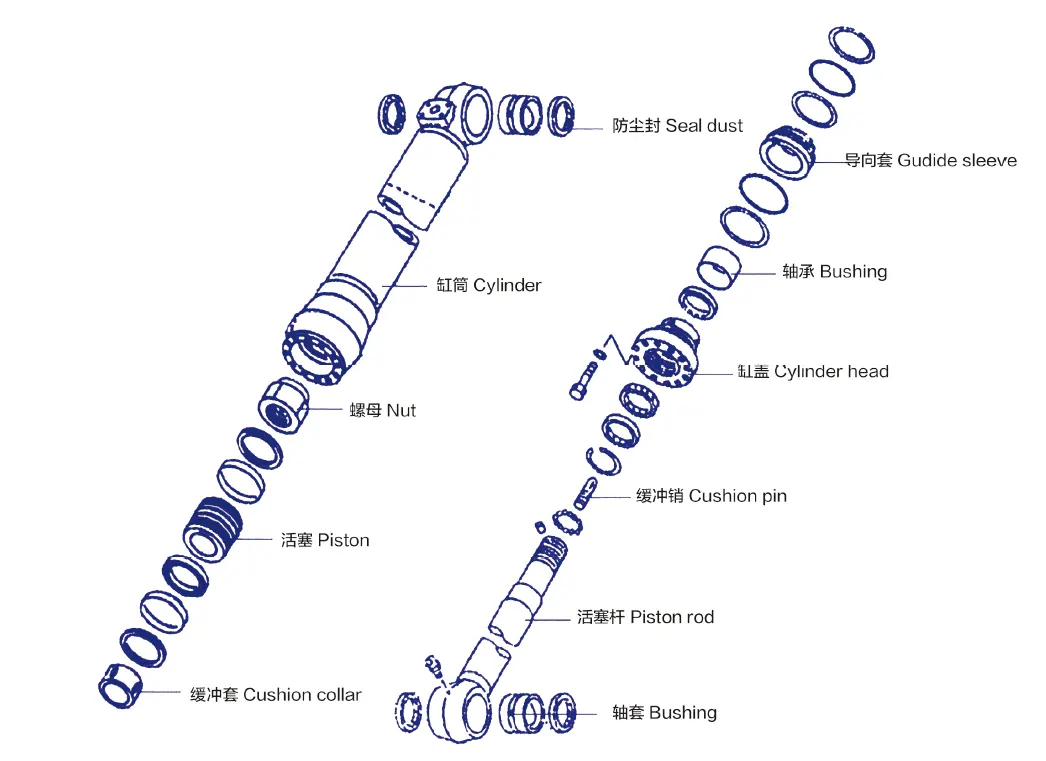
Características del cilindro del brazo
- Transmisión de potencia de alta eficiencia: El cilindro del brazo proporciona un potente movimiento y fuerza lineal, lo que garantiza capacidades de alto rendimiento para el brazo de la maquinaria.
- Control de precisión: Through the hydraulic system, the arm cylinder enables precise motion control, allowing for flexible and accurate operation of attached tools.
- Durabilidad: Arm cylinders are typically made of high-strength materials, providing excellent wear and corrosion resistance, making them suitable for long-term use in harsh environments.
- Adaptabilidad multifuncional: These cylinders have wide applications in various machinery, including excavators, cranes, and robotic arms, adapting to different working requirements.
- Fácil mantenimiento: Diseñados teniendo en cuenta la facilidad de mantenimiento y reemplazo, los cilindros del brazo facilitan las inspecciones y el mantenimiento regulares y convenientes, reduciendo el tiempo de inactividad del equipo.

Aplicaciones del cilindro de brazo
Los cilindros de brazo encuentran aplicaciones en diversas industrias:
1. Ingeniería de la Construcción
In excavators and cranes, the arm cylinder controls the movements of buckets or lifting arms for earthwork, material handling, and structural installation.
2. Industria manufacturera
In automated production lines, the arm cylinder enables the motion of robotic arms for assembly, welding, and material handling processes, enhancing production efficiency and accuracy.
3. Maquinaria agrícola
En maquinaria agrícola como cosechadoras y sembradoras, el cilindro del brazo controla el movimiento de los brazos operativos para tareas como la siembra, la fertilización y la cosecha.
4. Minería
En el equipo de minería, el cilindro del brazo controla el movimiento de los brazos del equipo de minería para la extracción y el transporte de mineral.
5. Logística y transporte
En las carretillas elevadoras y los robots de manipulación, el cilindro del brazo controla la elevación y el movimiento de las horquillas, lo que permite la manipulación y el apilamiento de materiales.

Consideraciones de diseño y criterios de selección
In the design of arm cylinders, several factors are considered:
1. Capacidad de carga
The arm cylinder is designed to withstand the specific loads and forces required for the machinery’s arm movement.
2. Rendimiento de sellado
Various sealing components, such as piston seals and rod seals, are used to ensure effective sealing of the cylinder, preventing leaks and maintaining operational efficiency.
3. Durabilidad
Arm cylinders are manufactured using high-quality materials with excellent wear resistance and corrosion resistance, ensuring long-term performance in demanding environments.
4. Seguridad
Safety features, such as pressure relief valves and safety locks, may be incorporated into the arm cylinder design to prevent accidents and ensure operator safety.
5. Mantenibilidad
The design of arm cylinders considers ease of maintenance and repair, allowing for convenient inspection, lubrication, and replacement of components, minimizing downtime.

Sellado y lubricación
The arm cylinder utilizes various sealing components, such as piston seals and rod seals, made of wear-resistant materials like polyurethane and nitrile rubber. The cylinder body and threaded ends undergo precise surface treatment to enhance wear resistance. Regular lubrication with the appropriate amount of hydraulic oil is necessary to ensure smooth operation.
Inspección regular y mantenimiento preventivo
To ensure optimal performance and longevity, regular inspection and preventive maintenance are recommended:
- Inspect the arm cylinder for any signs of wear, leaks, or damage.
- Limpie y lubrique el cilindro periódicamente.
- Check and replace worn-out seals or other components as needed.
- Siga las instrucciones del fabricante para el mantenimiento y la lubricación.
Guía de instalación correcta del producto
La correcta instalación del cilindro del brazo es crucial para un rendimiento y una seguridad óptimos. Siga estos pasos:
- Ensure the machinery is powered off and in a stable position.
- Retire cualquier cilindro del brazo existente, si corresponde.
- Align the new arm cylinder with the mounting points on the machinery.
- Securely fasten the cylinder in place using appropriate bolts and hardware.
- Check and adjust the alignment of the cylinder, if necessary.
- Connect the hydraulic lines to the cylinder according to the machinery’s hydraulic system.
- Test the arm cylinder’s operation to ensure proper functionality.

Consideraciones de seguridad y factores ambientales
When using arm cylinders, it is essential to prioritize safety measures to prevent accidents and ensure operator well-being. Adhering to safety protocols and providing proper training to operators is crucial to minimize risks.
Solución de problemas y problemas comunes
Arm cylinders may encounter certain faults or issues. Here are some common ones:
1. Fugas
Possible causes of leakage include damaged seals, loose fittings, or excessive pressure. Inspect and replace faulty seals or tighten fittings as necessary.
2. Slow or Inefficient Movement
This issue may arise due to low hydraulic pressure or inadequate lubrication. Check the hydraulic system’s pressure and ensure proper lubrication of the cylinder.
Consejos y soluciones para la resolución de problemas
To effectively diagnose and resolve problems, consider the following tips:
- Refer to the manufacturer’s documentation for troubleshooting guidance.
- Inspect the arm cylinder for any visible signs of damage or wear.
- Check the hydraulic system for any issues that may affect the cylinder’s performance.
- Consult with a professional if necessary.
Acerca de nuestra empresa
We are a professional manufacturer of replacement hydraulic cylinders, offering a wide range of products. With our dedication to excellence, we have become one of the leading manufacturers and wholesale distributors of hydraulic cylinders in domestic and international markets. Our commitment to high-quality products is supported by our industrialized production management strategy and state-of-the-art manufacturing facilities. We continuously enhance our technical expertise and production efficiency by introducing advanced digital manufacturing equipment and professional testing systems. Our manufacturing platform is optimized, and our quality control processes are in place, ensuring strong innovation capabilities. Our goal is to meet the diverse needs of our customers with high efficiency, precision, and quality.
From our expertise and international certifications to
Cilindro hidráulico Aplicación:

 ES
ES  EN
EN  PT
PT  DE
DE  FR
FR  IT
IT  AR
AR  ZH
ZH  RU
RU  KO
KO  KA
KA  BG
BG  CS
CS  DA
DA  EL
EL  ET
ET  FI
FI  HU
HU  ID
ID  LT
LT  LV
LV  NB
NB  NL
NL  PL
PL  RO
RO  SK
SK  SL
SL  SV
SV  TR
TR  UK
UK