
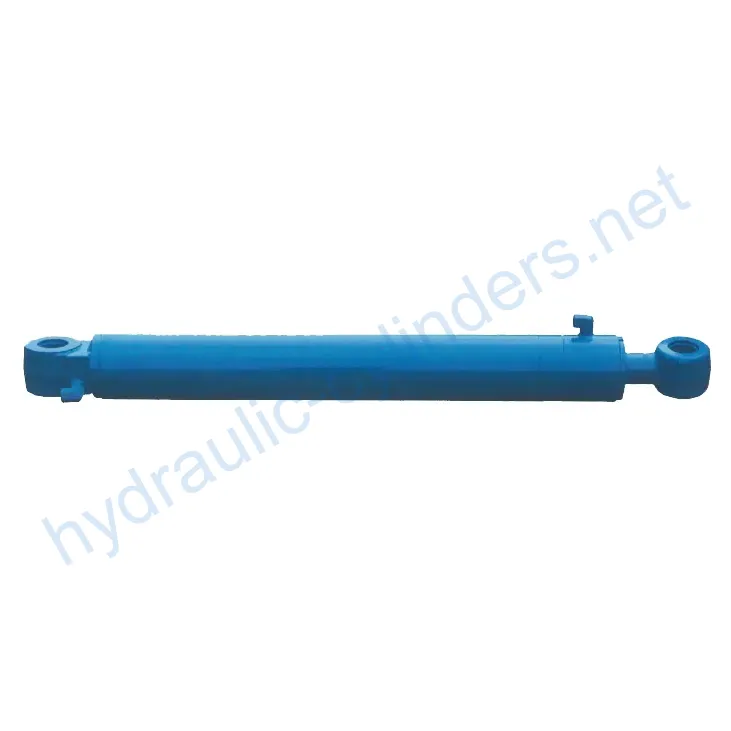
Arm Cylinder For Lovol Large Excavator FR370
Como cilindros hidráulicos uno de los fabricantes, los surtidores y los exportadores de productos mecánicos, ofrecemos cilindros hidráulicos y muchos otros productos.
Póngase en contacto con nosotros para más información.
Correo:sales@hydraulic-cylinders.net
Fabricante proveedor exportador de cilindros hidráulicos.
Arm Cylinder For Lovol Large Excavator FR370
The Arm Cylinder for Lovol Large Excavator FR370 is a specially designed hydraulic cylinder that is used to provide linear motion and power to the arm of various machinery, such as excavators, cranes, and robotic arms. The arm cylinder plays a crucial role in hydraulic systems, enabling the smooth movement and control of attachments or accessories. These cylinders not only ensure smooth motion but also withstand heavy loads, ensuring efficient operation and reliability of the machinery in various working conditions.
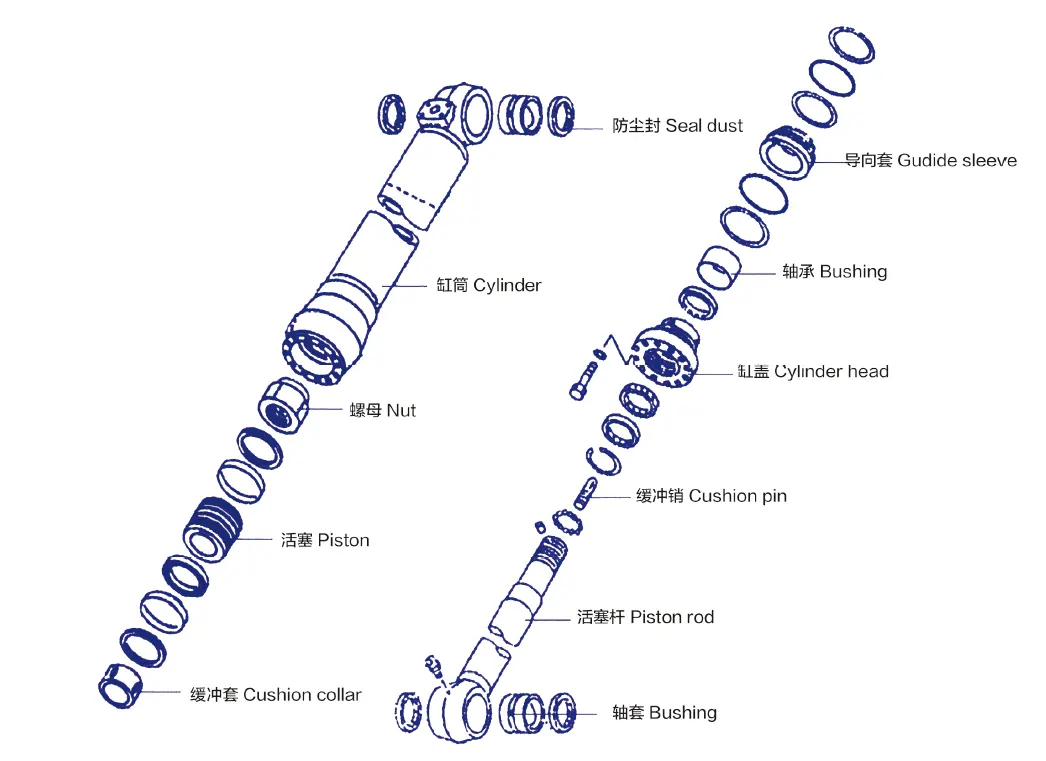
Características del cilindro del brazo:
- High Efficiency Transmission: The arm cylinder provides powerful linear motion and force, ensuring high efficiency performance of the robotic arm in various operations.
- Precise Control: Through the hydraulic system, the arm cylinder achieves precise motion control, making the operation of attached tools more flexible and accurate.
- Strong Durability: The arm cylinder is typically manufactured using high-strength materials, offering excellent wear and corrosion resistance, making it suitable for long-term use in harsh environments.
- Multi-functional Adaptability: These cylinders can be widely applied to various machinery, such as excavators, cranes, and robotic arms, adapting to different job requirements.
- Easy Maintenance: The design considers ease of maintenance and replacement, making regular inspections and upkeep convenient, thus reducing equipment downtime.

Aplicaciones del cilindro de brazo:
The Arm Cylinder finds its application in various industries and sectors:
- Construction Engineering: In excavators and cranes, the arm cylinder controls the movement of buckets or boom arms for earthwork, material handling, and structural installation.
- Manufacturing Industry: In automated production lines, the arm cylinder facilitates the movement of robotic arms for assembly, welding, and material handling processes, enhancing productivity and precision.
- Maquinaria agrícola: En equipos agrícolas como cosechadoras y sembradoras, el cilindro del brazo controla el movimiento de los brazos operativos para tareas como sembrar, fertilizar y cosechar.
- Minería: En los equipos de minería, el cilindro del brazo controla el movimiento del brazo de la maquinaria minera para la extracción y el transporte de mineral.
- Logística y Transporte: En carretillas elevadoras y robots de manipulación, el cilindro del brazo controla la elevación y el movimiento de las horquillas, lo que permite el transporte y apilado de materiales.
Consideraciones de diseño y criterios de selección:
When it comes to the design considerations and selection criteria of the arm cylinder, the following factors are important:
- Bearing Capacity: The arm cylinder should be designed to withstand the maximum load it will encounter during operation.
- Sealing: Various sealing elements, such as piston seals and rod seals, should be used to ensure proper sealing. These seals are made of wear-resistant materials like polyurethane and nitrile rubber.
- Durability: The cylinder body and threaded ends undergo fine treatment to enhance wear resistance and prolong the cylinder’s lifespan.
- Seguridad: Se deben incorporar medidas de seguridad en el diseño para prevenir accidentes y garantizar la protección del operador.
- Maintainability: The arm cylinder should be designed for easy maintenance and repair, minimizing downtime and optimizing efficiency.

Sellado y lubricación del cilindro del brazo:
To ensure optimal performance and longevity, the arm cylinder utilizes various sealing components such as piston seals and rod seals. These seals are made of wear-resistant materials like polyurethane and nitrile rubber. Additionally, the cylinder body and threaded ends undergo fine treatment to enhance wear resistance. Regular lubrication with the appropriate hydraulic oil is necessary to maintain smooth operation and prevent excessive friction.
Inspección regular y mantenimiento preventivo:
Regular inspection and preventive maintenance are essential to keep the arm cylinder in optimal condition. The following measures should be taken:
- Inspeccione el cilindro para detectar cualquier signo de fuga, daño o desgaste.
- Check and replace worn-out seals or other components as needed.
- Keep the cylinder clean and free from contaminants.
- Siga el programa de mantenimiento recomendado por el fabricante.
Pautas de instalación del producto:
Proper installation of the arm cylinder is crucial for its performance and longevity. The following steps should be followed:
- Asegúrese de que el sistema hidráulico esté despresurizado antes de la instalación.
- Align the cylinder and mounting brackets properly.
- Apriete los pernos de montaje al torque especificado.
- Check for any misalignment or interference during movement.

Consideraciones de seguridad y factores ambientales:
When using the arm cylinder, it is essential to prioritize safety measures to prevent accidents and ensure operator well-being. Adequate training, following safety guidelines, and using appropriate personal protective equipment are crucial aspects. Additionally, considering environmental factors such as temperature, humidity, and exposure to corrosive substances can help prolong the cylinder’s lifespan.
Diagnóstico de fallas y problemas comunes:
A continuación se muestran algunas fallas y problemas comunes que pueden ocurrir con el cilindro del brazo:
- Leakage in the cylinder seals or fittings
- Irregular or jerky motion of the cylinder
- Pérdida de potencia o fuerza insuficiente
- Ruido excesivo durante el funcionamiento
- Overheating of the cylinder

To diagnose and resolve these issues effectively, the following tips and solutions can be helpful:
- Inspect and replace any damaged or worn seals or fittings.
- Verifique que el sistema hidráulico tenga la presión y el flujo adecuados.
- Clean and lubricate the cylinder to ensure smooth operation.
- Inspect the surrounding components for any misalignment or damage.
- Consulte la guía de solución de problemas del fabricante para conocer problemas específicos.
Recuerde organizar el artículo de forma lógica, utilizar subtítulos para facilitar la navegación, incorporar imágenes o gráficos relevantes para mejorar la comprensión y asegurarse de que el contenido sea claro, conciso y adecuado para lectores con distintos niveles de conocimientos técnicos.
Autor: lyl
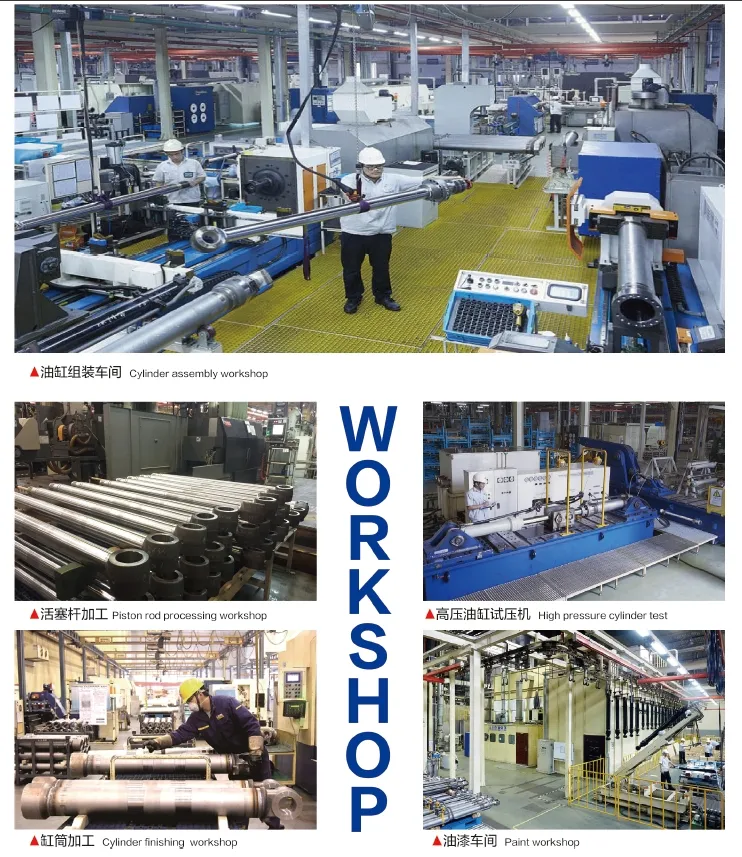
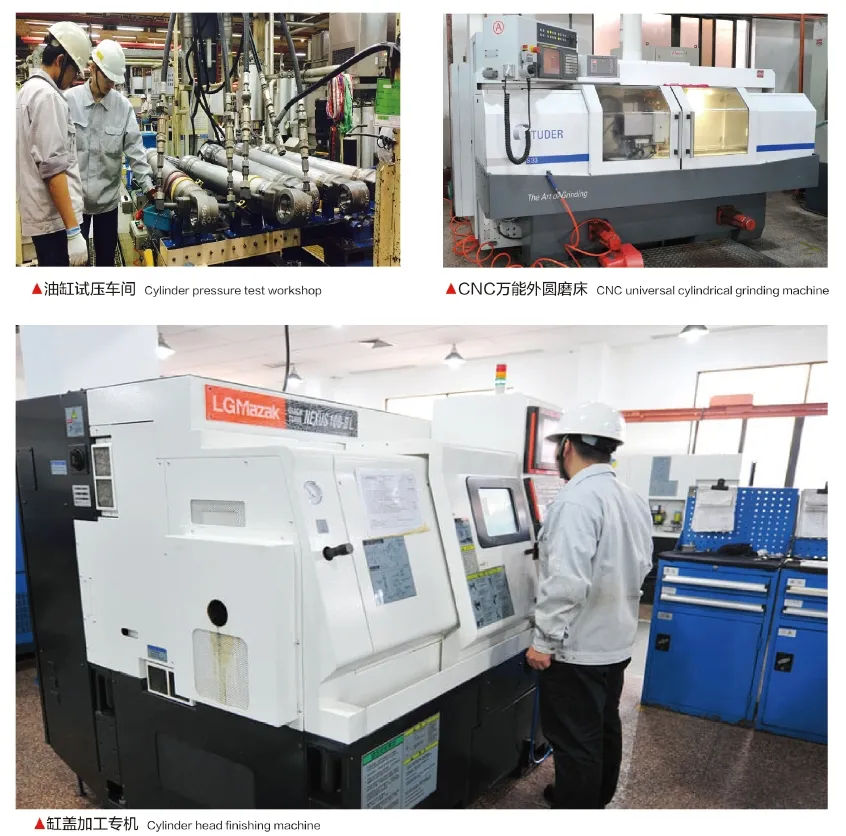
Lastly, it is important to highlight that we are a professional manufacturer of replacement hydraulic cylinders offering a wide range of products. We have become one of the leading hydraulic cylinder manufacturers and wholesale distributors in both domestic and international markets. With a commitment to excellence, we continuously improve our technical expertise and production efficiency through advanced manufacturing facilities and quality control systems. Our goal is to meet diverse customer needs with efficiency, precision, and high-quality products.
Cilindro hidráulico Aplicación:

 ES
ES  EN
EN  PT
PT  DE
DE  FR
FR  IT
IT  AR
AR  ZH
ZH  RU
RU  KO
KO  KA
KA  BG
BG  CS
CS  DA
DA  EL
EL  ET
ET  FI
FI  HU
HU  ID
ID  LT
LT  LV
LV  NB
NB  NL
NL  PL
PL  RO
RO  SK
SK  SL
SL  SV
SV  TR
TR  UK
UK