


Cilindro de brazo para John Deere E300LC
Introducción
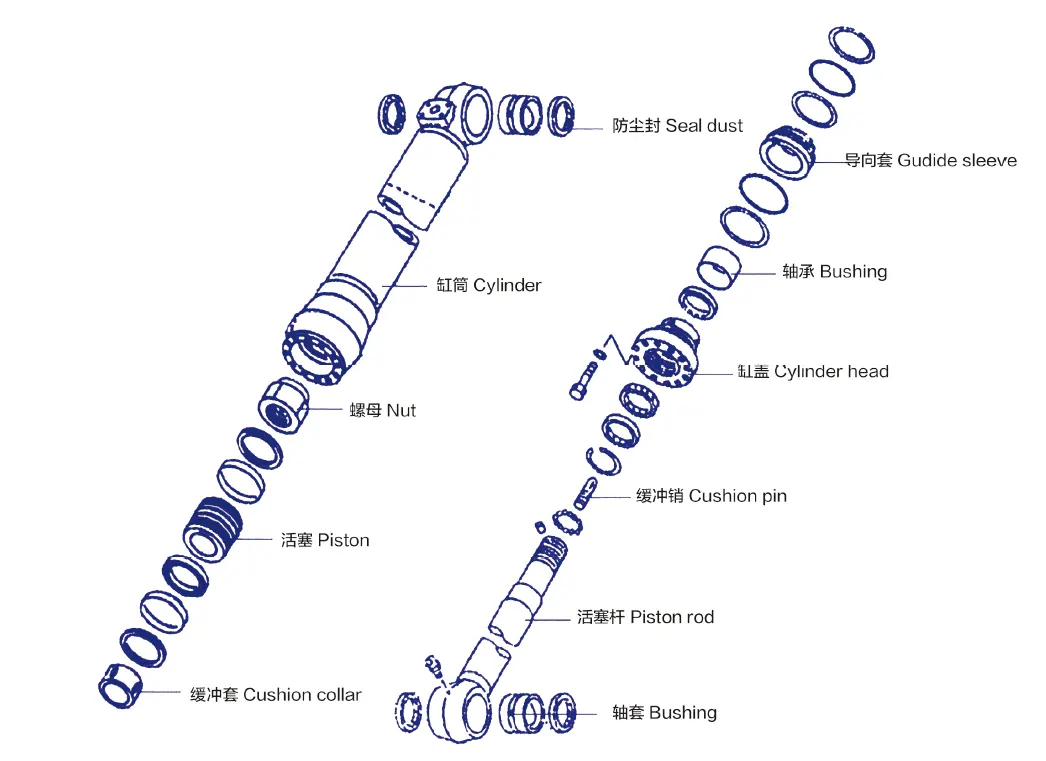
The Arm Cylinder for John Deere E300LC is a specially designed hydraulic cylinder that provides linear motion and power to the arm of various machinery, such as excavators, cranes, and robotic arms. The arm cylinder plays a crucial role in hydraulic systems, enabling the effective movement and control of additional tools or attachments. These cylinders not only ensure smooth motion but also withstand heavy loads, ensuring efficient operation and reliability of the machinery in various working conditions.

Características
- Transmisión de alta eficiencia: El cilindro del brazo proporciona un potente movimiento lineal y fuerza, lo que garantiza una alta eficiencia en diversas operaciones.
- Control de precisión: Through the hydraulic system, the arm cylinder allows for precise motion control, enabling flexible and accurate operation of attached tools.
- Durabilidad: Los cilindros de los brazos se fabrican normalmente con materiales de alta resistencia, lo que proporciona una excelente resistencia al desgaste y a la corrosión, haciéndolos adecuados para su uso a largo plazo en entornos hostiles.
- Adaptabilidad multifuncional: Estos cilindros pueden utilizarse ampliamente en diversas máquinas, como excavadoras, grúas y brazos robóticos, adaptándose a diferentes requisitos de trabajo.
- Fácil mantenimiento: Designed with ease of maintenance and replacement in mind, the arm cylinders facilitate convenient regular inspection and maintenance, reducing equipment downtime.


Aplicaciones
- Ingeniería de la construcción: In excavators and cranes, the arm cylinder is used to control the movement of buckets or booms, facilitating earthmoving, material handling, and structural installation.
- Industria manufacturera: In automated production lines, the arm cylinder is used for the motion of robotic arms, enabling assembly, welding, and material handling processes, thereby improving production efficiency and accuracy.
- Maquinaria agrícola: En equipos agrícolas como cosechadoras y sembradoras, el cilindro del brazo controla el movimiento de los brazos operativos, realizando tareas como plantar, fertilizar y cosechar.
- Minería: En equipos de minería, el cilindro del brazo se utiliza para controlar el movimiento del brazo de la maquinaria minera, facilitando la extracción y el transporte del mineral.
- Logística y Transporte: En las carretillas elevadoras y los robots de manipulación, el cilindro del brazo se utiliza para controlar la elevación y el movimiento de las horquillas, lo que permite la manipulación y el apilamiento de materiales.
Consideraciones de diseño y criterios de selección
- Capacidad de carga: The arm cylinder should be designed to handle the required load capacity, ensuring safe and efficient operation.
- Caza de focas: Various sealing components, such as piston seals and rod seals, should be used to prevent leakage and ensure optimal performance. These seals are often made of wear-resistant materials such as polyurethane and nitrile rubber.
- Durabilidad: The cylinder body and threaded ends should undergo precise treatment to enhance wear resistance, ensuring long-lasting performance.
- Seguridad: Safety measures should be considered in the design, such as incorporating safety valves or pressure relief mechanisms to prevent overloading or system failures.
- Mantenibilidad: The design should facilitate easy maintenance and allow for convenient replacement of components, reducing downtime during regular inspections and repairs.


Sellado y lubricación
The arm cylinder utilizes various sealing components to ensure effective sealing, such as piston seals and rod seals. These seals are made of wear-resistant materials like polyurethane and nitrile rubber. The cylinder body and threaded ends undergo precise treatment to enhance wear resistance. Regular lubrication with the appropriate amount of hydraulic oil is necessary to ensure smooth operation and longevity.
Regular Inspections and Preventative Maintenance
- Inspeccione periódicamente el cilindro para detectar cualquier signo de desgaste, fuga o daño.
- Check and replace seals as needed to maintain optimal performance.
- Ensure proper lubrication by regularly adding the recommended amount of hydraulic oil.
- Monitor the cylinder’s operation and address any abnormalities promptly.
- Follow the manufacturer’s guidelines for maintenance and schedule periodic servicing.
Guía de instalación
La correcta instalación del cilindro del brazo es crucial para un rendimiento y una seguridad óptimos. Siga estos pasos:
- Ensure the machinery is powered off and in a stable position.
- Retire cualquier cilindro o componente existente que pueda interferir con la instalación.
- Attach the arm cylinder securely to the designated mounting points.
- Make sure all connections are tight and properly aligned.
- Check for proper positioning and range of motion.
- Pruebe la funcionalidad del cilindro del brazo antes de reanudar el funcionamiento normal.


Consideraciones de seguridad y factores ambientales
When using the arm cylinder, it is essential to prioritize safety measures. Proper training and adherence to safety protocols are necessary to prevent accidents and injuries. Additionally, considering environmental factors such as temperature, humidity, and exposure to corrosive substances can help ensure the longevity and performance of the arm cylinder.
Solución de problemas y problemas comunes
A continuación se muestran algunos problemas comunes que pueden surgir con el cilindro del brazo:
- Fugas en juntas o conexiones
- Loss of power or slow movement
- Ruidos inusuales durante el funcionamiento
- Movimiento inconsistente o espasmódico
- Falla al extenderse o retraerse
Para abordar estos problemas:
- Inspect and replace any worn or damaged seals or connections.
- Verifique la lubricación adecuada y agregue aceite hidráulico si es necesario.
- Ensure all components are securely tightened and aligned.
- Consult the manufacturer’s troubleshooting guide or seek professional assistance if needed.


Acerca de nuestra empresa
We are a professional manufacturer of replacement hydraulic cylinders, offering a wide range of products. We have become one of the leading manufacturers and wholesale distributors of hydraulic cylinders in both domestic and international markets. We uphold the principle of excellence in quality and constantly strive to improve our technical expertise and production efficiency. With state-of-the-art digital manufacturing equipment and professional testing systems, we optimize our manufacturing platform and enhance product quality control processes. Our strong innovation capabilities enable us to meet the diverse needs of our customers with high efficiency, precision, and quality.
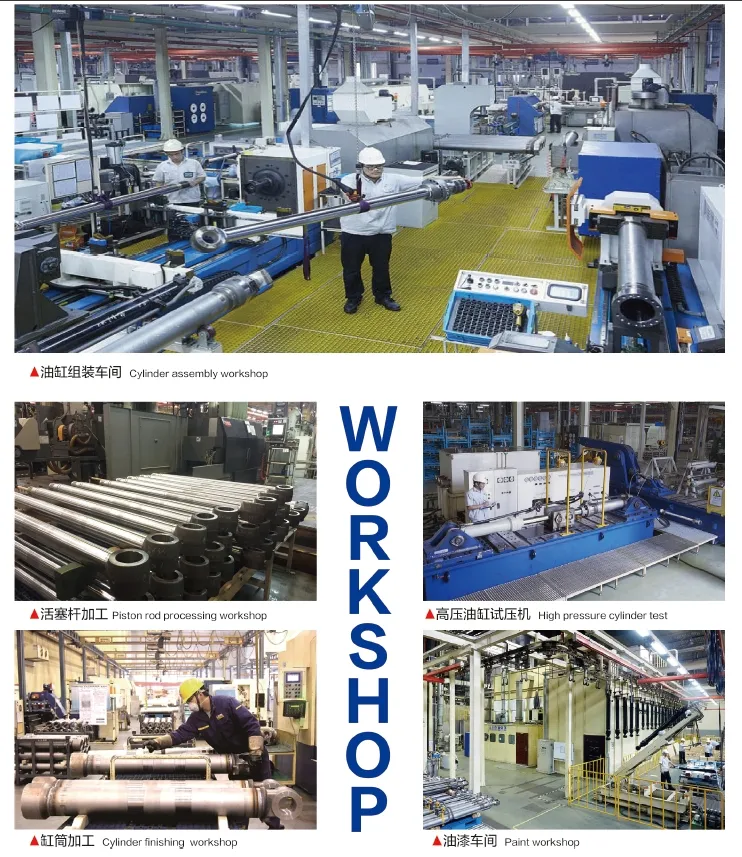
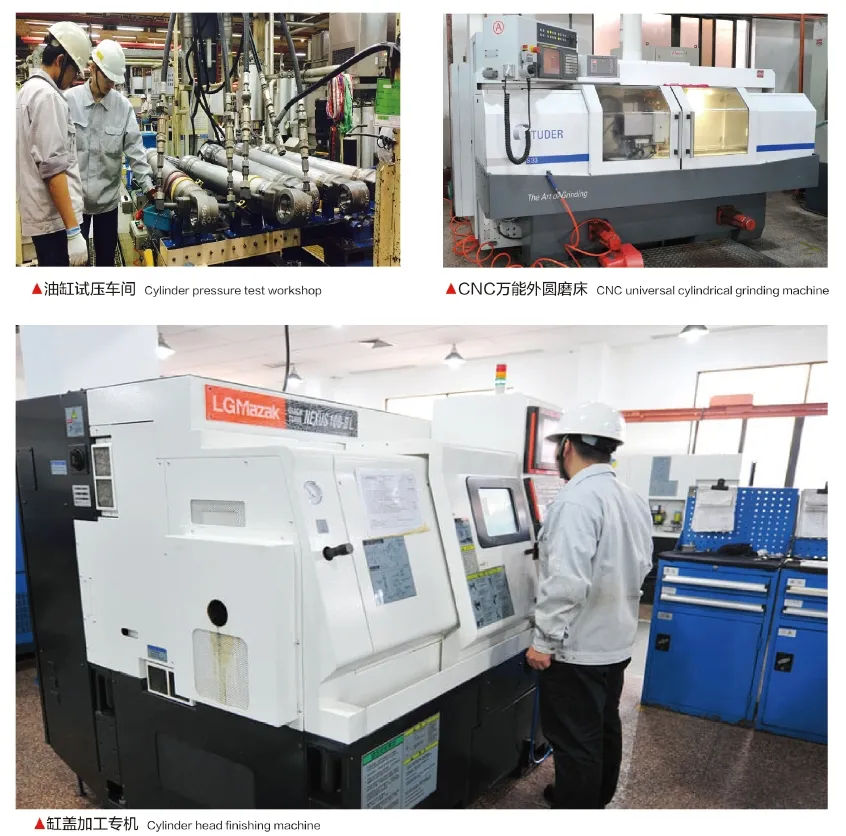


As a company, we pride ourselves on our professionalism, international certifications, customized services, advanced production equipment, and excellent after-sales service.
Autor: lyl