

Cilindro de brazo para Yuchai YC35-8
Como cilindros hidráulicos uno de los fabricantes, los surtidores y los exportadores de productos mecánicos, ofrecemos cilindros hidráulicos y muchos otros productos.
Póngase en contacto con nosotros para más información.
Correo:sales@hydraulic-cylinders.net
Fabricante proveedor exportador de cilindros hidráulicos.
Cilindro de brazo para Yuchai YC35-8
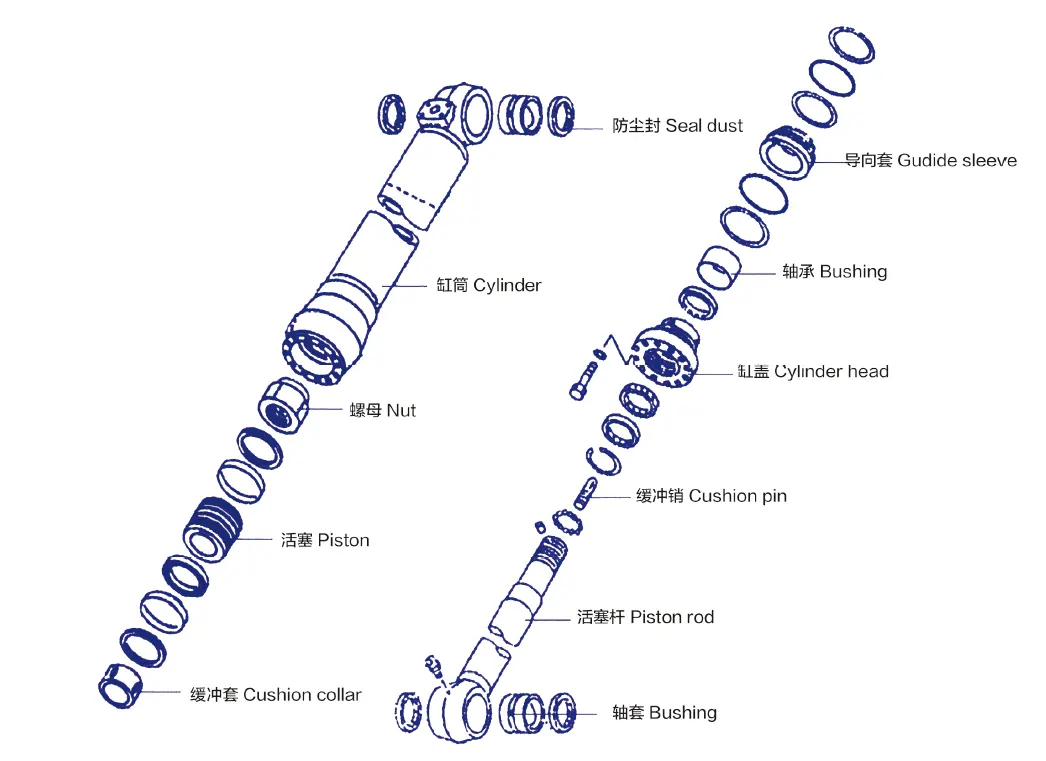
Definición y explicación
The arm cylinder is a hydraulic cylinder specially designed to provide linear motion and power to the arm of various types of machinery, such as excavators, cranes, and robotic arms. The arm cylinder plays a crucial role in hydraulic systems, enabling the efficient movement and control of attachments and accessories. These cylinders not only ensure smooth motion but also withstand heavy loads, ensuring the efficient operation and reliability of machinery under various working conditions.
Características
- Transmisión de alta eficiencia: El cilindro del brazo proporciona un potente movimiento y fuerza lineal, lo que garantiza un alto rendimiento del brazo robótico en diversas operaciones.
- Control preciso: A través del sistema hidráulico, el cilindro del brazo permite un control preciso del movimiento, haciendo que la operación de los accesorios sea más flexible y precisa.
- Fuerte durabilidad: Los cilindros de los brazos suelen estar fabricados con materiales de alta resistencia, que ofrecen una excelente resistencia al desgaste y a la corrosión, lo que los hace adecuados para su uso a largo plazo en entornos hostiles.
- Adaptabilidad multifuncional: Estos cilindros se pueden aplicar ampliamente a diversas maquinarias, como excavadoras, grúas y brazos robóticos, adaptándose a diferentes requisitos de trabajo.
- Fácil mantenimiento: Diseñados para un fácil mantenimiento y reemplazo, los cilindros del brazo facilitan las inspecciones y el mantenimiento regulares, reduciendo el tiempo de inactividad del equipo.

Aplicaciones
Los cilindros de brazo encuentran aplicaciones en diversas industrias:
- Ingeniería de la construcción: In excavators and cranes, the arm cylinders control the movement of buckets or booms, enabling earthwork, material handling, and structural installation.
- Fabricación: In automated production lines, the arm cylinders facilitate the motion of robotic arms, performing assembly, welding, and handling processes, improving production efficiency and precision.
- Maquinaria agrícola: In agricultural machinery such as harvesters and seeders, the arm cylinders control the movement of operating arms, executing tasks like planting, fertilizing, and harvesting.
- Minería: In mining equipment, the arm cylinders control the movement of mining equipment arms, enabling the extraction and transportation of ores.
- Logística y Transporte: In forklifts and handling robots, the arm cylinders control the lifting and movement of forks, facilitating material handling and stacking.
Consideraciones de diseño y criterios de selección

When designing arm cylinders, several key considerations and selection criteria are essential:
- Capacidad de carga: Arm cylinders should be designed to withstand the required load capacity, ensuring safe and efficient operation.
- Capacidad de sellado: Various sealing components like piston seals and rod seals should be used, employing wear-resistant materials such as polyurethane and nitrile rubber. The cylinder body and threaded end surfaces should undergo precise treatment to enhance wear resistance.
- Durabilidad: Arm cylinders should be constructed with high-quality materials to ensure durability and resistance to wear, corrosion, and other harsh environmental factors.
- Seguridad: Safety features should be incorporated into the design, such as pressure relief valves and emergency stop mechanisms, to prevent accidents and ensure operator safety.
- Mantenibilidad: Considerations should be given to easy maintenance and replacement of components, enabling convenient regular inspections, maintenance, and reducing downtime.
Sellado y lubricación
Arm cylinders utilize various sealing components, such as piston seals and rod seals, made of wear-resistant materials like polyurethane and nitrile rubber. The cylinder body and threaded end surfaces undergo precise treatment to improve wear resistance. Regular lubrication with the appropriate amount of hydraulic oil is necessary.
Inspección regular y mantenimiento preventivo

To ensure optimal performance and longevity, regular inspections and preventive maintenance measures are recommended:
- Inspect the cylinder and associated components for signs of wear, leaks, or damage.
- Clean the cylinder and remove any contaminants.
- Compruebe y rellene los niveles de aceite hidráulico según sea necesario.
- Apriete cualquier conexión o accesorio suelto.
- Replace worn or damaged seals and other components.
Guía de instalación del producto

La correcta instalación del cilindro del brazo es crucial para un rendimiento óptimo. Siga estos pasos:
- Prepare el área de montaje y asegúrese de que esté limpia y libre de residuos.
- Alinee el cilindro con los puntos de montaje y fíjelo utilizando pernos o sujetadores adecuados.
- Connect the hydraulic hoses or pipes to the cylinder’s inlet and outlet ports.
- Check for any leaks and ensure all connections are tight and secure.
- Test the cylinder’s functionality by operating the machinery’s controls.
Consideraciones de seguridad y factores ambientales
The use of appropriate safety measures is crucial when working with arm cylinders to prevent accidents and ensure operator safety. Considerations include:
- Provide proper training and instructions for operators on the safe use of machinery equipped with arm cylinders.
- Use safety guards or shields to protect operators from potential hazards.
- Perform regular inspections to identify and address safety issues promptly.
- Adhere to applicable safety regulations and guidelines.
Solución de problemas y problemas comunes
When troubleshooting arm cylinders, consider the following common issues:
- Leaking seals or connections
- Movimiento insuficiente o desigual
- Ruido o vibración excesivos
- pérdida de potencia o fuerza
Para abordar estos problemas:
- Inspect and replace any damaged or worn seals or connections.
- Check for any obstructions or misalignments that may hinder smooth movement.
- Ensure proper hydraulic fluid levels and flow.
- Consult the manufacturer’s guidelines or seek professional assistance if necessary.
Autor: lyl
Our company is a leading manufacturer and wholesaler of hydraulic cylinders, specializing in providing high-quality replacement cylinders. We offer a wide range of products and have become a trusted supplier in both domestic and international markets. With a focus on excellence, we continuously improve our technical capabilities and production efficiency through advanced manufacturing facilities and professional testing systems. Our goal is to meet the diverse needs of customers with principles of efficiency, precision, and high quality.
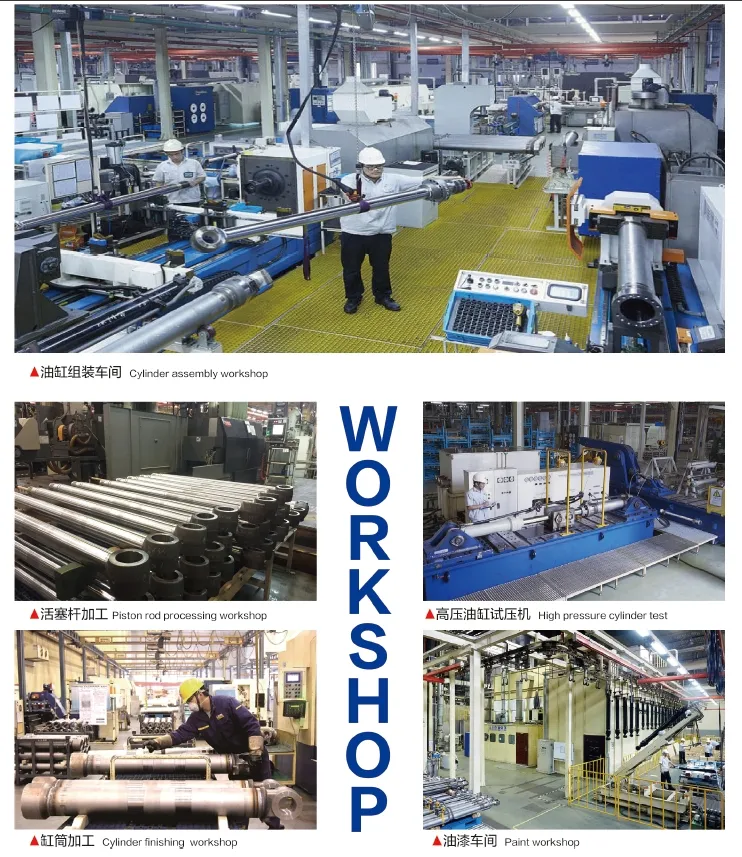
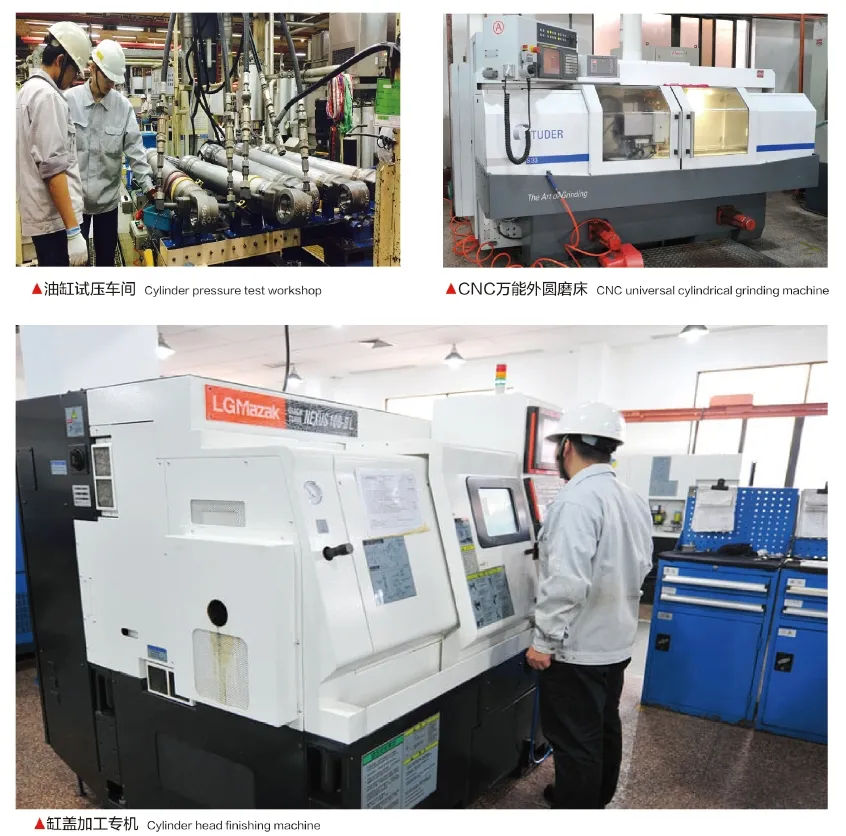
We take pride in our professionalism, international
Cilindro hidráulico Aplicación:

 ES
ES  EN
EN  PT
PT  DE
DE  FR
FR  IT
IT  AR
AR  ZH
ZH  RU
RU  KO
KO  KA
KA  BG
BG  CS
CS  DA
DA  EL
EL  ET
ET  FI
FI  HU
HU  ID
ID  LT
LT  LV
LV  NB
NB  NL
NL  PL
PL  RO
RO  SK
SK  SL
SL  SV
SV  TR
TR  UK
UK