
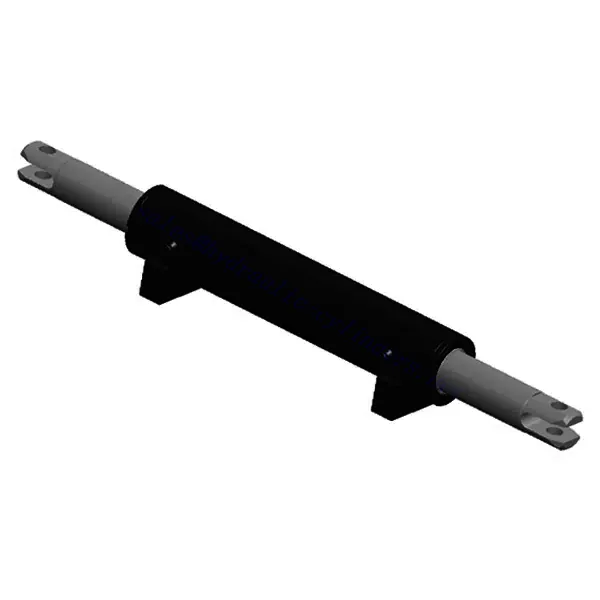
Cilindro de dirección del apilador retráctil
Como cilindros hidráulicos uno de los fabricantes, los surtidores y los exportadores de productos mecánicos, ofrecemos cilindros hidráulicos y muchos otros productos.
Póngase en contacto con nosotros para más información.
Correo:sales@hydraulic-cylinders.net
Fabricante proveedor exportador de cilindros hidráulicos.
Cilindro de dirección del apilador retráctil
The reach stacker steering cylinder is a vital hydraulic component designed to optimize control and maneuverability of reach stackers in material handling operations. This specialized cylinder enables smooth and precise steering, allowing operators to navigate tight spaces and handle heavy loads with ease. With its exceptional features, robust construction, and reliable performance, the reach stacker steering cylinder revolutionizes the efficiency and productivity of material handling processes.
The reach stacker steering cylinder is a game-changer in material handling operations, offering enhanced control, maneuverability, and efficiency. With its exceptional steering capabilities, high load-bearing capacity, and optimal energy efficiency, this cylinder empowers operators to navigate reach stackers with ease, increasing productivity and safety. By following the recommended usage methods and implementing regular maintenance practices, companies can maximize the performance, longevity, and reliability of their reach stacker operations. The reach stacker steering cylinder is a valuable investment for any material handling fleet, enabling precise control, efficient maneuvering, and seamless operations in the competitive material handling industry.
Reach Stacker Steering Cylinder Key Characteristics:
- Enhanced Steering Control: The reach stacker steering cylinder offers exceptional steering control, allowing operators to navigate reach stackers precisely. It ensures smooth and responsive steering, facilitating accurate positioning of containers and efficient maneuvering in confined spaces. Operators can confidently navigate complex layouts, improving productivity and reducing the risk of accidents or damage.
- High Load-bearing Capacity: This cylinder is designed to withstand heavy loads encountered in material handling operations. It is engineered with sturdy materials and robust construction, enabling it to handle the rigors of demanding applications. The Reach Stacker Steering Cylinder ensures stability and reliability, even when maneuvering large containers or carrying substantial loads, enhancing safety and performance.
- Optimal Efficiency: The reach stacker steering cylinder contributes to overall operational efficiency by minimizing energy loss during steering maneuvers. It features advanced hydraulic technology that reduces internal friction, improving energy efficiency and reducing power consumption. This efficiency translates into cost savings and prolonged equipment lifespan.
Reach Stacker Steering Cylinder Parameter:
| Nombre del producto | Cilindro abatible de apilador de alcance |
| Características: | Realize the adjustment of the direction of the crane’s tires |
| Diámetro del orificio: | 80mm~200mm |
| Diámetro de la varilla: | 60mm~100mm Carrera ≤ 9500 mm |
| Presión: | Máximo 25 MPa |
| Aplicaciones: | Apilador de alcance |
Aplicación del cilindro del apilador de alcance:
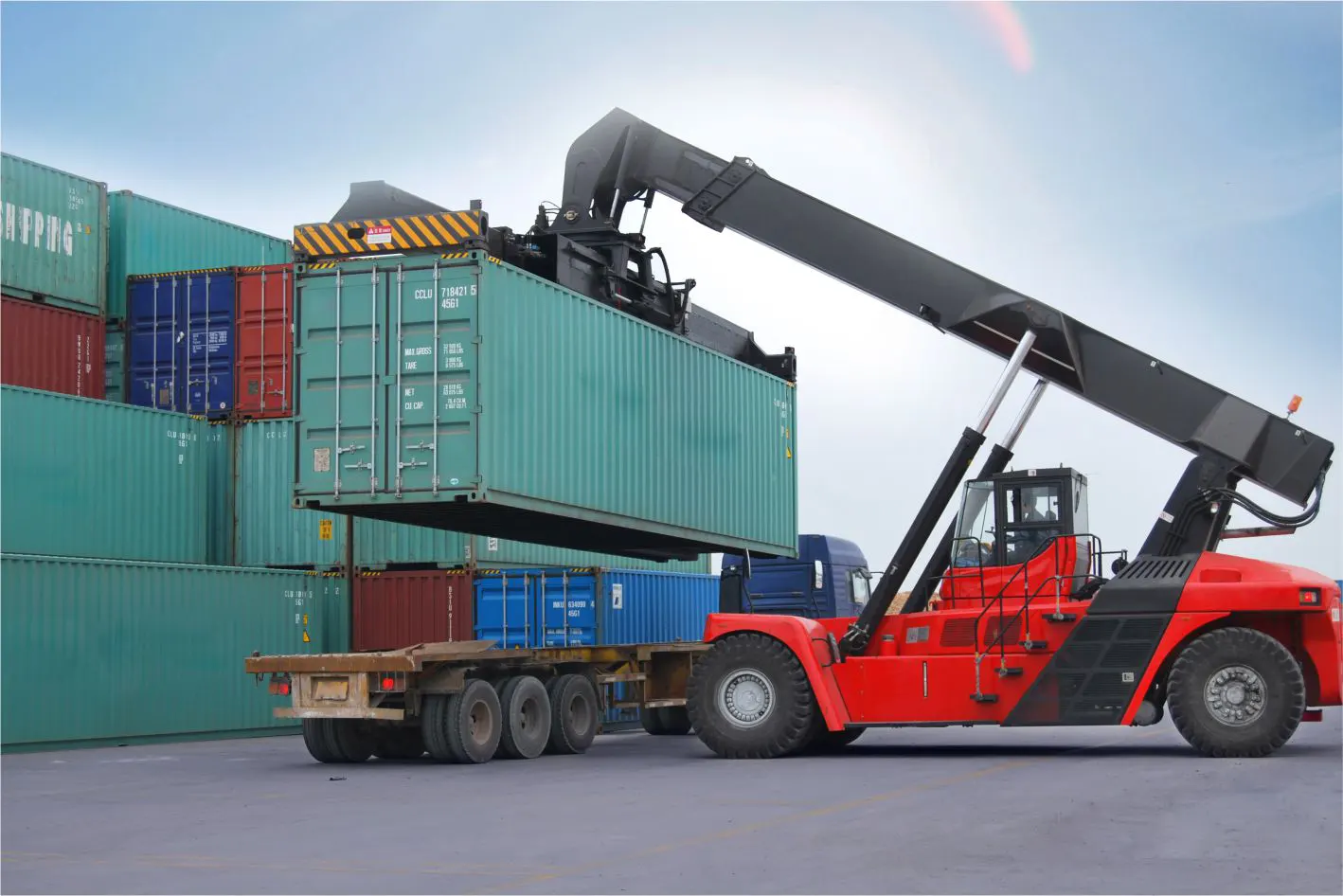
Usage Method Of Reach Stacker Steering Cylinder:
Steering Control: To utilize the Reach Stacker Steering Cylinder effectively, follow these steps:
a. Engage the reach stacker’s hydraulic system and ensure the hydraulic pressure is within the recommended operating range.
b. Utilize the reach stacker’s steering controls, such as a steering wheel or joystick, to direct the vehicle’s movement.
c.The reach stacker steering cylinder will respond to the operator’s input, translating it into smooth and precise steering motions.
d. Monitor the reach stacker’s direction and adjust the steering input to achieve the desired path or positioning.
¿Cómo se fabrican los cilindros hidráulicos?
Hydraulic cylinders are commonly manufactured using a systematic process involving several key steps. While the specifics may vary depending on the manufacturer and cylinder design, the following is a general overview of how hydraulic cylinders are made:
- Diseño e Ingeniería:
- The process begins with the design and engineering phase. Engineers and designers create detailed specifications, considering load capacity, stroke length, operating pressure, and environmental conditions.
- Selección de materiales:
- Once the design is finalized, suitable materials are selected based on the application requirements. Common materials used for hydraulic cylinders include high-strength steel for the cylinder barrel, piston, and rod, and seals and gaskets made from elastomers or other suitable materials.
- Producción de barriles cilíndricos:
- The cylinder barrel is typically manufactured through a process called honing. Honing involves precision machining the inner surface of the barrel to achieve a smooth and precise finish. This ensures optimal sealing and reduces friction during operation.
- Piston and Rod Production:
- The piston and rod are typically machined from high-strength steel. CNC or other machining techniques are used to achieve precise dimensions and tolerances. The piston may have grooves for seals, and the rod is often hardened and chromed for durability and resistance to wear.
- Asamblea:
- The assembly process involves fitting various components together to create the hydraulic cylinder. This includes inserting seals, bearings, and other necessary parts into the barrel, attaching the piston and rod, and securing them with retaining rings or bolts.
- Surface Treatment and Coating:
- Depending on the application and environmental conditions, the hydraulic cylinder may undergo surface treatments and coatings to enhance corrosion resistance and durability. This can include electroplating, painting, or applying specialized coatings.
- Pruebas y control de calidad:
- Once the assembly is complete, hydraulic cylinders undergo rigorous testing to meet quality and performance standards. This may include pressure, leakage, and functional testing to verify proper operation and reliability.
- Final Finishing and Packaging:
- After passing quality control checks, the hydraulic cylinders undergo final finishing processes, such as cleaning, deburring, and cosmetic enhancements. They are then carefully packaged for shipment or storage, ready to be installed in hydraulic systems.
Capacidad de la fábrica:
(1) Montaje
Contamos con una plataforma de ensamblaje independiente de primera clase para investigación y desarrollo. El taller de producción de cilindros hidráulicos cuenta con cuatro líneas de ensamblaje de cilindros de elevación semiautomáticos y una línea de ensamblaje de cilindros de inclinación automáticos, con una capacidad de producción anual diseñada de 1 millón de piezas. El taller de cilindros especiales está equipado con un sistema de ensamblaje de limpieza semiautomático de diversas especificaciones, con una capacidad de producción anual diseñada de 200,000 unidades, y está equipado con reconocidos equipos de mecanizado CNC, un centro de mecanizado, equipos especiales de procesamiento de cilindros de alta precisión, una máquina de soldadura robotizada, una máquina de limpieza automática, una máquina de ensamblaje de cilindros automáticos y una línea de producción de pintura automática. Contamos con más de 300 equipos críticos. La asignación óptima y el uso eficiente de los recursos de equipo garantizan la precisión y la alta calidad de los productos.


(2) Mecanizado
El taller de mecanizado está equipado con un centro de torneado de carril inclinado personalizado, un centro de mecanizado, una máquina de bruñido de alta velocidad, un robot de soldadura y otros equipos relacionados, que pueden procesar tubos cilíndricos con un diámetro interior máximo de 400 mm y una longitud máxima de 6 metros.

(3) Soldadura

(4) Pintura y revestimiento
Con pequeñas y medianas líneas de cilindros automáticos de recubrimiento de pintura a base de agua, para lograr la carga y descarga automática de robots y pulverización automática, la capacidad de diseño de 4000 piezas por turno;
También disponemos de una línea semiautomática de producción de pintura para grandes cilindros accionada por cadena, con una capacidad de diseño de 60 cajas por turno.


(5) Pruebas
Disponemos de instalaciones de inspección y bancos de pruebas de primera clase para garantizar que el rendimiento del cilindro cumple los requisitos.

Somos uno de los mejores fabricantes de cilindros hidráulicos. Ofrecemos cilindros hidráulicos integrales. También proporcionamos... cajas de cambios agrícolasHemos exportado nuestros productos a clientes de todo el mundo y nos hemos ganado una excelente reputación gracias a nuestra excelente calidad y servicio posventa. Invitamos a clientes nacionales e internacionales a contactarnos para negociar negocios, intercambiar información y... colabore con nosotros!
Cilindro hidráulico Aplicación:

 ES
ES  EN
EN  PT
PT  DE
DE  FR
FR  IT
IT  AR
AR  ZH
ZH  RU
RU  KO
KO  KA
KA  BG
BG  CS
CS  DA
DA  EL
EL  ET
ET  FI
FI  HU
HU  ID
ID  LT
LT  LV
LV  NB
NB  NL
NL  PL
PL  RO
RO  SK
SK  SL
SL  SV
SV  TR
TR  UK
UK