
Fluid Power Diagnostics and Maintenance
Why Is My Hydraulic Cylinder Drifting Down? An Engineering Analysis
An authoritative technical guide exploring internal fluid bypass, piston seal degradation, load holding valve failure, and diagnostic isolation protocols for resolving hydraulic actuator drift.

The Danger and Mechanics of Load Drift
In the rigorous world of industrial machinery, heavy construction equipment, and automated manufacturing, hydraulic cylinders are trusted to lift, position, and indefinitely suspend massive payloads. The entire premise of fluid power relies on the physical law that liquids are incompressible. When a control valve closes, the trapped volume of hydraulic oil is supposed to act as an unyielding, rigid column of steel, locking the actuator perfectly in place. However, one of the most persistent, frustrating, and potentially lethal failures encountered by maintenance professionals is when a hydraulic cylinder is drifting down. This phenomenon occurs when a suspended load slowly sinks or creeps downward despite the operator returning the directional control valve to the neutral, closed position.
Hydraulic cylinder drifting down is not merely a minor operational inconvenience; it is a critical safety hazard. An excavator boom slowly dropping over a trench, a manlift creeping downward while technicians work at height, or an industrial forging press platen settling unexpectedly can result in catastrophic equipment damage and severe human injury. Understanding exactly why a hydraulic actuator loses its load holding capability is the absolute prerequisite for executing a permanent mechanical repair.
From a strictly diagnostic engineering perspective, cylinder drift is always the symptom of a single physical reality: high pressure fluid is escaping from the load bearing chamber. Because hydraulic oil cannot simply vanish, it must be finding a microscopic pathway to bypass a mechanical seal. Troubleshooting hydraulic drift requires a systematic approach to isolate the fluid power circuit and identify the exact component failing to hold pressure. This authoritative technical guide will dissect the primary culprits behind load creep, including internal piston seal failure, control valve spool wear, thermal viscosity drops, and the failure of dedicated holding valves.
Culprit 1: Internal Piston Seal Bypass
The most frequent assumption mechanics make when a cylinder drifts is that the internal piston seals have blown. While highly common, understanding the exact mechanism of this internal fluid bypass is vital for preventing repeat failures.

The Physics of Internal Leakage
In a double acting hydraulic cylinder, the piston acts as the solid dividing wall between the extension chamber and the retraction chamber. Its perimeter is fitted with heavy duty elastomeric seals. If you are suspending a load, the fluid in the cap end is highly pressurized. If the piston seals are compromised, this high pressure oil will slowly squeeze past the outer edge of the piston and leak into the lower pressure rod end chamber. As fluid escapes the load bearing zone, the cylinder rod physically retracts, causing the payload to drift downward. Notably, internal bypass does not cause visible oil puddles on the ground, making it an entirely invisible, internal mechanical failure.
Causes of Seal Degradation
Piston seals do not fail without a catalyst. The primary destroyer of polyurethane and PTFE seals is particulate contamination. Microscopic metal shavings or dirt in the hydraulic oil act like liquid sandpaper, aggressively scoring the seals with every stroke. Additionally, extreme pressure spikes can cause the cylinder barrel to expand radially ballooning slightly; when the barrel swells, the seal loses contact with the wall, allowing fluid to blow past. Finally, extreme thermal loading can cause the elastomeric polymers to harden, crack, and permanently lose their flexible sealing properties.
Culprit 2: Directional Control Valve Leakage
It is a widespread diagnostic error to immediately rebuild a drifting cylinder without inspecting the broader fluid power circuit. In many instances, the hydraulic cylinder is in perfect mechanical condition, and the drift is actually originating from the directional control valve.
Standard hydraulic directional control valves utilize a hardened steel spool that slides back and forth within a cast iron valve body to direct fluid flow. To allow the spool to move freely, there is a microscopic clearance gap between the spool and the bore typically measured in ten thousandths of an inch. Because these are metal to metal clearances without rubber O rings, standard spool valves are not entirely leak proof by design. They have an acceptable, inherent leak rate. Over years of high cycle operation, abrasive contaminants in the oil will wear down the spool lands, widening this microscopic gap. When suspending a heavy load, the high pressure fluid from the cylinder pushes back against the closed valve, slowly slipping past the worn spool and returning to the reservoir. This volumetric slip allows the cylinder to drift down.
The Critical Isolation Test (The Ball Valve Protocol)
To definitively prove whether the drift is caused by a failed piston seal or a leaking control valve, fluid power engineers execute a simple isolation test. Suspend the load so the cylinder is pressurized. Install a high pressure mechanical ball valve directly inline on the hydraulic hose between the cylinder port and the directional control valve.
- –If the drift continues after you manually close the ball valve, the fluid is bypassing the piston internally. The cylinder must be rebuilt.
- –If the drift stops immediately upon closing the ball valve, the cylinder seals are perfect. The fluid was escaping back through the directional control valve, indicating the valve spool is worn and requires replacement.

Culprit 3: Failure of Load Holding Valves
Because standard spool valves have an inherent leak rate, critical safety applications like cranes, manlifts, and outrigger cylinders utilize dedicated, zero leak load holding valves bolted directly to the cylinder barrel.
Pilot Operated (PO) Check Valves
A PO check valve utilizes a hardened steel poppet seated tightly against a machined metal face. This creates a true, zero leak mechanical seal that traps high pressure fluid inside the cylinder, absolutely preventing drift. The valve only opens when pilot pressure is applied from the opposing hydraulic line to physically push the poppet off its seat. However, if a microscopic piece of debris such as a metal shaving or degraded seal material becomes lodged between the poppet and the seat, the valve cannot close completely. This allows high pressure fluid to bleed out, resulting in immediate load creep.
Counterbalance Valve Instability
Counterbalance valves provide load holding while also ensuring smooth deceleration of heavy, overrunning loads. They feature complex internal springs and relief settings. If a counterbalance valve is incorrectly adjusted by a technician, or if the internal biasing spring fatigues over years of high pressure operation, the valve will open prematurely under the static weight of the payload. Before tearing down a drifting cylinder equipped with load holding valves, always extract the cartridge valves, inspect them for particulate contamination, and replace the O-rings on the cartridge body.
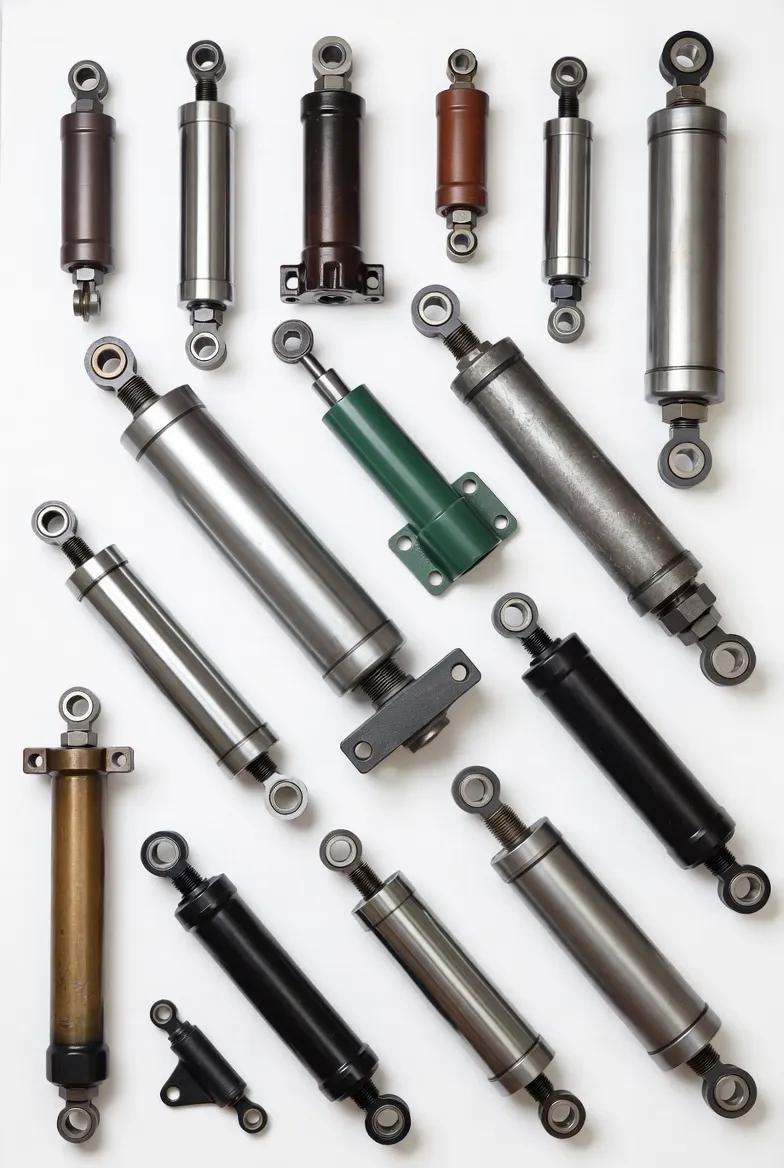
Culprit 4: Thermal Contraction and Fluid Viscosity Breakdown
Fluid power diagnostics must also account for environmental and thermodynamic variables. A hydraulic cylinder drifting down is not always the result of a catastrophic mechanical failure; in some specific scenarios, it is driven purely by physics and fluid properties.
- ✔️
The Illusion of Drift (Thermal Contraction): Hydraulic oil expands when it is heated and contracts when it cools. If a piece of mobile equipment operates heavily all day, the hydraulic fluid may reach temperatures exceeding 160 degrees Fahrenheit. If the operator extends a cylinder, parks the machine for the night with a load suspended, and the ambient temperature drops significantly, the trapped volume of hydraulic fluid will physically contract as it cools. This thermal contraction reduces the volume of fluid in the cylinder, causing the rod to retract slightly. This appears to be load drift, but it will stabilize once the fluid reaches ambient temperature.
- ✔️
Extreme Heat and Viscosity Loss: The effectiveness of hydraulic seals and the tight metal to metal clearances inside spool valves rely heavily on the viscosity thickness of the hydraulic oil. If a machine’s heat exchanger fails and the system overheats, the oil becomes incredibly thin, essentially turning to the consistency of water. This ultra thin, superheated fluid easily slips past seals and valves that would normally hold firm. If cylinder drift only occurs after the machine has been running hot for several hours, the primary issue is thermal management, not shattered piston seals.

Predictive Maintenance and Final Resolution
The phenomenon of a hydraulic cylinder drifting down is a definitive signal that the fluid power system has lost its mechanical integrity. Ignoring this symptom invariably leads to worse outcomes, ranging from massive, sudden fluid blowouts to dropped payloads causing catastrophic structural damage to the machinery.
Resolving the issue permanently requires a commitment to engineering excellence and absolute fluid cleanliness. Once the diagnostic isolation tests prove the piston seals are failing, the cylinder must be professionally removed, entirely disassembled on a clean workbench, and rigorously inspected. Mechanics must verify that the internal barrel wall is free of abrasive scoring, and the new, high pressure polyurethane seals must be installed with precision tooling. Furthermore, replacing the seals without addressing heavily contaminated hydraulic fluid will merely result in the new seals being shredded within weeks. A complete system flush and high efficiency bypass filtration are mandatory components of a successful drift resolution strategy.

Conclusion: Securing the Foundation of Fluid Power
Troubleshooting hydraulic drift demands a logical, physics based approach. By understanding the mechanical differences between internal piston seal bypass, inherent spool valve volumetric slip, and the catastrophic failure of pilot operated check valves, engineering professionals can eliminate guesswork. Applying rigorous diagnostic procedures such as the ball valve isolation test ensures that expensive maintenance budgets are deployed accurately, repairing the exact component at fault. Ultimately, maintaining fluid purity, managing system thermal loads, and executing timely seal replacements guarantees that the world’s most powerful automated machinery continues to hold massive payloads aloft with absolute, uncompromising rigidity and safety.