Arm Cylinder For SGZG SD15B
Introducción
The Arm Cylinder for SGZG SD15B is a specialized hydraulic cylinder designed to provide linear motion and power to the arm of various machines, such as excavators, cranes, and robotic arms. The arm cylinder plays a crucial role in hydraulic systems, allowing for efficient movement and control of attached tools or accessories. These cylinders not only enable smooth motion but also withstand heavy loads, ensuring high performance and reliability of the machinery in various operating conditions.

Características
- Transmisión de alta eficiencia: El cilindro del brazo proporciona un potente movimiento y fuerza lineal, lo que garantiza un rendimiento eficiente de la maquinaria en diversas operaciones.
- Control preciso: A través del sistema hidráulico, el cilindro del brazo permite un control preciso del movimiento, haciendo que las operaciones con herramientas acopladas sean más flexibles y precisas.
- Durabilidad: The arm cylinder is typically made of high-strength materials, offering excellent wear and corrosion resistance, suitable for prolonged use in harsh environments.
- Adaptabilidad multifuncional: These cylinders can be widely applied to various machinery, such as excavators, cranes, and robotic arms, adapting to different job requirements.
- Fácil mantenimiento: The design considers ease of maintenance and replacement, making regular inspection and upkeep convenient, thereby reducing equipment downtime.


Aplicaciones
El cilindro del brazo encuentra aplicaciones en diversas industrias:
- Ingeniería de la construcción: En excavadoras y grúas, el cilindro del brazo se utiliza para controlar el movimiento de cucharones o plumas para trabajos de movimiento de tierras, manipulación de materiales e instalación de estructuras.
- Fabricación: In automated production lines, the arm cylinder is used for the motion of robotic arms, enabling processes like assembly, welding, and material handling, improving production efficiency and precision.
- Maquinaria agrícola: In agricultural equipment such as harvesters and seeders, the arm cylinder controls the movement of operating arms to perform tasks like seeding, fertilizing, and harvesting.
- Minería: In mining equipment, the arm cylinder is used to control the arm movement of mining machinery, facilitating ore extraction and transport.
- Logística y Transporte: En carretillas elevadoras y robots de manipulación, el cilindro del brazo controla la elevación y el movimiento de las horquillas, lo que permite la manipulación y el apilado de materiales.
Consideraciones de diseño y criterios de selección
When designing the arm cylinder, several factors and selection criteria are taken into account:
- Capacidad de carga: The arm cylinder is designed to withstand specific loads and forces to ensure safe and efficient operation.
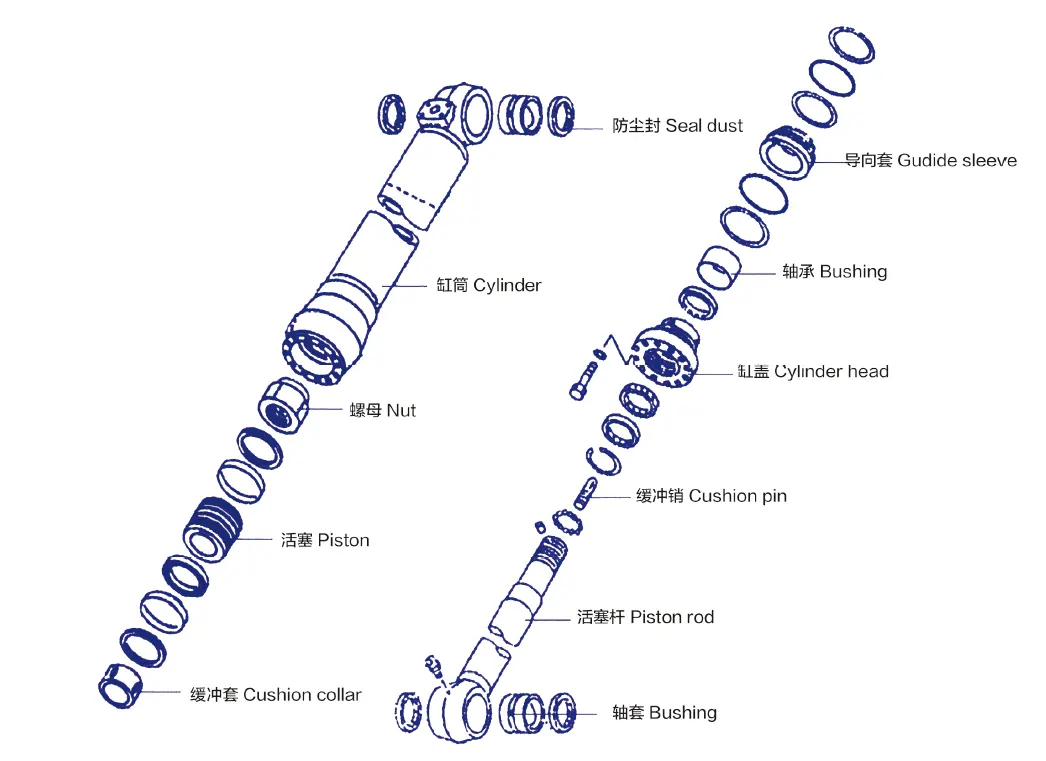
- Sealing Ability: Various sealing elements, such as piston seals and rod seals, are chosen to provide effective sealing, using materials like polyurethane and nitrile rubber for wear resistance.
- Durabilidad: The cylinder body and threaded ends undergo precise treatment to enhance wear resistance, ensuring prolonged service life.
- Seguridad: Safety considerations are integrated into the design to prevent accidents and ensure operator well-being during cylinder operation.
- Mantenibilidad: The arm cylinder is designed for easy maintenance and regular lubrication with hydraulic oil to optimize performance and extend its lifespan.


Sellado y lubricación
The arm cylinder utilizes various sealing components, such as piston seals and rod seals, made of wear-resistant materials like polyurethane and nitrile rubber. The cylinder body and threaded ends are finely treated to improve wear resistance. Regular lubrication with the appropriate amount of hydraulic oil is necessary to ensure smooth operation.
Inspección regular y mantenimiento preventivo
- Realice inspecciones periódicas del cilindro del brazo para verificar si hay signos de desgaste, fugas o daños.
- Ensure proper lubrication of the cylinder and replace any worn-out or damaged seals.
- Tighten all connections and fittings to prevent leaks and ensure the cylinder’s stability.
- Keep the cylinder clean and free from debris or contaminants that can affect its performance.
- Follow the manufacturer’s recommendations for maintenance intervals and procedures.
Guía de instalación
Siga estos pasos para instalar correctamente el cilindro del brazo:
- Ensure the machine is turned off and the hydraulic system is depressurized.
- Coloque el cilindro del brazo en la posición deseada, alineando los orificios de montaje.
- Securely attach the cylinder using appropriate bolts and connectors.
- Connect the hydraulic hoses to the cylinder following the recommended connections.
- Compruebe que no haya fugas en todas las conexiones y apriételas si es necesario.


Consideraciones de seguridad y factores ambientales
When using the arm cylinder, it is essential to prioritize safety measures to prevent accidents and ensure operator protection. Compliance with safety guidelines and the use of appropriate safety equipment are crucial. Additionally, considering environmental factors during operation helps minimize the impact on the surroundings.
Solución de problemas y problemas comunes
A continuación se muestran algunos problemas comunes que pueden surgir con el cilindro del brazo:
- Fuga de líquido hidráulico del cilindro
- Ruidos inusuales durante el funcionamiento
- Movimiento lento o desigual del brazo
- Inconsistent performance or loss of power
- Cylinder not responding to control commands
Para solucionar estos problemas, tenga en cuenta los siguientes consejos y soluciones de resolución de problemas:
- Check and tighten all connections to prevent leaks.
- Inspect the seals and replace any worn-out or damaged ones.
- Ensure the hydraulic system has sufficient fluid and proper pressure.
- Clean the cylinder and remove any debris or obstructions.
- If issues persist, consult the manufacturer or a qualified technician.


Recuerda organizar el artículo de forma lógica, usar subtítulos para facilitar la navegación, incorporar imágenes o gráficos relevantes para una mejor comprensión y asegurarte de que el contenido sea claro, conciso y adecuado para lectores con diferentes niveles de conocimiento técnico.
Autor: lyl