

Cilindro de brazo para excavadora pequeña JCM 908C
Como cilindros hidráulicos uno de los fabricantes, los surtidores y los exportadores de productos mecánicos, ofrecemos cilindros hidráulicos y muchos otros productos.
Póngase en contacto con nosotros para más información.
Correo:sales@hydraulic-cylinders.net
Fabricante proveedor exportador de cilindros hidráulicos.
Arm Cylinder for JCM Small Excavator 908C
Definición y explicación
The arm cylinder is a specially designed hydraulic cylinder that is primarily used to provide linear motion and power to the arm of various types of machinery, such as excavators, cranes, and robotic arms. The arm cylinder plays a crucial role in hydraulic systems, enabling efficient movement and control of additional tools or attachments. These cylinders not only provide smooth motion but also withstand heavy loads, ensuring high efficiency and reliability of the machinery under various operating conditions.
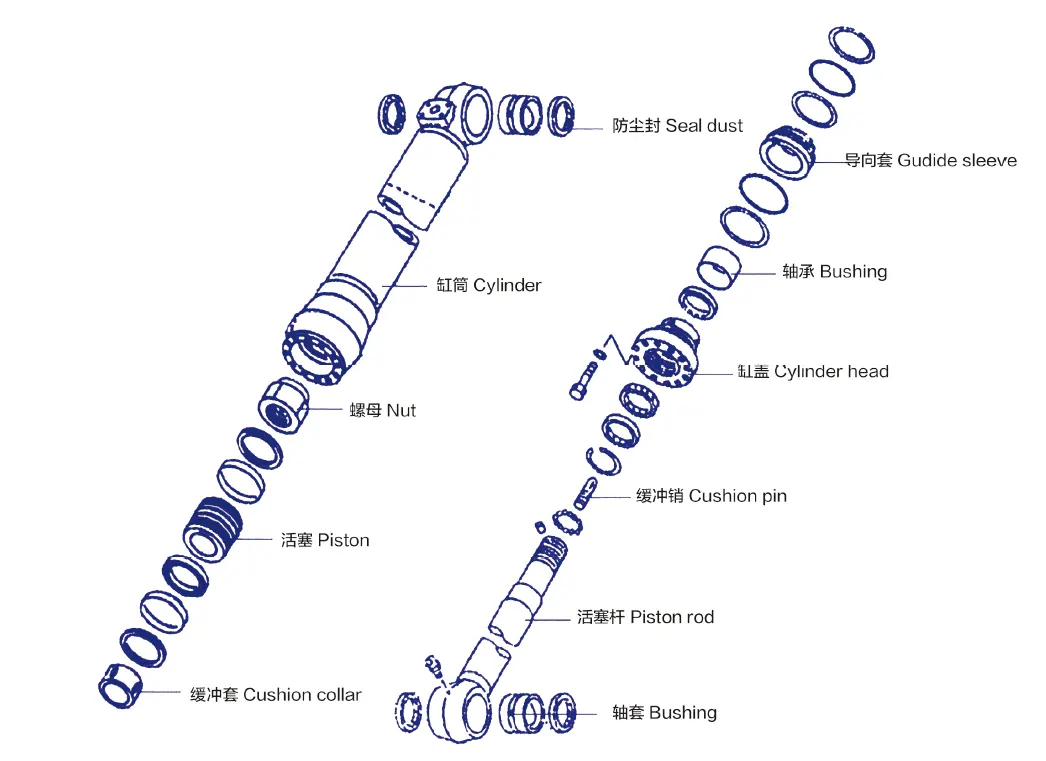
Características
- Transmisión de alta eficiencia: El cilindro del brazo proporciona un potente movimiento lineal y fuerza, lo que garantiza capacidades de alto rendimiento para el brazo mecánico en diversas operaciones.
- Control preciso: A través del sistema hidráulico, el cilindro del brazo permite un control preciso del movimiento, haciendo que las operaciones con herramientas adicionales sean más flexibles y precisas.
- Durabilidad: Los cilindros de los brazos se fabrican normalmente con materiales de alta resistencia, que ofrecen una excelente resistencia al desgaste y a la corrosión, lo que los hace adecuados para su uso a largo plazo en entornos hostiles.
- Adaptabilidad multifuncional: These cylinders can be widely applied to various types of machinery, such as excavators, cranes, and robotic arms, adapting to different work requirements.
- Facilidad de mantenimiento: Diseñados pensando en la facilidad de mantenimiento y reemplazo, los cilindros del brazo facilitan las inspecciones y el mantenimiento regulares, reduciendo el tiempo de inactividad del equipo.

Aplicaciones
El cilindro de brazo encuentra aplicación en diversas industrias:
- Ingeniería de la construcción: In excavators and cranes, the arm cylinder controls the movement of the bucket or boom, enabling earthmoving, material handling, and structural installation.
- Industria manufacturera: In automated production lines, the arm cylinder is used for the motion of robotic arms, enabling processes such as assembly, welding, and material handling, thereby improving production efficiency and accuracy.
- Maquinaria agrícola: In agricultural machinery like harvesters and seeders, the arm cylinder controls the movement of the operating arm, performing tasks such as seeding, fertilizing, and harvesting.
- Industria minera: En equipos de minería, el cilindro del brazo se utiliza para controlar el movimiento del brazo de la maquinaria minera, facilitando la extracción y el transporte del mineral.
- Logística y Transporte: En carretillas elevadoras y robots de manipulación, el cilindro del brazo controla la elevación y el movimiento de las horquillas, lo que permite la manipulación y el apilado de materiales.
Consideraciones de diseño y criterios de selección
Cuando se trata de las consideraciones de diseño y los criterios de selección de los cilindros de brazo, se deben tener en cuenta varios factores clave:
- Capacidad de carga: The arm cylinder should be able to handle the required load effectively and safely.
- Caza de focas: Various sealing components, such as piston seals and rod seals, should be chosen carefully. Materials like polyurethane and nitrile rubber with excellent wear resistance are commonly used.
- Durabilidad: The cylinder body and threaded ends should undergo fine processing to enhance wear resistance and ensure long-lasting performance.
- Seguridad: Safety measures should be implemented during the design to prevent any potential hazards or accidents.
- Mantenibilidad: Regular lubrication with suitable hydraulic oil should be carried out, and the design should facilitate easy maintenance and repair.

Sellado y lubricación
The arm cylinder utilizes various sealing components, such as piston seals and rod seals, which are made of wear-resistant materials like polyurethane and nitrile rubber. The cylinder body and threaded ends undergo fine processing to enhance wear resistance. Regular lubrication with suitable hydraulic oil is necessary to ensure smooth operation and lubrication of the cylinder components.
Inspección regular y mantenimiento preventivo
Regular inspections and preventive maintenance are crucial to ensure the optimal performance and longevity of the arm cylinder. The following measures should be taken:
- Inspeccione el cilindro para detectar cualquier signo de fuga, desgaste o daño.
- Clean the cylinder and its components regularly to remove dirt and debris.
- Check the hydraulic oil level and quality, and top up or replace as needed.
- Apriete cualquier conexión o accesorio suelto.
- Replace any worn-out seals or components promptly.
Guía de instalación del producto
La correcta instalación del cilindro del brazo es esencial para su óptimo rendimiento. Siga estas instrucciones:
- Ensure the mounting surface is clean and free from any contaminants.
- Align the arm cylinder properly with the mounting holes.
- Asegure el cilindro utilizando los pernos o sujetadores adecuados.
- Verifique si hay desalineación o interferencia durante el proceso de instalación.

Consideraciones de seguridad y factores ambientales
When working with arm cylinders, it is important to prioritize safety measures. The following safety precautions are crucial:
- Ensure proper training and certification for operators working with machinery equipped with arm cylinders.
- Implement safety protocols and guidelines to prevent accidents or injuries during operation.
- Adhere to relevant safety regulations and standards.
Diagnóstico de fallas y problemas comunes
Despite the reliability of arm cylinders, certain faults or issues may arise. Common problems include:
- Fuga de fluido hidráulico
- Reduced or uneven arm movement
- Ruidos inusuales durante el funcionamiento
- Excessive wear on seals or components
- Unresponsive or sluggish arm movement
To diagnose and resolve these issues effectively, follow these troubleshooting tips:
- Inspect and tighten all hydraulic connections to address any leakage issues.
- Check the hydraulic fluid level and quality, and replace if necessary.
- Examine the seals and components for signs of wear or damage, and replace as needed.
- Asegúrese de que todas las partes móviles estén lubricadas adecuadamente.
- If problems persist, consult a qualified technician or contact our customer support for assistance.

Recuerda organizar el artículo de forma lógica, usar subtítulos para facilitar la navegación, incorporar imágenes o gráficos relevantes para mejorar la comprensión y asegurarte de que el contenido sea claro, conciso y adecuado para lectores con diferentes niveles de conocimiento técnico.
Autor: lyl
Acerca de nuestra empresa
We are a professional manufacturer of replacement hydraulic cylinders. With a wide range of products, we have become one of the leading manufacturers and wholesale distributors of hydraulic cylinders in the domestic and international markets. We uphold the principle of excellence in quality and continually improve our technological capabilities and production efficiency through industrialized production management strategies in our sophisticated manufacturing workshop. By introducing high-end digital manufacturing equipment and professional testing systems, we optimize our manufacturing platform and perfect our product quality control processes, demonstrating strong innovation capabilities. Our goal is to meet the diverse needs of customers with efficiency, accuracy, and high-quality products.
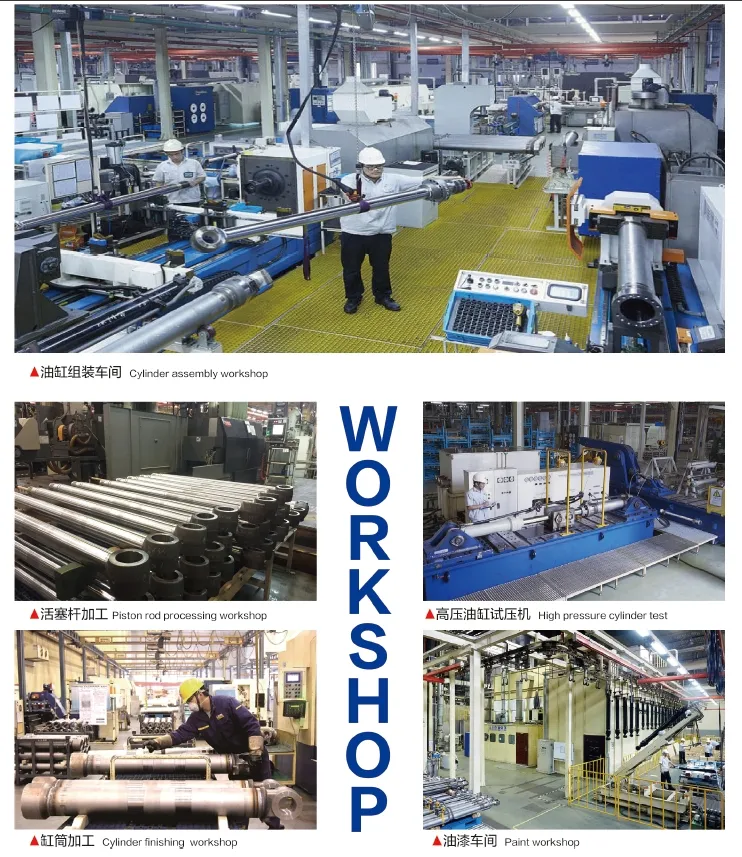
Cilindro hidráulico Aplicación:

 ES
ES  EN
EN  PT
PT  DE
DE  FR
FR  IT
IT  AR
AR  ZH
ZH  RU
RU  KO
KO  KA
KA  BG
BG  CS
CS  DA
DA  EL
EL  ET
ET  FI
FI  HU
HU  ID
ID  LT
LT  LV
LV  NB
NB  NL
NL  PL
PL  RO
RO  SK
SK  SL
SL  SV
SV  TR
TR  UK
UK