
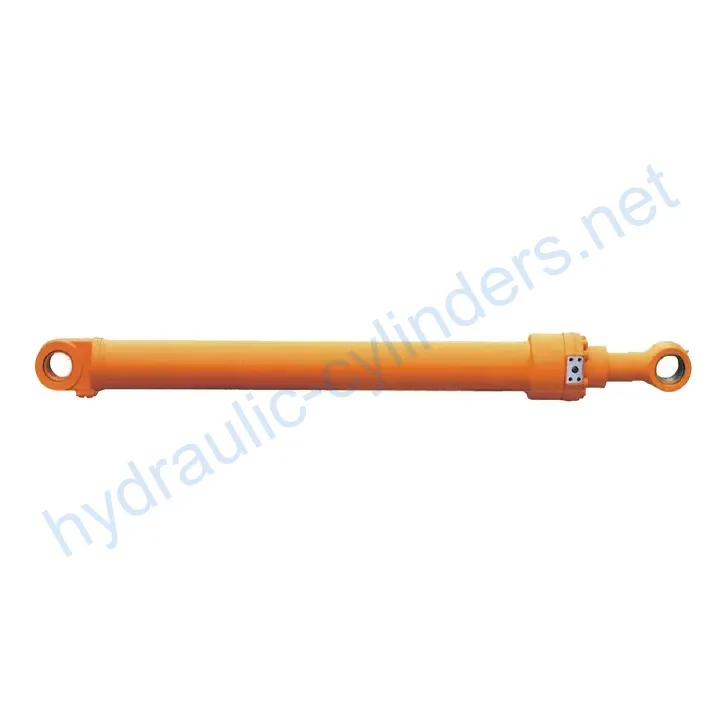
Cilindro de brazo para excavadora pequeña JCM MC136-9
Como cilindros hidráulicos uno de los fabricantes, los surtidores y los exportadores de productos mecánicos, ofrecemos cilindros hidráulicos y muchos otros productos.
Póngase en contacto con nosotros para más información.
Correo:sales@hydraulic-cylinders.net
Fabricante proveedor exportador de cilindros hidráulicos.
Cilindro de brazo para excavadora pequeña JCM MC136-9
Definición y explicación
The arm cylinder is a specially designed hydraulic cylinder that is used to provide linear motion and power to the arm of various machinery, such as excavators, cranes, and mechanical arms. The arm cylinder plays a critical role in hydraulic systems, enabling the efficient movement and control of additional tools or attachments. These cylinders not only ensure smooth motion but also withstand heavy loads, ensuring the efficient operation and reliability of machinery in various working conditions.
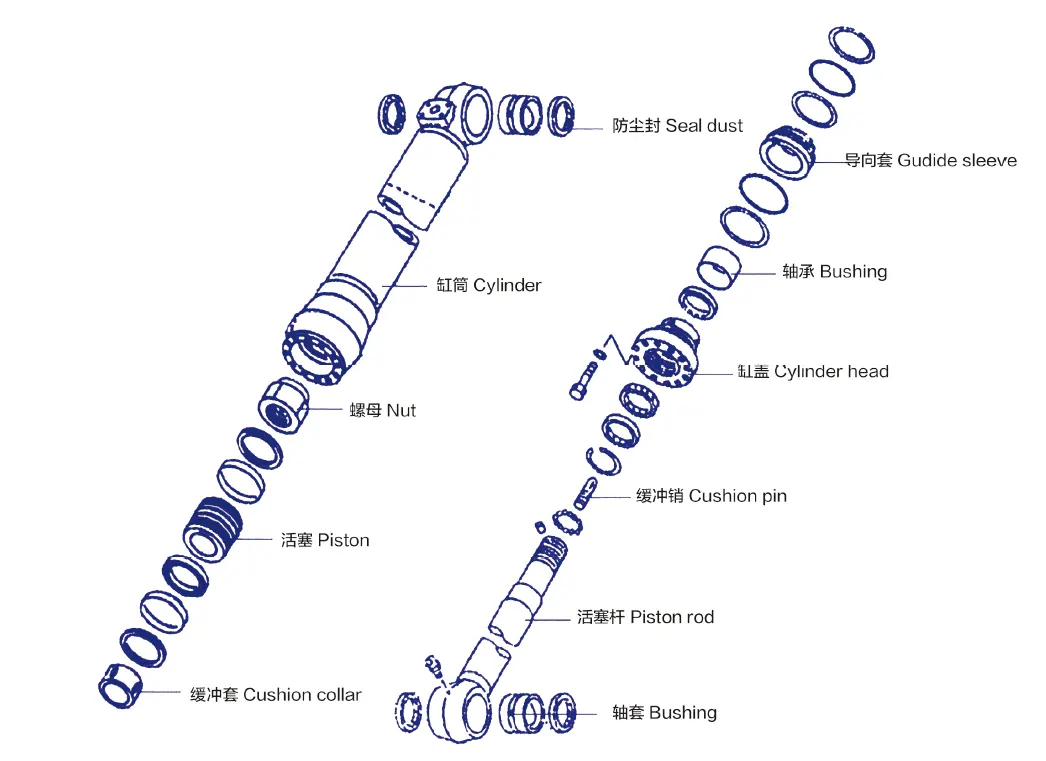
Características
- Transmisión de alta eficiencia: El cilindro del brazo proporciona un potente movimiento y fuerza lineal, lo que garantiza un funcionamiento de alto rendimiento del brazo mecánico en diversas operaciones.
- Control de precisión: A través del sistema hidráulico, el cilindro del brazo permite un control preciso del movimiento, haciendo que la operación de las herramientas acopladas sea más flexible y precisa.
- Durabilidad: Los cilindros de brazo generalmente están hechos de materiales de alta resistencia, lo que ofrece una excelente resistencia al desgaste y a la corrosión y es adecuado para uso a largo plazo en entornos hostiles.
- Adaptabilidad multifuncional: Estos cilindros pueden aplicarse ampliamente a diversos tipos de maquinaria, como excavadoras, grúas y brazos mecánicos, adaptándose a diferentes requisitos de trabajo.
- Fácil mantenimiento: El diseño tiene en cuenta la facilidad de mantenimiento y sustitución, lo que hace que las inspecciones y el mantenimiento regulares sean más convenientes y reduce el tiempo de inactividad del equipo.

Aplicaciones
El cilindro del brazo encuentra aplicaciones en diversas industrias:
- Ingeniería de la construcción: En excavadoras y grúas, el cilindro del brazo controla el movimiento del cucharón o la pluma para movimiento de tierras, manipulación de materiales e instalación estructural.
- Industria manufacturera: In automated production lines, the arm cylinder enables the movement of mechanical arms for assembly, welding, and material handling processes, improving production efficiency and accuracy.
- Maquinaria agrícola: En maquinaria agrícola, como cosechadoras y sembradoras, el cilindro del brazo controla el movimiento del brazo operativo, realizando tareas como sembrar, fertilizar y cosechar.
- Industria minera: In mining equipment, the arm cylinder controls the arm movement for mining and transportation of ores.
- Logística y Transporte: En carretillas elevadoras y robots de manipulación, el cilindro del brazo controla la elevación y el movimiento de las horquillas, lo que permite la manipulación y el apilado de materiales.
Consideraciones de diseño y criterios de selección
- Capacidad de carga: The arm cylinder design considers the maximum load it can bear to ensure safe and efficient operation.
- Caza de focas: Various sealing components, such as piston seals and rod seals, are used. These seals are made of wear-resistant materials like polyurethane and nitrile rubber. The cylinder body and threaded ends are finely processed to enhance wear resistance.
- Durabilidad: Arm cylinders are designed to withstand demanding conditions, including corrosion, high pressure, and intense use, ensuring long-term durability.
- Seguridad: Safety features, such as pressure relief valves and overload protection, are incorporated into the design to prevent accidents and ensure operator safety.
- Mantenimiento: The design includes considerations for easy maintenance and repair, with accessible components and clear instructions, reducing downtime and maintenance costs.

Sellado y lubricación
The arm cylinder uses various sealing components to ensure proper sealing, such as piston seals, rod seals, etc. These seals are made of wear-resistant materials such as polyurethane and nitrile rubber. The cylinder body and threaded ends are finely processed to improve wear resistance. Regular lubrication with the appropriate amount of hydraulic oil is necessary for smooth operation.
Inspección regular y mantenimiento preventivo
- Regularly inspect the arm cylinder for any signs of leakage, damage, or wear.
- Compruebe los sellos y reemplácelos si es necesario.
- Asegúrese de que todas las partes móviles estén lubricadas adecuadamente.
- Keep the cylinder and surrounding areas clean to prevent debris from entering.
- Siga el programa de mantenimiento y las directrices recomendadas por el fabricante.
Guía de instalación del producto
Siga estos pasos para la correcta instalación del cilindro del brazo:
- Ensure the equipment is in a safe position and turned off.
- Remove the old cylinder, if present, by disconnecting any attached components.
- Install the new arm cylinder, ensuring proper alignment and connection to the hydraulic system.
- Apriete todas las conexiones firmemente.
- Test the cylinder for proper operation before putting the equipment back into service.

Consideraciones de seguridad y factores ambientales
When using arm cylinders, it is crucial to prioritize safety measures. Proper training, adherence to safety guidelines, and regular equipment inspections are essential to prevent accidents and ensure a safe working environment. Additionally, environmental factors should be considered, such as proper disposal of hydraulic fluids and adherence to relevant environmental regulations.
Solución de problemas y problemas comunes
- Asunto: The arm cylinder does not extend or retract.
- Solución: Check the hydraulic fluid level and pressure. Inspect the seals for any damage or leakage. If necessary, replace faulty seals and ensure proper lubrication of moving parts.
- Asunto: The arm cylinder operates slowly or unevenly.
- Solución: Check the hydraulic fluid viscosity and temperature. Clean or replace the filters to ensure proper fluid flow. Inspect the cylinder for any blockages or damage.
- Asunto: The arm cylinder leaks hydraulic fluid.
- Solución: Inspect the seals and connections for any signs of damage or looseness. Replace faulty seals and tighten connections as needed.
By following these troubleshooting tips and solutions, readers can effectively diagnose and resolve problems with their arm cylinders. Additionally, implementing preventive measures can help minimize potential issues and ensure smooth operation.

Remember to organize the article logically, use subheadings for easy navigation, incorporate relevant images or charts to enhance understanding, and ensure content clarity, conciseness, and suitability for readers with varying technical knowledge levels.
Sobre nosotros
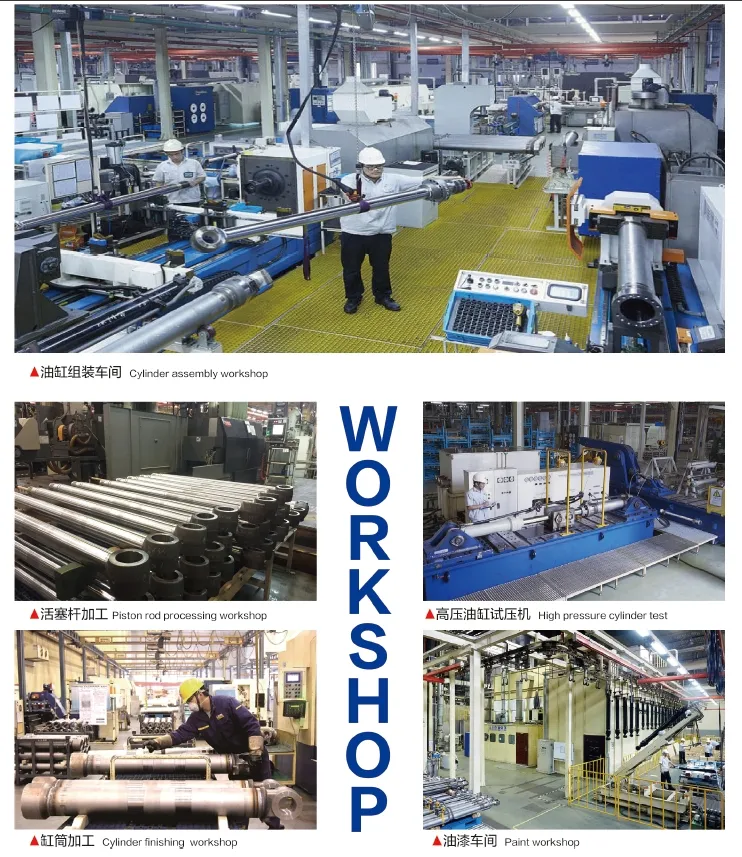
We are a professional manufacturer of replacement hydraulic cylinders, offering a wide range of products. We have become one of the leading hydraulic cylinder manufacturers and wholesale distributors in domestic and international markets. We adhere to the principle of excellent quality, relying on industrialized production management strategies in our sophisticated manufacturing workshop to continuously improve our technical level and production efficiency. By introducing high-end digital manufacturing equipment and professional testing systems, we optimize our manufacturing platform and enhance our product quality control processes, demonstrating strong innovation capabilities. Our goal is to meet diverse customer needs with principles of efficiency, precision, and high-quality.
Cilindro hidráulico Aplicación:

 ES
ES  EN
EN  PT
PT  DE
DE  FR
FR  IT
IT  AR
AR  ZH
ZH  RU
RU  KO
KO  KA
KA  BG
BG  CS
CS  DA
DA  EL
EL  ET
ET  FI
FI  HU
HU  ID
ID  LT
LT  LV
LV  NB
NB  NL
NL  PL
PL  RO
RO  SK
SK  SL
SL  SV
SV  TR
TR  UK
UK