
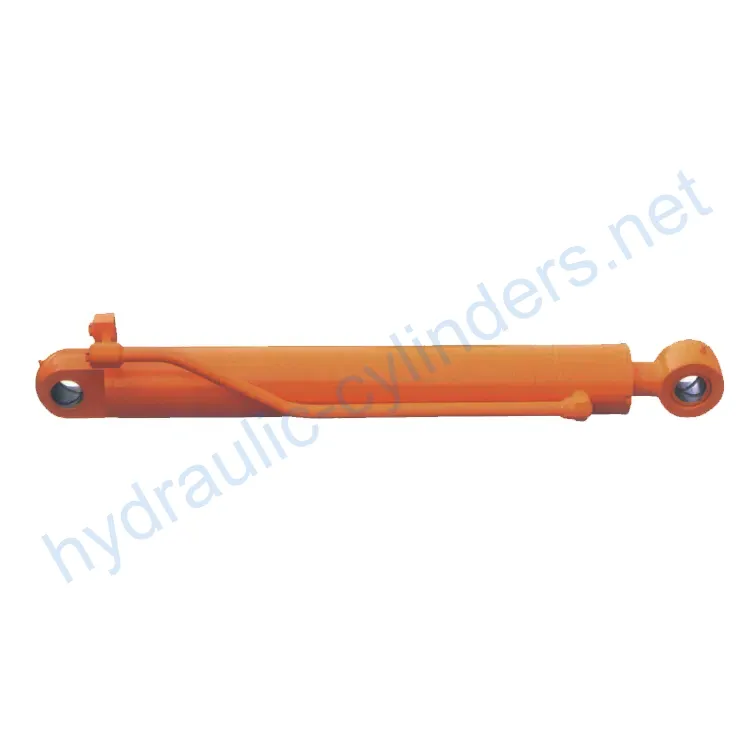
Cilindro de brazo para Sinomach ZG3150-9C
Como cilindros hidráulicos uno de los fabricantes, los surtidores y los exportadores de productos mecánicos, ofrecemos cilindros hidráulicos y muchos otros productos.
Póngase en contacto con nosotros para más información.
Correo:sales@hydraulic-cylinders.net
Fabricante proveedor exportador de cilindros hidráulicos.
Cilindro de brazo para Sinomach ZG3150-9C
Introducción
The Arm Cylinder for Sinomach ZG3150-9C is a specially designed hydraulic cylinder that provides linear motion and power for the arm of various machinery, such as excavators, cranes, and robotic arms. The arm cylinder plays a crucial role in hydraulic systems, allowing for efficient movement and control of additional tools or attachments. These cylinders not only ensure smooth motion but also withstand heavy loads, ensuring high efficiency and reliability of the machinery in various operating conditions.
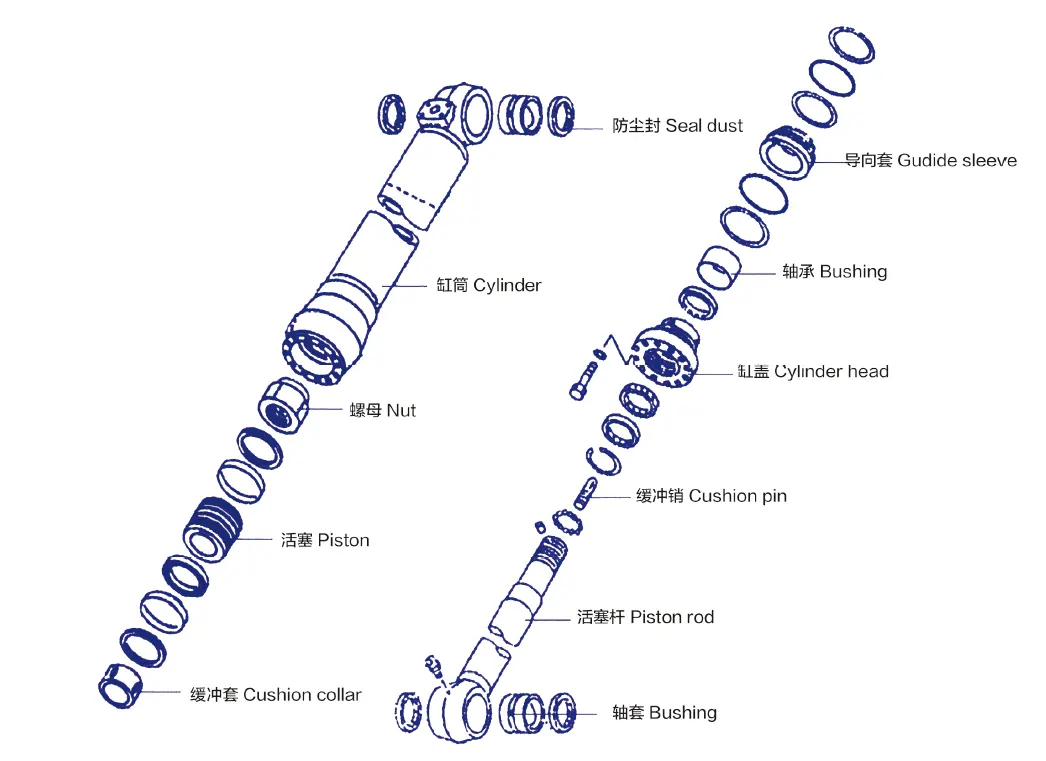
Características
- Transmisión de alta eficiencia: The arm cylinder provides powerful linear motion and force, ensuring efficient performance of the robotic arm in various operations.
- Control preciso: Mediante el sistema hidráulico, el cilindro del brazo permite un control preciso del movimiento, lo que hace que el funcionamiento de las herramientas acopladas sea más flexible y preciso.
- Durabilidad: Arm cylinders are typically made from high-strength materials, providing excellent wear and corrosion resistance, making them suitable for long-term use in harsh environments.
- Adaptabilidad multifuncional: Estos cilindros se pueden utilizar ampliamente en diversas maquinarias, como excavadoras, grúas y brazos robóticos, adaptándose a diferentes requisitos de trabajo.
- Fácil mantenimiento: The design incorporates considerations for easy maintenance and replacement, making regular inspections and servicing more convenient while reducing equipment downtime.

Aplicaciones
El cilindro del brazo encuentra aplicaciones en diversas industrias:
- Ingeniería de la construcción: En excavadoras y grúas, el cilindro del brazo controla el movimiento de los cucharones o plumas para trabajos de movimiento de tierras, manipulación de materiales e instalación de estructuras.
- Fabricación: In automated production lines, the arm cylinder facilitates the movement of robotic arms for assembly, welding, and material handling, improving production efficiency and accuracy.
- Maquinaria agrícola: En maquinaria agrícola como cosechadoras y sembradoras, el cilindro del brazo controla el movimiento de los brazos operativos para tareas como la siembra, la fertilización y la cosecha.
- Minería: En los equipos de minería, el cilindro del brazo controla el movimiento de los brazos de la maquinaria minera para la extracción y el transporte de mineral.
- Logística y Transporte: En carretillas elevadoras y robots de manipulación, el cilindro del brazo controla la elevación y el movimiento de las horquillas, lo que permite la manipulación y el apilado de materiales.
Consideraciones de diseño y criterios de selección
- Capacidad de carga: The arm cylinder is designed to withstand the specified loads and forces, ensuring safe and efficient operation.
- Caza de focas: Various sealing components such as piston seals and rod seals are used, made of wear-resistant materials like polyurethane and nitrile rubber. The cylinder body and threaded ends undergo fine processing to enhance wear resistance.
- Durabilidad: The arm cylinder is constructed using materials with high wear and corrosion resistance, ensuring long-term performance in demanding environments.
- Seguridad: Safety features such as pressure relief valves and emergency stop mechanisms are integrated into the cylinder design to prevent accidents and ensure operator safety.
- Mantenibilidad: The design incorporates easy access for maintenance and replacement, reducing downtime and facilitating regular inspections and servicing.

Sellado y lubricación
The arm cylinder utilizes various sealing components, such as piston seals and rod seals, which are made of wear-resistant materials such as polyurethane and nitrile rubber. The cylinder body and threaded ends undergo fine processing to improve wear resistance. Regular lubrication with the appropriate amount of hydraulic oil is necessary to ensure smooth operation.
Inspección regular y mantenimiento preventivo
- Inspeccione periódicamente el cilindro del brazo para detectar signos de desgaste, fugas o daños.
- Check the hydraulic connections, hoses, and fittings for tightness and potential leaks.
- Monitor the hydraulic fluid levels and quality, and replace or replenish as necessary.
- Perform preventive maintenance tasks such as cleaning, greasing, and replacing worn-out seals or components.
- Siga las instrucciones del fabricante en cuanto a intervalos y procedimientos de mantenimiento.
Guía de instalación
Proper installation is crucial to ensure the optimal performance of the arm cylinder:
- Ensure the mounting surfaces are clean, flat, and free from any debris.
- Align the cylinder and connect the hydraulic hoses according to the manufacturer’s instructions.
- Tighten all connections securely, but avoid over-tightening to prevent damage.
- Test the cylinder’s operation and check for any leaks before putting it into full use.

Consideraciones de seguridad y factores ambientales
When using the arm cylinder, it is important to adhere to safety measures:
- Follow all safety guidelines and regulations provided by the equipment manufacturer.
- Asegúrese de que los operadores que manipulen la maquinaria cuenten con la capacitación y cualificación adecuadas.
- Regularly inspect safety features, such as pressure relief valves and emergency stop mechanisms, for proper functioning.
- Consider environmental factors such as temperature, humidity, and exposure to corrosive substances, and take appropriate measures to protect the arm cylinder.
Diagnóstico de fallas y problemas comunes
Los problemas comunes que pueden surgir con el cilindro del brazo incluyen:
- Fuga de líquido hidráulico.
- Loss of power or insufficient force during operation.
- Unusual noises or vibrations.
- Movimiento inconsistente o espasmódico.
- Excessive wear or damage to seals or components.
Para abordar estos problemas, considere las siguientes soluciones y procedimientos de resolución de problemas:
- Inspect all hydraulic connections, seals, and components for leaks and damage. Replace any faulty parts.
- Check the hydraulic fluid levels and quality. Top up or replace as needed.
- Asegúrese de que el cilindro del brazo esté correctamente alineado y montado.
- Monitor the hydraulic system pressure and adjust if necessary.
- Perform regular maintenance and lubrication to prevent wear and damage.

Recuerda organizar el artículo de forma lógica, usar subtítulos para facilitar la navegación, incorporar imágenes o gráficos relevantes para mejorar la comprensión y asegurarte de que el contenido sea claro, conciso y adecuado para lectores con diferentes niveles de conocimiento técnico.
Acerca de nuestra empresa
Our company is a professional manufacturer of replacement hydraulic cylinders with a wide range of products. We have become one of the leading manufacturers and wholesalers of hydraulic cylinders in domestic and international markets. Upholding the principle of excellent quality, we continuously improve our technical expertise and production efficiency by utilizing advanced manufacturing facilities and professional testing systems. With a focus on high efficiency, precision, and quality, we aim to meet the diverse needs of our customers.
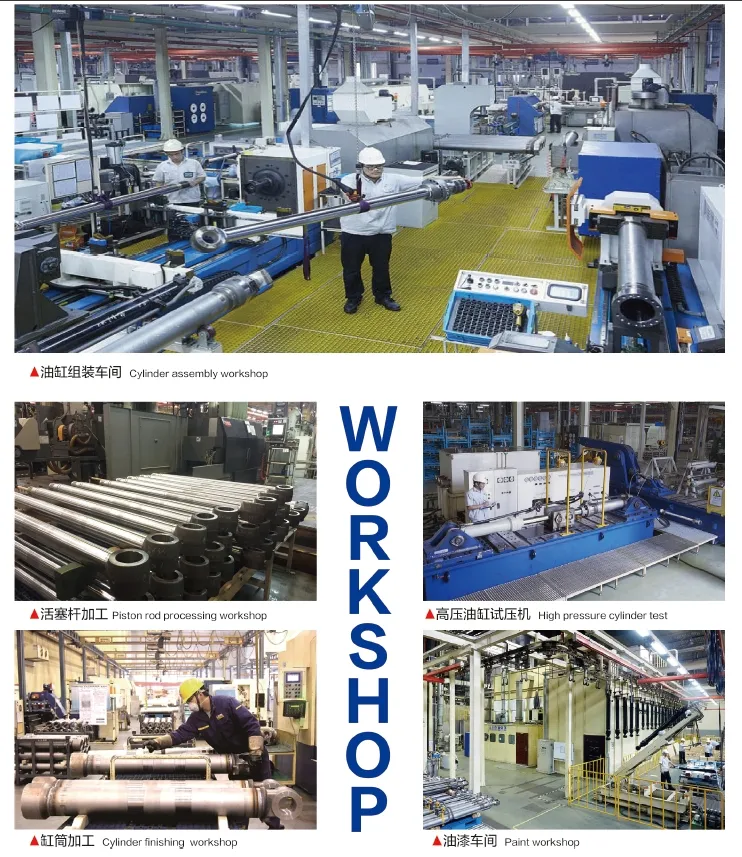
Cilindro hidráulico Aplicación:

 ES
ES  EN
EN  PT
PT  DE
DE  FR
FR  IT
IT  AR
AR  ZH
ZH  RU
RU  KO
KO  KA
KA  BG
BG  CS
CS  DA
DA  EL
EL  ET
ET  FI
FI  HU
HU  ID
ID  LT
LT  LV
LV  NB
NB  NL
NL  PL
PL  RO
RO  SK
SK  SL
SL  SV
SV  TR
TR  UK
UK