


Cilindro de brazo para excavadora pequeña Zhenyu ZY330
Introducción
The arm cylinder is a specially designed hydraulic cylinder that provides linear movement and power to the arm of various machinery such as excavators, cranes, and robotic arms. It plays a crucial role in hydraulic systems, enabling the efficient movement and control of additional tools or attachments. These cylinders not only ensure smooth motion but also withstand heavy loads, ensuring the efficient operation and reliability of the machinery under various working conditions.
Definición y explicación
The arm cylinder is a hydraulic cylinder that is specifically designed to provide linear motion and power to the arm of various machinery. It allows for the effective movement and control of additional tools or attachments, such as buckets, booms, or arms, in machines like excavators, cranes, and robotic arms. These cylinders are essential components in hydraulic systems, enabling the smooth and precise operation of the machinery.
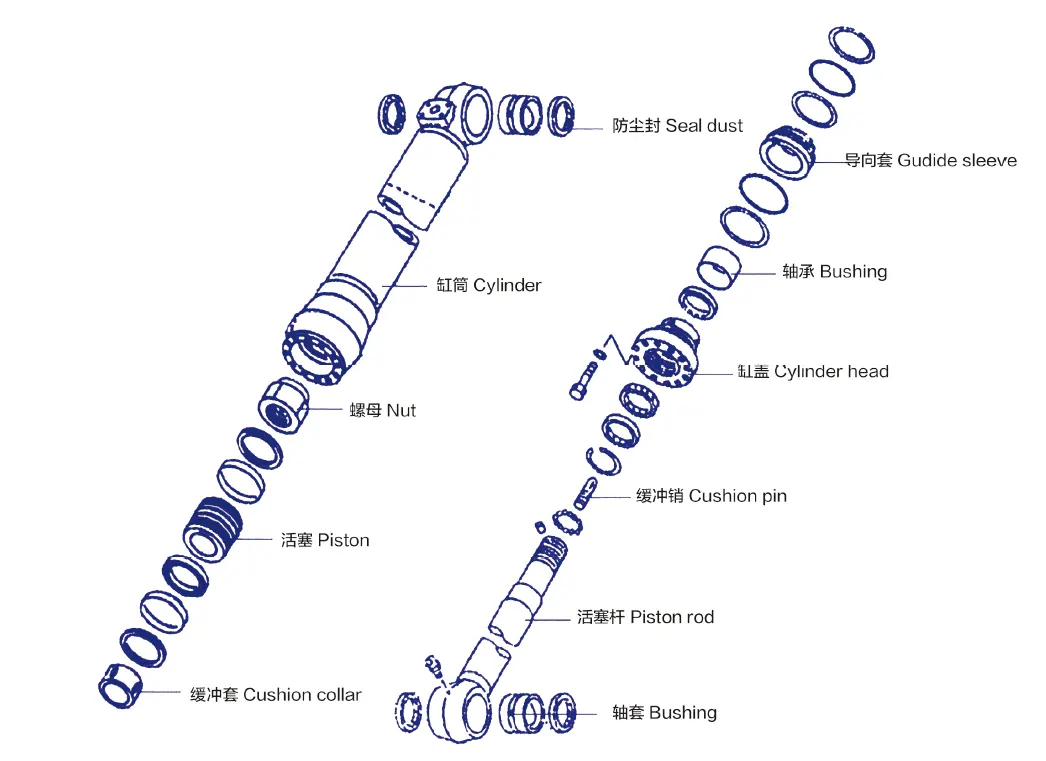

Características
- Transmisión de alta eficiencia: El cilindro del brazo proporciona un potente movimiento y fuerza lineal, lo que garantiza un rendimiento de alta eficiencia del brazo de la maquinaria en diversas operaciones.
- Control preciso: A través del sistema hidráulico, el cilindro del brazo permite un control preciso del movimiento, haciendo que la operación de las herramientas acopladas sea más flexible y precisa.
- Durabilidad: Los cilindros de brazo generalmente están hechos de materiales de alta resistencia y tienen una excelente resistencia al desgaste y a la corrosión, lo que los hace adecuados para uso a largo plazo en entornos hostiles.
- Adaptabilidad multifuncional: Estos cilindros se pueden aplicar ampliamente a varios tipos de maquinaria, como excavadoras, grúas y brazos robóticos, adaptándose a diferentes requisitos de trabajo.
- Fácil mantenimiento: El diseño del cilindro del brazo tiene en cuenta la facilidad de mantenimiento y reemplazo, lo que hace que la inspección y el mantenimiento regulares sean más convenientes y reducen el tiempo de inactividad del equipo.


Aplicaciones
The arm cylinder finds application in various industries and sectors:
1. Ingeniería de la Construcción
In excavators and cranes, the arm cylinder is used to control the movement of buckets or booms, facilitating earthmoving, material handling, and structural installation.
2. Fabricación
In automated production lines, the arm cylinder is used for the motion of robotic arms, enabling assembly, welding, and material handling processes, improving production efficiency and precision.
3. Maquinaria agrícola
En maquinaria agrícola, como cosechadoras y sembradoras, el cilindro del brazo controla el movimiento de los brazos operativos, realizando tareas como sembrar, fertilizar y cosechar.
4. Minería
En equipos de minería, el cilindro del brazo se utiliza para controlar el movimiento del brazo de la maquinaria minera, facilitando la extracción y el transporte del mineral.
5. Logística y transporte
En carretillas elevadoras y robots de manipulación, el cilindro del brazo controla la elevación y el movimiento de las horquillas, lo que permite la manipulación y el apilado de materiales.


Consideraciones de diseño y criterios de selección
- Capacidad de carga: El cilindro del brazo está diseñado para soportar los requisitos de carga específicos de la maquinaria en la que se utilizará.
- Caza de focas: Se utilizan diversos componentes de sellado, como juntas de pistón y juntas de vástago, generalmente fabricados con materiales resistentes al desgaste como poliuretano y caucho de nitrilo.
- Durabilidad: The cylinder body and threaded end surfaces undergo fine treatment to enhance wear resistance and prolong the service life.
- Seguridad: Safety considerations include the use of high-quality materials, precise engineering, and adherence to safety standards to prevent accidents or failures.
- Mantenibilidad: The design of the arm cylinder takes into account ease of maintenance and replacement, ensuring easy access for regular inspections and reducing downtime for repairs.


Sellado y lubricación
The arm cylinder utilizes various sealing components, such as piston seals and rod seals, made from wear-resistant materials like polyurethane and nitrile rubber. The cylinder body and threaded end surfaces are finely treated to improve wear resistance. Regular lubrication with appropriate hydraulic oil is necessary for smooth operation and longevity of the cylinder.
Inspección regular y mantenimiento preventivo
- Inspect the arm cylinder regularly for any signs of wear, leakage, or damage to the seals and components.
- Check the hydraulic oil level and quality, and replace or replenish as necessary.
- Ensure all connections and fittings are secure and properly tightened.
- Clean the cylinder and surrounding areas to remove dirt and debris that may affect its performance.
- Follow the manufacturer’s guidelines for preventive maintenance, including lubrication and replacement of components at recommended intervals.
Guía de instalación del producto
Proper installation of the arm cylinder is essential for its optimal performance and longevity. Follow these steps for installation:
- Ensure the machinery is safely positioned and powered off.
- Remove any old or damaged cylinder by loosening the mounting bolts and disconnecting the hydraulic hoses.
- Inspect the new arm cylinder for any signs of damage or defects.
- Apply a thin layer of hydraulic oil or grease to the cylinder’s mounting surface.
- Align the cylinder with the mounting bracket and secure it in place using the appropriate bolts and nuts.
- Connect the hydraulic hoses, ensuring proper routing and tight connections.
- Test the cylinder’s operation by slowly activating the hydraulic system and checking for any abnormalities or leaks.


Consideraciones de seguridad y factores ambientales
When using the arm cylinder, it is important to follow safety measures to prevent accidents and ensure operator safety. Some key safety precautions include:
- Adhere to all safety guidelines and regulations provided by the machinery manufacturer.
- Equip operators with necessary personal protective equipment (PPE) such as gloves and safety goggles.
- Regularly inspect the arm cylinder and hydraulic system for any signs of wear, damage, or leaks.
- Ensure proper lubrication and maintenance of the cylinder to avoid unexpected failures.
- Dispose of any used hydraulic oil or waste materials in accordance with local environmental regulations.
Solución de problemas y problemas comunes
Here are some common issues that may arise with the arm cylinder and possible troubleshooting tips:
- Fuga: Check for loose connections or damaged seals. Replace any faulty components and ensure proper tightening of fittings.
- Ruido anormal: Inspect the cylinder for any loose parts or contaminants. Clean or replace components as necessary.
- Rendimiento deficiente: Check the hydraulic system for low fluid levels or dirty oil. Clean or replace filters and replenish the hydraulic oil as needed.
By following these troubleshooting tips, readers will be able to diagnose and resolve common issues effectively. Additionally, implementing preventive measures will help minimize potential problems.