

Arm CylinderFor Caterpillar Small Excavator E312D
Como cilindros hidráulicos uno de los fabricantes, los surtidores y los exportadores de productos mecánicos, ofrecemos cilindros hidráulicos y muchos otros productos.
Póngase en contacto con nosotros para más información.
Correo:sales@hydraulic-cylinders.net
Fabricante proveedor exportador de cilindros hidráulicos.
Arm Cylinder For Caterpillar Small Excavator E312D
Introducción
The Arm Cylinder for Caterpillar Small Excavator E312D is a specially designed hydraulic cylinder that is used to provide linear motion and power to the arm of various types of machinery such as excavators, cranes, and robotic arms. The arm cylinder plays a crucial role in hydraulic systems, allowing for the efficient movement and control of additional tools or attachments. These cylinders not only enable smooth motion but also withstand heavy loads, ensuring the efficient operation and reliability of the machinery under various working conditions.
Definición y explicación
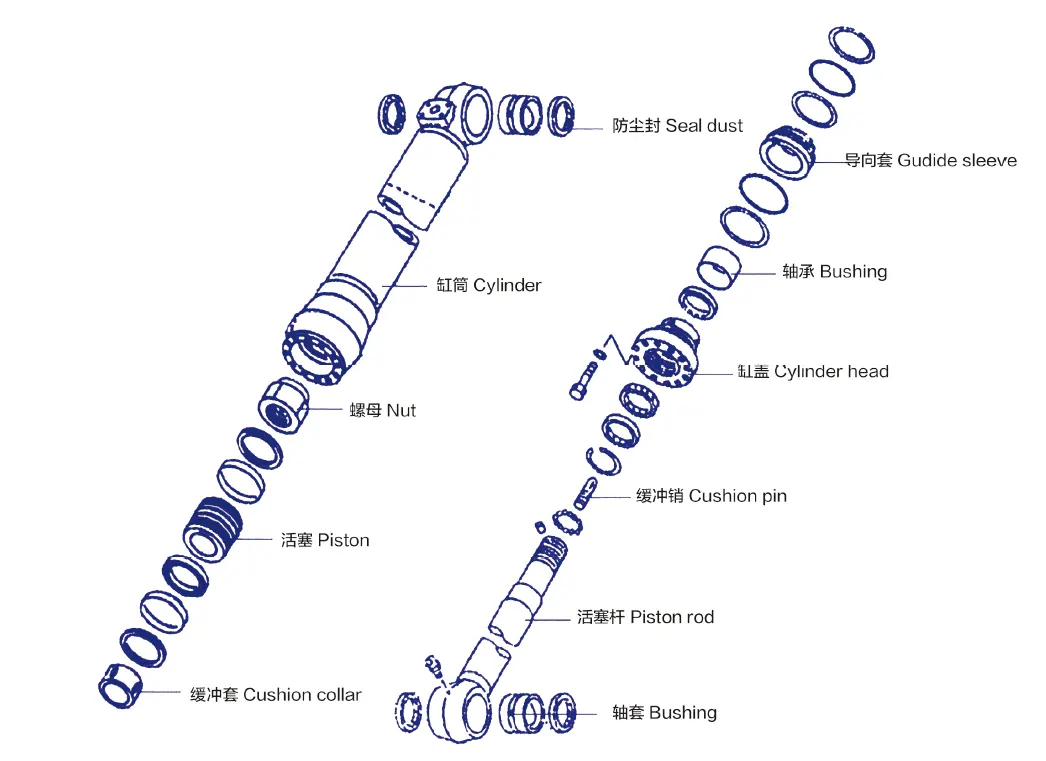
An arm cylinder, also known as an excavator arm hydraulic cylinder, is a hydraulic actuator that converts hydraulic energy into mechanical force to move the arm of a machine in a linear motion. It consists of a cylindrical barrel, a piston, a rod, and various seals. When hydraulic fluid is pressurized, it pushes the piston, which in turn extends or retracts the rod, resulting in the desired arm movement.
Características
- Transmisión de alta eficiencia: The arm cylinder provides powerful linear motion and force, ensuring high-performance capabilities for the machine arm in various operations.
- Control preciso: A través del sistema hidráulico, el cilindro del brazo permite un control preciso del movimiento, haciendo que la operación de las herramientas acopladas sea más flexible y precisa.
- Durabilidad: Los cilindros de los brazos se fabrican normalmente con materiales de alta resistencia, que ofrecen una excelente resistencia al desgaste y a la corrosión, lo que los hace adecuados para su uso a largo plazo en entornos hostiles.
- Adaptabilidad versátil: These cylinders are widely used in various types of machinery, including excavators, cranes, and robotic arms, to meet different job requirements.
- Fácil mantenimiento: Diseñados para facilitar el mantenimiento y el reemplazo, los cilindros del brazo facilitan las inspecciones y el mantenimiento periódicos convenientes, reduciendo el tiempo de inactividad del equipo.

Aplicaciones
The arm cylinder finds its application in several industries, including:
1. Ingeniería de la Construcción
In excavators and cranes, the arm cylinder controls the movement of the bucket or boom for tasks such as earthmoving, material handling, and structural installation.
2. Fabricación
In automated production lines, the arm cylinder enables the motion of robotic arms for processes like assembly, welding, and material handling, enhancing production efficiency and precision.
3. Maquinaria agrícola
In agricultural machinery such as harvesters and seeders, the arm cylinder controls the movement of the operating arm for tasks like seeding, fertilizing, and harvesting.
4. Minería
En los equipos de minería, el cilindro del brazo se utiliza para controlar el movimiento del brazo de la maquinaria minera para la extracción y el transporte de mineral.
5. Logística y transporte
En carretillas elevadoras y robots de manipulación, el cilindro del brazo controla la elevación y el movimiento de las horquillas, lo que permite la manipulación y el apilado de materiales.

Consideraciones de diseño y criterios de selección
When designing and selecting an arm cylinder, several key factors need to be considered:
1. Capacidad de carga
The arm cylinder should be designed to withstand the expected load while ensuring safe and efficient operation.
2. Sellado
The arm cylinder should incorporate various sealing components, such as piston seals and rod seals, made of wear-resistant materials like polyurethane and nitrile rubber to prevent leakage and maintain performance.
3. Durabilidad
The cylinder body and threaded ends should undergo careful surface treatment to improve wear resistance and extend the cylinder’s lifespan.
4. Seguridad
Considerations should be given to safety features such as pressure relief valves and emergency stop mechanisms to prevent accidents and protect personnel.
5. Mantenibilidad
The design should facilitate easy maintenance and repair, allowing for quick inspections, part replacements, and reduced downtime.

Sellado y lubricación
The arm cylinder utilizes a variety of sealing components, including piston seals, rod seals, and wipers. These seals are made of durable materials such as polyurethane and nitrile rubber, which ensure wear resistance and prevent fluid leakage. Proper lubrication is essential for the smooth operation of the arm cylinder. Regularly applying hydraulic oil helps to lubricate the seals and reduce friction between moving parts.
Inspección regular y mantenimiento preventivo
To ensure optimal performance and extend the lifespan of the arm cylinder, the following measures should be taken:
- Inspeccione periódicamente el cilindro para detectar signos de desgaste, fugas o daños.
- Ensure proper lubrication by checking and replenishing hydraulic oil levels.
- Tighten loose fittings and connections.
- Keep the cylinder and surrounding area clean to prevent contamination.
- Siga las pautas del fabricante para conocer los intervalos y procedimientos de mantenimiento.
Guía de instalación del producto
Follow these steps for the proper installation of the arm cylinder:
- Asegúrese de que la máquina esté apagada y que se haya liberado toda la presión hidráulica.
- Coloque el cilindro del brazo en la posición deseada, alineando los orificios de montaje.
- Securely attach the cylinder using appropriate fasteners and torque settings.
- Connect the hydraulic hoses to the cylinder, ensuring tight fittings.
- Check for any leaks and perform a functional test to verify proper operation.

Consideraciones de seguridad y factores ambientales
When using arm cylinders, it is crucial to prioritize safety measures to prevent accidents and ensure operator protection. Safety precautions include proper training, regular maintenance, and adherence to operational guidelines. Additionally, considering environmental factors such as temperature, humidity, and exposure to corrosive substances can help mitigate potential risks and extend the lifespan of the cylinder.
Solución de problemas y problemas comunes
Entre los problemas comunes que pueden surgir con los cilindros de los brazos se incluyen:
- Fluid leakage
- Slow or jerky motion
- Noise or vibrations
- Inconsistent movement
- Falla al extenderse o retraerse
When encountering these problems, follow these troubleshooting tips:
- Check for damaged seals and replace if necessary.
- Inspect the hydraulic lines for leaks or blockages.
- Asegúrese de que los niveles y la calidad del líquido hidráulico sean adecuados.
- Examine the cylinder for misalignment or bent components.
Sobre nosotros
We are a professional manufacturer of replacement hydraulic cylinders, offering a wide range of products. We have become one of the leading manufacturers and wholesale distributors of hydraulic cylinders in domestic and international markets. Upholding the principle of excellence, we rely on industrialized production management strategies in our refined manufacturing workshop to continuously improve our technical expertise and production efficiency. Through the introduction of advanced digital manufacturing equipment and professional testing systems, we optimize our manufacturing platform and enhance our product quality control processes. Our strong innovation capabilities aim to meet diverse customer needs with efficiency, precision, and
Cilindro hidráulico Aplicación:

 ES
ES  EN
EN  PT
PT  DE
DE  FR
FR  IT
IT  AR
AR  ZH
ZH  RU
RU  KO
KO  KA
KA  BG
BG  CS
CS  DA
DA  EL
EL  ET
ET  FI
FI  HU
HU  ID
ID  LT
LT  LV
LV  NB
NB  NL
NL  PL
PL  RO
RO  SK
SK  SL
SL  SV
SV  TR
TR  UK
UK