

Cilindro de brazo para excavadora Komatsu PC300-3-5-6-7-8
Como cilindros hidráulicos uno de los fabricantes, los surtidores y los exportadores de productos mecánicos, ofrecemos cilindros hidráulicos y muchos otros productos.
Póngase en contacto con nosotros para más información.
Correo:sales@hydraulic-cylinders.net
Fabricante proveedor exportador de cilindros hidráulicos.
Introducción
The Arm Cylinder for Komatsu Large Excavator PC300-3-5-6-7-8 is a hydraulic cylinder designed specifically to provide linear motion and power for the arm of various types of machinery, such as excavators, cranes, and mechanical arms. The arm cylinder plays a crucial role in hydraulic systems, enabling the efficient movement and control of attachments or accessories. These cylinders not only ensure smooth motion, but also have the ability to withstand heavy loads, ensuring high efficiency and reliability of the machinery under various working conditions.
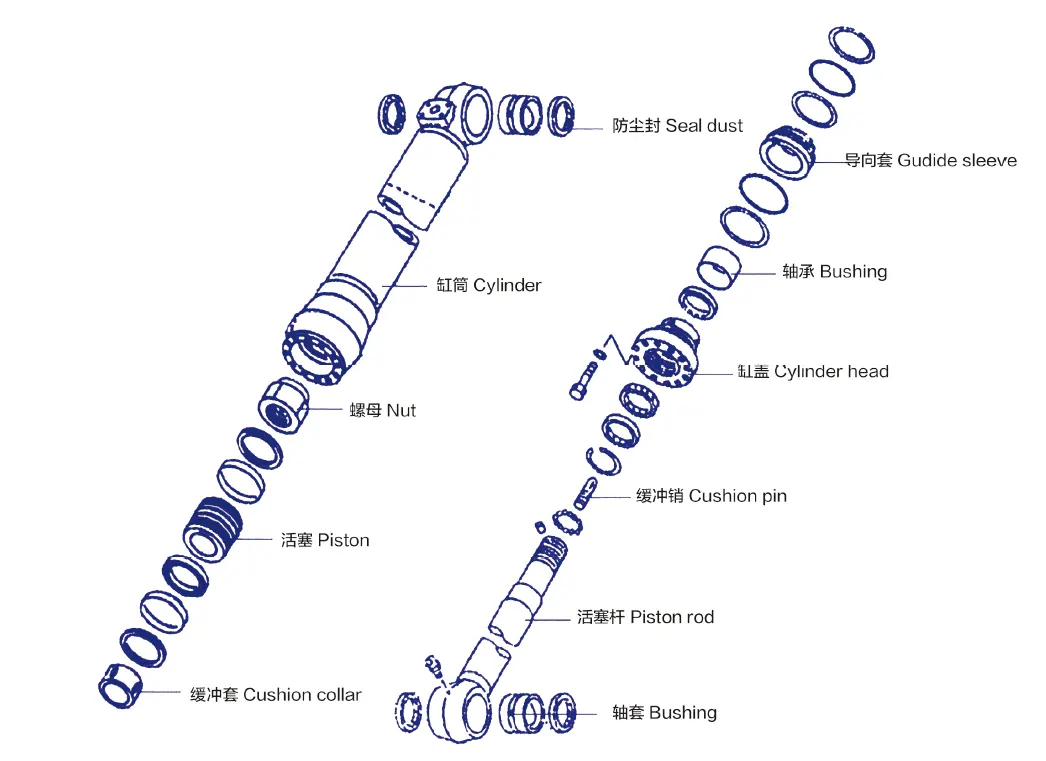
Características
-
Transmisión de alta eficiencia
The arm cylinder provides powerful linear motion and force, ensuring the high efficiency performance of the mechanical arm in various operations.
-
Control preciso
A través del sistema hidráulico, el cilindro del brazo permite un control preciso del movimiento, haciendo que la operación de los accesorios sea más flexible y precisa.
-
Durabilidad
The arm cylinder is typically manufactured using high-strength materials, providing excellent wear resistance and corrosion resistance, making it suitable for long-term use in harsh environments.
-
Adaptabilidad multifuncional
These cylinders can be widely applied to various types of machinery, such as excavators, cranes, and mechanical arms, to meet different working requirements.
-
Fácil mantenimiento
Designed with maintenance and replacement in mind, the arm cylinders make regular inspection and maintenance more convenient, reducing equipment downtime.

Aplicaciones
El cilindro del brazo encuentra aplicaciones en diversas industrias:
-
Ingeniería de la construcción
En excavadoras y grúas, el cilindro del brazo controla el movimiento de los cucharones o plumas para trabajos de movimiento de tierras, manipulación de materiales e instalación de estructuras.
-
Fabricación
In automated production lines, the arm cylinder is used for the motion of mechanical arms in processes like assembly, welding, and material handling, improving production efficiency and precision.
-
Maquinaria agrícola
En maquinaria agrícola como cosechadoras y sembradoras, el cilindro del brazo controla el movimiento de los brazos operativos para tareas como la siembra, la fertilización y la cosecha.
-
Minería
In mining equipment, the arm cylinder controls the movement of the arm for mining and material handling.
-
Logística y Transporte
En carretillas elevadoras y robots de manipulación, el cilindro del brazo controla la elevación y el movimiento de las horquillas, lo que permite la manipulación y el apilado de materiales.
Consideraciones de diseño y estándares de selección
When it comes to the design and selection of the arm cylinder, several factors need to be considered:
-
Capacidad de carga
El cilindro del brazo debe estar diseñado para soportar la capacidad de carga requerida para garantizar un funcionamiento seguro y eficiente.
-
Caza de focas
Various sealing components, such as piston seals and rod seals, should be used to maintain proper sealing. These seals are made of durable materials like polyurethane and nitrile rubber to withstand wear and tear.
-
Durabilidad
The arm cylinder should be constructed with high-quality materials and undergo precise surface treatments to enhance durability and resistance to wear.
-
Seguridad
The design should incorporate safety features to prevent accidents and ensure the safe operation of the machinery.
-
Mantenibilidad
The arm cylinder should be designed for easy maintenance and replacement, reducing downtime and increasing productivity.

Sellado y lubricación
The arm cylinder employs various sealing components, such as piston seals and rod seals, which are made of wear-resistant materials like polyurethane and nitrile rubber. The cylinder body and threaded end surfaces are finely treated to improve wear resistance. Regular lubrication with the appropriate amount of hydraulic oil is required to ensure smooth operation.

Inspección regular y mantenimiento preventivo
- Regularly inspect the arm cylinder for any signs of wear or damage.
- Compruebe los componentes de sellado y reemplácelos si es necesario.
- Ensure proper lubrication and refill with hydraulic oil when needed.
- Inspect and maintain other components connected to the arm cylinder.
- Siga el programa de mantenimiento recomendado por el fabricante.
Guía de instalación del producto
Siga estos pasos para la correcta instalación del cilindro del brazo:
- Prepare las herramientas y equipos necesarios.
- Carefully remove the existing cylinder, if applicable.
- Install the new arm cylinder in the correct position, aligning the mounting points.
- Tighten the bolts securely to ensure a stable connection.
- Compruebe si hay fugas o movimientos anormales después de la instalación.

Consideraciones de seguridad y factores ambientales
When using the arm cylinder, it is important to follow safety measures to prevent accidents and ensure the well-being of operators and others. Proper safety equipment and training should be provided. Additionally, environmental factors, such as temperature and humidity, should be considered to ensure optimal performance of the arm cylinder.
Solución de problemas y problemas comunes
Common issues that may arise with the arm cylinder:
- Fuga de fluido hidráulico
- Ruidos anormales durante el funcionamiento
- Movimiento lento o sin respuesta
- Presión inconsistente
- Uneven wear on sealing components
To troubleshoot these issues, follow these tips:
- Inspect the cylinder for any visible leaks and repair or replace the damaged seals.
- Check the hydraulic fluid level and refill if necessary.
- Inspect the hydraulic lines, fittings, and valves for any damage or blockage.
- Check the pressure settings and adjust if needed.
- Regularly clean and lubricate the
Cilindro hidráulico Aplicación:

 ES
ES  EN
EN  PT
PT  DE
DE  FR
FR  IT
IT  AR
AR  ZH
ZH  RU
RU  KO
KO  KA
KA  BG
BG  CS
CS  DA
DA  EL
EL  ET
ET  FI
FI  HU
HU  ID
ID  LT
LT  LV
LV  NB
NB  NL
NL  PL
PL  RO
RO  SK
SK  SL
SL  SV
SV  TR
TR  UK
UK