
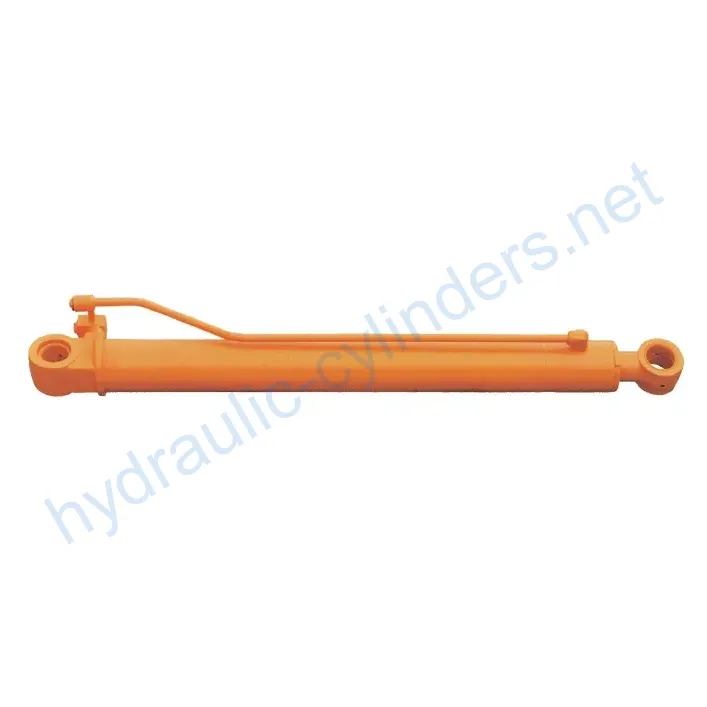
Cilindro de brazo para excavadora pequeña Komatsu PC40
Como cilindros hidráulicos uno de los fabricantes, los surtidores y los exportadores de productos mecánicos, ofrecemos cilindros hidráulicos y muchos otros productos.
Póngase en contacto con nosotros para más información.
Correo:sales@hydraulic-cylinders.net
Fabricante proveedor exportador de cilindros hidráulicos.
Arm Cylinder For Komatsu Small Excavator PC40
Introducción
The Arm Cylinder for Komatsu Small Excavator PC40 is a specially designed hydraulic cylinder that provides linear motion and power to the arm of various machinery, such as excavators, cranes, and robotic arms. The arm cylinder plays a crucial role in hydraulic systems, allowing for efficient movement and control of attachments and accessories. These cylinders not only enable smooth operation but also withstand heavy loads, ensuring high efficiency and reliability of the machinery in various working conditions.
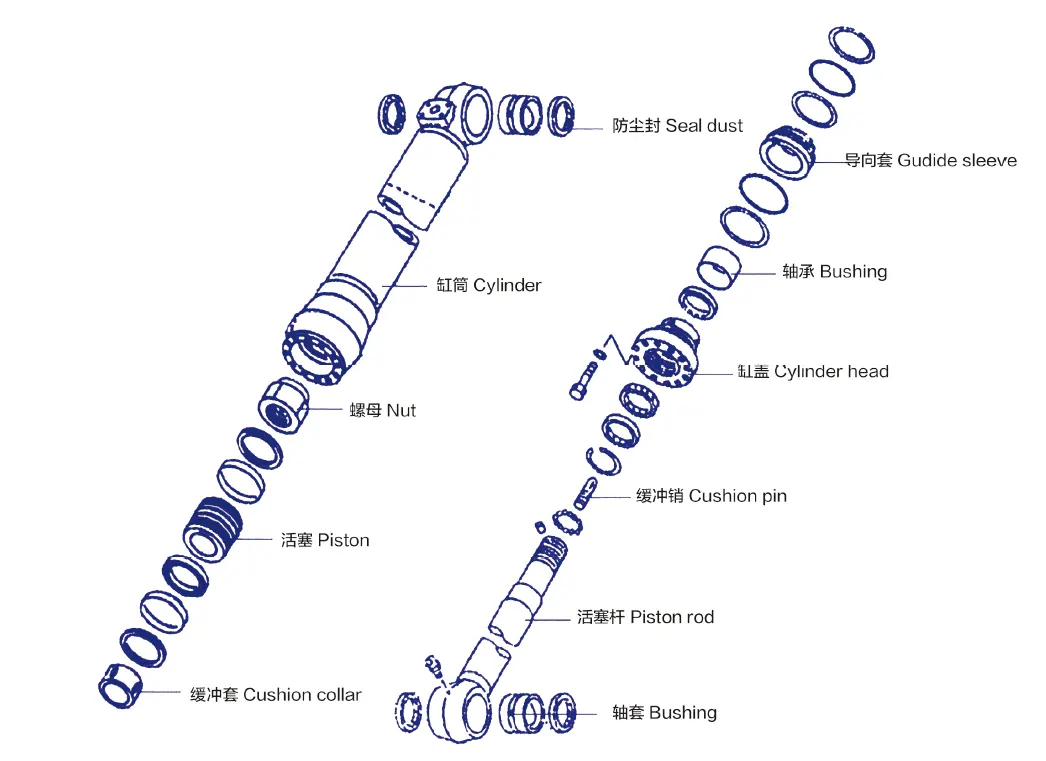
Características
- Transmisión de alta eficiencia: El cilindro del brazo proporciona un potente movimiento y fuerza lineal, lo que garantiza un alto rendimiento del brazo robótico en diversas operaciones.
- Control preciso: A través del sistema hidráulico, el cilindro del brazo permite un control preciso del movimiento, haciendo que la operación de las herramientas acopladas sea más flexible y precisa.
- Fuerte durabilidad: Arm cylinders are typically made of high-strength materials with good wear and corrosion resistance, making them suitable for long-term use in harsh environments.
- Adaptabilidad multifuncional: These cylinders can be widely used in various machinery, such as excavators, cranes, and robotic arms, adapting to different working requirements.
- Fácil mantenimiento: Diseñados teniendo en cuenta la facilidad de mantenimiento y reemplazo, los cilindros del brazo facilitan las inspecciones y el mantenimiento regulares y convenientes, reduciendo el tiempo de inactividad del equipo.

Aplicaciones
The Arm Cylinder for Komatsu Small Excavator PC40 finds applications in various industries and scenarios:
- Ingeniería de la construcción: En excavadoras y grúas, el cilindro del brazo controla el movimiento del cucharón o la pluma para movimiento de tierras, manipulación de materiales e instalación estructural.
- Industria manufacturera: In automated production lines, the arm cylinder facilitates the motion of robotic arms for assembly, welding, and material handling processes, enhancing production efficiency and accuracy.
- Maquinaria agrícola: En equipos agrícolas como cosechadoras y sembradoras, el cilindro del brazo controla el movimiento del brazo operativo para tareas como plantar, fertilizar y cosechar.
- Operaciones mineras: En los equipos de minería, el cilindro del brazo controla el movimiento del brazo para fines de extracción y transporte de materiales.
- Logística y Transporte: En carretillas elevadoras y robots de manipulación, el cilindro del brazo controla la elevación y el movimiento de las horquillas para facilitar la manipulación y el apilado de materiales.
Consideraciones de diseño y criterios de selección
Al considerar el diseño y la selección del cilindro del brazo, entran en juego varios factores:
- Capacidad de carga: The arm cylinder should be able to handle the expected loads and forces in the intended applications.
- Caza de focas: Various sealing components, such as piston seals and rod seals, should be used to ensure proper sealing performance. Materials like polyurethane and nitrile rubber are commonly chosen for their wear resistance.
- Durabilidad: The cylinder body and threaded ends undergo precise processing to improve wear resistance and durability.
- Seguridad: Safety considerations should be taken into account, such as pressure relief valves or limit switches to prevent excessive forces or movements.
- Mantenimiento: Regular lubrication with appropriate hydraulic oil and periodic inspections are necessary to ensure the smooth operation and longevity of the arm cylinder.

Sellado y lubricación
The arm cylinder utilizes various sealing components, such as piston seals and rod seals, which are made of wear-resistant materials like polyurethane and nitrile rubber. The cylinder body and threaded ends undergo precise processing to improve wear resistance. Regular lubrication with the appropriate amount of hydraulic oil is required to ensure proper lubrication and smooth operation of the cylinder.
Inspección regular y mantenimiento preventivo
- Regularly inspect the arm cylinder for any signs of leakage, damage, or wear.
- Revise y reemplace los sellos desgastados o dañados y otros componentes según sea necesario.
- Limpie el cilindro y elimine cualquier residuo o contaminante.
- Ensure proper lubrication and maintain the hydraulic oil at the recommended level.
- Siga las instrucciones del fabricante en cuanto a intervalos y procedimientos de mantenimiento.
Guía de instalación
Proper installation of the arm cylinder is crucial for its performance and longevity. Follow the steps below for correct installation:
- Asegúrese de que el sistema hidráulico esté despresurizado antes de la instalación.
- Clean the mounting surfaces and remove any dirt or debris.
- Attach the arm cylinder to the designated mounting points, following the provided specifications.
- Apriete los pernos de montaje al torque recomendado.
- Connect the hydraulic hoses or pipes to the cylinder, ensuring proper connections and sealing.
- Test the arm cylinder for proper operation and any potential leaks.

Consideraciones de seguridad y factores ambientales
When using the arm cylinder, safety measures are of utmost importance to prevent accidents and ensure operator well-being. It is essential to follow all relevant safety guidelines and regulations while operating the machinery.
Solución de problemas y problemas comunes
Problems may occasionally arise with the arm cylinder. Here are some common issues and possible solutions:
- Fuga: Check for damaged seals or loose connections. Replace or tighten as necessary.
- Potencia insuficiente: Inspect the hydraulic system for low fluid levels or pump malfunctions. Address any issues accordingly.
- Sticky or Inconsistent Movement: Check for debris or contamination in the cylinder. Clean or replace affected components as needed.
By following these troubleshooting tips and implementing preventive measures, you can effectively diagnose and resolve issues, minimizing potential problems.

Remember to organize the article in a logical manner, use subheadings for easy navigation, incorporate relevant images or charts for enhanced understanding, and ensure the content is clear, concise, and suitable for readers with varying levels of technical knowledge.
Autor: lyl
Cilindro hidráulico Aplicación:

 ES
ES  EN
EN  PT
PT  DE
DE  FR
FR  IT
IT  AR
AR  ZH
ZH  RU
RU  KO
KO  KA
KA  BG
BG  CS
CS  DA
DA  EL
EL  ET
ET  FI
FI  HU
HU  ID
ID  LT
LT  LV
LV  NB
NB  NL
NL  PL
PL  RO
RO  SK
SK  SL
SL  SV
SV  TR
TR  UK
UK