
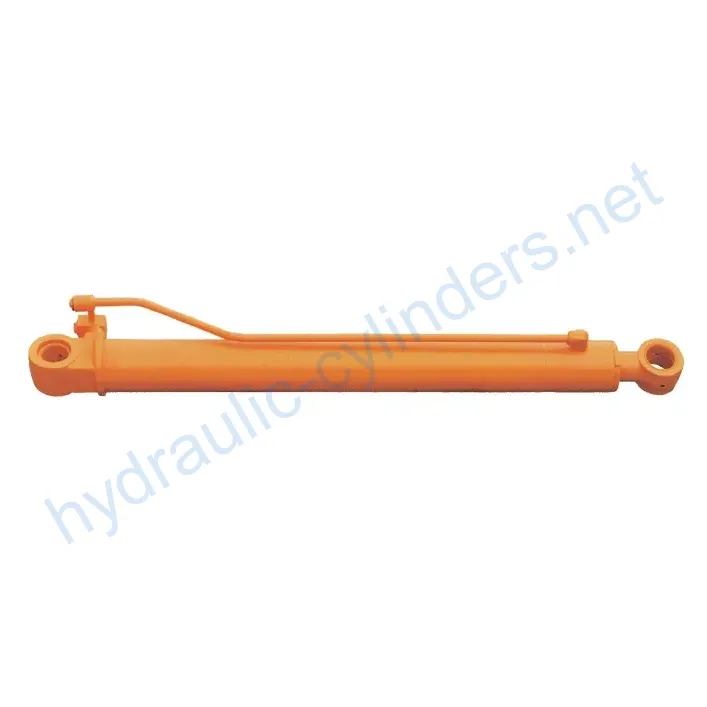
Arm CylinderFor Sany Small Excavator SY155C-9
Como cilindros hidráulicos uno de los fabricantes, los surtidores y los exportadores de productos mecánicos, ofrecemos cilindros hidráulicos y muchos otros productos.
Póngase en contacto con nosotros para más información.
Correo:sales@hydraulic-cylinders.net
Fabricante proveedor exportador de cilindros hidráulicos.
Arm Cylinder For Sany Small Excavator SY155C-9
Introducción
The arm cylinder is a hydraulic cylinder specifically designed to provide linear motion and power to the arm of various types of machinery, such as excavators, cranes, and robotic arms. The arm cylinder plays a crucial role in hydraulic systems, enabling the efficient movement and control of additional tools or attachments. These cylinders not only ensure smooth motion but also withstand heavy loads, ensuring the efficient operation and reliability of the machinery under various working conditions.
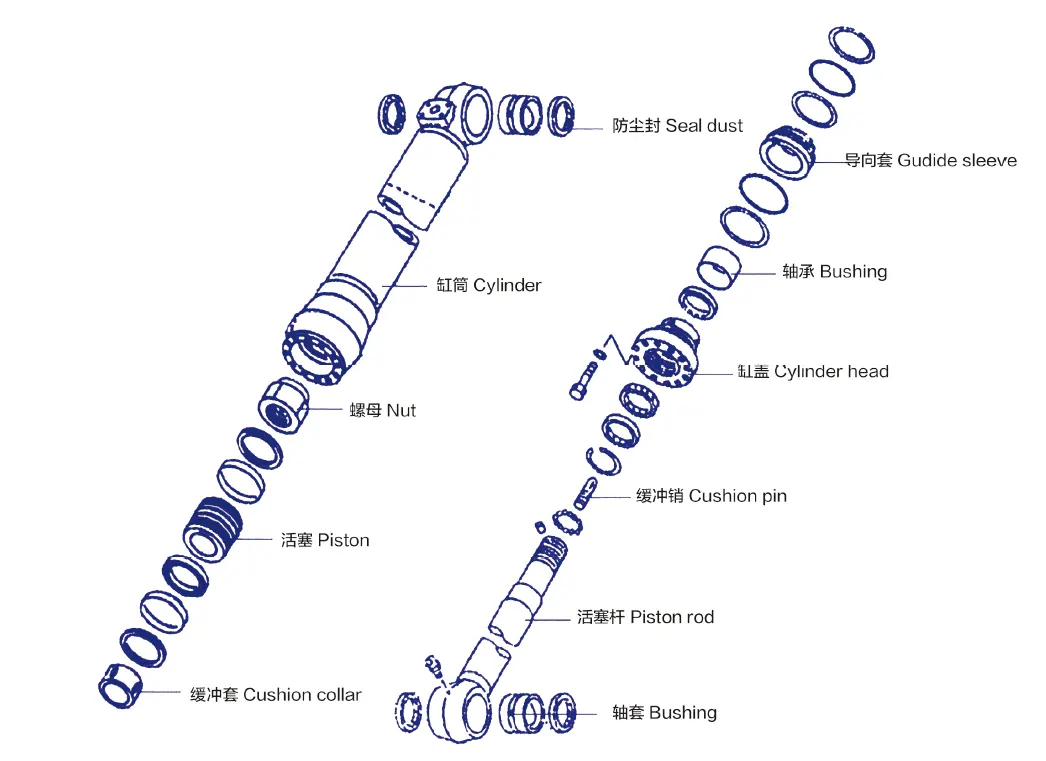
Características
- Transmisión de alta eficiencia: The arm cylinder provides powerful linear motion and force, ensuring high-performance operation of the robotic arm in various tasks.
- Control preciso: Through the hydraulic system, the arm cylinder enables precise motion control, making the operation of the attached tools more flexible and accurate.
- Durabilidad: Los cilindros de los brazos suelen estar fabricados con materiales de alta resistencia, que ofrecen una excelente resistencia al desgaste y a la corrosión, lo que los hace adecuados para su uso a largo plazo en entornos hostiles.
- Adaptabilidad multifuncional: Estos cilindros se pueden aplicar ampliamente a diversas maquinarias, como excavadoras, grúas y brazos robóticos, adaptándose a diferentes requisitos de trabajo.
- Fácil mantenimiento: Designed with ease of maintenance and replacement in mind, the arm cylinder facilitates convenient periodic checks and maintenance, reducing equipment downtime.

Aplicaciones
- Ingeniería de la construcción: En excavadoras y grúas, el cilindro del brazo controla el movimiento del cucharón o la pluma, facilitando el movimiento de tierras, la manipulación de materiales y la instalación de estructuras.
- Industria manufacturera: En las líneas de producción automatizadas, el cilindro del brazo se utiliza para el movimiento de los brazos robóticos, lo que permite procesos como ensamblaje, soldadura y manipulación de materiales, mejorando así la eficiencia y la precisión de la producción.
- Maquinaria agrícola: In agricultural equipment such as harvesters and seeders, the arm cylinder controls the movement of operating arms, executing tasks such as seeding, fertilizing, and harvesting.
- Minería: In mining equipment, the arm cylinder is used to control the movement of the mining equipment arm, facilitating ore extraction and transportation.
- Logística y Transporte: En carretillas elevadoras y robots de manipulación, el cilindro del brazo controla la elevación y el movimiento de las horquillas, lo que permite la manipulación y el apilado de materiales.
Consideraciones de diseño y estándares de selección
- Capacidad de carga: Discussing the arm cylinder’s ability to bear loads.
- Caza de focas: Discussing the use of various sealing components, such as piston seals and rod seals, made of wear-resistant materials like polyurethane and nitrile rubber. Mentioning the fine surface treatment of the cylinder body and threaded ends to enhance wear resistance. Emphasizing the need for regular lubrication with hydraulic oil.
- Durabilidad: Discussing the importance of selecting materials and manufacturing processes that ensure the arm cylinder’s durability and longevity.
- Seguridad: Discussing the safety measures implemented in the design of the arm cylinder to prevent accidents and ensure operator safety.
- Mantenimiento: Discussing the importance of regular inspections and preventive maintenance measures to keep the arm cylinder in optimal condition and prevent potential issues.

Sellado y lubricación
The arm cylinder utilizes various sealing components, such as piston seals and rod seals, which are made of wear-resistant materials like polyurethane and nitrile rubber. The cylinder body and threaded ends undergo fine surface treatment to enhance wear resistance. Regular lubrication with an appropriate amount of hydraulic oil is necessary to ensure smooth operation and reduce friction.
Inspección regular y mantenimiento preventivo
- Regularly check for leaks in the hydraulic system and inspect the condition of the seals.
- Monitor the performance of the arm cylinder and ensure it operates smoothly without abnormal vibrations or noises.
- Inspect and clean the cylinder body and piston rod regularly to remove any accumulated dirt or debris.
- Verify the hydraulic oil level and quality, replenishing or replacing it as necessary.
- Follow the manufacturer’s guidelines for the recommended maintenance schedule and procedures.
Guía de instalación del producto
Follow the steps below for proper installation of the arm cylinder:
- Asegúrese de que el equipo esté apagado y en una posición estable.
- Identify the correct mounting position for the arm cylinder.
- Securely attach the cylinder to the equipment, aligning the mounting holes.
- Tighten the bolts or fasteners according to the specified torque values.
- Conecte las mangueras hidráulicas a los puertos apropiados, asegurando un sellado adecuado.
- Check for any leaks or abnormalities before operating the equipment.

Consideraciones de seguridad y factores ambientales
When using the arm cylinder, it is important to follow proper safety measures to prevent accidents and ensure a safe working environment. Safety precautions should include:
- Proper training and certification for operators handling equipment with arm cylinders.
- Utilizando dispositivos de seguridad y equipos de protección adecuados.
- Regular inspections and maintenance to identify and address any safety hazards.
- Adhering to environmental regulations and responsible waste management practices.
Diagnóstico de fallas y problemas comunes
When encountering issues with the arm cylinder, it is essential to diagnose the faults correctly. Common problems and their potential solutions include:
- Fuga: Check the seals and connections for any damage or looseness. Replace or reseal as necessary.
- Rendimiento deficiente: Inspect the hydraulic system for any blockages or low fluid levels. Clean or replenish as needed.
- Ruido o vibración: Check for loose mounting bolts or damaged components. Tighten or replace as necessary.
- Sticking or Jerky Movement: Inspect the cylinder body and rod for any dirt or debris. Clean and lubricate accordingly.

Recuerda organizar el artículo de forma lógica, usar subtítulos para facilitar la navegación, incorporar imágenes o gráficos relevantes para mejorar la comprensión y asegurarte de que el contenido sea claro, conciso y adecuado para lectores con diferentes niveles de conocimiento técnico.
Sobre nosotros
We are a professional manufacturer of replacement hydraulic cylinders, offering a wide range of products. We have become one of the leading hydraulic cylinder manufacturers and wholesale distributors in both domestic and international markets. We uphold the principle of excellence in quality and continually improve our technical capabilities and production efficiency through industrialized production management strategies in our advanced manufacturing workshop. By introducing high-end digital manufacturing equipment and professional testing systems, we optimize our manufacturing platform and improve product quality control processes, showcasing strong innovation capabilities. Our goal is to meet diverse customer needs with efficiency, precision, and high-quality products.

Cilindro hidráulico Aplicación:

 ES
ES  EN
EN  PT
PT  DE
DE  FR
FR  IT
IT  AR
AR  ZH
ZH  RU
RU  KO
KO  KA
KA  BG
BG  CS
CS  DA
DA  EL
EL  ET
ET  FI
FI  HU
HU  ID
ID  LT
LT  LV
LV  NB
NB  NL
NL  PL
PL  RO
RO  SK
SK  SL
SL  SV
SV  TR
TR  UK
UK