
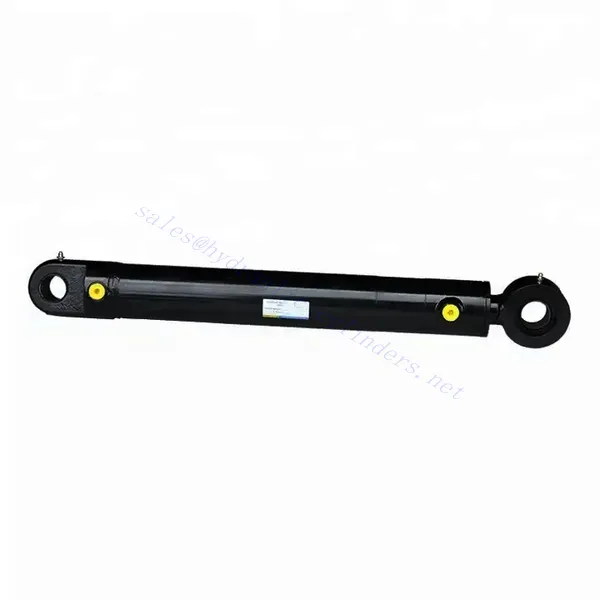
La cabeza de rótula de pisón es una cabeza de rótula con rosca externa Conexión de anilla Cilindro hidráulico de ingeniería
Como cilindros hidráulicos uno de los fabricantes, los surtidores y los exportadores de productos mecánicos, ofrecemos cilindros hidráulicos y muchos otros productos.
Póngase en contacto con nosotros para más información.
Correo:sales@hydraulic-cylinders.net
Fabricante proveedor exportador de cilindros hidráulicos.
La cabeza de rótula de pisón es una cabeza de rótula con rosca externa Conexión de anilla Cilindro hidráulico de ingeniería
The piston rod end has an externally threaded rod head earring connection, usually consisting of a threaded rod head at the end of the piston rod. The rod head has external threads and can be connected to external components or load-bearing structures.
HSG series engineering hydraulic cylinder is a double acting piston rod hydraulic cylinder. Installation mode adopts earring type. According to the connection between the cylinder head and the cylinder block, there are three kinds of external thread connection, internal card critical connection, and flange connection. Engineering hydraulic cylinder is mainly used in construction, lifting, mining, and other hydraulic systems.

Parámetros del cilindro hidráulico de ingeniería HSG:


Cilindro hidráulico de ingeniería HSG Advantages:
The piston rod end with an externally threaded rod head connection offers several advantages in engineering hydraulic cylinders:
- Secure Fastening:
- The threaded rod head connection provides a safe and reliable connection that minimizes the risk of loosening or disengagement during operation.
- This improves the safety and stability of hydraulic cylinder assemblies, especially in applications with high loads or vibrations.
- Ease of Installation and Replacement:
- Externally threaded connections simplify the installation and replacement of components or load-bearing structures.
- It allows for quick removal and reassembly using threaded fasteners for easy maintenance, repair, or replacement tasks.
- Adaptabilidad:
- Threaded rod head connections can be adapted to different application requirements.
- It allows the connection of various components or load-bearing structures using compatible threaded fasteners, offering versatility and customization options.
Cilindro hidráulico de ingeniería HSG Aplicaciones:
- Threaded Fastening:
- Externally threaded rod heads can directly tighten components or load-bearing structures using nuts, bolts, or other threaded fasteners.
- This threaded connection allows for a safe and reliable connection that ensures the stability and integrity of the hydraulic cylinder assembly.
- Customization and Adjustment:
- The threaded rod head connection provides flexibility in attaching different components or load-bearing structures.
- It allows customization and adjustment by selecting appropriate threaded fasteners to suit specific application requirements.
- Load-Bearing Structures:
- Threaded rod head connections can be directly connected to load-bearing structures such as brackets, plates, or other supporting elements.
- This configuration allows the hydraulic cylinder to apply force and support the weight of external objects or machinery, making it suitable for applications that require load-bearing capacity.
How To Bleed Double-Acting Hydraulic Cylinder?
Bleeding a double-acting hydraulic cylinder involves removing air or trapped gases from the system to ensure proper functioning and prevent spongy or inconsistent movement. Here’s a step-by-step guide on how to bleed a double-acting hydraulic cylinder:
- Preparación:
- Asegúrese de que el sistema hidráulico esté despresurizado y el cilindro esté retraído.
- Identify the bleed valves or fittings on the cylinder. These are typically located at the end cap or near the cylinder ports.
- Posicione el cilindro:
- If possible, position the cylinder vertically with the rod end facing upward. This helps air bubbles rise to the top for easier bleeding.
- Open the Bleed Valves:
- Locate the bleed valves or fittings on the cylinder.
- Use an appropriate wrench or tool to open the bleed valves or fittings slowly. Start with the one closest to the rod end of the cylinder.
- Apply Pressure:
- Activate the hydraulic system by operating the pump or actuator.
- Gradually increase the pressure to a moderate level. This helps push the trapped air out of the cylinder through the open bleed valves.
- Sangrar el aire:
- As the hydraulic system pressurizes, you may notice air bubbles escaping through the open bleed valves.
- Allow the air to purge from the system until a steady flow of hydraulic fluid is observed without any air bubbles. This indicates that the cylinder is properly bled.
- Close the Bleed Valves:
- Once all the air is expelled, close the bleed valves or fittings on the cylinder.
- Ensure they are tightened securely, but avoid over-tightening.
- Retract and Extend the Cylinder:
- Operate the hydraulic system to retract and extend the cylinder fully a few times.
- This helps to further purge any remaining air pockets and ensure smooth and consistent cylinder movement.
- Compruebe si hay fugas:
- After bleeding and cylinder operation, inspect the entire hydraulic system for any leaks or abnormal behavior.
- Address any leaks or issues promptly to prevent further problems.
Capacidad de la fábrica:
(1) Montaje
Contamos con una plataforma de ensamblaje independiente de primera clase para investigación y desarrollo. El taller de producción de cilindros hidráulicos cuenta con cuatro líneas de ensamblaje de cilindros de elevación semiautomáticos y una línea de ensamblaje de cilindros de inclinación automáticos, con una capacidad de producción anual diseñada de 1 millón de piezas. El taller de cilindros especiales está equipado con un sistema de ensamblaje de limpieza semiautomático de diversas especificaciones, con una capacidad de producción anual diseñada de 200,000 unidades, y está equipado con reconocidos equipos de mecanizado CNC, un centro de mecanizado, equipos especiales de procesamiento de cilindros de alta precisión, una máquina de soldadura robotizada, una máquina de limpieza automática, una máquina de ensamblaje de cilindros automáticos y una línea de producción de pintura automática. Contamos con más de 300 equipos críticos. La asignación óptima y el uso eficiente de los recursos de equipo garantizan la precisión y la alta calidad de los productos.


(2) Mecanizado
El taller de mecanizado está equipado con un centro de torneado de carril inclinado personalizado, un centro de mecanizado, una máquina de bruñido de alta velocidad, un robot de soldadura y otros equipos relacionados, que pueden procesar tubos cilíndricos con un diámetro interior máximo de 400 mm y una longitud máxima de 6 metros.

(3) Soldadura

(4) Pintura y revestimiento
Con pequeñas y medianas líneas de cilindros automáticos de recubrimiento de pintura a base de agua, para lograr la carga y descarga automática de robots y pulverización automática, la capacidad de diseño de 4000 piezas por turno;
También disponemos de una línea semiautomática de producción de pintura para grandes cilindros accionada por cadena, con una capacidad de diseño de 60 cajas por turno.


(5) Pruebas
Disponemos de instalaciones de inspección y bancos de pruebas de primera clase para garantizar que el rendimiento del cilindro cumple los requisitos.

Somos uno de los mejores fabricantes de cilindros hidráulicos de ingeniería. Ofrecemos un completo inventario de cilindros hidráulicos de ingeniería. También proporcionamos... cajas de cambios agrícolas. Hemos exportado nuestros productos a clientes de todo el mundo y nos hemos ganado una buena reputación gracias a la calidad superior de nuestros productos y a nuestro servicio posventa. Invitamos cordialmente a los clientes nacionales y extranjeros a ponerse en contacto con nosotros para negociar negocios, intercambiar información y... colabore con nosotros!
Cilindro hidráulico Aplicación:

 ES
ES  EN
EN  PT
PT  DE
DE  FR
FR  IT
IT  AR
AR  ZH
ZH  RU
RU  KO
KO  KA
KA  BG
BG  CS
CS  DA
DA  EL
EL  ET
ET  FI
FI  HU
HU  ID
ID  LT
LT  LV
LV  NB
NB  NL
NL  PL
PL  RO
RO  SK
SK  SL
SL  SV
SV  TR
TR  UK
UK