
Fluid Power Diagnostics Masterclass
How to Read a Hydraulic Schematic: A Beginner Guide for Maintenance Teams
An authoritative engineering blueprint detailing fluid power symbols, directional control logic, circuit tracing methodologies, and the diagnostic protocols required to troubleshoot industrial heavy machinery.

Decoding the Language of Fluid Power
In the highly rigorous disciplines of heavy equipment manufacturing, commercial construction, deep underground mining, and advanced industrial automation, fluid power systems represent the absolute pinnacle of controlled kinetic force. When a massive piece of machinery experiences a catastrophic failure, maintenance technicians cannot simply guess which component is malfunctioning. They must approach the repair with surgical precision. The absolute foundational tool for this diagnostic process is the hydraulic schematic. A schematic is the universal language of fluid power engineering. It is a visual map that translates complex physical pipework, massive steel pressure vessels, and intricate valve manifolds into standardized, easily readable geometric symbols. For professionals looking to understand the ultimate standard in fluid power components, exploring our premium hydraulic cylinders platform provides an excellent engineering baseline.
To the untrained eye, a hydraulic schematic appears as an intimidating maze of intersecting lines, confusing squares, and seemingly random geometric shapes. However, once you learn the fundamental alphabet of these symbols, the schematic transforms into a brilliantly logical roadmap. It reveals exactly where the hydraulic fluid originates, how it is pressurized, which pathways it follows, how its direction is controlled, and ultimately, how it performs physical work by extending or retracting a linear actuator. Mastering how to read a hydraulic schematic is the absolute most critical skill required to prevent catastrophic machine downtime and execute safe, predictive maintenance protocols.
From a highly authoritative engineering perspective evaluated against international ISO fluid power standards, reading a schematic requires a systematic approach. You must learn to identify the power source, trace the primary working lines, decipher the logic of directional control valves, and understand the mechanical output components. This comprehensive technical guide will meticulously dissect every core symbol utilized in modern fluid power drawings. We will explore the variations in pump iconography, analyze the precise valving logic required to operate massive heavy machinery, and provide the definitive engineering knowledge necessary to troubleshoot your fluid power networks with absolute confidence.
The Foundation: Lines, Reservoirs, and Pumps
Every journey through a hydraulic circuit begins at the source. Before fluid can perform work, it must be stored, drawn into a pump, and pushed through a network of precisely routed conduits.
?️
The Reservoir Tank
The reservoir is the storage facility for the synthetic hydraulic oil. On a schematic, it is depicted as a simple rectangle with the top line removed, resembling an open box. This signifies a vented reservoir, which allows atmospheric air to enter and exit as the fluid level fluctuates. If the box is completely closed, it represents a pressurized, sealed reservoir. Often, you will see multiple open box symbols scattered across a single large schematic; engineers do this to avoid drawing dozens of return lines crisscrossing the entire page. Every open box symbol represents a return path to the exact same central fluid tank.
〰️
Understanding the Lines
The lines connecting the symbols represent the physical steel pipes or flexible rubber hoses. A solid, continuous line represents a primary working line—this is where the high pressure fluid travels to do the heavy lifting. A dashed line represents a pilot line, which carries a small amount of fluid used solely to shift internal valves. A dotted line indicates a drain line, routing internal leakage from motors or valves safely back to the reservoir. When a solid line connects to the very bottom of the reservoir symbol, it indicates the fluid is drawn from below the oil level. If it terminates above the bottom line, it indicates the fluid is splashing back into the tank from above.
⚙️
The Hydraulic Pump
The pump creates the fluid flow. It is symbolized by a circle containing a solid black triangle pointing outward toward the perimeter of the circle. This outward pointing triangle signifies that fluid energy is leaving the component. If there is a single triangle, it is a fixed displacement pump. If an arrow is drawn diagonally through the entire circle, it indicates the pump is variable displacement, meaning the operator or the system can actively adjust the fluid volume being pushed into the circuit.

Actuators: Translating Fluid into Physical Motion
Once the fluid is pressurized by the pump, it travels through the solid working lines toward the actuators. Actuators are the components that convert hydrostatic energy back into mechanical force. They are the physical muscles of the machine.
Linear Actuators (Hydraulic Cylinders)
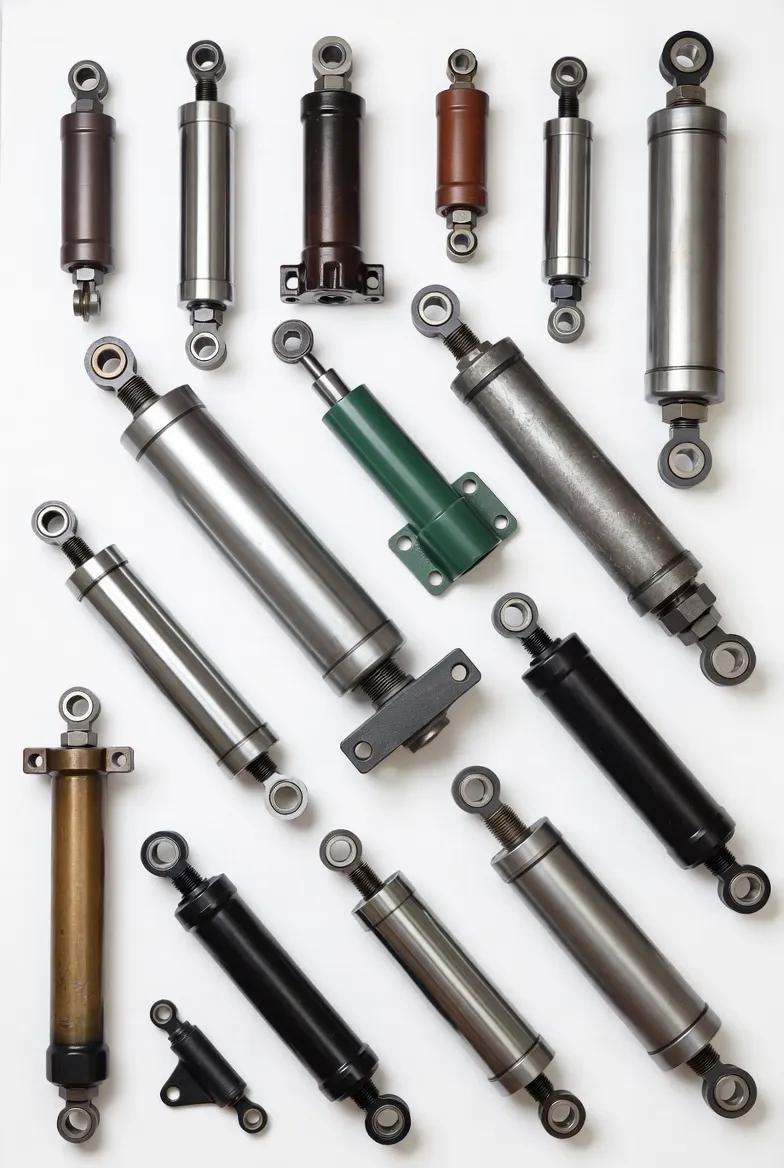
A hydraulic cylinder is drawn as a simple rectangle representing the steel barrel, with a T-shaped object inside representing the piston and the extending rod. If there is only one solid fluid line connecting to the base of the rectangle, it is a single-acting cylinder, which relies on gravity or an internal spring to retract. If there are two fluid lines—one at the base and one at the rod end—it is a double-acting cylinder capable of powered pushing and powered pulling. This dual-port symbol is the universal representation for heavy duty components like Excavator Hydraulic Cylinders, which require immense bidirectional force to violently crush through solid bedrock.
Specialized Cylinder Symbols
Schematics provide profound detail if you know what to look for. If you see small, solid blocks drawn at the ends of the internal piston, it indicates the cylinder is equipped with internal hydrostatic cushioning, a vital feature that prevents the heavy payload from slamming into the steel end caps. If the rod extends through both ends of the rectangle, it is a double-rod cylinder. Recognizing these subtle variations is critical when ordering replacement parts for specialized equipment, such as Forklift Hydraulic Cylinders that demand precise internal cushioning to protect delicate cargo during rapid descent.

Directional Control Valves: The Brains of the Operation
The most complex and intimidating symbols on any fluid power schematic are the directional control valves. These components dictate exactly where the high pressure fluid is allowed to travel.
?
Boxes and Positions
A directional control valve is drawn as a series of connected squares, commonly called “envelopes” or boxes. The number of boxes dictates the number of distinct positions the valve can shift into. A three-box symbol means the valve has three positions (typically extend, neutral, and retract). The external solid fluid lines only attach to one of the boxes—usually the center box, representing the valve’s default resting state. Inside each box, arrows indicate the exact pathway the fluid will take when the internal spool is shifted into that specific position. T-shaped symbols inside a box indicate that a fluid port is physically blocked.
?️
Actuation Methods
Attached to the left and right sides of the valve boxes are smaller symbols that reveal exactly how the valve is physically moved. A jagged zigzag line indicates a mechanical spring, meaning the valve will automatically snap back to center when released. A simple lever shape indicates manual human operation. A rectangle with a diagonal line through it represents an electrical solenoid, meaning the valve is shifted electronically by a computer controller. Understanding these actuation symbols is critical when diagnosing massive mobile equipment like Dump Truck Hydraulic Cylinders, where the operator uses electronic joysticks in the cab to shift massive steel spools located safely on the chassis.
Pressure and Flow Control: Managing Safe Limits
A fluid power system without pressure regulation is a localized bomb waiting to detonate. The schematic relies on specific symbols to represent the components that prevent extreme hydrostatic overload and control the velocity of the payload.
- ✔️
The Pressure Relief Valve: This is the ultimate safety mechanism. It is drawn as a single square containing an arrow that is normally offset from the main fluid line. A dashed pilot line senses the pressure in the main circuit. If the pressure spikes dangerously high, the pilot line overcomes the internal spring (represented by a zigzag line), pushing the arrow into alignment and dumping the excess high pressure oil safely back into the reservoir.
- ✔️
Pilot Operated Check Valves: Represented by a ball seated inside a V-shape, check valves allow fluid to flow in only one direction. A “pilot operated” check valve includes a dashed line connecting to it. This means the valve remains firmly locked shut, holding a massive load perfectly still, until a separate pilot pressure signal forces the ball off its seat. This is the mandatory safety architecture utilized in Aerial Work Vehicle Hydraulic Cylinders to ensure the platform cannot plummet to the earth even if a primary hose is violently severed.
- ✔️
Flow Control Valves: Represented by two curved lines pinching inward, a flow control valve restricts the volume of oil allowed to pass. A diagonal arrow across the symbol means it is adjustable. This controls the exact velocity of the actuator extension, preventing dangerous, jerky movements.

Putting it all Together: Troubleshooting in the Field
The true power of a hydraulic schematic is realized during a severe mechanical breakdown. Instead of blindly replacing expensive steel components, a maintenance technician uses the blueprint to perform systematic, empirical diagnostics.
Imagine an operator reports that a massive piece of agricultural machinery is experiencing severe cylinder drift—the payload is slowly dropping when the joystick is in neutral. The technician consults the schematic. They trace the solid working lines backward from the cylinder to the directional control valve. By referencing the schematic, they identify a specific test port located between the valve and the actuator. They can cap this port to completely isolate the cylinder. If the load stops drifting, the schematic proves the internal cylinder seals are perfect, and the control valve spool is hemorrhaging fluid. This level of precise diagnostic logic prevents hours of wasted labor and thousands of dollars in unnecessary parts. For rugged applications operating far from repair facilities, like Agricultural Hydraulic Cylinders deployed in remote harvesting fields, the ability to rapidly read a schematic and pinpoint the exact failure vector is the difference between a minor delay and total crop loss.

Conclusion: Mastering the Blueprint of Power
Learning how to read a hydraulic schematic is not merely an academic exercise; it is the fundamental bedrock of proactive heavy machinery maintenance and absolute operational safety. A schematic strips away the visual complexity of massive steel chassis and tangled rubber hoses, revealing the pure, elegant logic of the fluid power network underneath. By mastering the symbols for variable displacement pumps, decoding the geometric envelopes of directional control valves, and understanding the fail-safe architecture of pilot-operated checks, engineering professionals transform from reactive parts-replacers into elite diagnostic experts. Whether you are maintaining a pristine indoor assembly line or keeping rugged commercial earthmovers operational, the ability to trace a circuit on paper guarantees that your heavy equipment will deliver unyielding kinetic force with absolute reliability. If your maintenance teams require advanced components or custom-engineered fluid power solutions, our experts are ready to assist.