
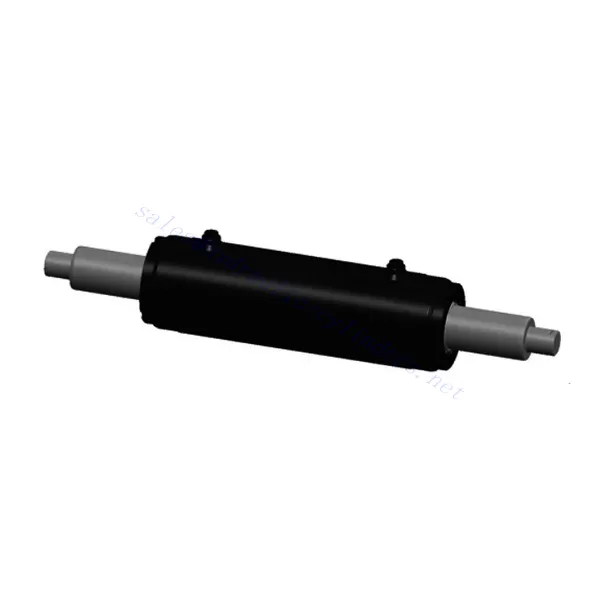
Vérin de direction de nacelle élévatrice
En tant que fabricant, fournisseur et exportateur de produits mécaniques, nous proposons des vérins hydrauliques et de nombreux autres produits.
N'hésitez pas à nous contacter pour plus de détails.
Courrier :sales@hydraulic-cylinders.net
Fabricant fournisseur exportateur de vérins hydrauliques.
Vérin de direction de nacelle élévatrice
The aerial work platform steering cylinder is a critical component designed to enhance maneuverability and control in aerial work platforms. This specialized hydraulic cylinder is vital in steering the platform, allowing operators to navigate safely and efficiently at elevated heights.
The aerial work platform steering is indispensable for enhancing maneuverability, control, and operator comfort in elevated work environments. With its robust construction, precise steering control, improved maneuverability, and operator-centric design, this hydraulic cylinder facilitates smooth navigation and efficient access in various elevated work applications. By following the recommended usage methods and maintenance practices, operators can maximize the longevity and performance of the aerial work platform steering, contributing to increased productivity, safety, and confidence in elevated work scenarios. Invest in this essential hydraulic component to elevate your aerial work platform’s maneuverability, control, and efficiency, unlocking new productivity levels and success in elevated work operations.
Aerial Work Platform Steering Cylinder Key Characteristics:
- Construction robuste :
- The Aerial Work Platform Steering Cylinder is constructed using high-quality materials, ensuring durability and reliability.
- It is engineered to withstand the demands of challenging work environments and withstand heavy loads.
- Precise Steering Control:
- This cylinder facilitates precise steering control, enabling operators to maneuver the aerial work platform with accuracy and confidence.
- It ensures smooth and responsive steering, allowing for precise positioning and navigation in tight spaces or complex worksites.
- Enhanced Maneuverability:
- The Aerial Work Platform Steering Cylinder enhances the overall maneuverability of the platform, allowing operators to navigate efficiently and access hard-to-reach areas.
- It enables smooth turns and precise adjustments, contributing to increased productivity and versatility in elevated work applications.
- Operator Comfort:
- The steering cylinder is designed to provide ergonomic control, reducing operator fatigue and enhancing comfort during extended work periods.
- It offers smooth and effortless steering, minimizing operator effort and ensuring a comfortable working experience.
Aerial Work Platform Steering Cylinder Parameter:
| Nom du produit | Vérin de direction de nacelle élévatrice |
| Caractéristiques: | Steering system for chassis tires of aerial work vehicles |
| Diamètre d'alésage : | 63mm~200mm |
| Diamètre de la tige : | 36mm~140mm Course ≤ 1000 mm |
| Pression: | 30 MPa (pression maximale) |
| Hydraulic Steering Cylinder Applications: | Plateforme élévatrice |
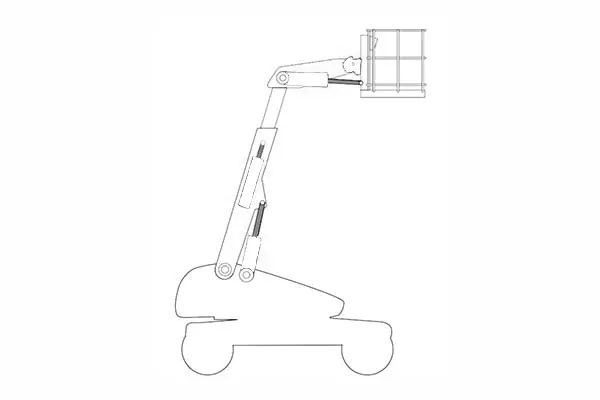
Schéma d'identification de la plate-forme élévatrice :
Usage Method Of Aerial Work Platform Steering Cylinder:
- Installation et configuration :
- Follow the manufacturer’s instructions for proper installation and setup of the aerial work platform steering.
- Assurez-vous que le cylindre est correctement monté et aligné pour garantir des performances optimales.
- Raccordement hydraulique :
- Connect the steering cylinder to the hydraulic system of the aerial work platform according to the provided guidelines.
- Ensure all hydraulic connections are secure and properly sealed to prevent leaks or loss of hydraulic fluid.
- Steering Operation:
- Engage the control mechanisms or steering wheel on the aerial work platform to control the steering cylinder.
- Follow the recommended procedures and safety guidelines during the steering operation.
- Responsiveness and Precision:
- Familiarize yourself with the steering response and sensitivity of the platform equipped with the steering cylinder.
- Practice gradual and controlled steering inputs to achieve precise positioning and smooth maneuvering.
Comment purger un système hydraulique ?
Flushing a hydraulic system is a crucial maintenance procedure that helps remove contaminants, old fluid, and debris from the system, ensuring optimal performance and longevity. Here’s a step-by-step guide on how to flush a hydraulic system:
- Gather the Required Tools and Supplies:
- Lunettes de sécurité et gants
- Drain pan or bucket
- Chiffons ou serviettes propres
- Wrench or pliers
- Hydraulic system flushing fluid (recommended by the manufacturer)
- Replacement hydraulic fluid (if needed)
- Préparez la zone de travail :
- Park the equipment on a level surface and engage any safety mechanisms, such as setting the parking brake or blocking the wheels.
- Ensure there is sufficient ventilation in the area to avoid inhaling fumes from the flushing fluid.
- Identify the System Components:
- Familiarize yourself with the hydraulic system components, including the reservoir, filters, hoses, and fittings.
- Refer to the equipment’s manual or consult the manufacturer’s guidelines for specific instructions on locating these components.
- Drain the Existing Fluid:
- Place the drain pan or bucket beneath the hydraulic reservoir.
- Use a wrench or pliers to loosen the drain plug or remove the drain cap, allowing the old fluid to drain completely.
- Dispose of the old fluid in accordance with local regulations.
- Remove and Clean Filters:
- Locate the hydraulic filters and remove them according to the manufacturer’s instructions.
- Inspect the filters for signs of dirt, debris, or damage.
- Clean or replace the filters as necessary before reinstalling them.
- Connect Flushing Equipment:
- Attach a flushing line or hose to the hydraulic system, ensuring a secure connection.
- Position the other end of the flushing line into the container of flushing fluid.
- Flush the System:
- Slowly introduce the flushing fluid into the hydraulic system by turning on the equipment or activating the hydraulic pump.
- Allow the flushing fluid to circulate through the system for a specified duration as recommended by the manufacturer.
- Operate any hydraulic controls to ensure the flushing fluid reaches all components.
- Drain the Flushing Fluid:
- Disconnect the flushing line from the hydraulic system.
- Reinstall the drain plug or cap on the reservoir.
- Allow the flushing fluid to drain completely into the drain pan or bucket.
- Refill with New Hydraulic Fluid:
- Ensure the reservoir is clean and free of any residual flushing fluid.
- Refer to the equipment’s manual or manufacturer’s guidelines for the appropriate type and quantity of hydraulic fluid.
- Slowly pour or pump the new hydraulic fluid into the reservoir, avoiding overfilling.
- Bleed and Test the System:
- Follow the manufacturer’s instructions for bleeding air from the system, if required.
- Start the equipment or activate the hydraulic pump, and operate the controls to ensure proper functioning of the system.
- Check for any leaks or abnormalities during operation.
Capacité de l'usine :
(1) Assemblage
Nous disposons d'une plateforme d'assemblage indépendante de recherche et développement de premier ordre. Notre atelier de production de vérins hydrauliques dispose de quatre lignes d'assemblage semi-automatiques de vérins de levage et d'une ligne d'assemblage automatique de vérins d'inclinaison, pour une capacité de production annuelle prévue d'un million de pièces. L'atelier de vérins spéciaux est équipé d'un système d'assemblage de nettoyage semi-automatique de diverses spécifications, d'une capacité de production annuelle prévue de 200 000 pièces et dispose d'équipements d'usinage CNC de pointe, d'un centre d'usinage, d'équipements spéciaux d'usinage de haute précision, d'une machine de soudage robotisée, d'une machine de nettoyage automatique, d'une machine d'assemblage automatique de vérins et d'une ligne de peinture automatique. Nous disposons de plus de 300 équipements critiques. L'allocation optimale et l'utilisation efficace des ressources garantissent la précision et la qualité des produits.


(2) Usinage
L'atelier d'usinage est équipé d'un centre de tournage sur rail incliné personnalisé, d'un centre d'usinage, d'une machine à honer à grande vitesse, d'un robot de soudage et d'autres équipements connexes, qui peuvent traiter des tubes cylindriques d'un diamètre intérieur maximal de 400 mm et d'une longueur maximale de 6 mètres.

(3) Soudage

(4) Peinture et revêtement
Avec des lignes de revêtement de peinture à base d'eau automatiques à cylindre de petite et moyenne taille, pour réaliser le chargement et le déchargement automatiques par robot et la pulvérisation automatique, la capacité de conception est de 4 000 pièces par équipe ;
Nous disposons également d'une ligne de production de peinture semi-automatique pour gros cylindres, alimentée par une chaîne de traction, d'une capacité de conception de 60 caisses par équipe.


(5) Essais
Nous disposons d'installations d'inspection et de bancs d'essai de premier ordre pour garantir que les performances de la bouteille sont conformes aux exigences.

Nous sommes l'un des meilleurs fabricants de vérins hydrauliques. Nous proposons une gamme complète de vérins hydrauliques. Nous fournissons également les vérins correspondants. boîtes de vitesses agricolesNous exportons nos produits dans le monde entier et nous avons acquis une excellente réputation grâce à la qualité supérieure de nos produits et à notre service après-vente. Nous invitons nos clients, nationaux et internationaux, à nous contacter pour négocier, échanger des informations et… coopérer avec nous!
Vérin hydraulique Application :

 FR
FR  EN
EN  PT
PT  ES
ES  DE
DE  IT
IT  AR
AR  ZH
ZH  RU
RU  KO
KO  KA
KA  BG
BG  CS
CS  DA
DA  EL
EL  ET
ET  FI
FI  HU
HU  ID
ID  LT
LT  LV
LV  NB
NB  NL
NL  PL
PL  RO
RO  SK
SK  SL
SL  SV
SV  TR
TR  UK
UK