

Arm CylinderFor Komatsu Large Excavator PC300-3-5-6-7-8
En tant que fabricant, fournisseur et exportateur de produits mécaniques, nous proposons des vérins hydrauliques et de nombreux autres produits.
N'hésitez pas à nous contacter pour plus de détails.
Courrier :sales@hydraulic-cylinders.net
Fabricant fournisseur exportateur de vérins hydrauliques.
Introduction
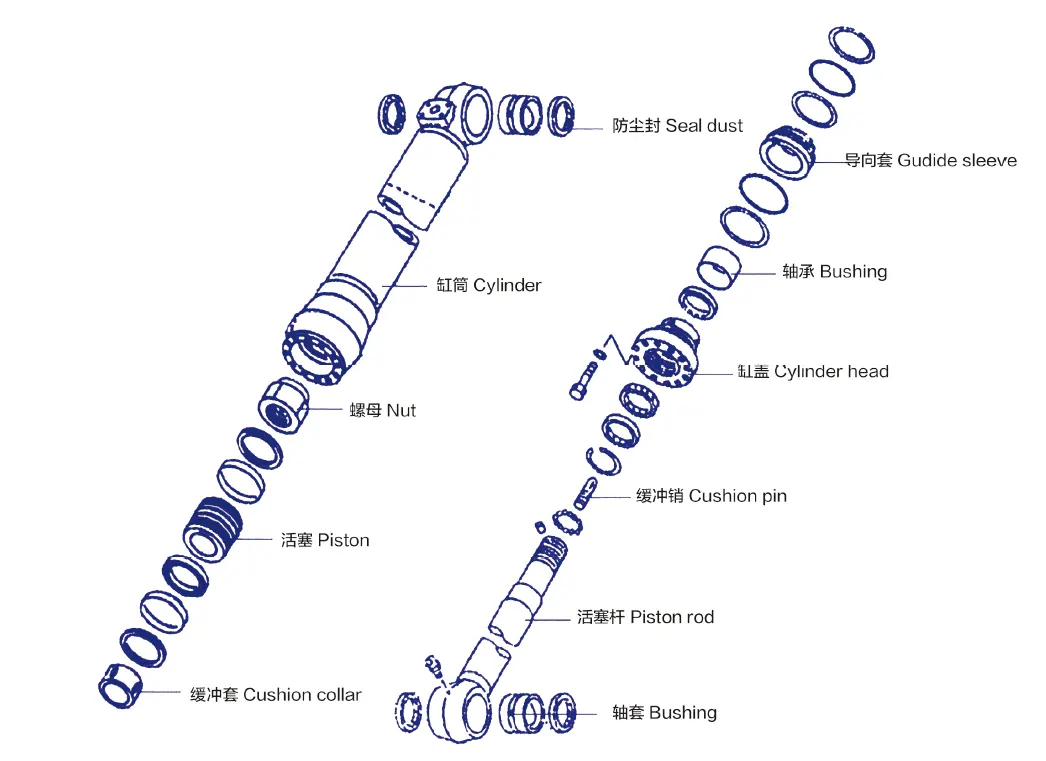
The Arm Cylinder for Komatsu Large Excavator PC300-3-5-6-7-8 is a hydraulic cylinder designed specifically to provide linear motion and power for the arm of various types of machinery, such as excavators, cranes, and mechanical arms. The arm cylinder plays a crucial role in hydraulic systems, enabling the efficient movement and control of attachments or accessories. These cylinders not only ensure smooth motion, but also have the ability to withstand heavy loads, ensuring high efficiency and reliability of the machinery under various working conditions.
Caractéristiques
-
Transmission à haut rendement
Le vérin du bras assure un mouvement linéaire et une force puissants, garantissant ainsi une performance hautement efficace du bras mécanique dans diverses opérations.
-
Contrôle précis
Grâce au système hydraulique, le vérin du bras permet un contrôle précis du mouvement, rendant le fonctionnement des accessoires plus flexible et précis.
-
Durabilité
The arm cylinder is typically manufactured using high-strength materials, providing excellent wear resistance and corrosion resistance, making it suitable for long-term use in harsh environments.
-
Adaptabilité multifonctionnelle
These cylinders can be widely applied to various types of machinery, such as excavators, cranes, and mechanical arms, to meet different working requirements.
-
Entretien facile
Designed with maintenance and replacement in mind, the arm cylinders make regular inspection and maintenance more convenient, reducing equipment downtime.

Applications
Le vérin à bras trouve ses applications dans diverses industries :
-
Ingénierie de la construction
Dans les excavatrices et les grues, le vérin du bras contrôle le mouvement des godets ou des flèches pour les travaux de terrassement, la manutention de matériaux et l'installation de structures.
-
Fabrication
In automated production lines, the arm cylinder is used for the motion of mechanical arms in processes like assembly, welding, and material handling, improving production efficiency and precision.
-
machines agricoles
Dans les machines agricoles telles que les moissonneuses-batteuses et les semoirs, le vérin du bras contrôle le mouvement des bras de travail pour des tâches comme le semis, la fertilisation et la récolte.
-
Exploitation minière
In mining equipment, the arm cylinder controls the movement of the arm for mining and material handling.
-
Logistique et transport
Dans les chariots élévateurs et les robots de manutention, le vérin du bras contrôle le levage et le mouvement des fourches, permettant la manutention et l'empilage des matériaux.
Considérations de conception et normes de sélection
When it comes to the design and selection of the arm cylinder, several factors need to be considered:
-
Capacité de charge
The arm cylinder should be designed to withstand the required load capacity to ensure safe and efficient operation.
-
Scellage
Various sealing components, such as piston seals and rod seals, should be used to maintain proper sealing. These seals are made of durable materials like polyurethane and nitrile rubber to withstand wear and tear.
-
Durabilité
The arm cylinder should be constructed with high-quality materials and undergo precise surface treatments to enhance durability and resistance to wear.
-
Sécurité
The design should incorporate safety features to prevent accidents and ensure the safe operation of the machinery.
-
Maintenabilité
The arm cylinder should be designed for easy maintenance and replacement, reducing downtime and increasing productivity.

Étanchéité et lubrification
The arm cylinder employs various sealing components, such as piston seals and rod seals, which are made of wear-resistant materials like polyurethane and nitrile rubber. The cylinder body and threaded end surfaces are finely treated to improve wear resistance. Regular lubrication with the appropriate amount of hydraulic oil is required to ensure smooth operation.

Inspection régulière et maintenance préventive
- Regularly inspect the arm cylinder for any signs of wear or damage.
- Vérifiez les éléments d'étanchéité et remplacez-les si nécessaire.
- Ensure proper lubrication and refill with hydraulic oil when needed.
- Inspect and maintain other components connected to the arm cylinder.
- Respectez le programme d'entretien recommandé par le fabricant.
Instructions d'installation du produit
Suivez ces étapes pour installer correctement le cylindre du bras :
- Préparez les outils et l'équipement nécessaires.
- Carefully remove the existing cylinder, if applicable.
- Install the new arm cylinder in the correct position, aligning the mounting points.
- Tighten the bolts securely to ensure a stable connection.
- Vérifiez l'absence de fuites ou de mouvements anormaux après l'installation.

Considérations de sécurité et facteurs environnementaux
When using the arm cylinder, it is important to follow safety measures to prevent accidents and ensure the well-being of operators and others. Proper safety equipment and training should be provided. Additionally, environmental factors, such as temperature and humidity, should be considered to ensure optimal performance of the arm cylinder.
Dépannage et problèmes courants
Common issues that may arise with the arm cylinder:
- Fuite de fluide hydraulique
- Bruits anormaux pendant le fonctionnement
- Mouvement lent ou sans réaction
- Pression irrégulière
- Uneven wear on sealing components
To troubleshoot these issues, follow these tips:
- Inspect the cylinder for any visible leaks and repair or replace the damaged seals.
- Check the hydraulic fluid level and refill if necessary.
- Inspect the hydraulic lines, fittings, and valves for any damage or blockage.
- Check the pressure settings and adjust if needed.
- Regularly clean and lubricate the
Vérin hydraulique Application :

 FR
FR  EN
EN  PT
PT  ES
ES  DE
DE  IT
IT  AR
AR  ZH
ZH  RU
RU  KO
KO  KA
KA  BG
BG  CS
CS  DA
DA  EL
EL  ET
ET  FI
FI  HU
HU  ID
ID  LT
LT  LV
LV  NB
NB  NL
NL  PL
PL  RO
RO  SK
SK  SL
SL  SV
SV  TR
TR  UK
UK