
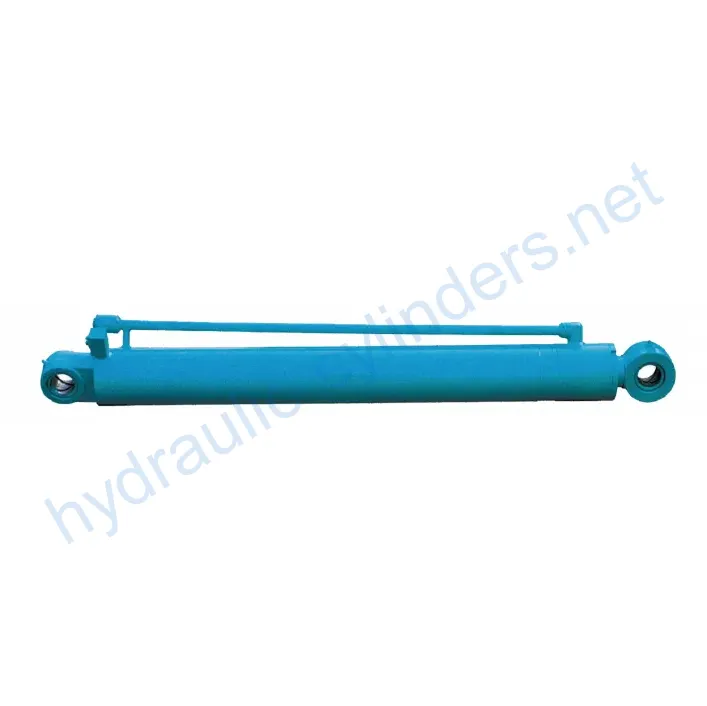
Arm CylinderFor Hyundai Large Excavator R450LC-5
En tant que fabricant, fournisseur et exportateur de produits mécaniques, nous proposons des vérins hydrauliques et de nombreux autres produits.
N'hésitez pas à nous contacter pour plus de détails.
Courrier :sales@hydraulic-cylinders.net
Fabricant fournisseur exportateur de vérins hydrauliques.
Arm CylinderFor Hyundai Large Excavator R450LC-5
Introduction
The arm cylinder is a specially designed hydraulic cylinder that is primarily used to provide linear motion and power to the arm of various machinery, such as excavators, cranes, and robotic arms. The arm cylinder plays a crucial role in hydraulic systems, allowing for efficient movement and control of additional tools or attachments. These cylinders not only enable smooth and precise motion but also have the ability to withstand heavy loads, ensuring high efficiency and reliability of the machinery in various operating conditions.
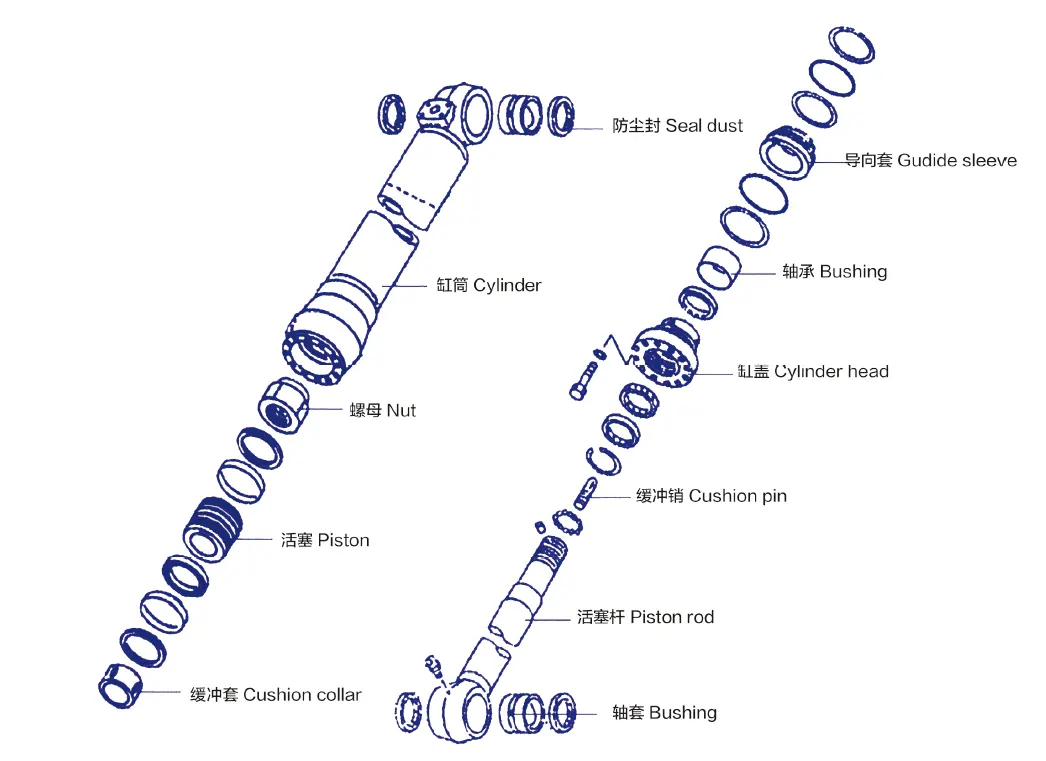
Caractéristiques
- Transmission à haut rendement : Le vérin du bras assure un mouvement linéaire et une force puissants, garantissant ainsi le bon fonctionnement du bras mécanique dans diverses opérations.
- Contrôle de précision : Grâce au système hydraulique, le vérin du bras peut réaliser un contrôle précis du mouvement, rendant le fonctionnement des outils attachés plus flexible et précis.
- Durabilité: Les vérins de bras sont généralement fabriqués à partir de matériaux à haute résistance, offrant une excellente résistance à l'usure et à la corrosion, adaptés à une utilisation à long terme dans des environnements difficiles.
- Adaptabilité multifonctionnelle : Ces vérins peuvent être largement utilisés dans diverses machines telles que les excavatrices, les grues et les bras robotisés, s'adaptant ainsi aux différentes exigences des tâches.
- Entretien facile : La conception du vérin de bras prend en compte la facilité d'entretien et de remplacement, ce qui rend les inspections et la maintenance régulières plus pratiques et réduit les temps d'arrêt des équipements.

Applications
Le vérin à bras trouve ses applications dans diverses industries :
1. Ingénierie de la construction
In excavators and cranes, the arm cylinder is used to control the movement of buckets or booms for earthworks, material handling, and structural installations.
2. Industrie manufacturière
In automated production lines, the arm cylinder is used for the motion of robotic arms, enabling processes such as assembly, welding, and material handling, thereby improving production efficiency and accuracy.
3. Machines agricoles
In agricultural machinery such as harvesters and seeders, the arm cylinder controls the movement of operating arms, performing tasks such as seeding, fertilizing, and harvesting.
4. Exploitation minière
In mining equipment, the arm cylinder is used to control the arm movement of mining equipment, facilitating the extraction and transportation of ores.
5. Logistique et transport
Dans les chariots élévateurs et les robots de manutention, le vérin du bras sert à contrôler le levage et le mouvement des fourches, permettant ainsi la manutention et l'empilage des matériaux.

Considérations de conception et critères de sélection
- Capacité portante : The arm cylinder should be designed to handle the expected loads and forces to ensure safe and efficient operation.
- Scellage: Various sealing components, such as piston seals and rod seals, should be used, preferably made of wear-resistant materials like polyurethane and nitrile rubber. The cylinder body and threaded ends should undergo precise treatment to improve wear resistance.
- Durabilité: The arm cylinder should be built to withstand the rigors of the operating environment and maintain its performance over an extended period.
- Sécurité: Safety considerations should be incorporated into the design, such as providing safety valves or devices to prevent overloading or sudden failures.
- Maintenabilité : The design should facilitate easy maintenance and replacement of components, minimizing downtime and ensuring smooth operation.

Étanchéité et lubrification
The arm cylinder utilizes various sealing components, such as piston seals and rod seals, which should be made of wear-resistant materials like polyurethane and nitrile rubber. The cylinder body and threaded ends undergo precise treatment to improve wear resistance. Regular lubrication with the appropriate amount of hydraulic oil is necessary to ensure smooth operation.
Inspection régulière et maintenance préventive
Pour garantir des performances et une longévité optimales, les mesures suivantes doivent être prises :
- Inspectez régulièrement le cylindre du bras pour détecter tout signe d'usure, de fuite ou de dommage.
- Check the hydraulic oil level and quality regularly, and refill or replace as necessary.
- Resserrer les raccords ou connexions desserrés.
- Ensure that the arm cylinder is properly aligned and mounted.
- Follow the manufacturer’s guidelines for preventive maintenance procedures.
Guide d'installation du produit
Proper installation of the arm cylinder is essential for its performance and safety. Follow these steps:
- Préparez la surface de montage et assurez-vous qu'elle soit propre et exempte de débris.
- Align the arm cylinder with the mounting holes and secure it in place using appropriate bolts or fasteners.
- Make sure all connections, such as hydraulic hoses and fittings, are properly installed and tightened.
- Check for any leaks or abnormal noises during the initial operation.
- Refer to the equipment’s manual for any specific instructions or requirements.

Considérations de sécurité et facteurs environnementaux
When using arm cylinders, adhering to safety measures is of utmost importance. It is crucial to follow proper operating procedures, use appropriate safety devices, and provide adequate training to operators. Additionally, considering environmental factors, such as avoiding contamination of hydraulic oil and adhering to proper waste disposal regulations, is essential for maintaining a safe and eco-friendly working environment.
Dépannage et problèmes courants
Here are some potential troubleshooting tips and solutions for common problems related to arm cylinders:
- If the arm cylinder is not moving or lacks power, check the hydraulic oil level, pressure, and flow rate. Inspect for any leaks or blockages in the hydraulic system.
- If there are excessive vibrations or abnormal noises, inspect the mounting and alignment of the arm cylinder. Check for damaged or worn-out components.
- If there is oil leakage, examine the seals and connections for any damage or improper installation. Replace any faulty components and ensure proper tightening.
- If the arm cylinder shows signs of wear or corrosion, consider replacing the affected parts or the entire cylinder as necessary.
N'oubliez pas d'organiser l'article de manière logique, d'utiliser des sous-titres pour faciliter la navigation, d'intégrer des images ou des graphiques pertinents pour améliorer la compréhension et de veiller à ce que le contenu soit clair, concis et adapté aux lecteurs ayant différents niveaux de connaissances techniques.
À propos de notre entreprise
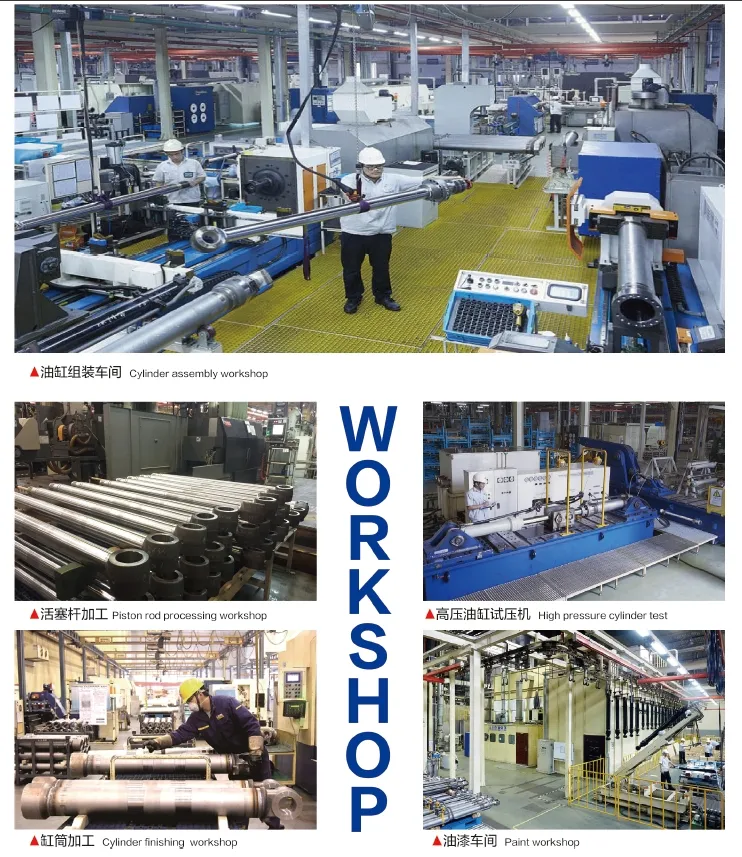
We are a professional manufacturer of replacement hydraulic cylinders, offering a wide range of products. We have become one of the leading manufacturers and wholesale distributors of hydraulic cylinders in domestic and international markets. We always uphold the principle of excellence in quality and continuously improve our technical expertise and production efficiency. By introducing advanced digital manufacturing equipment and professional testing systems, we optimize our manufacturing platform and enhance our product quality control process, demonstrating strong innovation capabilities. Our goal is to meet customer’s diversified needs with principles of high efficiency, accuracy, and high quality.
Vérin hydraulique Application :

 FR
FR  EN
EN  PT
PT  ES
ES  DE
DE  IT
IT  AR
AR  ZH
ZH  RU
RU  KO
KO  KA
KA  BG
BG  CS
CS  DA
DA  EL
EL  ET
ET  FI
FI  HU
HU  ID
ID  LT
LT  LV
LV  NB
NB  NL
NL  PL
PL  RO
RO  SK
SK  SL
SL  SV
SV  TR
TR  UK
UK