


Vérin de bras pour pelle hydraulique Sany SY195C-9
Introduction
The Arm Cylinder is a specially designed hydraulic cylinder that is used to provide linear motion and power to the arm of various machinery, such as excavators, cranes, and robotic arms. The Arm Cylinder plays a crucial role in hydraulic systems, allowing for efficient movement and control of attached tools or accessories. These cylinders not only provide smooth motion but also withstand heavy loads, ensuring high operational efficiency and reliability of the machinery in various working conditions.
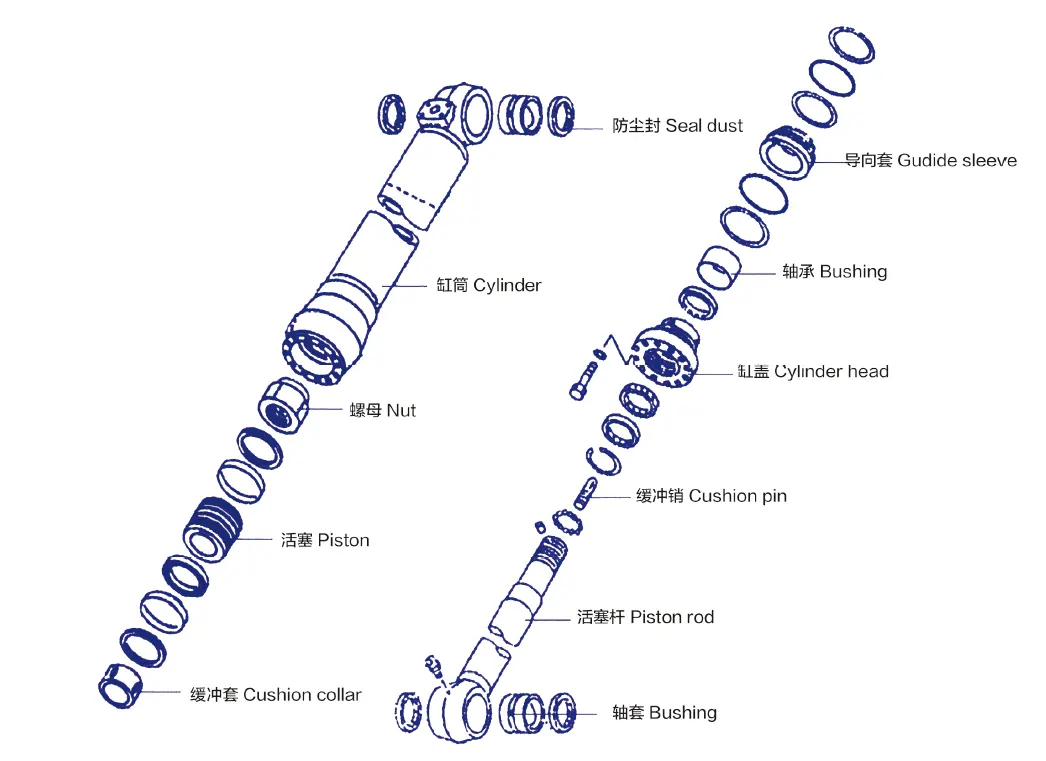

Caractéristiques
-
Transmission à haut rendement
Le vérin du bras assure un mouvement linéaire et une force puissants, garantissant ainsi des performances élevées du bras robotique dans diverses opérations.
-
Contrôle précis
Grâce au système hydraulique, le vérin de bras permet un contrôle précis du mouvement, rendant le fonctionnement des outils fixés plus flexible et précis.
-
Durabilité
The Arm Cylinder is typically made of high-strength materials, which offer excellent wear resistance and corrosion resistance, making them suitable for long-term use in harsh environments.
-
Adaptabilité polyvalente
These cylinders can be widely used in various types of machinery, including excavators, cranes, and robotic arms, to meet different working requirements.
-
Entretien facile
The design of the Arm Cylinder considers ease of maintenance and replacement, making regular inspection and maintenance more convenient and reducing equipment downtime.


Applications
Le vérin à bras trouve ses applications dans diverses industries :
-
Ingénierie de la construction
Dans les excavatrices et les grues, le vérin de bras contrôle le mouvement du godet ou de la flèche pour les travaux de terrassement, la manutention de matériaux et l'installation de structures.
-
Fabrication
In automated production lines, the Arm Cylinder enables the movement of robotic arms for assembly, welding, and material handling processes, improving production efficiency and accuracy.
-
machines agricoles
In agricultural machinery such as harvesters and planters, the Arm Cylinder controls the movement of operating arms for tasks like seeding, fertilizing, and harvesting.
-
Exploitation minière
In mining equipment, the Arm Cylinder controls the arm movement for mining and material handling operations.
-
Logistique et transport
Dans les chariots élévateurs et les robots de manutention, le vérin de bras contrôle le levage et le mouvement des fourches, permettant la manutention et l'empilage des matériaux.
Considérations de conception et critères de sélection
When it comes to the design considerations and selection criteria for Arm Cylinders, the following aspects are important:
-
Capacité de charge
The Arm Cylinder should be designed to handle the specific load requirements of the machinery it is being used in.
-
Scellage
Various sealing components, such as piston seals and rod seals, should be used to ensure effective sealing. These seals are made of wear-resistant materials like polyurethane and nitrile rubber. The cylinder body and threaded end surfaces are finely processed to improve wear resistance.
-
Durabilité
The Arm Cylinder should be constructed from high-quality materials to ensure durability and resistance to wear and corrosion.
-
Sécurité
Safety features should be incorporated into the design of the Arm Cylinder to prevent accidents and ensure the protection of operators and surrounding equipment.
-
Maintenabilité
The design of the Arm Cylinder should consider ease of maintenance and repair, making it convenient for regular inspections and decreasing potential downtime.


Étanchéité et lubrification
Arm Cylinders utilize various sealing components, including piston seals and rod seals, which are made of wear-resistant materials such as polyurethane and nitrile rubber. The cylinder body and threaded end surfaces undergo fine processing to enhance wear resistance. Regular lubrication with hydraulic oil is required to ensure smooth operation.
Inspection régulière et maintenance préventive
Regular inspection and preventive maintenance are essential for the optimal performance and longevity of the Arm Cylinder. The following measures should be taken:
-
Inspection visuelle
Regularly inspect the Arm Cylinder for any signs of wear, damage, or leakage. Check the seals, connections, and other components for tightness and proper functioning.
-
Cleaning and Lubrication
Clean the Arm Cylinder and lubricate it with the appropriate hydraulic oil as recommended by the manufacturer.
-
Tightening and Adjustment
Check and tighten all fasteners and connections. Make any necessary adjustments to ensure proper operation.
-
Preventive Replacement
Replace worn-out seals, damaged components, or any parts nearing the end of their service life before they cause major issues.
Guide d'installation du produit
Suivez ces étapes pour installer correctement le cylindre de bras :
- Ensure the machinery is properly supported and secure before starting the installation process.
- Disconnect any hydraulic lines or connections from the old cylinder.
- Remove the old cylinder from its mounting location.
- Position the new Arm Cylinder in the mounting location, ensuring proper alignment.
- Securely fasten the cylinder using the appropriate bolts or mounting brackets.
- Reconnect the hydraulic lines and fittings, ensuring proper sealing and tightness.
- Check for any leaks and ensure smooth operation before resuming normal operation.


Considérations de sécurité et facteurs environnementaux
When using Arm Cylinders, safety measures are of utmost importance. Proper training and adherence to safety protocols are necessary to prevent accidents and ensure the well-being of operators and those nearby. Additionally, considering environmental factors such as proper disposal of used hydraulic oil and adherence to environmental regulations is essential.
Dépannage et problèmes courants
Here are some common troubleshooting tips and solutions for Arm Cylinders:
-
Problème : Fuite
Solution: Check the seals and connections for any damage or misalignment. Replace worn-out seals or tighten loose connections.
-
Problème : Puissance insuffisante
Solution: Ensure the hydraulic system has sufficient pressure and flow. Check for any restrictions or blockages in the hydraulic lines.
-
Problème : Mouvement irrégulier
Solution: Inspect the Arm Cylinder for any damage or misalignment. Adjust or replace any worn-out components that may be causing the irregular movement.
<