
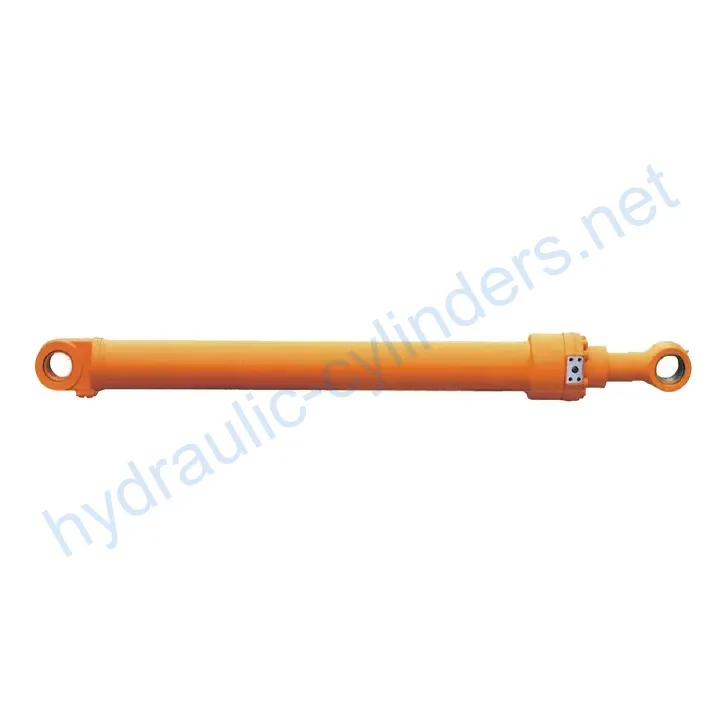
Arm Cylinder For SDLG Small Excavator LG660
En tant que fabricant, fournisseur et exportateur de produits mécaniques, nous proposons des vérins hydrauliques et de nombreux autres produits.
N'hésitez pas à nous contacter pour plus de détails.
Courrier :sales@hydraulic-cylinders.net
Fabricant fournisseur exportateur de vérins hydrauliques.
Arm Cylinder For SDLG Small Excavator LG660
The arm cylinder is a specially designed hydraulic cylinder that provides linear motion and power to the arm of various machinery, such as excavators, cranes, and mechanical arms. The arm cylinder plays a crucial role in hydraulic systems, enabling the efficient movement and control of additional tools or attachments. These cylinders not only ensure smooth motion but also withstand heavy loads, ensuring high efficiency and reliability of the machinery under various operating conditions.
Définition et explication
The arm cylinder is a type of hydraulic cylinder that is specifically designed to provide linear motion and power to the arm of various machinery. It is essential for the movement and control of additional tools or attachments, such as buckets, booms, or arms. The arm cylinder operates within a hydraulic system, utilizing the force of hydraulic fluid to generate the necessary power for the arm’s movement. It consists of a piston, rod, cylinder barrel, and end caps, all of which are carefully engineered to withstand high pressure and ensure smooth operation.
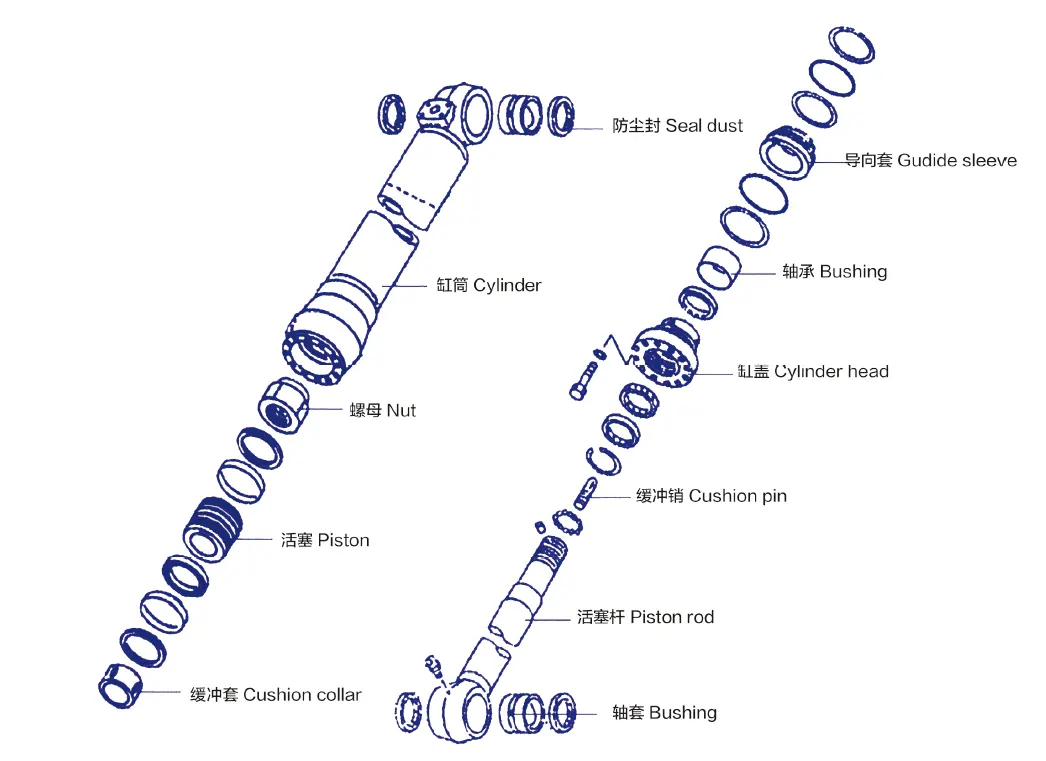
Caractéristiques du cylindre de bras
-
Transmission à haut rendement :
The arm cylinder provides powerful linear motion and force, ensuring high-performance capabilities for the machinery’s arm.
-
Contrôle précis :
Through the hydraulic system, the arm cylinder enables precise motion control, allowing for flexible and accurate operation of the additional tools.
-
Durabilité:
The arm cylinder is manufactured using high-strength materials, providing excellent wear resistance and corrosion resistance, making it suitable for long-term use in harsh environments.
-
Adaptabilité multifonctionnelle :
These cylinders can be widely applied in various types of machinery, such as excavators, cranes, and mechanical arms, catering to different working requirements.
-
Entretien facile :
The design of the arm cylinder takes into consideration easy maintenance and replacement, making regular inspections and maintenance more convenient and reducing equipment downtime.

Applications du cylindre de bras
Le vérin à bras trouve son application dans diverses industries et secteurs :
1. Ingénierie de la construction
In excavators and cranes, the arm cylinder is used to control the movement of the bucket or boom, facilitating earthworks, material handling, and structural installation.
2. Industrie manufacturière
In automated production lines, the arm cylinder is used for the motion of mechanical arms, enabling processes such as assembly, welding, and material handling, thereby improving production efficiency and accuracy.
3. Machines agricoles
In agricultural machinery such as harvesters and seeders, the arm cylinder controls the movement of the operating arm, performing tasks like seeding, fertilizing, and harvesting.
4. Exploitation minière
In mining equipment, the arm cylinder is used to control the arm’s movement, enabling the extraction and transportation of minerals.
5. Logistique et transport
Dans les chariots élévateurs et les robots de manutention, le vérin du bras sert à contrôler le levage et le mouvement des fourches, facilitant ainsi la manutention et l'empilage des matériaux.
Considérations de conception et critères de sélection
-
Capacité portante :
The arm cylinder must be designed to withstand the expected loads and forces encountered during operation.
-
Scellage:
Various sealing components, such as piston seals and rod seals, are used to ensure the integrity of the hydraulic system and prevent leakage.
-
Durabilité:
The arm cylinder should be constructed using materials that exhibit high durability and resistance to wear and corrosion.
-
Sécurité:
Safety features, such as pressure relief valves and overload protection mechanisms, should be incorporated into the design to prevent accidents and equipment damage.
-
Maintenabilité :
The design should consider ease of maintenance and repair, with accessible components and clear documentation.

Sealing and Lubrication of the Arm Cylinder
The arm cylinder utilizes various sealing components to ensure the integrity of the hydraulic system. These components include piston seals, rod seals, and wipers. They are made from wear-resistant materials such as polyurethane and nitrile rubber. Additionally, the cylinder barrel and threaded ends undergo meticulous surface treatment to enhance their wear resistance. Regular lubrication with hydraulic oil is necessary to maintain smooth operation and prevent excessive wear and friction.
Inspection régulière et maintenance préventive
-
Inspection:
Regularly examine the arm cylinder for any signs of wear, leakage, or damage. Inspect the seals, rods, and barrel for integrity and cleanliness.
-
Maintenance préventive :
Follow the manufacturer’s recommended maintenance schedule, which may include tasks such as cleaning, resealing, and lubrication.
Guide d'installation approprié
Lors de l'installation du cylindre de bras, suivez ces étapes :
- Assurez-vous que les surfaces de montage sont propres et exemptes de débris.
- Apply a thin layer of hydraulic oil or grease to the piston rod.
- Align the cylinder with the mounting bracket and secure it using the appropriate bolts or pins.
- Connect the hydraulic hoses or pipes to the cylinder’s ports, ensuring a proper seal.
- Vérifiez le bon fonctionnement du cylindre et recherchez d'éventuelles fuites.

Considérations de sécurité et facteurs environnementaux
When using the arm cylinder, it is essential to prioritize safety measures to prevent accidents and ensure the well-being of operators and nearby personnel. Adequate training, proper usage guidelines, and the use of safety guards and devices are crucial in maintaining a safe working environment. Additionally, considering environmental factors such as temperature, humidity, and exposure to chemicals can help optimize the longevity and performance of the arm cylinder.
Diagnostic des pannes et problèmes courants
Les problèmes courants pouvant survenir avec le cylindre du bras comprennent :
-
Fuite:
Check for damaged seals or loose fittings. Replace or tighten as necessary.
-
Mouvements lents ou irréguliers :
Inspect for clogged or worn-out components. Clean or replace them accordingly.
-
Bruit excessif :
Check for loose connections or damaged internal parts. Tighten or replace as needed.
If any of these issues occur, it is recommended to consult the manufacturer’s documentation or seek professional assistance to diagnose and resolve the problem effectively. Implementing preventive measures, such as regular inspection and maintenance, can help minimize potential issues.

N'oubliez pas d'organiser l'article de manière logique, d'utiliser des sous-titres pour faciliter la navigation, d'intégrer des images ou des graphiques pertinents pour améliorer la compréhension et de veiller à ce que le contenu soit clair, concis et adapté aux lecteurs ayant différents niveaux de connaissances techniques.
Auteur : lyl
We are a professional manufacturer of replacement hydraulic cylinders, offering a wide range of products. We have established ourselves as one of the leading manufacturers and wholesale distributors of hydraulic cylinders in both domestic and international markets. We are committed to delivering excellence through our refined manufacturing processes and industrial production management strategies. By utilizing high-end digital
Vérin hydraulique Application :

 FR
FR  EN
EN  PT
PT  ES
ES  DE
DE  IT
IT  AR
AR  ZH
ZH  RU
RU  KO
KO  KA
KA  BG
BG  CS
CS  DA
DA  EL
EL  ET
ET  FI
FI  HU
HU  ID
ID  LT
LT  LV
LV  NB
NB  NL
NL  PL
PL  RO
RO  SK
SK  SL
SL  SV
SV  TR
TR  UK
UK