
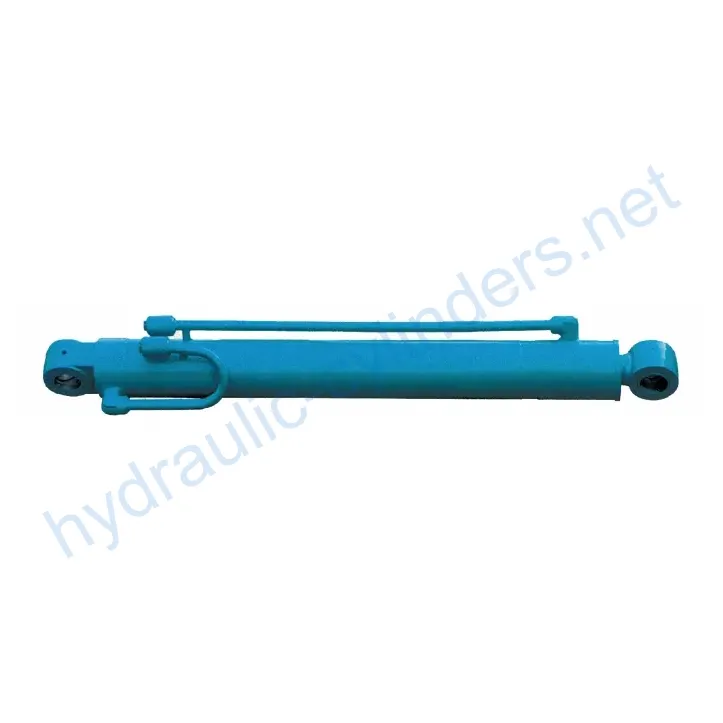
Arm Cylinder For Takeuchi Small Excavator TB285C
En tant que fabricant, fournisseur et exportateur de produits mécaniques, nous proposons des vérins hydrauliques et de nombreux autres produits.
N'hésitez pas à nous contacter pour plus de détails.
Courrier :sales@hydraulic-cylinders.net
Fabricant fournisseur exportateur de vérins hydrauliques.
Arm Cylinder For Takeuchi Small Excavator TB285C
The arm cylinder is a specially designed hydraulic cylinder that is primarily used to provide linear motion and power to the arm of various types of machinery, such as excavators, cranes, and robotic arms. The arm cylinder plays a key role in hydraulic systems, allowing for the efficient movement and control of additional tools or attachments. These cylinders not only enable smooth motion but also have the ability to withstand heavy loads, ensuring high operational efficiency and reliability of the machinery in various working conditions.
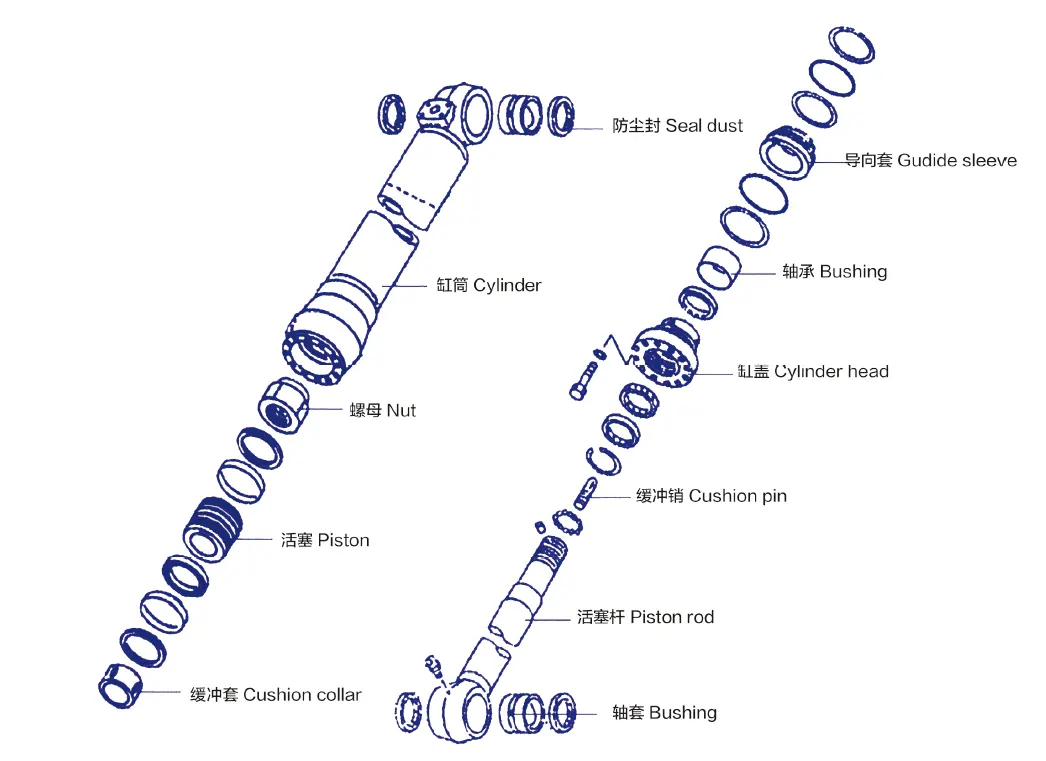
Caractéristiques du produit
- Entraînement à haut rendement : Le vérin du bras assure un mouvement linéaire et une force puissants, garantissant ainsi des performances élevées du bras mécanique dans diverses opérations.
- Contrôle de précision : Grâce au système hydraulique, le vérin du bras permet un contrôle précis du mouvement, rendant le fonctionnement des outils fixés plus flexible et précis.
- Durabilité: Les vérins de bras sont généralement fabriqués à partir de matériaux à haute résistance et présentent une excellente résistance à l'usure et à la corrosion, ce qui les rend adaptés à une utilisation à long terme dans des environnements difficiles.
- Adaptabilité multifonctionnelle : Ces vérins peuvent être largement utilisés dans divers types de machines, notamment les excavatrices, les grues et les bras robotisés, s'adaptant ainsi aux différentes exigences de travail.
- Entretien facile : Designed for ease of maintenance and replacement, the arm cylinders facilitate convenient periodic inspections and maintenance, reducing equipment downtime.

Applications
- Génie civil : Dans les excavatrices et les grues, le vérin de bras sert à contrôler le mouvement du godet ou de la flèche pour les travaux de terrassement, la manutention de matériaux et l'installation de structures.
- Industrie manufacturière : In automated production lines, the arm cylinder enables the motion of robotic arms for assembly, welding, and material handling processes, enhancing production efficiency and accuracy.
- Machines agricoles : Dans les équipements agricoles tels que les moissonneuses-batteuses et les semoirs, le vérin du bras contrôle le mouvement des bras moteurs pour des tâches comme le semis, la fertilisation et la récolte.
- Exploitation minière: In mining equipment, the arm cylinder is used to control the arm movement of mining devices for ore extraction and transportation.
- Logistique et transport : Dans les chariots élévateurs et les robots de manutention, le vérin du bras contrôle le levage et le mouvement des fourches, permettant la manutention et l'empilage des matériaux.
Considérations de conception et critères de sélection
- Capacité de charge : The arm cylinder is designed to withstand specific load requirements, ensuring safe and efficient operation.
- Scellage: Various sealing elements such as piston seals and rod seals are used, made of wear-resistant materials like polyurethane and nitrile rubber. The cylinder body and threaded ends undergo fine processing to enhance wear resistance.
- Durabilité: The arm cylinder is constructed with materials that offer excellent durability and corrosion resistance, ensuring its longevity in demanding environments.
- Sécurité: Safety features such as pressure relief valves and emergency stop mechanisms are incorporated into the design to prevent accidents and ensure operator safety.
- Maintenabilité : The design considers ease of maintenance and repair, allowing for convenient inspection, lubrication, and replacement of components.

Étanchéité et lubrification
The arm cylinder utilizes various sealing elements, including piston seals and rod seals, made of wear-resistant materials such as polyurethane and nitrile rubber. The cylinder body and threaded ends undergo fine processing to enhance wear resistance. Regular lubrication with the appropriate hydraulic oil is necessary to ensure smooth operation and prolong the lifespan of the cylinder.
Inspection régulière et maintenance préventive
- Inspect the arm cylinder for any signs of leakage, damage, or wear.
- Check the hydraulic connections, hoses, and fittings for tightness and integrity.
- Monitor the hydraulic oil level and quality, and replace or top up as needed.
- Ensure the proper functioning of safety features, such as pressure relief valves.
- Respectez les consignes du fabricant concernant les intervalles et les procédures d'entretien.
Guide d'installation du produit
Une installation correcte du vérin de bras est essentielle pour un fonctionnement optimal et une longue durée de vie. Procédez comme suit :
- Prepare the excavator or machinery for installation, ensuring stability and safety.
- Position the arm cylinder in the designated mounting area and align it with the hydraulic connections.
- Fixez solidement le cylindre à l'aide des supports ou boulons de montage appropriés.
- Connect the hydraulic hoses, ensuring proper alignment and tight fittings.
- Check for any leaks and ensure all connections are secure.
- Test the functionality of the arm cylinder through controlled movements.

Considérations de sécurité et facteurs environnementaux
When using the arm cylinder, it is vital to prioritize safety measures. This includes following proper operating procedures, wearing appropriate personal protective equipment, and regularly inspecting the cylinder for any signs of wear or damage. Additionally, environmental factors such as temperature, humidity, and exposure to chemicals or abrasive materials should be considered to ensure the optimal performance and longevity of the cylinder.
Dépannage et problèmes courants
Common issues that may arise with the arm cylinder include leakage, reduced performance, and abnormal noise. Here are some troubleshooting tips and solutions:
- Fuite: Inspect the cylinder seals and connections for damage or wear. Replace any faulty seals or tighten loose connections.
- Performances réduites : Check the hydraulic oil level and quality. Ensure proper lubrication and replace the oil if necessary. If the issue persists, consult a professional for further diagnosis.
- Bruit anormal : Inspect the cylinder for loose components or damaged internal parts. Tighten any loose parts and replace any faulty components if needed.
Preventive measures include regular maintenance, proper lubrication, and following recommended usage guidelines to minimize potential issues and ensure long-lasting performance of the arm cylinder.

N'oubliez pas d'organiser l'article de manière logique, d'utiliser des sous-titres pour faciliter la navigation, d'intégrer des images ou des graphiques pertinents pour améliorer la compréhension et de veiller à ce que le contenu soit clair, concis et adapté aux lecteurs ayant différents niveaux de connaissances techniques.
Auteur : lyl
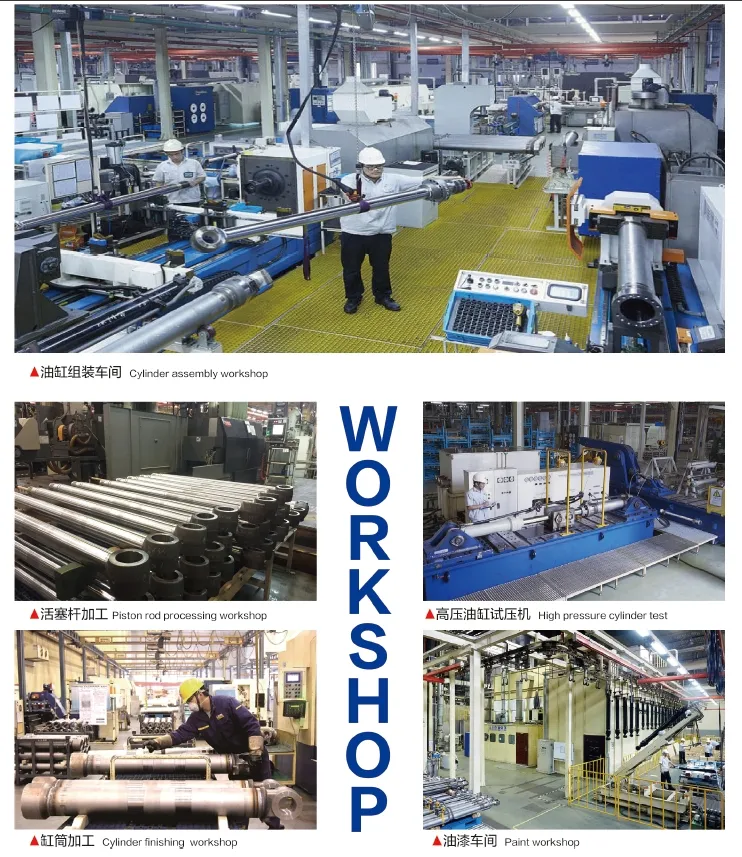
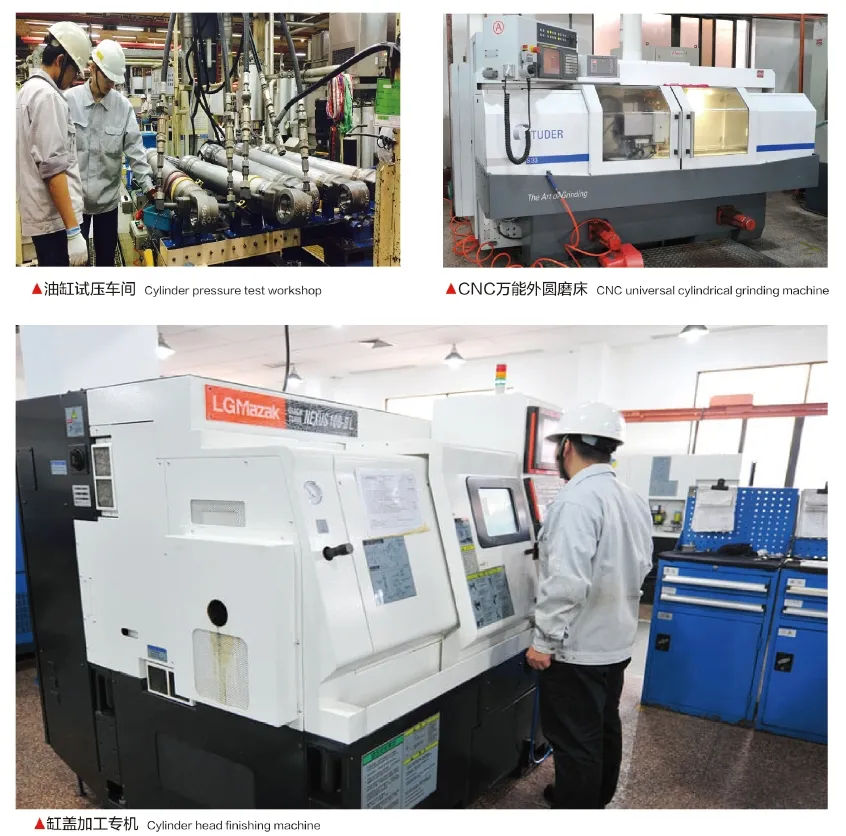
Vérin hydraulique Application :

 FR
FR  EN
EN  PT
PT  ES
ES  DE
DE  IT
IT  AR
AR  ZH
ZH  RU
RU  KO
KO  KA
KA  BG
BG  CS
CS  DA
DA  EL
EL  ET
ET  FI
FI  HU
HU  ID
ID  LT
LT  LV
LV  NB
NB  NL
NL  PL
PL  RO
RO  SK
SK  SL
SL  SV
SV  TR
TR  UK
UK